Sculpture Style Identifier
Not sure what you're looking at? Answer these questions to uncover the likely style and context of the artwork.
Select options and click Analyze to see results.
You might look at a statue in a park or a modern installation in a gallery and wonder: what exactly is this? It’s not a painting. It’s not a photograph. It takes up space. You can walk around it. Sometimes you can touch it (if the sign lets you). This is sculpture, a three-dimensional art form that shapes materials like stone, metal, wood, or clay into physical forms. But here’s the tricky part: asking "what style" is sculpture is a bit like asking "what style" is music. It’s not just one thing. It’s a massive umbrella covering thousands of years of human expression, from ancient Egyptian pharaohs to abstract metal blobs in city squares.
The confusion usually stems from thinking sculpture has a single visual language. It doesn’t. A marble bust of Caesar looks nothing like a twisted steel ribbon by Richard Serra. Yet both are sculpture. To understand what style of art sculpture is, you have to stop looking for a single definition and start looking at the intent behind the work. Are they carving away material? Are they building it up? Are they trying to copy reality or break it apart? Let’s break down how sculpture fits into the broader art world and why it defies simple labeling.
Sculpture as a Three-Dimensional Medium
At its core, sculpture is defined by dimensionality. Unlike painting, which creates an illusion of depth on a flat surface, sculpture exists in real space. It has height, width, and depth. This physical presence changes how we interact with it. When you view a painting, you stand still and look. When you view a sculpture, you often move. You circle it. You see how light hits different angles. This interaction is part of the art itself.
This distinction places sculpture firmly within the realm of visual arts, creative practices that appeal primarily to sight, but it overlaps heavily with architecture and design because it occupies physical environments. Because it takes up space, sculpture interacts with its surroundings. A statue in a cathedral feels different than the same statue in a subway station. The context changes the meaning. This spatial relationship is a key feature that separates it from other art forms.
Classical vs. Modern Styles: A Historical Breakdown
If you’re trying to pin down a "style," history offers the clearest roadmap. Sculpture has evolved through distinct phases, each with its own rules and aesthetics. Understanding these helps you identify what you’re looking at.
| Movement | Time Period | Key Characteristics | Famous Example |
|---|---|---|---|
| Classical | Ancient Greece/Rome | Idealized human anatomy, balance, realism, symmetry | Venus de Milo |
| Gothic | 12th-16th Century | Religious themes, elongated figures, integrated with architecture | Notre Dame gargoyles |
| Baroque | 17th Century | Dramatic movement, intense emotion, dynamic poses | Bernini’s David |
| Modernism | Late 19th-Mid 20th Century | Abstraction, new materials, breaking tradition | Brancusi’s Bird in Space |
| Contemporary | Late 20th Century-Present | Conceptual focus, mixed media, site-specific installations | Yayoi Kusama’s Infinity Rooms |
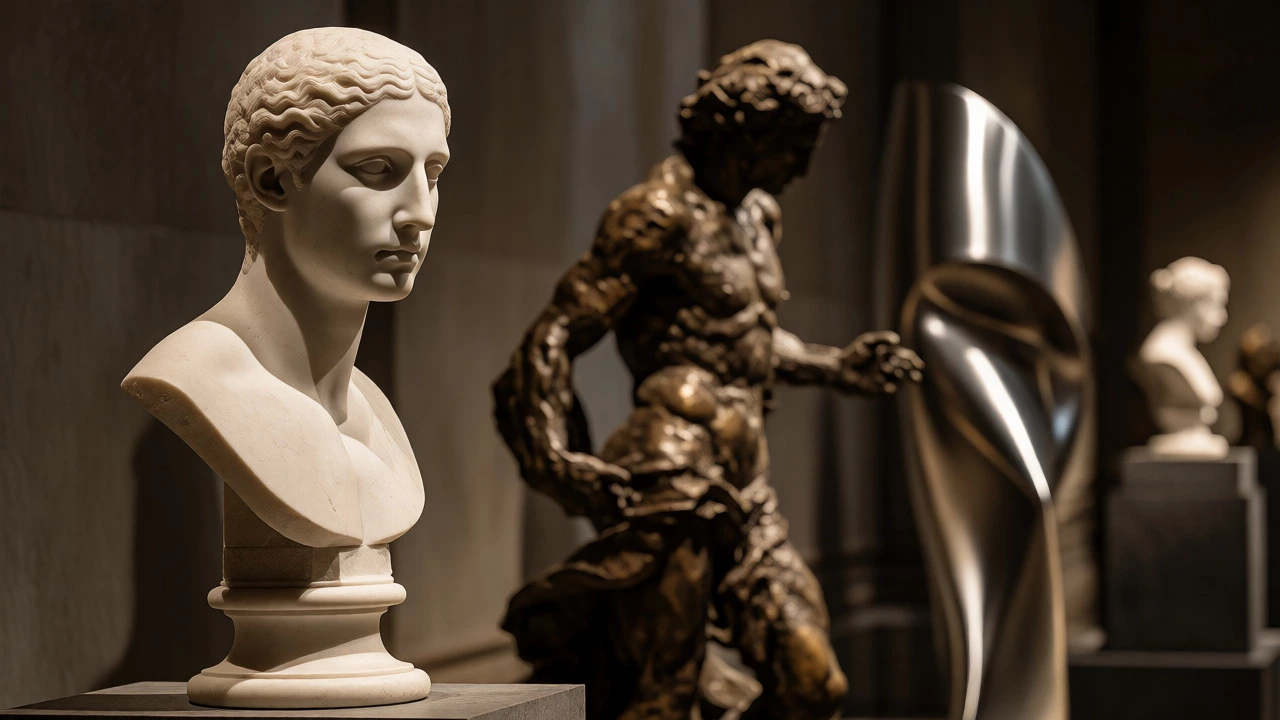
Notice how the definition shifts. In the Classical era, sculpture was about perfection of the human form. By the Baroque period, it was about capturing a moment of high drama. Then, in the 20th century, artists like Constantin Brancusi stripped away details entirely, suggesting that a smooth, curved shape could represent a bird without having wings or a beak. This progression shows that "style" in sculpture isn't static; it reacts to cultural shifts.
Technique Defines Style: Subtractive vs. Additive
Sometimes the style is dictated by how the object was made. There are two main approaches: subtractive and additive. Knowing which method was used can tell you a lot about the artist's process and the resulting aesthetic.
Subtractive sculpture involves removing material. Think of Michelangelo carving marble. He famously said he saw the figure inside the stone and just removed the excess. This technique requires planning and precision. Mistakes are permanent. The result often feels solid, heavy, and enduring. Materials like stone, wood, and ice fall into this category. If you see chisel marks or a sense of weight, you’re likely looking at subtractive work.
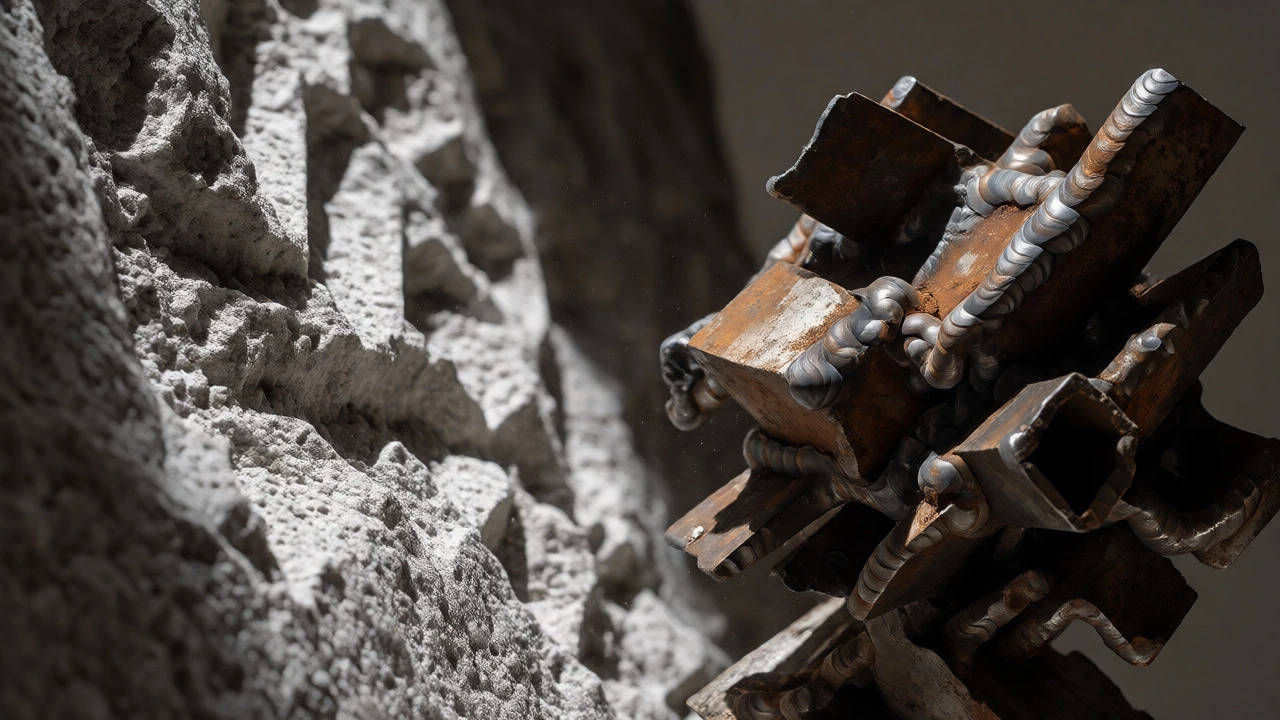
Additive sculpture builds material up. This includes modeling with clay, welding metal, or assembling found objects. Auguste Rodin used this approach extensively, creating rough, textured surfaces that captured light in complex ways. Additive sculpture allows for more experimentation. You can add, remove, and reshape until you’re happy. This flexibility led to the rise of assemblage, a type of art where disparate pieces of pre-existing materials are combined into a unified whole in the 20th century, where artists glued together junk, toys, and scrap metal to create new meanings.
Abstract vs. Representational: The Great Debate
One of the biggest questions people ask is whether sculpture has to look like something. For centuries, the answer was yes. If it didn’t resemble a person, animal, or object, it wasn’t considered good sculpture. That changed dramatically in the early 1900s.
Representational sculpture aims to depict recognizable subjects. Even if it’s stylized, you know what it is. A caricature is representational. So is a realistic portrait bust. The goal is communication through likeness.
Abstract sculpture abandons literal representation. It focuses on shape, color, texture, and form. Henry Moore’s large bronze holes invite you to think about negative space rather than a specific figure. Donald Judd’s minimalist boxes challenge you to consider industrial precision. Abstract sculpture asks you to feel rather than identify. This shift opened the door for all kinds of weird, wonderful, and confusing works that dominate today’s galleries.
It’s worth noting that many contemporary works blur this line. They might use abstract forms to suggest a human body without copying it exactly. This hybrid approach keeps viewers guessing, which is often the point.
Materials Matter: How Substance Influences Style
You can’t separate the style from the stuff. The material dictates the possibilities. Bronze allows for thin, delicate limbs because it’s strong when cast. Stone requires thicker supports because it cracks under tension. Wood has grain patterns that can enhance or fight against the form. Clay is soft and forgiving, allowing for expressive fingerprints.
In recent decades, artists have expanded the palette beyond traditional materials. Plastic, glass, neon lights, digital projections, and even living plants have entered the sculptural lexicon. Anish Kapoor uses highly polished stainless steel to reflect the environment, making the viewer part of the artwork. Olafur Eliasson uses ice and water to discuss climate change. These choices aren’t just practical; they’re conceptual. The material carries meaning. Using plastic might comment on consumer waste. Using gold might critique wealth. So when you ask "what style," look at what it’s made of. That’s half the story.

Site-Specific and Installation Art
Today, much of what we call sculpture is actually installation art, three-dimensional works designed to transform the perception of a particular space. These pieces aren’t meant to sit on a pedestal. They fill a room or cover a wall. You don’t just look at them; you enter them.
Consider Yayoi Kusama’s infinity rooms. You step inside a mirrored box filled with lights. It’s immersive. It surrounds you. Traditional sculpture stands apart from the viewer. Installation art envelops the viewer. This shift challenges the old idea that sculpture is an object to be observed from a distance. Now, it’s an experience to be lived through. If you’re standing inside the art, it’s probably an installation. If you’re walking around it, it’s likely traditional sculpture. Though, again, the lines are blurry.
Why It Matters to Know the Difference
Understanding these categories helps you appreciate art more deeply. When you see a jagged piece of metal, you can ask: Is this abstract? Is it industrial? Is it commenting on war? When you see a smooth marble figure, you can ask: Is this classical? Is it idealized? Is it trying to evoke peace?
Artists don’t work in a vacuum. They respond to what came before. Knowing the history lets you see those conversations. A modern artist carving a distorted face is talking back to the perfect faces of antiquity. A street artist spray-painting a 3D mural is challenging the need for physical mass. Every choice is a statement.
So, next time someone asks you what style of art sculpture is, you can say: It’s whatever the artist wants it to be, constrained only by physics and imagination. It’s a conversation between material, space, and human perception. And that makes it endlessly fascinating.
Is sculpture considered fine art?
Yes, sculpture is traditionally classified as a fine art, alongside painting and drawing. Historically, the term "fine art" distinguished creative works made for their beauty and intellectual value from crafts made for utility. While modern definitions have blurred these lines, major museums and academic institutions continue to categorize sculpture as a primary discipline of fine art.
What is the difference between a statue and a sculpture?
A statue is a specific type of sculpture that represents a human or animal figure. All statues are sculptures, but not all sculptures are statues. For example, an abstract geometric shape made of metal is a sculpture, but it is not a statue because it does not depict a recognizable being. The term "statue" implies figuration, while "sculpture" refers to the medium and technique regardless of subject matter.
Can sculpture be abstract?
Absolutely. Abstract sculpture became prominent in the early 20th century with artists like Constantin Brancusi and Naum Gabo. Instead of representing real-world objects literally, abstract sculptures focus on formal elements such as line, shape, color, and texture. They may evoke emotions or ideas without depicting a clear image, inviting viewers to interpret the form personally.
What materials are commonly used in sculpture?
Traditional materials include stone (marble, granite), metals (bronze, steel, iron), wood, and clay. Modern sculpture expands this list significantly to include plastics, glass, resin, concrete, paper, textiles, and found objects. Artists often choose materials based on the desired durability, texture, weight, and symbolic meaning of the final piece.
How do I identify the style of a sculpture?
To identify the style, examine three key aspects: realism, material, and composition. Check if the work depicts recognizable forms (realistic) or non-representational shapes (abstract). Look at the material to see if it suggests traditional craftsmanship (carved stone) or industrial processes (welded steel). Finally, observe the composition-does it emphasize balance and harmony (classical) or movement and chaos (baroque/expressionist)? Context clues like location and artist signature also help narrow down the era and movement.