
Broadway Matchmaker
Not sure which famous musical to watch? Answer these three questions to find the show that fits your vibe.
Your Perfect Match:
You walk into a theater, the lights dim, and suddenly you’re swept away. But if someone asked you right now, "What is the most famous musical?", what would pop into your head? For some, it’s the haunting mask of Phantom of the Opera. For others, it’s the rap battles of Hamilton. The truth is, there isn’t just one answer. Fame in musical theater depends on whether you mean ticket sales, cultural impact, or how many people have hummed the songs at karaoke night.
This guide breaks down the heavy hitters of the stage. We’ll look at the long-running giants, the modern phenomenon that changed everything, and the classics that started it all. By the end, you’ll know exactly which show deserves the crown for your next movie night or theater trip.
The Undisputed King of Longevity: Phantom of the Opera
If we measure fame by sheer endurance and box office dominance, Andrew Lloyd Webber’s The Phantom of the Opera is hard to beat. It ran on Broadway for over 13,000 performances before closing in 2023. That’s more than three decades of nightly shows. Think about that consistency. While other shows fade after a few years, this one stayed relevant through economic crashes, technological shifts, and changing tastes.
Why does it stick? It has a simple, universal hook: beauty and the beast dynamics mixed with gothic horror. The music is instantly recognizable. Even if you’ve never seen the show, you know "The Music of the Night." It appeals to teenagers, grandparents, and everyone in between. Its global reach is massive, translated into dozens of languages and performed in cities from Tokyo to Toronto.
| Musical Title | Broadway Run (Years) | Total Gross (Approx.) | Cultural Impact Score |
|---|---|---|---|
| Phantom of the Opera | 35 | $1.1 Billion+ | High (Global Brand) |
| The Lion King | 26+ | $1.8 Billion+ | Very High (Family Staple) |
| Wicked | 20+ | $1.7 Billion+ | High (Social Media Favorite) |
| Hamilton | Active | $1.0 Billion+ (Broadway only) | Extreme (Viral Phenomenon) |
The Modern Phenomenon: Hamilton
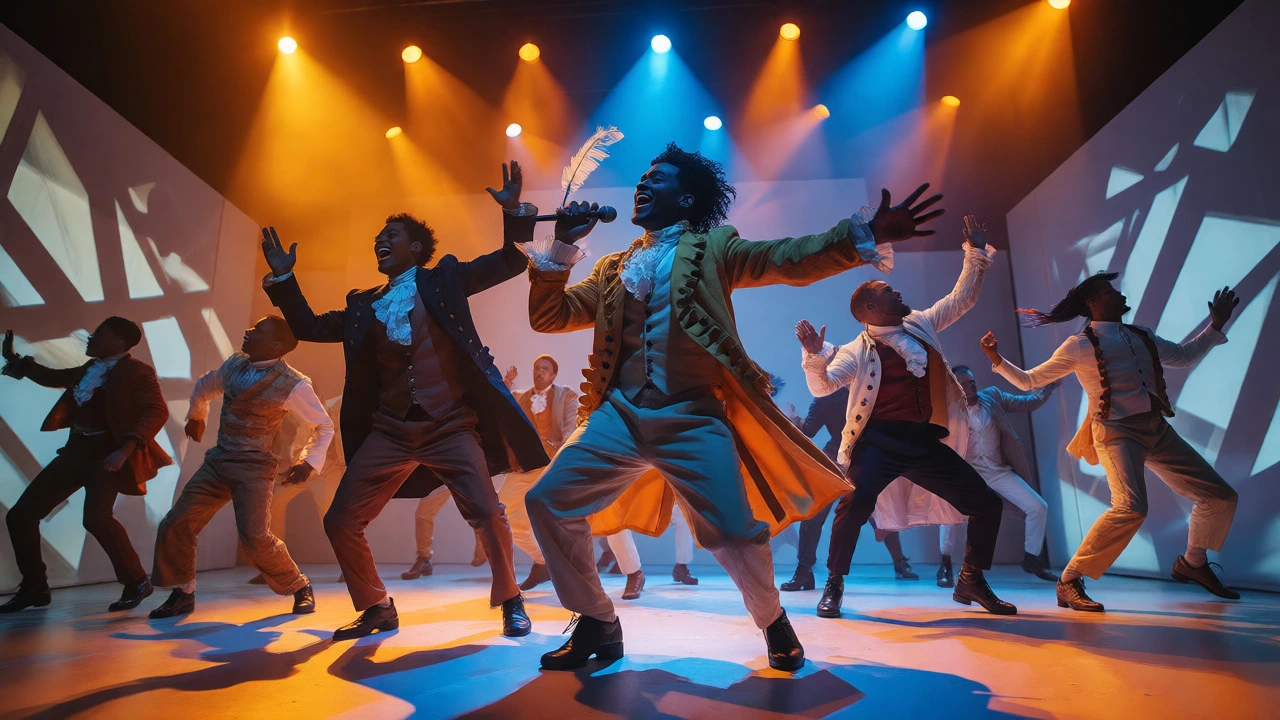
Before 2015, musicals were often seen as niche entertainment for older audiences or tourists. Then came HAMILTON, Lin-Manuel Miranda’s hip-hop biography of Alexander Hamilton. It didn’t just sell tickets; it broke the internet. The cast album hit number one on Billboard charts, something rare for a stage score. Celebrities camped out outside the Richard Rodgers Theatre just to get a $10 lottery ticket.
Hamilton’s fame comes from accessibility. It took a dry history lesson and made it feel like a Marvel movie. The casting choices-portraying Founding Fathers with actors of color-sparked national conversations about identity and representation. You can’t separate the show from its cultural footprint. It won 11 Tony Awards and a Pulitzer Prize. If you ask Gen Z what the most famous musical is, they will likely say Hamilton without hesitation.
The Family Favorite: The Lion King
While Phantom rules longevity and Hamilton rules buzz, The Lion King rules the wallet. It consistently earns more money per week than almost any other show on Broadway. Why? Because families keep coming back. Parents who grew up watching the Disney movie want their kids to see the puppetry and the vibrant costumes.
Julie Taymor’s direction transformed flat animation into three-dimensional magic. The opening sequence alone, with animals parading onto the stage, creates a sense of wonder that hooks even reluctant attendees. It’s less about plot twists and more about visual spectacle. This makes it the safest bet for a first-time musical experience. If you need a show that guarantees no complaints from a diverse group, this is it.
The Classic That Started It All: Oklahoma!
You can’t talk about famous musicals without mentioning Oklahoma!. Before this 1943 hit, musicals were mostly revues-loose collections of songs and dances with weak plots. Rodgers and Hammerstein changed the game by integrating song and dance directly into the story. Every number advanced the plot or revealed character depth.
This structure became the blueprint for every successful musical that followed. West Side Story, My Fair Lady, and even today’s shows owe their DNA to Oklahoma!. It might not have the flashy effects of Phantom, but its historical significance makes it foundational. Knowing this show helps you understand why modern musicals are structured the way they are.
The Fan Cult: Wicked
Some musicals gain fame through word-of-mouth and online communities. Wicked is the prime example. Based on Gregory Maguire’s novel, it reimagines the witches of Oz. The friendship between Elphaba and Glinda resonates deeply with audiences, particularly women and LGBTQ+ fans.
"Defying Gravity" is arguably the most belted song in amateur theater circles. The show’s aesthetic-green skin, black hats, emerald city vibes-is instantly marketable. Merchandise flies off shelves. Social media hashtags for Wicked trends spike whenever new clips drop. It proves that emotional connection and strong branding can sustain fame for two decades.

How to Choose Your Next Watch
So, which one should you pick? Here is a quick decision tree based on what you value:
- For pure spectacle: Go with The Lion King. The visuals are unmatched.
- For emotional drama: Try Les Misérables. It’s epic, tragic, and sweeping.
- For modern relevance: Watch Hamilton. The lyrics are witty and sharp.
- For romantic gothic vibes: Stick with Phantom of the Opera. It’s timeless.
- For female friendship stories: Pick Wicked. It’s empowering and fun.
Remember, "famous" doesn't always mean "best for you." Some people find Phantom too melodramatic. Others think Hamilton’s pacing is too fast. Check out clips on YouTube before committing to a full performance. See if the singing style suits your ear. Do you prefer operatic belts or conversational rapping?
Beyond Broadway: International Contenders
Don’t ignore non-English speaking markets. In Europe, Elisabeth (a German-language musical about Empress Elisabeth of Austria) has a cult following comparable to Phantom. In Asia, local adaptations of Western hits often outperform originals due to language familiarity. However, when we speak globally, American and British productions dominate the conversation simply because English is the lingua franca of theater tourism.
Also, consider film adaptations. Many people know Mamma Mia! or The Greatest Showman better than their stage counterparts. These movies introduced millions to the genre. If you haven’t seen the stage versions yet, start there. The energy of live performers changes everything.
Frequently Asked Questions
Is Phantom of the Opera still running?
No, the original Broadway production closed in April 2023 after 35 years. However, touring productions continue worldwide, and London’s West End version remains open. You can still catch it in major cities across North America and Europe.
Which musical has sold the most tickets?
In terms of total gross revenue, The Lion King is the top earner. However, Phantom of the Opera had the longest continuous run, accumulating a massive audience over time. Exact ticket counts vary by source, but both are in the hundreds of millions globally.
Is Hamilton appropriate for children?
Yes, generally. It deals with war, death, and politics, but nothing is overly graphic. The complex lyrics might be hard for very young kids to follow, so it’s best for ages 10 and up. Many parents use it to help kids learn American history.
What is the oldest famous musical still popular?
Oklahoma! (1943) is considered the first modern musical. While rarely staged in its original form today, its songs and structure remain influential. Cats (1981) is another classic that sees frequent revival tours.
Do I need to know the plot before seeing a musical?
Not necessarily. Shows like Phantom or Lion King rely heavily on visuals and emotion, so you can follow along easily. Complex narratives like Les Misérables benefit from prior knowledge. Reading a synopsis beforehand enhances appreciation for subtle details.