Modern Art Movement Timeline
Explore the evolution of Modern Art (c. 1860–1970). Scroll through the key movements that defined the era.
Walk into any major museum today, and you might find yourself standing in front of a canvas that looks like it was painted by a toddler or a sculpture made from found trash. It’s easy to feel lost. You might look at a splash of red paint and wonder, "Is this really art?" The confusion usually stems from one simple mix-up: we use the word "modern" to mean "new," but in the art world, modern art refers to a specific historical period that ended decades ago.
If you’re trying to understand what separates a Monet from a Banksy, or why Picasso’s faces look broken, you need to look at the timeline. Modern art isn’t about being current; it’s about a radical break from tradition that happened roughly between 1860 and 1970. This era didn’t just change how artists painted; it changed how we think about creativity itself.
The Birth of Modern Art: Breaking the Rules
To understand modern art, you first have to understand what it rebelled against. For centuries, European art was dominated by academic standards. Artists were expected to paint historical scenes, mythology, or realistic portraits with perfect technique. If your painting looked too messy or depicted ordinary people doing boring things, it wasn’t considered "high art."
That changed in the late 19th century. The invention of photography in the 1830s dealt a massive blow to traditional portraiture. Why pay an artist to sit for hours when a camera could capture your likeness instantly? This forced painters to ask a new question: What can art do that a photograph cannot?
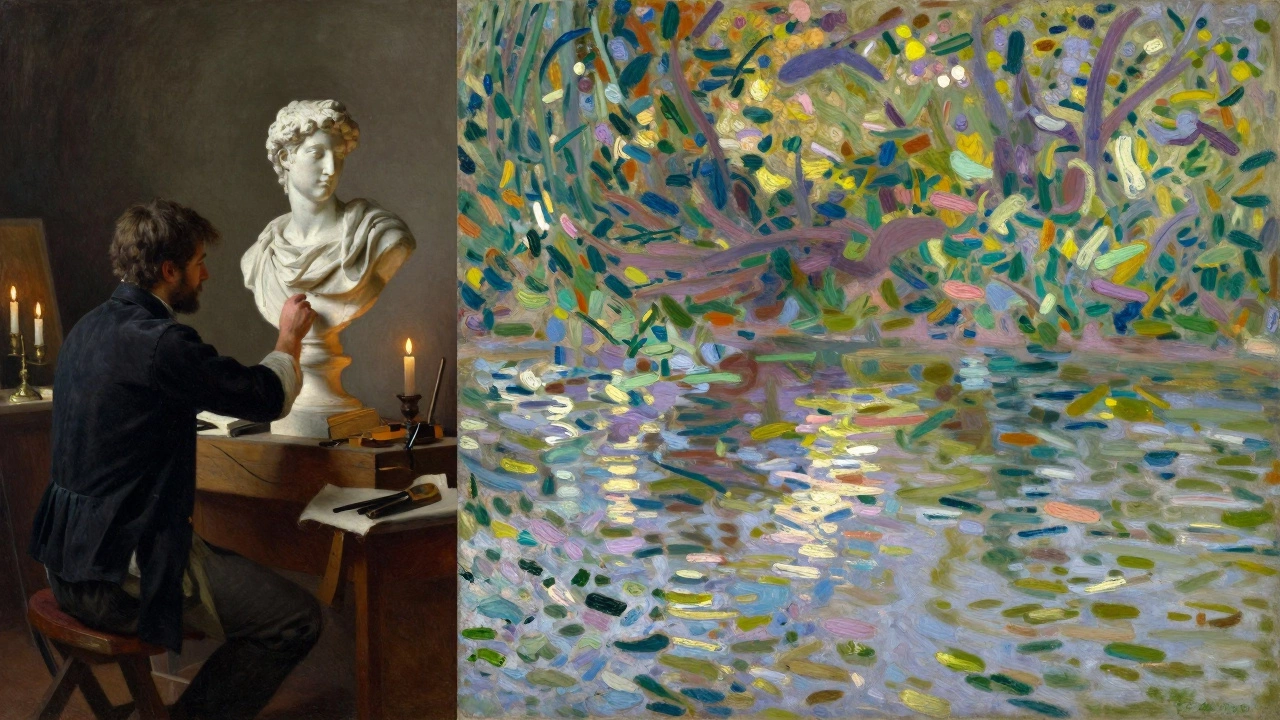
The answer became the foundation of modern art. Artists stopped trying to copy reality perfectly. Instead, they started focusing on light, color, emotion, and form. This shift began with Impressionism, a movement led by figures like Claude Monet and Edgar Degas. They painted outdoors, capturing fleeting moments of light rather than polished studio scenes. To critics at the time, their work looked unfinished and crude. To us, it looks revolutionary.
Key Movements That Defined the Era
Modern art wasn’t a single style; it was a rapid-fire sequence of movements, each reacting against the last. Here are the pillars that define the era:
- Post-Impressionism (1880s-1900s): Artists like Vincent van Gogh and Paul Cézanne moved beyond capturing light. Van Gogh used thick, swirling brushstrokes to convey intense emotion, while Cézanne broke objects down into geometric shapes, paving the way for abstraction.
- Fauvism (1900s): Led by Henri Matisse, these artists used wild, non-naturalistic colors. A face could be green; the sky could be orange. Color was no longer descriptive; it was expressive.
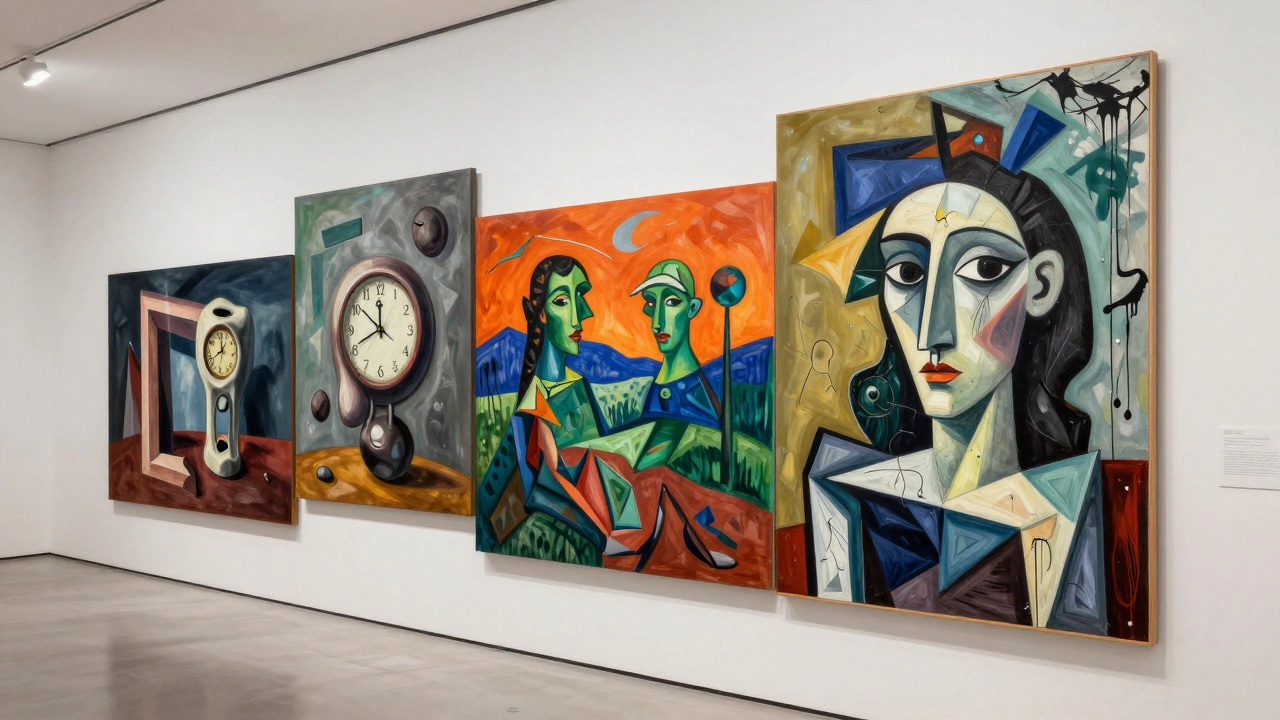
- Cubism (1907-1914): Pablo Picasso and Georges Braque shattered perspective. Instead of viewing an object from one angle, they showed it from multiple angles simultaneously. A guitar might look like a puzzle because it is-deconstructed and reassembled on a flat plane.
- Dada (1916-1924): Born out of the horror of World War I, Dada was anti-art. Marcel Duchamp placed a urinal in a gallery and called it a "Fountain." The point wasn’t beauty; it was to shock the system and question the very definition of art.
- Surrealism (1920s-1950s): Salvador Dalí and René Magot explored the unconscious mind. Their paintings featured melting clocks and floating rocks, blending dream logic with realistic technique.
- Abstract Expressionism (1940s-1950s): Often seen as the peak of modern art, this New York-based movement focused on spontaneous, automatic, or subconscious creation. Jackson Pollock’s drip paintings weren’t just splashes; they were records of physical action and energy.
| Movement | Approximate Dates | Key Characteristic | Representative Artist |
|---|---|---|---|
| Impressionism | 1860-1890 | Capturing light and movement | Claude Monet |
| Cubism | 1907-1914 | Geometric fragmentation | Pablo Picasso |
| Dada | 1916-1924 | Absurdity and anti-art | Marcel Duchamp |
| Surrealism | 1920s-1950s | Dream imagery and unconscious | Salvador Dalí |
| Abstract Expressionism | 1940s-1950s | Spontaneous gesture and abstraction | Jackson Pollock |
Why Did Modern Art End?
This is the trickiest part for most people. If modern art is so great, why don’t we call today’s art "modern"? The general consensus among historians and curators is that modern art ended around the mid-1960s to early 1970s.
Several factors contributed to this shift. First, the post-war optimism that fueled Abstract Expressionism faded. Second, new technologies like television and mass media changed how people consumed images. Artists began to incorporate these elements directly into their work, leading to Pop Art (Andy Warhol) and Conceptual Art.
By the 1970s, the focus shifted away from formal experimentation (how something looks) to ideas and context (what something means). This marked the beginning of Contemporary Art, which encompasses everything created from the late 20th century to the present day.
Modern vs. Contemporary: Clearing the Confusion
You’ve probably heard these terms used interchangeably in casual conversation, but in the art world, they are distinct categories. Understanding the difference helps you navigate galleries and auctions with confidence.
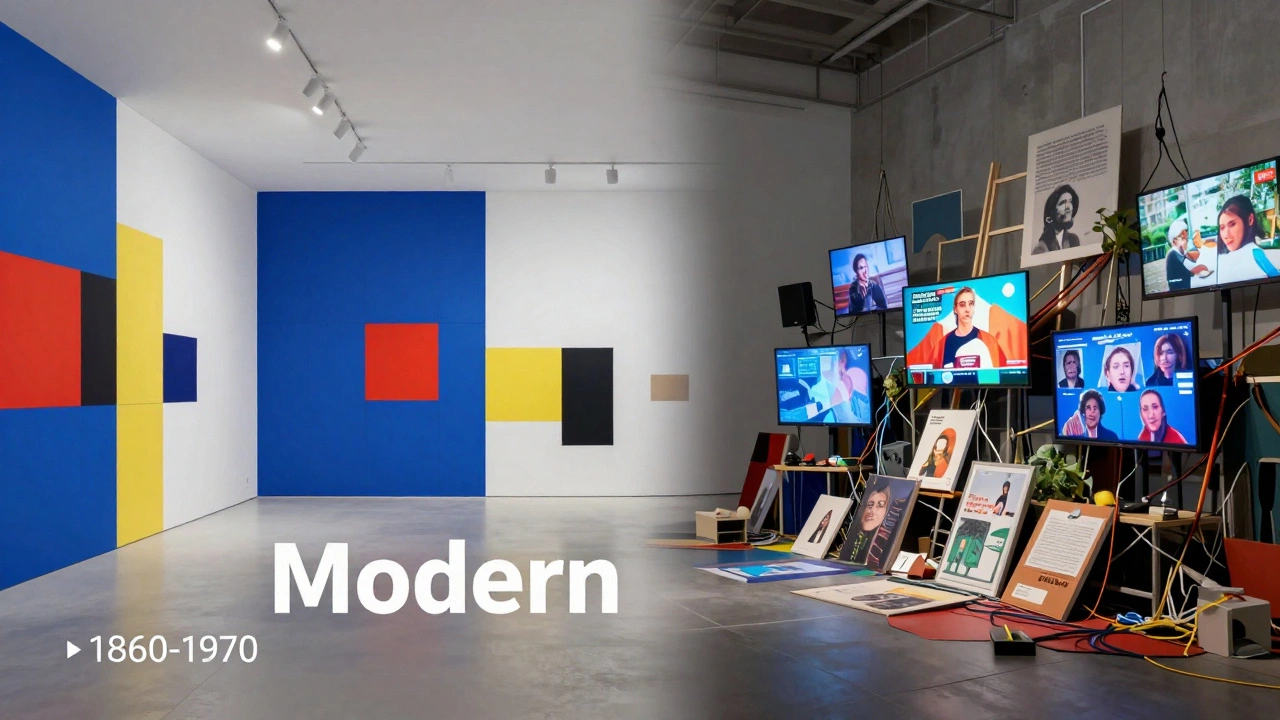
Modern Art is historical. It covers the period from roughly 1860 to 1970. It is characterized by a rejection of traditional aesthetics and an emphasis on individual expression, abstraction, and new materials. When you see a Picasso, a Matisse, or a Pollock, you are looking at modern art.
Contemporary Art is current. It refers to art made by living artists or those who died recently. It reflects the issues of our time: globalization, identity politics, digital technology, and environmental crisis. Contemporary art is often interdisciplinary, mixing video, performance, installation, and traditional media.
Think of it this way: Modern art asked, "How can we paint differently?" Contemporary art asks, "What does it mean to be alive right now?"
How to Identify Modern Art
If you’re walking through a museum or browsing online, here are some practical clues to help you spot modern art:
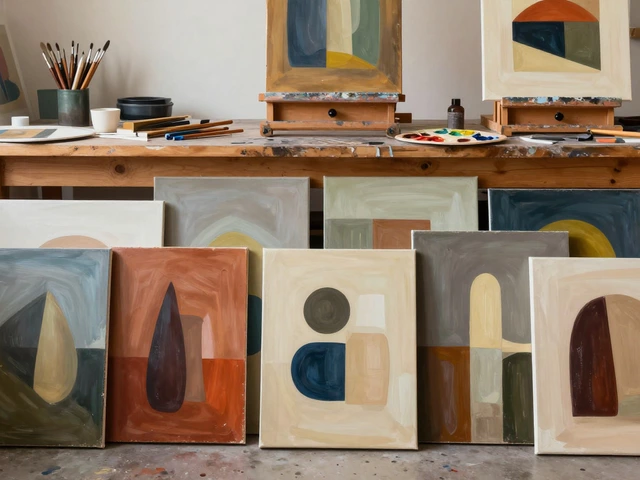
- Look for Abstraction: Does the artwork lack recognizable subjects? If you see shapes, lines, and colors without a clear picture of a person or landscape, it’s likely modern (specifically from the mid-20th century onward).
- Check the Date: Is the piece created between 1860 and 1970? If yes, it falls squarely into the modern category.
- Notice the Brushwork: Modern artists often left visible brushstrokes. They wanted you to see the hand of the artist, not hide it behind smooth finishes.
- Identify the Movement: Familiarize yourself with the key names. If you see works by Kandinsky, Mondrian, Rothko, or O’Keeffe, you’re in modern territory.
Common Misconceptions About Modern Art
Despite its popularity, modern art is still misunderstood. Here are three myths that persist:
Myth 1: "My child could do that." While it’s true that a child might make a similar mark, the intent and context are different. Modern art is the result of years of study, deliberate choice, and engagement with art history. Jackson Pollock didn’t just throw paint; he controlled the viscosity, the speed, and the placement of every drop. The value lies in the decision-making process, not just the final image.
Myth 2: "It’s all subjective." All art is subjective to some degree, but modern art has objective criteria. Historians analyze it based on innovation, influence, technical mastery within its chosen style, and cultural impact. A Rothko painting is valued not just because people like it, but because it redefined the role of color field painting in the 20th century.
Myth 3: "Modern art is dead." As a historical period, yes. But its influence is everywhere. The graphic design of your phone interface, the architecture of skyscrapers, and the fashion you wear all owe debts to modernist principles of simplicity, functionality, and bold geometry.
Where to See Modern Art Today
You don’t need to travel to Paris or New York to experience modern art. Many institutions worldwide have dedicated collections:
- The Museum of Modern Art (MoMA), New York: One of the most comprehensive collections, featuring works by Picasso, Warhol, and Hopper.
- The Tate Modern, London: Housed in a former power station, it offers a vast array of international modern and contemporary works.
- The Centre Pompidou, Paris: Known for its colorful exterior and extensive collection of avant-garde art.
- The Art Gallery of Ontario, Toronto: Home to significant Canadian modernists like Emily Carr and the Group of Seven, as well as international masters.
Understanding what art is considered modern gives you a lens through which to view the 20th century. It wasn’t just about making pretty pictures; it was about challenging perception, embracing chaos, and finding new ways to express the human condition in a rapidly changing world.
What is the exact date range for modern art?
Most art historians define modern art as spanning from approximately 1860 to 1970. It begins with the rise of Impressionism and ends with the emergence of Postmodernism and Contemporary Art practices in the late 1960s and early 1970s.
Is Picasso considered modern or contemporary?
Pablo Picasso is considered a modern artist. Although he lived until 1973, his most influential work, including the development of Cubism, occurred during the modern art period (early to mid-20th century). His style and contributions fit squarely within the modernist framework.
Why is modern art so abstract?
Modern art became abstract because artists wanted to move beyond simply copying reality. With the advent of photography, the need for realistic representation diminished. Artists like Kandinsky and Mondrian believed that pure form, color, and line could communicate emotions and spiritual truths more effectively than realistic images.
What is the difference between modern and contemporary art?
Modern art refers to a specific historical period (c. 1860-1970) characterized by a break from tradition and a focus on abstraction and individual expression. Contemporary art refers to art created from the late 20th century to the present day, often focusing on current social, political, and cultural issues and using diverse media.
Who are the most important modern artists?
Key figures include Claude Monet (Impressionism), Vincent van Gogh (Post-Impressionism), Pablo Picasso (Cubism), Henri Matisse (Fauvism), Marcel Duchamp (Dada), Salvador Dalí (Surrealism), and Jackson Pollock (Abstract Expressionism). Each played a pivotal role in shaping the visual language of the 20th century.
Can modern art include sculptures?
Yes, absolutely. Modern sculpture broke away from traditional bronze and marble casting. Artists like Constantin Brâncuși simplified forms to their essentials, while Alexander Calder created kinetic mobiles. Modern sculpture often emphasized space, balance, and industrial materials.