Modern Art Style Identifier
Select the features that best describe the artwork you are viewing. The tool will analyze these traits against the five defining characteristics of modern art to suggest the most likely movement.
Analysis Result
Based on your selections
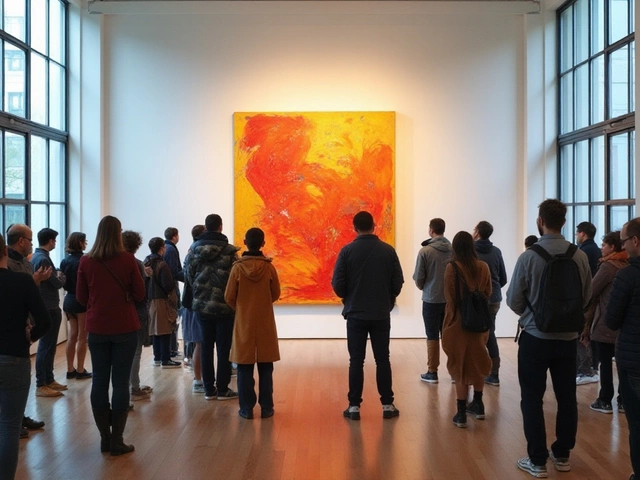
Walk into any major museum today, and you might stand before a canvas that looks like it was splattered by accident, or a sculpture made from discarded trash. You might think, "I could have done that." But that’s exactly the point. Modern Art is an artistic movement that emerged in the late 19th and early 20th centuries, rejecting traditional realism to explore new forms of expression, abstraction, and conceptual depth. It wasn’t about making pretty pictures; it was about breaking rules.
If you’ve ever felt confused by a piece of modern art, you’re not alone. The shift from painting what we see to painting how we feel-or even challenging the very idea of art-was radical. To understand this era, which roughly spans from the 1860s to the 1970s, we need to look at the five core characteristics that defined it. These aren't just random quirks; they were deliberate choices made by artists who wanted to reflect a rapidly changing world.
1. Rejection of Traditional Realism
The most obvious trait of modern art is its break from Realism, the style that dominated Western art for centuries, focusing on accurate, detailed depictions of the visible world. For hundreds of years, the goal of an artist was to create an illusion of reality so perfect that you couldn't tell it was paint on canvas. Then came the camera.
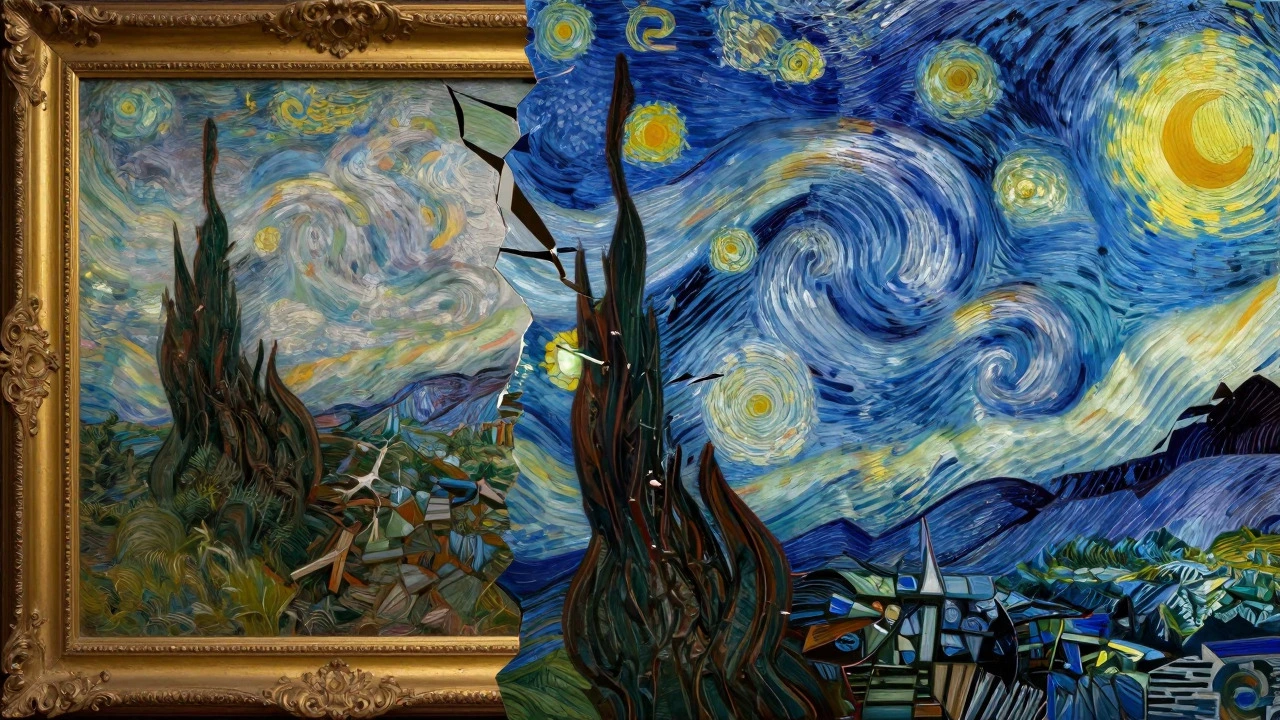
In 1839, Louis Daguerre invented the daguerreotype, the first practical method of photography. Suddenly, machines could capture reality faster and more accurately than any painter. Artists had to ask themselves: If a machine can do this, what is left for me? The answer was to stop trying to copy nature. Instead of painting a realistic portrait, artists began to distort faces, exaggerate colors, and flatten perspectives. This didn't mean they ignored the real world; they just stopped pretending their job was to mirror it perfectly. Think of Vincent van Gogh’s swirling skies or Pablo Picasso’s fractured faces. They weren't bad at drawing; they were choosing not to draw conventionally.
2. Embrace of Abstraction
Closely linked to the rejection of realism is the rise of Abstraction, a style where art does not attempt to represent an accurate depiction of visual reality but instead uses shapes, colors, forms, and gestural marks to achieve its effect. This is often the hardest hurdle for new viewers. When you look at a Jackson Pollock painting, you don't see a tree or a person. You see energy, chaos, and rhythm.
Abstraction evolved slowly. It started with Impressionists capturing light rather than form, moved through Fauvism with its wild, non-naturalistic colors, and exploded into pure abstraction with movements like Abstract Expressionism. In this view, color and line have emotional weight independent of objects. A red square isn't just a red square; it can feel urgent, warm, or aggressive. By removing recognizable subjects, artists forced viewers to engage with the work on a purely sensory and emotional level. It’s the difference between reading a poem about love and feeling the emotion directly without words.
3. Experimentation with Materials and Techniques
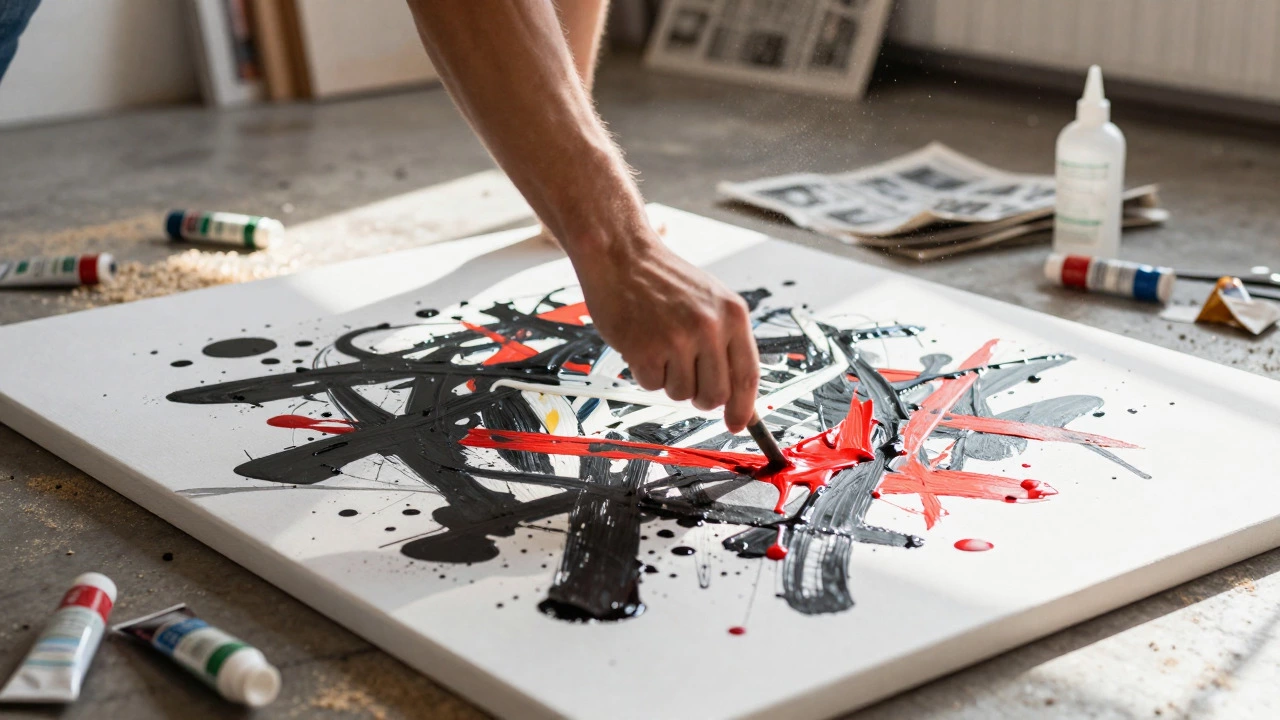
Modern artists didn't just change what they painted; they changed how they painted and what they used. The strict hierarchy of materials-oil on canvas for serious history paintings, watercolor for sketches-was thrown out the window. Artists began using house paint, sand, newspaper, glue, and even found objects.
This experimentation was driven by both necessity and rebellion. During World War I, traditional supplies were scarce, leading artists to improvise. But beyond scarcity, there was a desire to make art feel more immediate and raw. Cubism, pioneered by Picasso and Georges Braque, didn't just use unusual angles; it incorporated collage elements like wallpaper and sheet music directly into the composition. Later, artists like Robert Rauschenberg created "combines," mixing painting with physical objects like tires and stuffed animals. This blurred the line between art and life, suggesting that anything could be part of an artwork if the artist said so.
| Movement | Traditional Approach | Modern Innovation |
|---|---|---|
| Impressionism | Studio-based, blended oils | Plein air (outdoor) painting, rapid brushstrokes |
| Cubism | Single viewpoint perspective | Collage, multiple viewpoints, flat planes |
| Dada | Handcrafted fine art materials | Readymades (everyday objects), chance operations |
| Abstract Expressionism | Controlled technique | Dripping, splattering, large-scale canvases on floor |
4. Focus on Concept Over Craft
In the academic tradition, technical skill was everything. If your anatomy was wrong or your perspective off, you were considered unskilled. Modern art shifted the focus from how well something was made to what idea it conveyed. This is known as conceptualism.
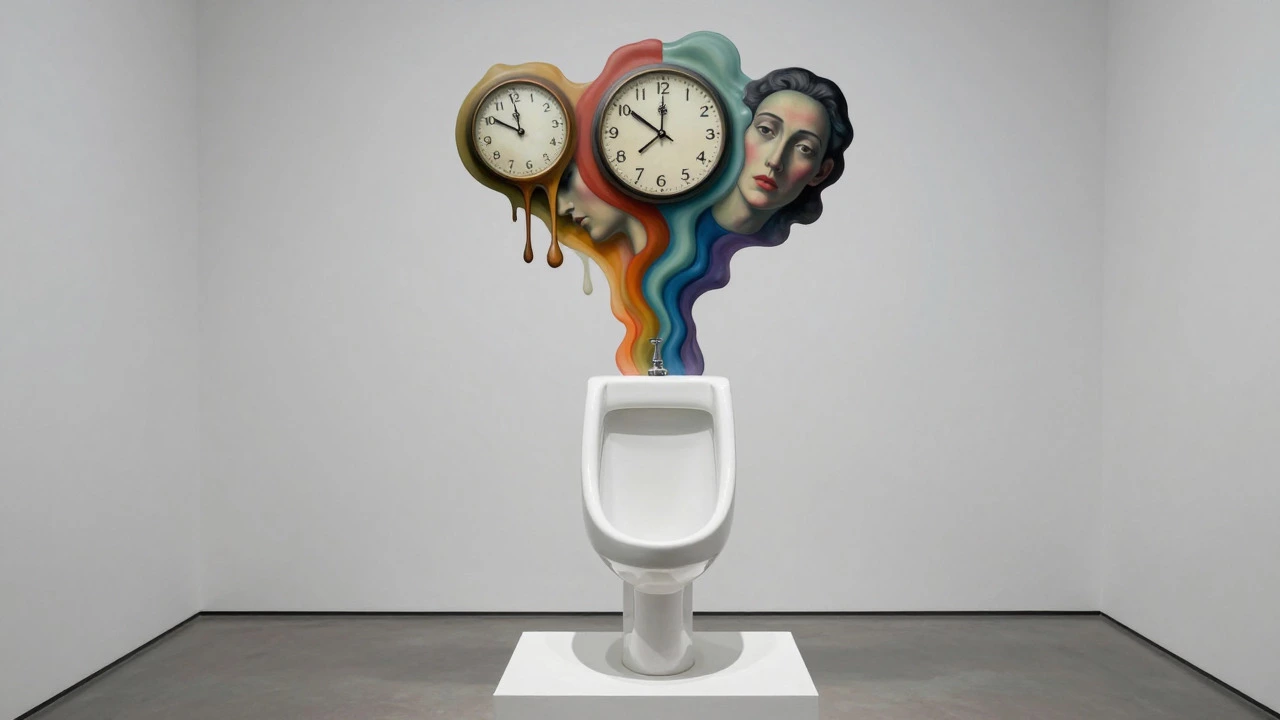
The most famous example is Marcel Duchamp’s Fountain (1917), a standard porcelain urinal he signed with a pseudonym and submitted to an exhibition. Was it skilled craftsmanship? No. But it asked a profound question: What makes something art? Is it the object itself, or the context and intention behind it? This characteristic defines much of modern art. The value lies in the intellectual challenge, the critique of society, or the exploration of the subconscious. Freud’s theories influenced Surrealists like Salvador Dalí, who used precise techniques to depict irrational dreams. The craft served the concept, not the other way around.
5. Individualism and Subjectivity
Finally, modern art championed the individual voice. Before the 19th century, artists often worked under commissions from the church or state, adhering to strict guidelines. Modern art liberated the artist to express their inner world. This subjectivity meant that two artists could look at the same scene and produce vastly different works based on their personal emotions and psychological states.
This emphasis on the self led to highly personalized styles. Edvard Munch’s The Scream isn't just a picture of a person screaming; it’s a visualization of anxiety itself. The landscape distorts because the viewer’s mind is distorted. This trend continued through Expressionism and into Abstract Expressionism, where the artist’s gesture became a direct record of their mental state. It made art deeply personal and often difficult, requiring the viewer to empathize with the artist’s internal experience rather than just appreciate a beautiful scene.
Why These Characteristics Matter Today
Understanding these five characteristics helps decode not just historical pieces, but also contemporary art. While modern art as a specific period has ended (giving way to postmodern and contemporary art), its DNA remains. The freedom to use any material, the acceptance of abstraction, and the priority of concept over craft are now standard tools for all artists.
When you next encounter a piece that confuses you, ask yourself: Is it rejecting realism? Is it abstract? Did the artist experiment with materials? What concept is being explored? And finally, what is the artist’s unique voice saying? You don’t have to like it, but understanding these pillars will help you see past the initial shock and engage with the work on its own terms.
What is the main difference between modern art and contemporary art?
Modern art generally refers to the period from the 1860s to the 1970s, characterized by a break from tradition and the development of new styles like Cubism and Abstract Expressionism. Contemporary art refers to art produced from the late 20th century to the present day. While modern art focused on formal innovation and abstraction, contemporary art often engages with global issues, identity politics, and digital media, building upon the freedoms established by modernists.
Why did modern artists stop painting realistically?
The invention of photography in the mid-19th century challenged the necessity of realistic representation. Since cameras could capture reality accurately and quickly, artists sought new purposes for painting. They turned inward, exploring emotion, perception, and abstract concepts rather than external appearances. This shift allowed them to express subjective experiences that a photograph could not capture.
Is abstract art just random?
No, abstract art is rarely random. While it may lack recognizable subjects, it involves careful decisions about color theory, composition, balance, and texture. Artists like Wassily Kandinsky studied the spiritual and emotional effects of colors and shapes. Even in action painting, where artists like Jackson Pollock dripped paint, the process was controlled and intentional, creating complex layers of rhythm and movement.
Who are some key figures in modern art?
Key figures include Pablo Picasso (Cubism), Vincent van Gogh (Post-Impressionism), Claude Monet (Impressionism), Wassily Kandinsky (Abstraction), Marcel Duchamp (Dada/Conceptual Art), and Jackson Pollock (Abstract Expressionism). Each contributed significantly to the shift away from traditional realism toward new modes of expression.
How can I start appreciating modern art if I find it confusing?
Start by letting go of the expectation to recognize objects. Instead, focus on how the artwork makes you feel. Look at the colors, lines, and textures. Ask yourself what emotions they evoke. Read about the artist's background and the historical context of the piece. Understanding the intent behind the work can bridge the gap between confusion and appreciation. Remember, there is no single "correct" interpretation; your personal reaction is valid.