Oct 18, 2025
How to Get Your Artwork Accepted into an Exhibition - Step‑by‑Step Guide
When you paint a landscape in oil, a slow-drying, versatile painting medium known for its rich color and blendable texture. Also known as oil paint, it lets you build layers, adjust tones over days, and capture the subtle shifts of natural light in ways other mediums can’t. That’s why so many artists turn to oil for landscapes—it’s forgiving, deep, and alive with possibility. But without the right oil landscape tips, practical techniques that help artists create convincing outdoor scenes using oil paint, even the best brushes and pigments can fall flat.
What makes a landscape painting feel real isn’t just the subject—it’s how you handle depth, the illusion of space between foreground, middle ground, and background in a painting. Think of it like looking out a window: things close to you are sharper, darker, and more detailed. Things far away soften, lighten, and lose contrast. That’s not just theory—it’s how your eyes work. Use this to guide your brush. Mix cooler, grayer tones for distant hills. Keep warm, saturated colors in the front. And don’t forget light, the source that defines form, mood, and atmosphere in a landscape. Where’s the sun? Is it high noon or golden hour? That changes everything. One strong light source keeps your painting unified. Too many conflicting lights make it feel messy.
Color choice matters more than you think. Many beginners grab the first green they see and paint every leaf the same. Big mistake. Real landscapes have dozens of greens—olive, yellow-green, blue-green, even gray-green in shadow. Start with a limited color palette for landscapes, a small set of pigments chosen to create harmony and realism in outdoor scenes. Try burnt sienna, ultramarine blue, cadmium yellow, and white. You’d be surprised how much you can do with just four. Mix your greens on the canvas, not the palette. Let them breathe. Let them vary. And don’t rush the drying. Oil lets you come back tomorrow and tweak a shadow, soften a horizon, or add a glimmer of light. That’s the magic.
You’ll find plenty of posts below that dig into exactly these ideas—how to layer paint for texture, how to pick the right brush for distant trees, why some artists skip black entirely, and how to avoid muddy colors. Whether you’re just starting or you’ve been painting for years, these tips aren’t about rules. They’re about seeing better, working smarter, and letting oil do what it does best: turn a flat canvas into a place you can almost step into.
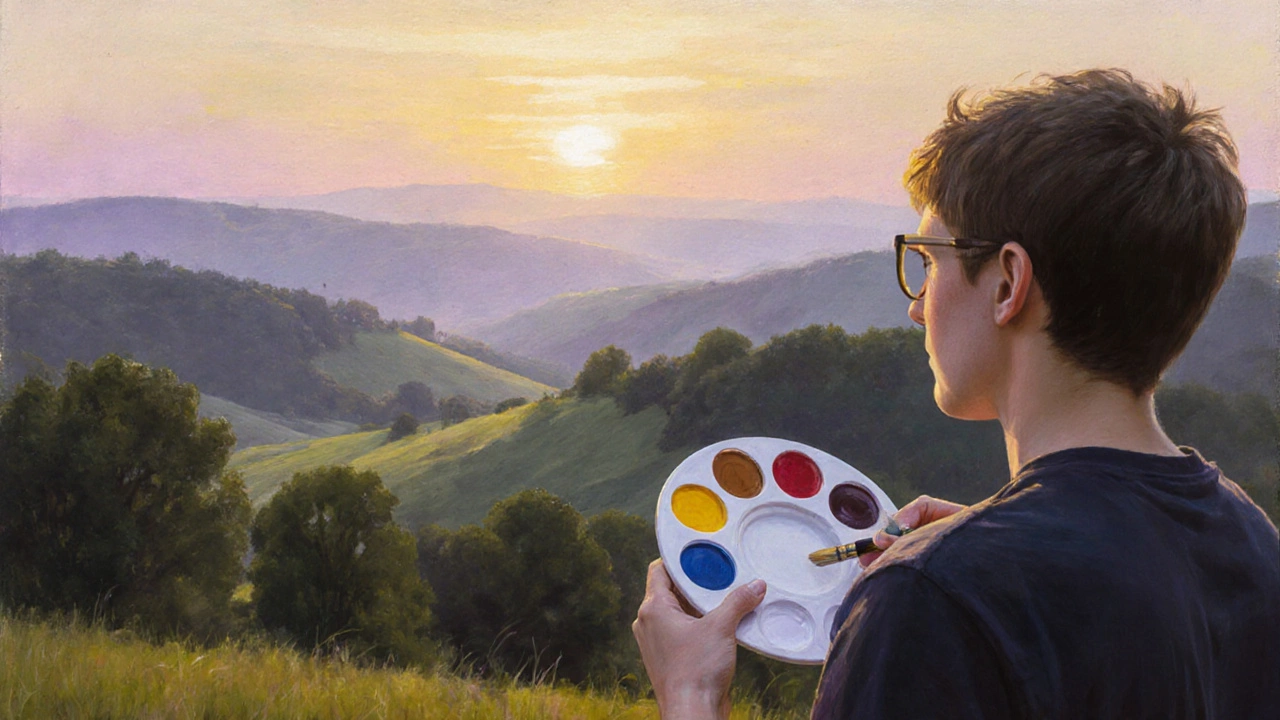
Learn how to paint realistic landscapes by focusing on light, value, and atmospheric perspective instead of details. Step-by-step techniques for beginners using oil or acrylics.