Sculpture vs. Statue Identifier
Are you looking at a statue or just a sculpture? Use this interactive tool to test your knowledge and learn the key differences through real-world examples.
Quick Rule of Thumb
Statue: Depicts a human, animal, or deity.
Sculpture: Any 3D artwork (can be abstract).
All statues are sculptures, but not all sculptures are statues.
Key Differentiator
Does it look like a living being?
If yes → Likely a Statue.
If no (abstract/geometric) → Sculpture.
Interactive Quiz: Identify the Artwork
Loading question...
Quiz Complete!
You scored .
You walk into a museum or stroll through a city park and see a figure carved from stone. Do you call it a sculpture? A statue? Most people use these words interchangeably, but if you ask an artist or an art historian, they’ll likely correct you. The confusion is understandable-after all, a statue is a type of sculpture. But not every sculpture is a statue. Think of it like squares and rectangles: every square is a rectangle, but not every rectangle is a square. Understanding this distinction changes how you look at art, whether you’re buying a piece for your garden or analyzing a masterpiece in the Louvre.
The core difference lies in scope and representation. Sculpture is a broad category of three-dimensional art created by shaping materials like stone, wood, metal, clay, or glass. It can be abstract, geometric, or realistic. A Statue, however, is a specific subset of sculpture that depicts a recognizable human, animal, or mythological figure. If it doesn’t represent a living being (or a mythical one), it’s rarely called a statue. This distinction isn’t just pedantic; it affects how we categorize art history, how museums label exhibits, and even how much a piece might cost.
Defining Sculpture: The Broad Canvas
Sculpture is one of the oldest forms of human expression. From the Venus of Willendorf to modern installations in Vancouver’s Stanley Park, sculpture covers any artwork that exists in three dimensions. The term comes from the Latin word sculpere, meaning "to carve," but today it includes casting, modeling, assembling, and welding.
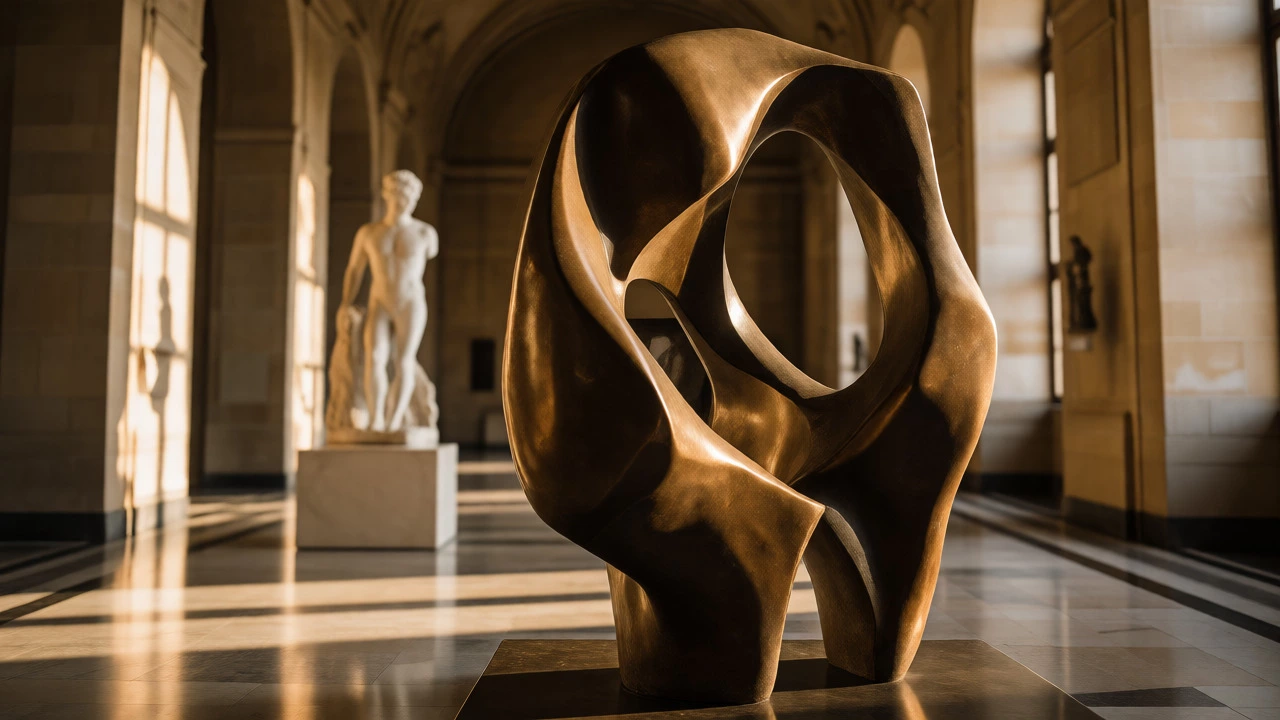
What makes something a sculpture? It occupies space. You can walk around it, touch it (if allowed), and view it from multiple angles. Unlike a painting, which tricks your eye with perspective on a flat surface, sculpture confronts you with physical mass. It interacts with light and shadow differently throughout the day. When you look at a bronze abstract form by Henry Moore, you aren’t looking for a face or a body part. You’re engaging with shape, texture, and volume. That’s pure sculpture.
Defining Statue: The Figurative Subset
A statue is strictly figurative. It represents a person, a deity, an animal, or a hybrid creature. If you see a marble figure of David in Florence, that’s a statue because it depicts a human male. If you see a jagged steel beam welded into a spiral in a downtown plaza, that’s a sculpture, but not a statue. Statues are often commemorative. They honor leaders, heroes, or religious figures. This historical bias toward representation is why people confuse the terms-most famous sculptures in public spaces happen to be statues.
Statues also carry a heavier cultural weight. They are often tied to power, memory, and politics. When cities debate removing Confederate statues in the US or colonial figures in Canada, they aren’t debating abstract art. They’re debating who gets represented in public life. An abstract sculpture rarely sparks the same level of political outrage because it doesn’t claim to depict a specific historical narrative.
Key Differences at a Glance
To make things clearer, let’s break down the attributes. While there is overlap, the primary distinctions revolve around subject matter, intent, and terminology.
| Feature | Sculpture | Statue |
|---|---|---|
| Definition | Any 3D artwork created by shaping materials. | A sculptural work depicting a human, animal, or deity. |
| Subject Matter | Abstract, geometric, organic, or figurative. | Strictly figurative (representational). |
| Scope | Broad category (the umbrella term). | Narrow subset of sculpture. |
| Purpose | Artistic expression, decoration, installation. | Commemoration, worship, memorialization. |
| Examples | Mobiles, abstract bronzes, land art. | Statue of Liberty, Michelangelo’s Pieta, equestrian monuments. |
When the Lines Blur: Busts, Reliefs, and Monuments
Language gets messy when you add other terms. What about a bust? A bust is a sculpture of a head and shoulders. Is it a statue? Technically, yes, it falls under the umbrella of statuary because it represents a person. However, collectors and galleries often distinguish them. A bust feels more intimate, less monumental than a full-body statue.
Then there are reliefs. A relief is a sculpture attached to a background surface, like the carvings on the Parthenon. Because it projects only slightly from the wall, it’s technically a sculpture, but few would call it a statue. Why? Because "statue" implies free-standing autonomy. A statue stands alone; a relief clings to a wall. This physical independence is a key marker. If you can walk completely behind it without touching a wall, it’s likely a statue (if figurative) or a free-standing sculpture (if abstract).
Monuments complicate things further. A monument can be a statue, a plaque, or an abstract structure. The Vietnam Veterans Memorial in Washington D.C. is a monument, but it’s primarily a wall with names, not a statue. The Lincoln Memorial contains a massive seated statue of Abraham Lincoln, which is itself a sculpture. Context matters more than rigid definitions here.
Why Does This Distinction Matter?
You might wonder why anyone cares. For casual observers, maybe they don’t. But for artists, buyers, and students, precision helps. If you’re commissioning a portrait for a town square, you want a statue. If you want to modernize a lobby, you might want an abstract sculpture. Using the wrong term can signal ignorance in professional circles.
Consider the market value. Figurative statues require high technical skill in anatomy and likeness. Abstract sculptures prioritize composition and material innovation. These different skill sets command different prices and appeal to different collectors. A gallery selling "contemporary sculpture" will show varied forms. A gallery specializing in "19th-century statuary" will show mostly marble humans. Knowing the difference helps you navigate these markets.
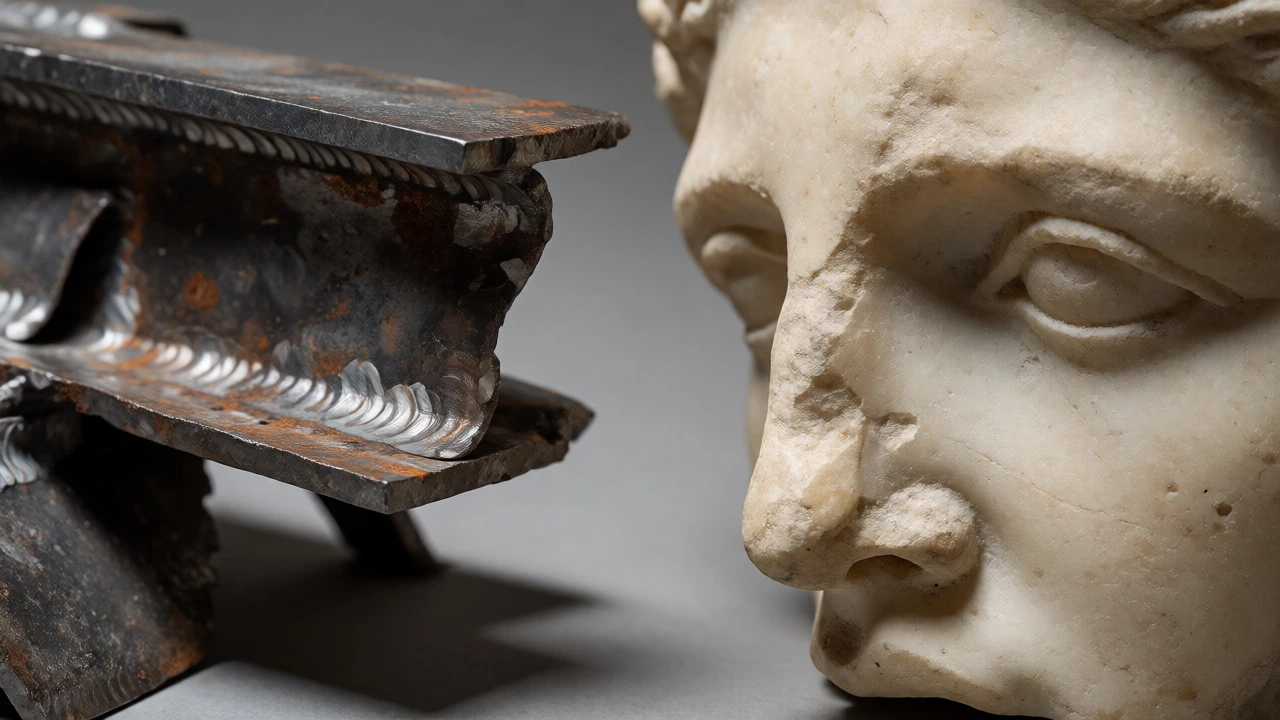
Also, preservation efforts differ. Statues outdoors suffer from weathering that damages facial features-the very thing that defines them as statues. Abstract sculptures might age gracefully, with patina adding character rather than detracting from identity. Conservationists treat them differently because the goal of a statue is to remain recognizable as a person, while the goal of a sculpture is to maintain its aesthetic form.

Common Misconceptions
One big myth is that statues must be large. We associate statues with grandeur-the Colossus of Rhodes, the Great Sphinx. But small figurines, like those found in archaeological digs, are technically statues if they depict a figure. Size doesn’t dictate the term; representation does.
Another misconception is that statues are always realistic. Ancient Egyptian statues were highly stylized, not photorealistic. Modern statues can be exaggerated or symbolic. As long as the viewer recognizes the subject as a person or creature, it fits the definition. Conversely, a hyper-realistic sculpture of a chair isn’t a statue. It’s a sculpture representing an object, not a living being.
How to Identify Which One You’re Looking At
Next time you’re at an exhibition, try this quick test. Ask yourself: "Does this look like a person, god, or animal?" If the answer is yes, you’re looking at a statue. If the answer is no, it’s a sculpture. Simple as that.
If you’re still unsure, check the label. Museums are precise. They will label a Rodin piece as a "sculpture" if it’s abstract, and a "statue" or "figure" if it’s figurative. Don’t worry about getting it perfect immediately. Even experts debate edge cases, like whether a humanoid robot sculpture counts as a statue. For now, stick to the biological rule: if it mimics life, it’s a statue. If it explores form, it’s a sculpture.
Frequently Asked Questions
Is every statue a sculpture?
Yes. All statues are sculptures because they are three-dimensional artworks created by shaping materials. However, not all sculptures are statues, as many are abstract or non-figurative.
Can a sculpture be two-dimensional?
No, by definition, sculpture is a three-dimensional art form. If it is flat, it is considered a painting, drawing, or print, even if it has some texture.
Are busts considered statues?
Busts are generally classified as a type of statue because they depict a human figure, specifically the head and shoulders. However, in art markets, they are often categorized separately due to their size and intimacy compared to full-body statues.
What materials are commonly used for statues versus sculptures?
Both use similar materials like bronze, marble, and stone. However, statues traditionally favored durable materials like marble and bronze for longevity and detail. Contemporary sculptures often experiment with mixed media, including plastic, glass, and found objects.
Why do people confuse sculptures and statues?
People confuse them because most well-known public artworks are statues of historical figures. Since these are the most visible examples of 3D art, the terms became synonymous in everyday language, despite the technical difference.