Landscape Composition Visualizer
Pro Tip:
Adjust the sliders to see how different composition choices affect depth perception. The foreground should have highest detail, middle ground moderate, and background very soft. Atmospheric perspective is the invisible glue that makes distances feel real.
When you look at a landscape painting, it’s easy to think you’re just seeing trees, mountains, and sky. But behind that calm scene is a carefully built structure-four key parts that hold the whole thing together. These aren’t just random elements; they’re the backbone of how artists create depth, mood, and movement on a flat canvas. If you’ve ever wondered why some landscape paintings feel real and others feel flat, the answer usually lies in how well these four parts are handled.
Foreground: The Closest View
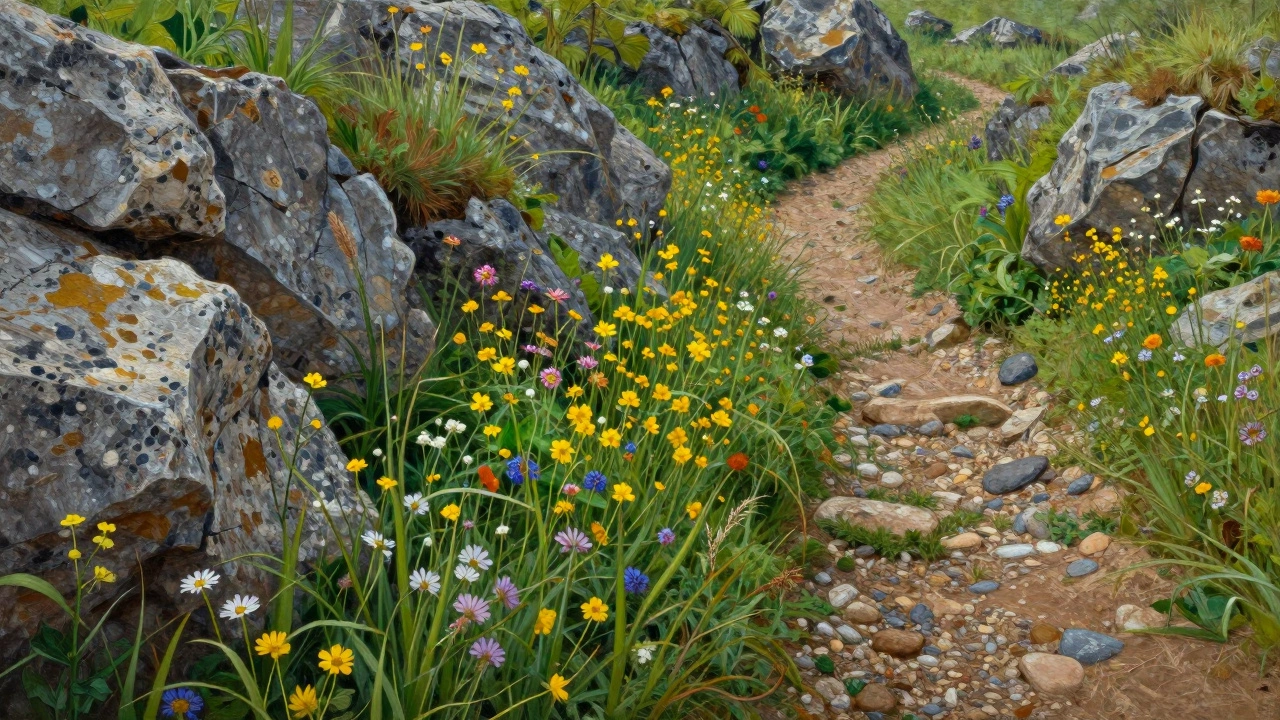
The foreground is the part of the landscape that appears closest to the viewer. It’s where your eye lands first. Artists use this area to pull you into the painting. You’ll often find rocks, grass, paths, rivers, or even figures here. These elements are painted with sharp details, strong contrasts, and rich colors because they’re meant to feel tangible.
Think of a painting by Thomas Moran-his foregrounds are full of textured rocks and wildflowers, almost reaching out toward you. That’s intentional. Without a strong foreground, the painting feels like it’s floating. It’s the anchor. If you’re painting your own landscape, start here. Place something solid in the front-maybe a fallen log, a patch of weeds, or a winding trail. It doesn’t have to be fancy, but it needs to ground the scene.
Middle Ground: The Storytelling Zone
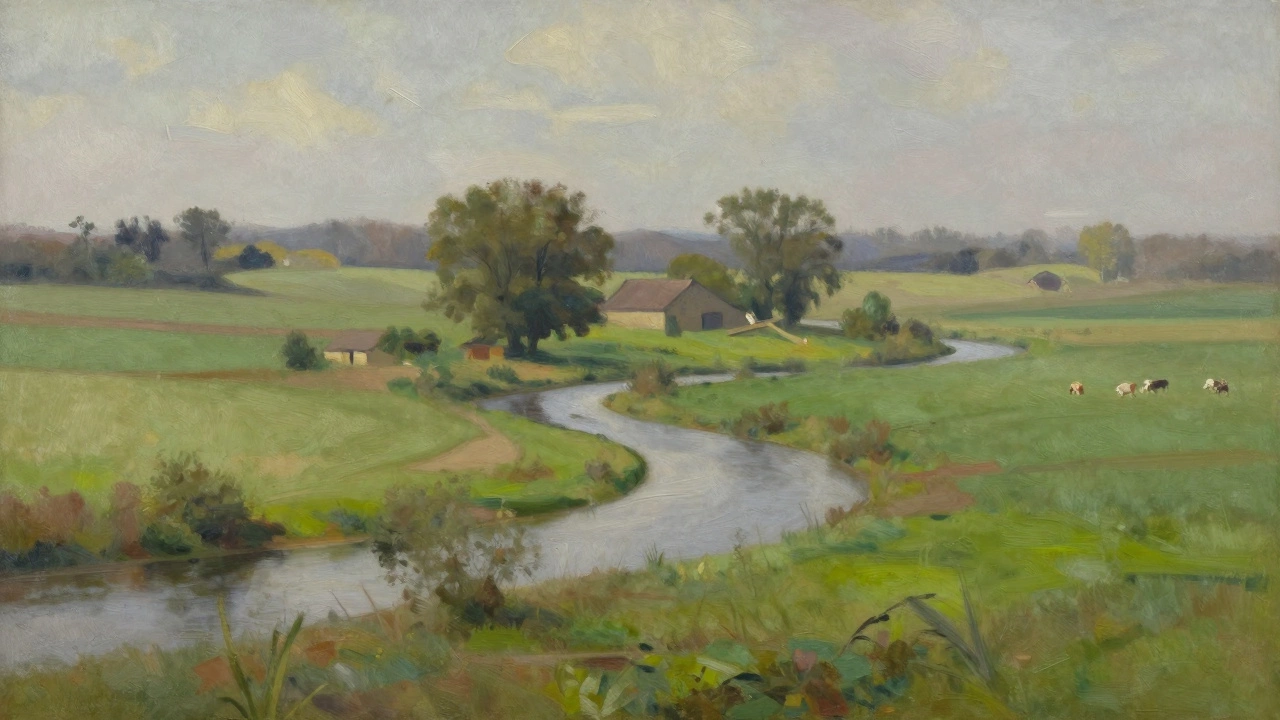
The middle ground is where the action happens. It’s the bridge between the foreground and the background. This is where you’ll find the main subject of the painting: a farmhouse, a cluster of trees, a distant hill, or a river curving through the valley. Unlike the foreground, details here are softened. Colors are less saturated, edges are slightly blurred. That’s not a mistake-it’s how our eyes naturally see distance.
Artists use the middle ground to tell the story. A lone tree in the middle ground can suggest isolation. A winding road leading toward a village hints at journey. In John Constable’s works, the middle ground is often filled with working fields and livestock, giving life to the scene. If your middle ground feels empty, ask yourself: What’s the heart of this landscape? That’s what belongs here.
Background: The Sky and the Far Horizon
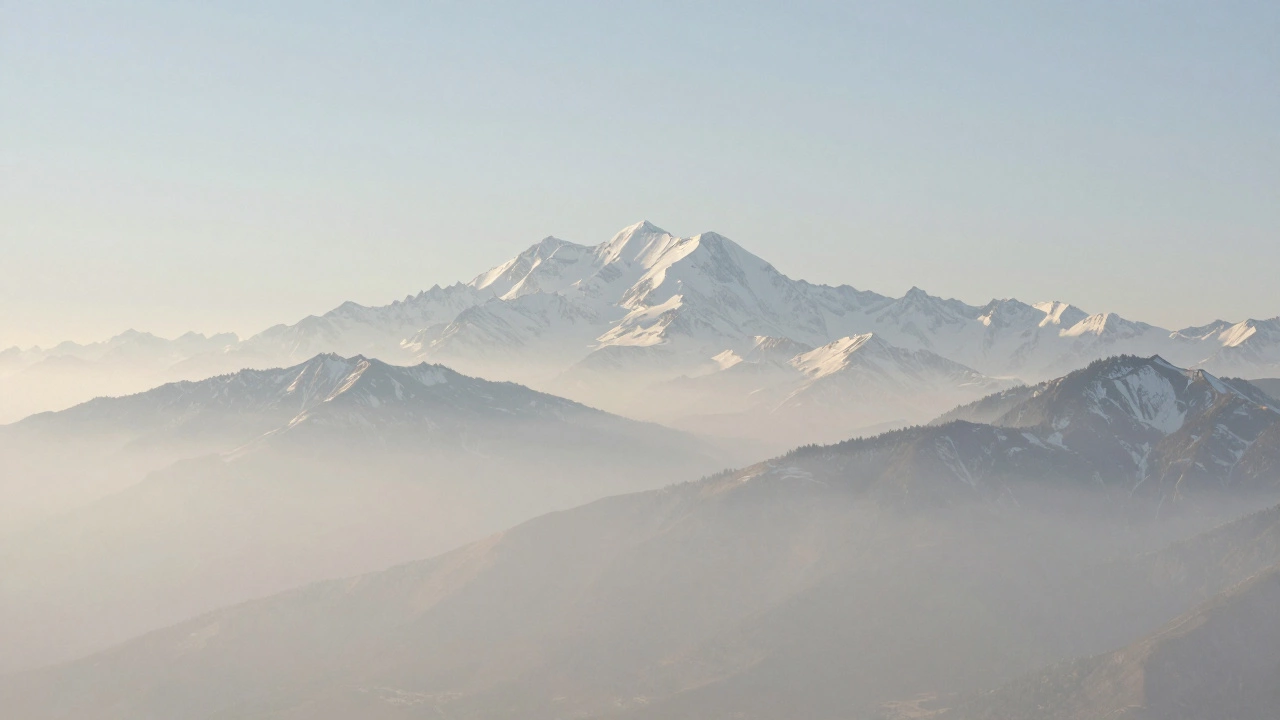
The background is where the land meets the sky. It includes distant mountains, clouds, the horizon line, and sometimes the edge of a valley. This area is painted with the lightest colors, the softest edges, and the least detail. Why? Because of atmospheric perspective-the scientific fact that air scatters light, making faraway objects appear bluer, lighter, and less distinct.
Look at any classic landscape by Albert Bierstadt. The mountains in the back are washed in pale blues and grays, almost fading into the sky. That’s not laziness-it’s realism. If you paint your background with the same bold greens and sharp lines as your foreground, the whole painting collapses. It looks like a collage, not a space. To get it right, mix a little blue or gray into your colors as you move back. Let the horizon sit low or high depending on the mood you want: low for drama, high for calm.
Atmospheric Perspective: The Invisible Glue
Atmospheric perspective isn’t a separate layer-it’s the rule that connects the other three. It’s the reason the background looks far away and the foreground feels near. It’s what makes a painting feel three-dimensional without using perspective lines or geometry.
Here’s how it works: As objects get farther away, they lose contrast, color saturation, and detail. A green tree in the foreground might be a deep emerald. In the middle ground, it’s olive. In the background, it’s a pale gray-green with a hint of blue. The same goes for shadows-they fade. A dark shadow on a rock up front might be almost black. A shadow on a distant hill? Just a whisper of tone.
Many beginners make the mistake of painting everything with equal intensity. That’s why amateur landscapes often look flat or cartoonish. Mastering atmospheric perspective means learning to mute your colors as you move back. It’s not about what you add-it’s about what you take away.
How These Parts Work Together
These four parts don’t exist in isolation. They’re a system. The foreground leads your eye into the middle ground. The middle ground guides you toward the background. And atmospheric perspective ties them all together with a visual rhythm.
Try this exercise: Take any landscape photo or painting and mentally divide it into those four zones. Notice how the artist uses size, detail, and color to show distance. Now sketch your own. Start with a simple line for the horizon. Below it, draw a shape for the background. Then add a middle ground shape. Finally, block in a foreground element. Don’t worry about details yet-just get the structure right.
Artists like J.M.W. Turner, Georgia O’Keeffe, and even modern plein air painters all rely on this structure. It’s not a rule set in stone, but a framework that gives your work stability. Even abstract landscapes-like those by Marsden Hartley-use this hidden architecture. The shapes may be simplified, but the depth is still there.
Common Mistakes to Avoid
Here’s what goes wrong when these parts aren’t handled well:
- Flatness: Everything looks the same distance away. No foreground, no depth.
- Cluttered foreground: Too many objects jumbled together. It overwhelms the eye.
- Hard-edged background: Distant mountains painted with sharp lines and bright colors. Breaks the illusion.
- Missing middle ground: The foreground jumps straight to the sky. Feels like a cutout.
- Ignoring atmospheric perspective: Using the same green for near and far trees. Looks unnatural.
One of the best ways to fix these is to squint at your painting. When you squint, details disappear. You start seeing shapes and values instead of textures. If the background still looks too dark or too detailed when you squint, you’ve got work to do.
Why This Matters Beyond Technique
Understanding these four parts isn’t just about painting better landscapes. It’s about seeing the world differently. When you walk through a forest, you don’t just see trees-you notice what’s close underfoot, what’s ahead in the trail, and what fades into the mist on the hill. Landscape painting teaches you to observe depth, light, and space in everyday life.
That’s why these four parts have lasted for centuries. They’re not just artistic tools-they’re ways of seeing. Whether you’re using oil, watercolor, or digital brushes, if you understand how to build depth with foreground, middle ground, background, and atmospheric perspective, your landscapes will feel alive.
What are the four parts of a landscape in art?
The four parts are the foreground, middle ground, background, and atmospheric perspective. The foreground is the closest area to the viewer, often filled with detailed objects like rocks or plants. The middle ground holds the main subject, like trees or buildings, and is painted with softened detail. The background includes distant elements like mountains and sky, painted lightly and softly. Atmospheric perspective is the technique that makes distant objects appear bluer, lighter, and less detailed, creating a sense of depth.
Why is the foreground important in a landscape painting?
The foreground pulls the viewer into the painting. It acts as an entry point, giving a sense of scale and grounding the scene. Without it, the image feels floating or disconnected. Artists use strong colors, sharp edges, and detailed textures here to create a tactile feel that contrasts with the softer background.
How does atmospheric perspective create depth in a landscape?
Atmospheric perspective works because air scatters light. Distant objects appear lighter, bluer, and less detailed than nearby ones. Artists use this by reducing contrast, muting colors, and softening edges as they move from foreground to background. This tricks the eye into perceiving distance, even on a flat canvas.
Can a landscape painting work without a middle ground?
It can, but it usually feels unbalanced. The middle ground connects the foreground and background, giving the painting a narrative focus. Without it, the scene jumps from close-up to far away, which can feel jarring. Some modern or abstract landscapes simplify or eliminate the middle ground for stylistic reasons, but traditional landscapes rely on it to guide the viewer’s eye.
What’s the difference between background and horizon in a landscape?
The horizon is the line where the land meets the sky. The background is everything behind the middle ground, including the sky and distant landforms beyond the horizon. The horizon is a single line; the background is the area above and beyond it. You can have a background without a visible horizon (like in foggy scenes), but you can’t have a horizon without a background.
Next time you paint a landscape-or even just look at one-try naming those four parts. You’ll start seeing how every great landscape is built, not just painted. It’s not magic. It’s structure. And once you understand it, you can create spaces that feel real, even if they’re only on paper.