Abstract Art Talent Estimator
Adjust the sliders below to simulate an abstract artwork's characteristics. The tool calculates a "Hidden Complexity Score" based on factors discussed in the article, such as color harmony, compositional balance, and conceptual depth.
Artwork Parameters
Talent Analysis
- Low Looks random or lazy.
- Med Requires some visual literacy.
- High Demonstrates mastery of abstraction.
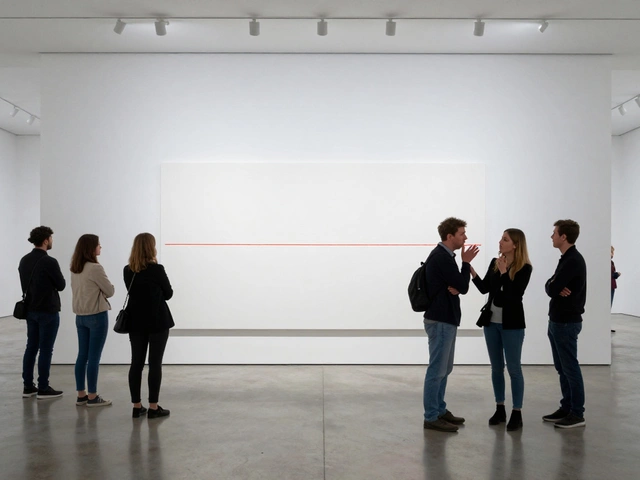
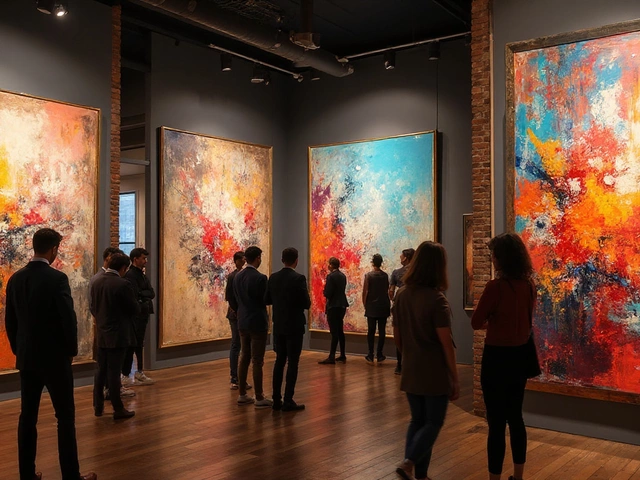
You’re standing in a gallery. You see a canvas that’s just blue. Or maybe it’s a messy splash of red and black. Your brain does a quick calculation: "My kid could do that." And honestly? Sometimes, you might be right about the technical skill required to make the mark. But here is the twist that trips up most people: Abstract Art isn’t really about the ability to draw a perfect circle or paint a realistic nose. It’s about something else entirely. The question "Does abstract art require talent?" assumes we know what talent means in this context. We don’t. If you define talent as photorealistic rendering, then no, abstract art doesn’t need it. If you define talent as visual communication, emotional resonance, and historical awareness, then yes, it demands a specific, hard-won kind of genius.
Redefining What "Talent" Actually Means
When people ask if abstract art requires talent, they are usually comparing it to academic realism. Think of a portrait by Leonardo da Vinci versus a Rothko color field painting. In the former, talent looks like mastery over anatomy, perspective, and light. In the latter, talent looks like... what? Choice? Restraint? This is where the confusion starts. We tend to equate effort with value. We think if it took ten years to learn how to shade an eye, that artist has more talent than someone who slapped paint on a canvas in ten minutes.
But let’s look at the actual skills involved. Creating effective abstract work often requires a deep understanding of color theory. You can’t just throw random colors together and hope for magic. Most successful abstract artists have studied how complementary colors vibrate against each other, or how warm tones advance while cool tones recede. That’s not magic; that’s knowledge applied through intuition. It’s a different muscle group than drawing hands, but it’s still a muscle.
Consider the concept of composition. In representational art, the subject dictates the layout. In abstract art, the artist must create balance from scratch. Where does the eye go? Is there tension between the left and right sides? Does the negative space feel intentional or empty? These decisions happen in milliseconds, guided by years of practice. That rapid decision-making under pressure is a form of talent, even if it doesn’t look like traditional craftsmanship.
The Historical Context: Why It Looks "Easy"
To understand why people doubt the talent behind abstract art, you have to look at its origins. Before the early 20th century, art had a job description: mimic reality. Cameras changed everything. Once photography could capture a face perfectly, painters didn’t need to compete on accuracy anymore. They were free to explore emotion, movement, and pure form.
Wassily Kandinsky, often credited with creating the first purely abstract works around 1910, believed that colors and shapes had their own spiritual language. He wasn’t trying to paint a tree; he was trying to paint the feeling of a tree. His background was actually quite academic-he studied law and economics before turning to art full-time. His "talent" was his ability to translate complex philosophical ideas into visual rhythms.
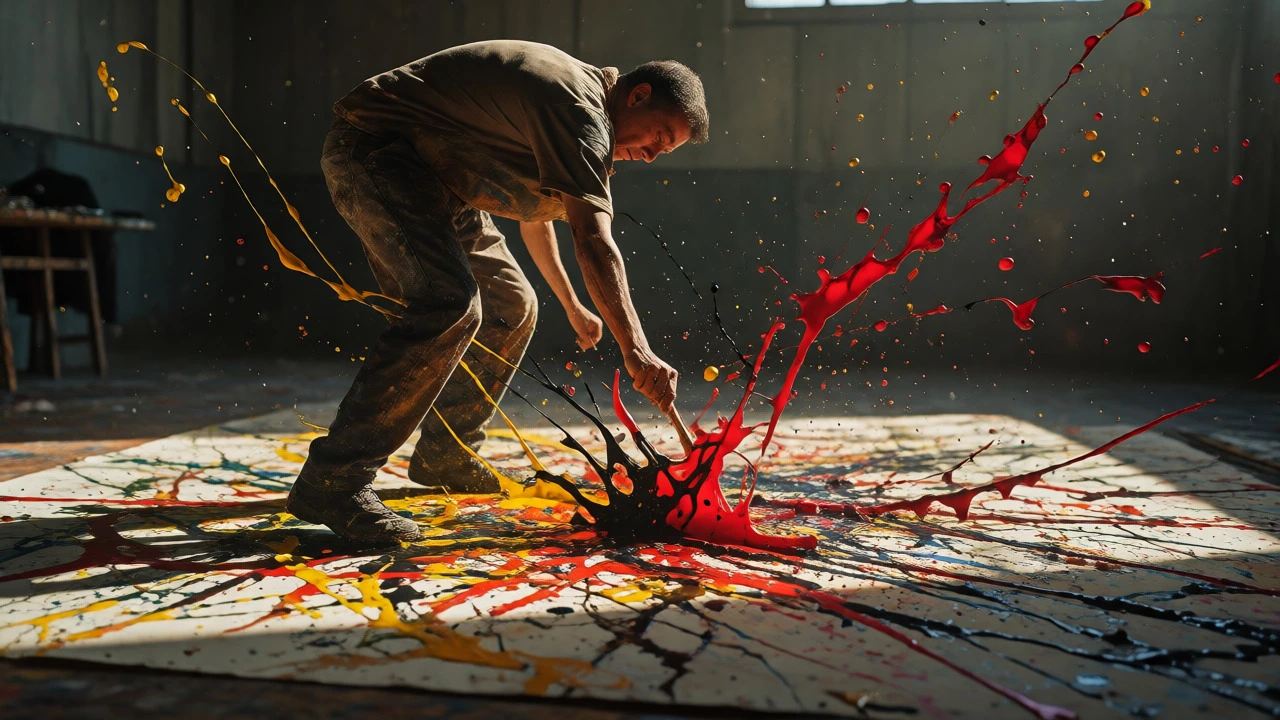
Then came Jackson Pollock and the Abstract Expressionists in the 1940s and 50s. Critics mocked them for splashing paint on floors. But Pollock developed a technique called "drip painting," which required precise control over viscosity, speed, and gravity. He walked around the canvas, moving his body like a dancer. If he lost focus, the painting became mud. Maintaining that flow state for hours, making thousands of micro-decisions without a plan, is a staggering feat of concentration and motor skill. Calling it "lazy" misses the physical and mental discipline required.
Technical Skills Hidden in Plain Sight
One of the biggest misconceptions is that abstract artists don’t study fundamentals. Many of the masters did extensive training in classical techniques before breaking the rules. Pablo Picasso, for instance, could paint hyper-realistically by age thirteen. He once said, "It took me four years to paint like Raphael, but a lifetime to paint like a child." He mastered the rules so thoroughly that he could break them meaningfully.
Here is a breakdown of the hidden technical requirements in abstract art:
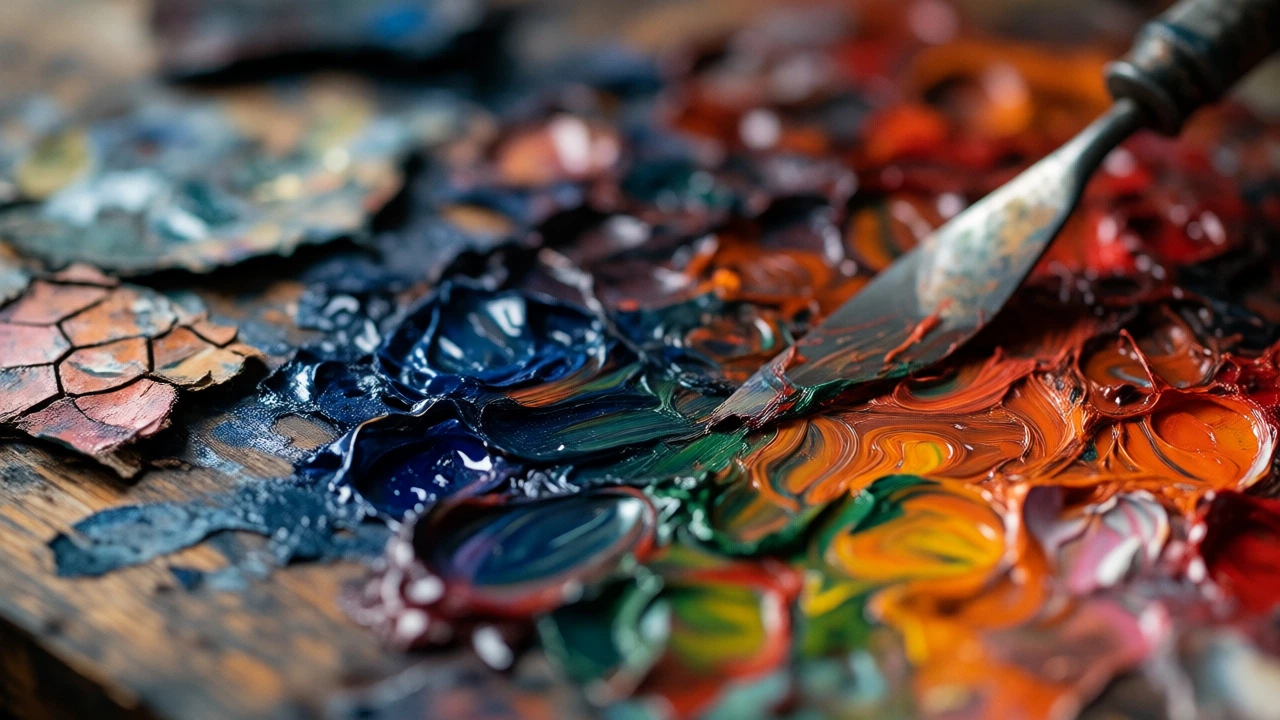
- Color Mixing: Abstract artists often mix pigments directly on the canvas to achieve subtle gradients that tube paints can’t provide. This requires an intimate knowledge of chemical interactions between mediums.
- Material Mastery: Working with acrylics, oils, resins, or mixed media means understanding drying times, adhesion, and texture. A mistake in material choice can ruin months of work.
- Scale Management: Abstract art is often large-scale. Controlling a brush stroke across a six-foot canvas requires different physical coordination than working on a small sketchbook.
- Editing Ability: Knowing when to stop is harder than knowing when to start. Many abstract paintings are destroyed because the artist couldn’t resist adding one more layer. The talent lies in restraint.
If you’ve ever tried to paint abstractly yourself, you know the frustration. You start with confidence, add some blue, then some yellow, and suddenly it looks like a muddy mess. Figuring out why it failed-and how to fix it-is the core skill set. It’s problem-solving in real-time.
The Role of Intent and Concept
In representational art, the "what" is obvious. It’s a horse. It’s a bowl of fruit. In abstract art, the "why" is the entire point. This shifts the burden of talent from execution to conception. The artist must have a clear internal vision or emotional intent that guides every mark. Without that anchor, the work feels arbitrary.
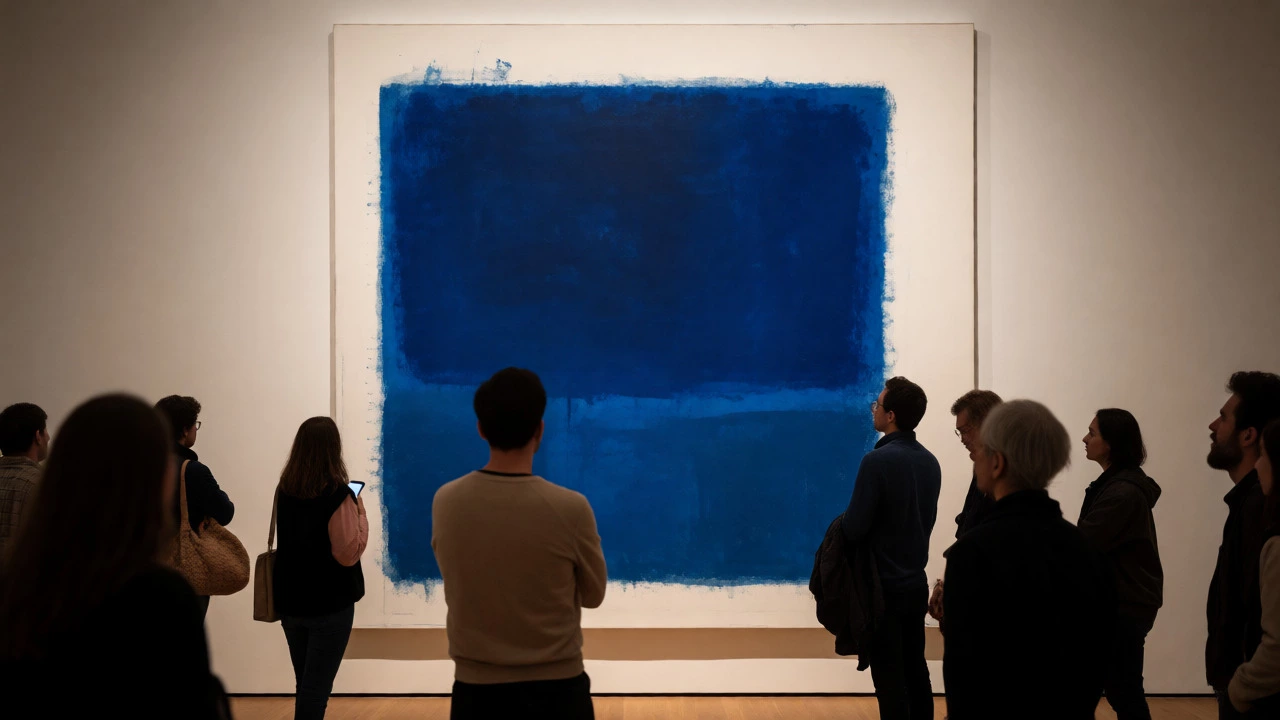
Take Mark Rothko. His famous color-field paintings-stacked rectangles of soft-edged color-are deceptively simple. But Rothko spent decades refining these forms. He wanted viewers to stand close to the canvas and feel enveloped by the color. He adjusted the hue of his reds by fractions until they evoked a sense of tragedy or ecstasy. That sensitivity to nuance is a rare talent. It’s akin to a musician hearing a slightly off-key note in a symphony.
This conceptual depth requires cultural literacy too. Abstract artists engage in a dialogue with art history. They reference previous movements, react against trends, or push new boundaries. An artist who ignores this context risks creating work that feels derivative or disconnected. Understanding the lineage of abstraction-from Malevich’s Black Square to contemporary digital abstractions-adds layers of meaning that enrich the viewer’s experience.
Comparing Skill Sets: Realism vs. Abstraction
It helps to visualize the differences in required competencies. While both paths demand dedication, they exercise different cognitive and physical abilities. Let’s look at a direct comparison.
| Skill Category | Representational Art (e.g., Portraits) | Abstract Art (e.g., Color Field) |
|---|---|---|
| Primary Focus | Accuracy of form and likeness | Emotional impact and visual harmony |
| Key Technical Skill | Perspective, anatomy, shading | Color theory, composition, texture |
| Decision Process | Observation-driven (copying reality) | Intuition-driven (creating reality) |
| Common Pitfall | Stiffness or lack of life | Chaos or lack of intention |
| Time Investment | High precision per detail | High iteration and editing |
Notice that neither column says "low skill." They just describe different types of labor. One is meticulous and analytical; the other is intuitive and experimental. Dismissing abstract art because it lacks the former is like dismissing jazz because it doesn’t follow sheet music exactly.
Why Viewers Struggle to See the Talent
So why do we keep asking this question? Part of it is psychological. Humans are pattern-recognition machines. When we see a realistic image, our brains instantly decode it. "That’s a dog." We feel smart because we understood the message. With abstract art, the decoding process fails. Our brains search for a referent-a thing the painting represents-and find nothing. This creates discomfort.
We interpret this discomfort as a lack of skill on the artist’s part. It’s easier to say, "They couldn’t draw," than to admit, "I don’t know how to read this visual language." This is similar to listening to avant-garde classical music. If you expect a melody, dissonance sounds like noise. If you understand the structure, it sounds like tension and release. The talent is in the composer’s ability to manipulate your expectations.
Moreover, the market plays a role. Because abstract art can look simple, it’s easy to produce low-quality knockoffs. For every masterpiece hanging in a museum, there are hundreds of bad abstract pieces sold in tourist shops. This dilutes the perception of quality. People judge the genre by its worst examples, assuming all abstract work is lazy. But judging abstract art by its bad examples is like judging literature by bad tweets.
Can Anyone Learn to Make Good Abstract Art?
Yes, but with caveats. You can teach someone color theory. You can teach them how to hold a brush. You can teach them art history. These are learnable skills. However, the ability to synthesize these elements into something that feels alive and original-that’s where innate disposition comes in.
Some people naturally think in shapes and colors rather than words. They perceive relationships between hues instinctively. Others struggle to move beyond literal representation. Neither is better; they are just different modes of thinking. But to succeed in abstract art, you need a willingness to fail publicly. You will make hundreds of ugly paintings before you find your voice. The talent isn’t necessarily in the first mark; it’s in the resilience to keep going and the critical eye to edit ruthlessly.
Think of it like cooking. Anyone can follow a recipe (representational art). But becoming a chef who invents new flavor combinations (abstract art) requires palate development, risk-taking, and an understanding of ingredients at a molecular level. You can train your palate, but you also need a certain curiosity and creativity that drives you to experiment.
Final Thoughts: Talent as Visual Literacy
So, does abstract art require talent? Absolutely. But it’s not the talent you think it is. It’s not about copying the world; it’s about interpreting it. It’s about mastering the tools of color, form, and space to communicate feelings that words can’t touch. It requires a high level of self-awareness, historical knowledge, and technical experimentation.
The next time you stand in front of a seemingly simple abstract painting, try this: Don’t look for a picture. Look for a conversation. Ask yourself: How does this color make me feel? Where is my eye drawn? Is there tension or calm? If you can answer those questions, you’re engaging with the artist’s intent. And you’ll realize that making those choices deliberately is anything but easy.
Frequently Asked Questions
Is abstract art easier to create than realistic art?
Not necessarily. While abstract art may not require the same rigorous training in anatomy and perspective, it demands a sophisticated understanding of color theory, composition, and material properties. The difficulty lies in creating meaningful visual balance without the crutch of recognizable subjects, which many beginners find surprisingly challenging.
Do abstract artists need to know how to draw realistically?
Many prominent abstract artists, such as Picasso and Matisse, had strong foundations in realistic drawing. While not strictly mandatory, learning to draw helps artists understand form and structure. This knowledge allows them to break the rules intentionally rather than accidentally, leading to more compelling abstract compositions.
Why do some people think abstract art is a scam?
This perception often stems from a lack of familiarity with the visual language of abstraction. Viewers accustomed to narrative or representational art may struggle to find immediate meaning in abstract works. Additionally, the art market’s high prices for seemingly simple pieces can lead to skepticism about the effort and skill involved.
Can anyone become an abstract artist?
With practice and education, anyone can develop the technical skills needed for abstract art. However, developing a unique voice and consistent quality requires dedication, critical self-reflection, and a willingness to experiment. Natural inclination toward visual thinking can help, but perseverance and study are equally important factors.
What skills are most important for abstract art?
Key skills include color mixing and theory, compositional balance, texture manipulation, and the ability to edit and refine work. Emotional intelligence and the capacity to translate feelings into visual forms are also crucial. Unlike realistic art, where observation is key, abstract art relies heavily on intuition and internal guidance.