Art Classifier: Modern or Contemporary?
How to use: Look at the characteristics of the artwork described below. Do you think it belongs to the Modern Art era (1860s-1970s) or the Contemporary Art era (1970s-Present)? Click a card to classify it!
Modern Art
Focuses on experimentation with style, abstraction, and breaking traditional painting rules.
Contemporary Art
Focuses on concepts, social dialogue, and a diverse mix of present-day mediums.
Artwork Analysis
Loading...
Click an option above to see if you are correct!
Key Takeaways
- Contemporary art is defined by time (the present) and concept (the idea).
- It differs from modern art, which refers to a specific era (roughly 1860s-1970s).
- The value often lies in the dialogue the work creates, not just the aesthetic.
- It embraces every possible medium, from digital screens to recycled trash.
Breaking the Mix-up: Modern Art vs. Contemporary Art
People use these terms interchangeably, but in the art world, that's a huge mistake. Think of it as the difference between a "classic car" and a "car made today." Modern Art refers to a specific period. It started in the mid-19th century with artists like Claude Monet and ended around the 1970s. Modernism was about breaking the rules of the past-switching from realistic portraits to abstract shapes and bold colors. It was a revolution in *how* we paint. Contemporary art, however, is about the *now*. It picks up where modernism left off but tosses the rulebook entirely. While a modern artist might experiment with how to paint a cube, a contemporary artist might decide that the *idea* of a cube is more important than actually painting one. If you're looking at something made in 2026, it's contemporary. If it was made in 1920, it's modern.| Feature | Modern Art | Contemporary Art |
|---|---|---|
| Timeframe | ~1860s to 1970s | ~1970s to Present |
| Core Goal | Experimentation & Style | Concept & Social Dialogue |
| Mediums | Paint, Sculpture, Collage | Digital, Performance, Found Objects, AI |
| Typical Vibe | Self-expressive, Formalist | Provocative, Political, Diverse |
The Power of the Idea: Conceptual Art
If you've ever felt cheated by a piece of art that looks like it took five minutes to make, you're likely dealing with Conceptual Art. In this realm, the "concept" is the most important part of the work. The physical object-the painting, the sculpture, the video-is just a vehicle for the idea. Take, for example, the work of Marcel Duchamp. Long before the term "contemporary" was common, he put a urinal in a gallery and called it *Fountain*. He wasn't saying, "Look at how well I sculpted this porcelain." He was asking, "What makes something art? Is it the object, or is it the artist's choice to call it art?" This shift changed everything. It meant that artists no longer had to be master painters or sculptors to be influential. They just had to be thinkers. This is why you'll see things like a single banana taped to a wall at Art Basel. The value isn't in the fruit; it's in the conversation about commerce, absurdity, and the art market that happens around it.Beyond the Frame: New Mediums and Methods
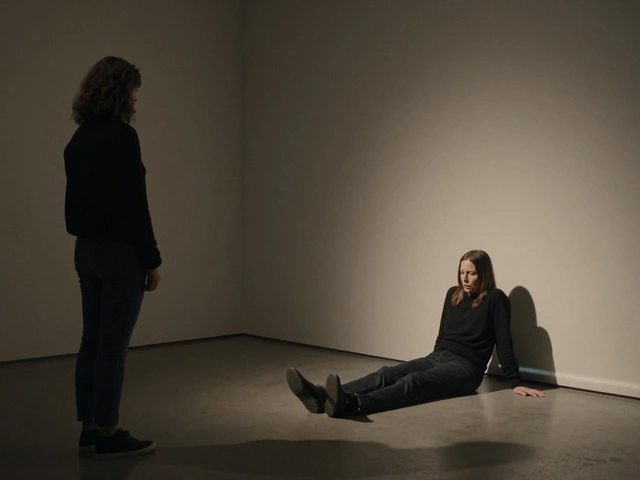
One of the biggest markers of contemporary art is that it refuses to stay inside a frame. We've moved far beyond oil on canvas. Today, the medium is whatever the artist needs to get their point across. First, there is Installation Art. This is art you walk into. Instead of looking at a picture of a forest, an artist might fill a room with real soil, hanging lights, and recorded sounds of birds. The goal is to create an immersive environment that affects your senses, not just your eyes. Then we have Performance Art. Here, the artist's own body becomes the medium. Whether it's a slow-motion walk across a city or a 700-hour endurance piece, the art happens in real-time. It's fleeting and cannot be bought or sold in a traditional way, which is a direct challenge to the commercial nature of galleries. And of course, there is the digital frontier. Digital Art and the use of Generative AI have blurred the lines even further. When an algorithm creates an image based on a prompt, who is the artist? The person who wrote the prompt, the programmers who built the model, or the AI itself? These questions are the heartbeat of contemporary art right now.Art as a Mirror: Social and Political Themes
Contemporary art rarely exists in a vacuum. It's almost always reacting to the world around it. While older art often focused on beauty or religious devotion, today's work is often a mirror held up to society. Artists are using their platforms to tackle heavy hitters: climate change, systemic racism, gender identity, and the loneliness of the internet age. For instance, an artist might create a massive sculpture out of ocean plastic to force the viewer to confront the scale of pollution. The work isn't trying to be "pretty"; it's trying to be honest. This is why some people find contemporary art frustrating. It doesn't always want to provide an escape. Sometimes, it wants to make you uncomfortable. It wants you to question your assumptions about power, history, and how we treat one another. If a piece of art makes you angry or confused, it's often doing exactly what the artist intended.How to Actually "Get" Contemporary Art
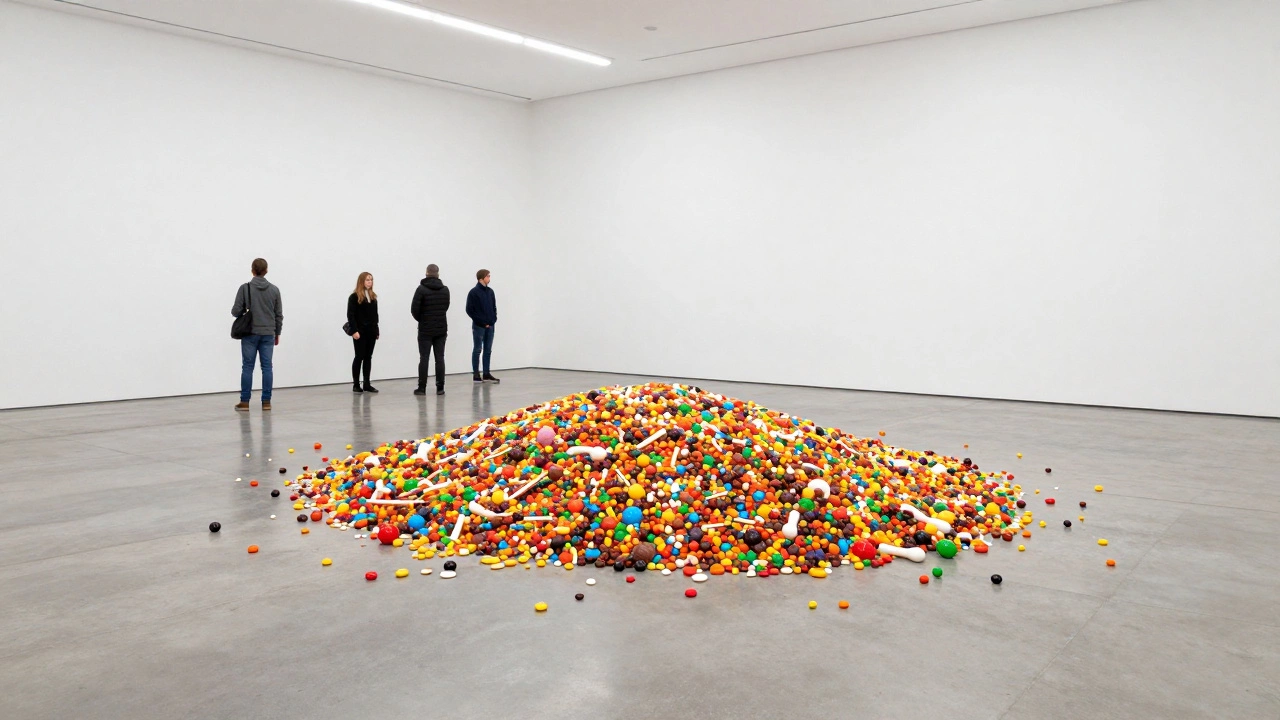
So, how do you navigate a contemporary gallery without feeling lost? The secret is to stop asking, "What is this a picture of?" and start asking, "What is this trying to say?" When you stand in front of a piece that looks like a random heap of clothes, try this mental checklist:- Observe the material: Why use old clothes instead of paint? What do clothes represent? (Memory, identity, loss).
- Consider the space: Is it in a sterile white cube gallery or a gritty street corner? How does the location change the meaning?
- Read the wall text: In conceptual art, the title and the artist's statement are often part of the work. They provide the map you need to understand the destination.
- Check your reaction: Do you feel bored? Annoyed? Curious? That reaction is the actual "art" happening inside you.
The Future: Where Is Art Heading?
As we move deeper into the 2020s, the definition of contemporary art will continue to shift. We are seeing a move toward "phygital" art-works that exist simultaneously in a physical gallery and a virtual space. We're also seeing a return to traditional crafts, like ceramics and weaving, but used to tell very modern, political stories. What remains constant is the spirit of questioning. As long as humans keep inventing new technologies and facing new social crises, artists will find new ways to represent those experiences. The "definition" of contemporary art is essentially a moving target, and that's exactly why it's so exciting.Why is some contemporary art so expensive if it looks simple?
The price of contemporary art is rarely about the cost of materials or the hours spent painting. Instead, it's about provenance, the artist's reputation, and the historical importance of the idea. When you buy a piece of conceptual art, you're essentially buying a "piece of history" or a validated intellectual breakthrough, much like how a rare stamp is valuable not because the paper is expensive, but because of its rarity and significance.
Does an artist need to be skilled to make contemporary art?
It depends on the work. Some contemporary artists are incredibly skilled technicians-think of hyper-realistic sculptors. However, in Conceptual Art, the "skill" is shifted from the hand to the mind. The ability to formulate a powerful idea and execute it in a way that communicates a message is considered a professional skill in itself.
Can I call my own work contemporary art?
Technically, yes. If you are creating art today, it is contemporary by definition of the timeframe. However, in a professional sense, "Contemporary Art" often refers to work that engages with current cultural dialogues and is recognized by the institutional art world (galleries, museums, and critics).
What is the difference between abstract art and contemporary art?
Abstract art is a style-art that doesn't attempt to represent external reality. Contemporary art is a time period. You can have contemporary art that is abstract, but you can also have contemporary art that is incredibly realistic. Abstract art started long ago (modernism), while contemporary art is happening right now.
Is AI-generated art considered contemporary art?
Yes, it is one of the most debated topics in the current art scene. Because it is produced now and reflects our current relationship with technology, it fits the definition. The debate isn't about whether it's "contemporary," but rather whether the AI or the human operator is the actual artist.
Next Steps for Art Lovers
If you're feeling inspired to explore more, start by visiting a local gallery-not to find something you like, but to find something that confuses you. Try to research the artist's intent behind that specific piece. You might also look into "curated lists" of current biennials, like the Venice Biennale, to see what the global art community is currently obsessing over. Whether you end up loving it or hating it, engaging with the work is the only way to truly understand it.