Ever stood in front of a big splash of color on a canvas and felt totally lost? You’re not alone. Abstract art doesn’t show trees, people, or buildings. It doesn’t try to copy the world. That’s why so many people walk away thinking, “My five-year-old could paint that.” But here’s the truth: abstract art isn’t about what you see-it’s about what you feel, remember, or imagine. And learning how to look at it isn’t about knowing art history. It’s about giving yourself permission to respond, honestly and without judgment.
Stop Trying to Find the Object
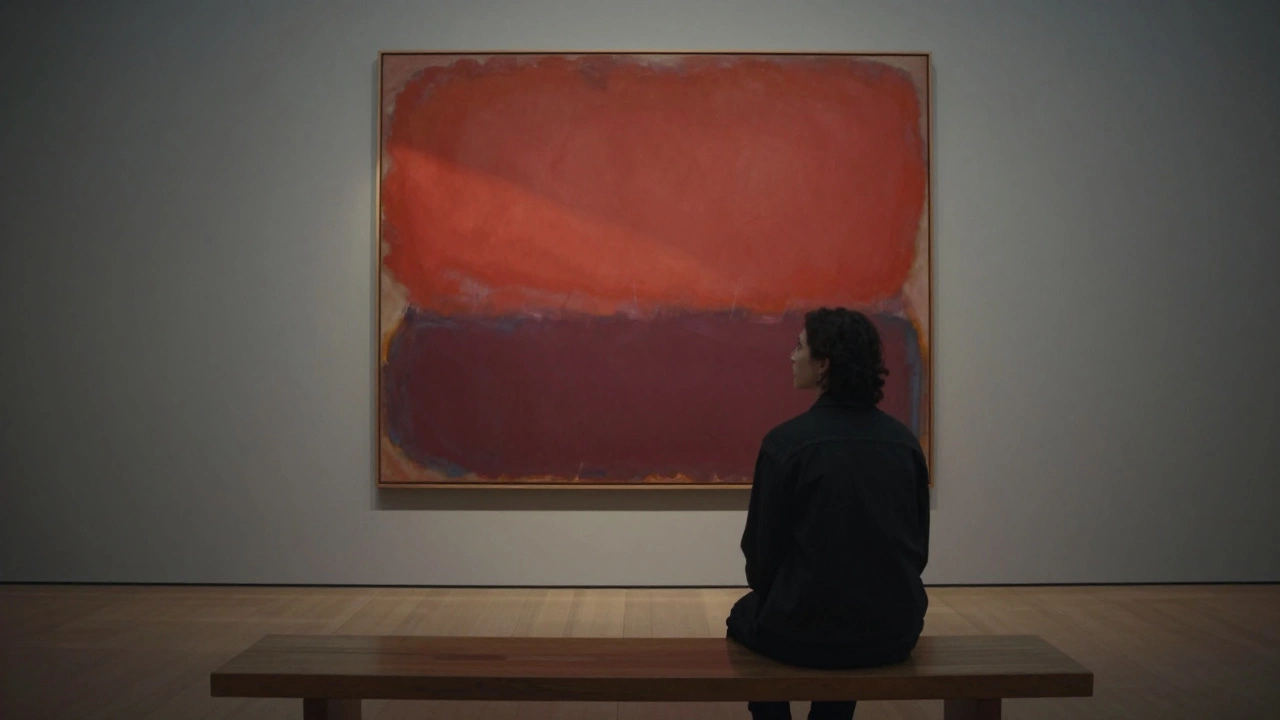
The biggest mistake people make is searching for something familiar. Is that a face? A tree? A storm? Abstract art doesn’t hide hidden meanings like a puzzle. It’s not a riddle you solve. When you look at a Mark Rothko painting-just layers of soft, glowing color-you’re not supposed to say, “Oh, that’s a sunset.” You’re supposed to feel the weight of silence, the ache of loneliness, or the warmth of peace. Let go of the need to name it. The meaning isn’t in the subject-it’s in the reaction.Notice the Brushwork and Texture
Look closely. How did the artist put paint on the canvas? Was it thick and heavy, like frosting? Or thin and streaky, like ink on wet paper? Jackson Pollock’s drips aren’t random. They’re controlled chaos. Each drip, splash, and smear carries energy. You can feel the movement in his arms, the rhythm of his breath. Even if you don’t know the title, you can sense the urgency, the frustration, the joy. Texture tells you how the artist moved. And that movement is part of the message.Let Color Speak
Color in abstract art isn’t decorative. It’s emotional. A deep red might feel like anger. A pale blue might feel like cold air in an empty room. Wassily Kandinsky believed color could vibrate like music. He painted sounds. When you look at a piece, ask yourself: What does this color feel like on my skin? Don’t think about what it means. Think about what it does to you. Maybe it makes your chest tighten. Maybe it makes you want to sigh. That’s the art working.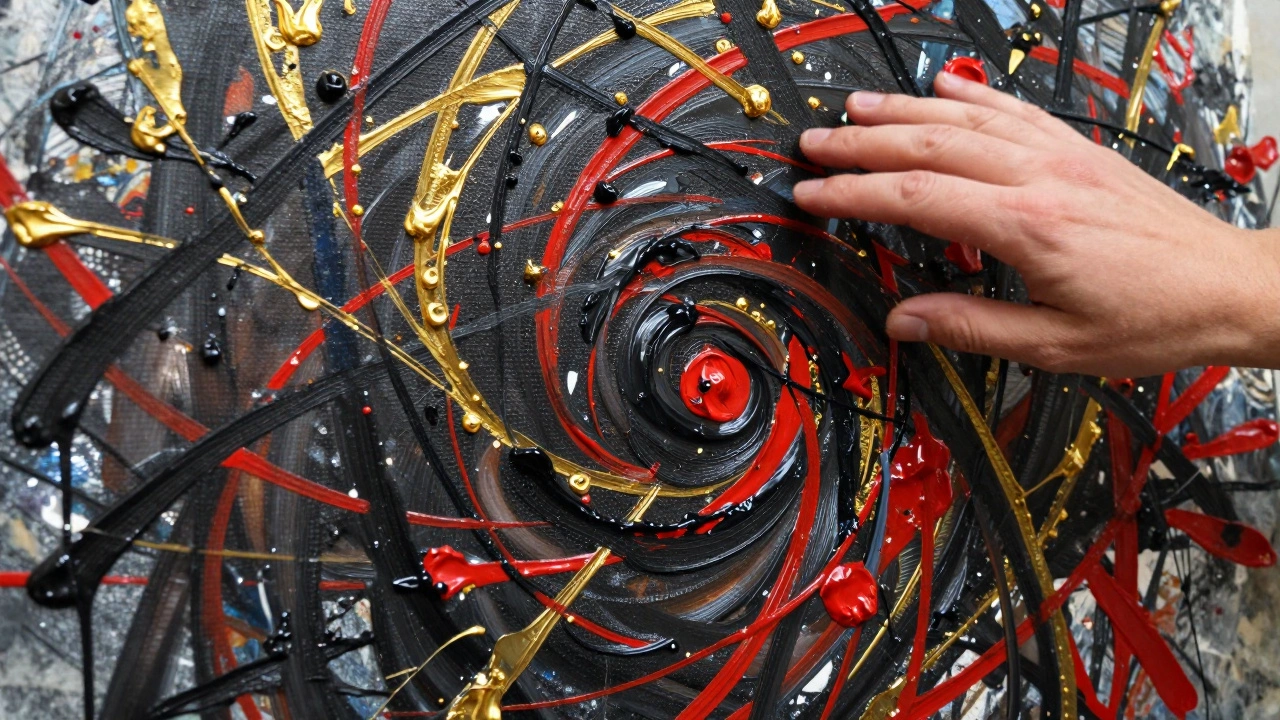
Give It Time
You wouldn’t listen to a symphony for five seconds and say, “I get it.” Why do that with a painting? Spend at least three minutes with one piece. Sit down. Breathe. Don’t rush. Let your eyes wander. Notice how one shape pulls your gaze to another. How a dark line cuts through a bright field. How the edges blur or sharpen. Abstract art changes as you look longer. What felt chaotic at first might start to feel calm. What felt empty might start to feel full. Time lets the painting breathe-and so do you.Connect It to Your Own Experience
You don’t need to know the artist’s intent. You don’t need to read the wall label. What matters is what the artwork brings up for you. Does it remind you of a childhood memory? A dream? A moment of grief? A burst of laughter? That’s valid. Abstract art is a mirror. It doesn’t tell you what to think-it invites you to bring your own story. A swirl of gray and white might remind you of fog over the ocean near Vancouver. A jagged red line might echo the way your heart raced during your first job interview. Your feelings aren’t wrong. They’re the point.It’s Okay to Not Like It
Not every abstract painting will speak to you. And that’s fine. You don’t have to love everything. Some pieces feel cold. Others feel noisy. Some feel meaningless. That’s okay. Art isn’t about liking everything. It’s about noticing what moves you-and what doesn’t. If a painting makes you roll your eyes? That’s still a response. You’re engaging. That’s more than most people do.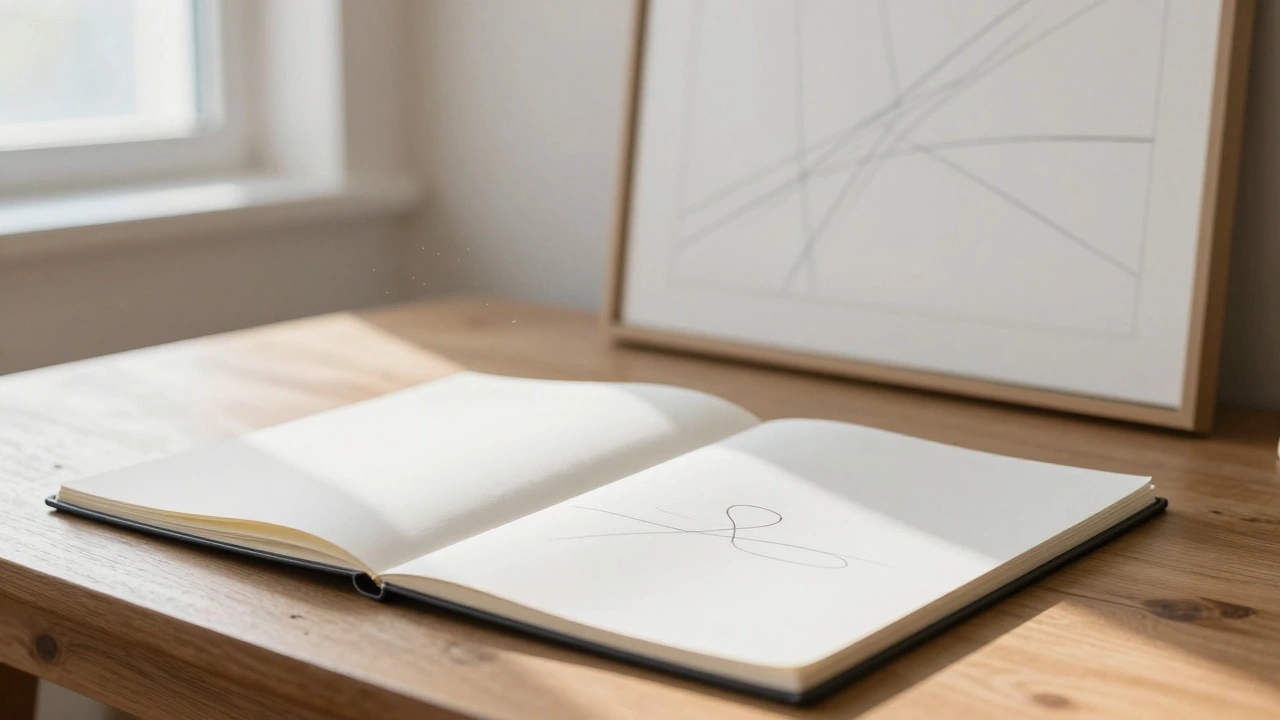
Compare Different Artists
Try looking at two abstract artists side by side. Compare a calm, quiet piece by Agnes Martin-thin pencil lines on white-with a wild, explosive one by Franz Kline-bold black strokes on white. One feels meditative. The other feels like a shout. Why? What’s different in how they use space? Line? Balance? You don’t need to know their names. Just feel the difference. That’s how you start to understand the language of abstraction.Visit a Museum-Without the Audio Guide
Go to a gallery. Pick one painting. Sit in front of it. No phone. No headphones. Just you and the art. Watch how light changes across the surface during the afternoon. Notice how people walk past without stopping. Notice how you feel when no one else is looking at it with you. Abstract art isn’t meant to be consumed in crowds. It’s meant to be felt in quiet.Try Drawing Your Own
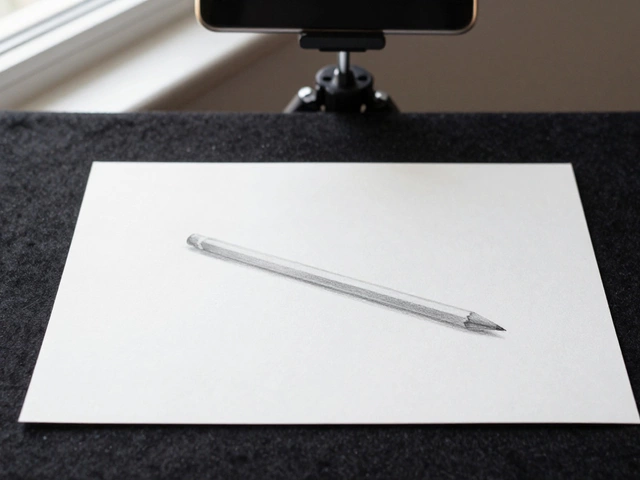
You don’t need to be an artist. Grab a sketchpad. Close your eyes. Put your pencil on the paper. Let your hand move without thinking. Don’t try to make a shape. Just let the line go where it wants. When you open your eyes, look at what you made. Is it calm? Chaotic? Tense? Calm again? That’s abstract art in its purest form: movement turned into mark. You don’t need to understand it. You just need to have made it.Abstract art doesn’t need to be explained. It needs to be experienced. You don’t need a degree. You don’t need to know the rules. You just need to show up-with your eyes, your breath, and your feelings. The canvas isn’t waiting for you to solve it. It’s waiting for you to feel it.
Do I need to know art history to understand abstract art?
No. While knowing about movements like Abstract Expressionism or De Stijl can add context, it’s not required. Abstract art speaks directly to emotion and sensation. You can connect with a Rothko painting without knowing he was influenced by mythology or Jungian psychology. What matters is how the colors, shapes, and textures make you feel right now.
Why do some abstract paintings cost millions?
High prices often reflect the artist’s influence, rarity, and historical importance-not technical skill. A Pollock drip painting isn’t expensive because it’s hard to make. It’s expensive because it changed how the world sees art. It’s a cultural landmark. Think of it like a rare song recording or a groundbreaking speech. The value isn’t in the materials-it’s in the impact.
Is abstract art just random splatters?
Some pieces look random, but most aren’t. Artists like Hilma af Klint or Ellsworth Kelly spent years developing systems-color grids, geometric rules, rhythmic patterns. Even Pollock, who dripped paint, worked with precise control over paint consistency, arm motion, and canvas placement. What looks like chaos is often deeply intentional. The randomness is a tool, not an accident.
Can abstract art be bad?
Yes. Just like music or writing, abstract art can feel lazy, overused, or empty. Some paintings rely on shock value or mimic well-known styles without adding anything new. The difference between great abstract art and weak abstract art is depth. Great work holds your attention. It changes when you look longer. Weak work feels flat, even after minutes. Trust your gut-if it doesn’t move you after time, it might not be strong.
What if I feel nothing when I look at abstract art?
That’s okay too. Not every piece works for every person. Sometimes you’re not in the right headspace. Try again later. Or try a different artist. Maybe you connect more with the quiet geometry of Agnes Martin than the wild energy of Jackson Pollock. Art isn’t a test. It’s a conversation. If you’re not hearing anything yet, keep listening. You might hear something next time.