Mona Lisa Knowledge & Value Estimator
Question 1 of 3
Loading question...
Quiz Complete!
You scored: 0/3
Since you can't buy the original ($1B+), estimate the cost of a museum-grade print.
You have enough money to buy a small country. You love Renaissance art more than your own family heirlooms. So, why can't you just walk into the Louvre, point at Mona Lisa is a 16th-century portrait painted by Leonardo da Vinci that has been part of the French national collection since 1797, and write a check for a billion dollars? The short answer is no. The longer answer involves centuries of law, national pride, and a very specific legal framework that makes the painting effectively unsellable.
But here is the twist: while you cannot own the original canvas, you can own a piece of its legacy. With the right approach, you can bring the world's most famous face into your home through high-quality art prints are reproductions of original artworks created using various printing techniques such as giclée or lithography. Let's break down exactly why the Mona Lisa is off the market, what it would actually cost if it weren't, and how you can still flex your taste without breaking international treaties.
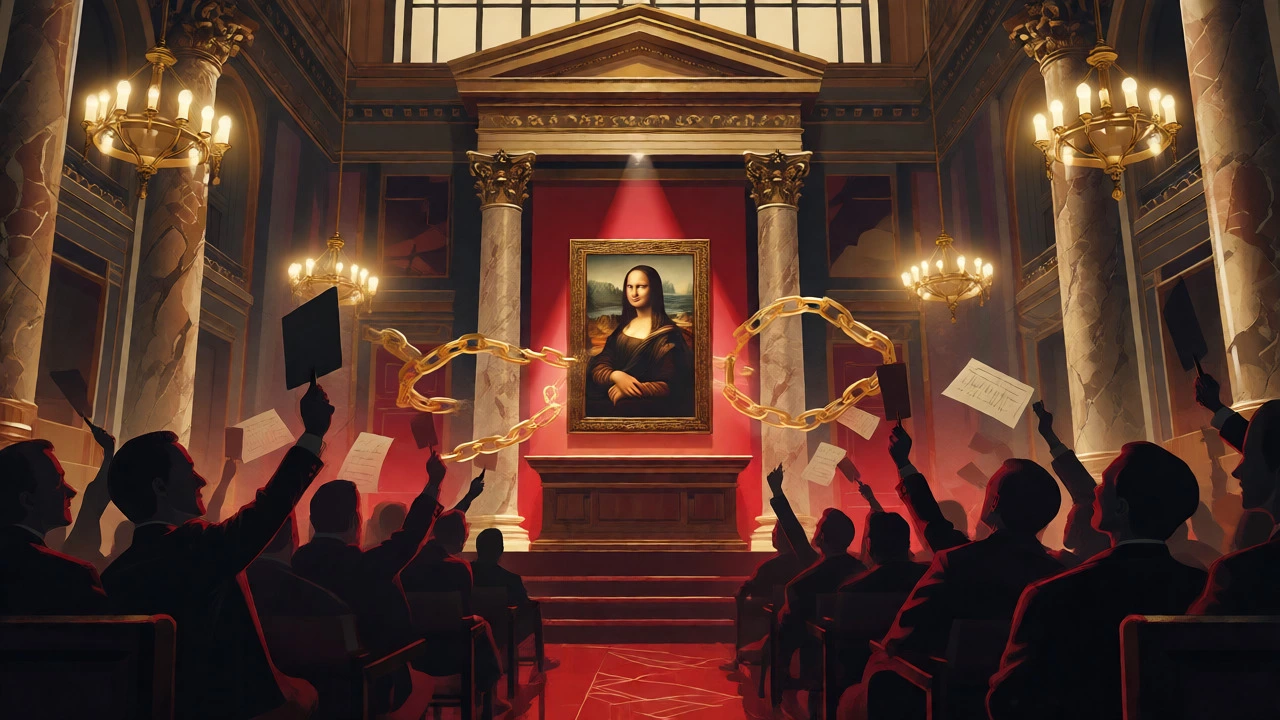
The Legal Wall: Why France Won't Sell
It isn't about price. It is about principle. The Mona Lisa doesn't belong to a bank, a corporation, or even the French government in the traditional sense of an asset they can liquidate. It belongs to the French people. This status comes from the Inalienability Principle is a legal doctrine stating that public domain property cannot be sold, transferred, or encumbered once it enters the public collection.
Once an artwork enters the French national museums, it becomes part of the "public domain." In legal terms, this means it is removed from commercial circulation forever. You could offer Elon Musk’s entire net worth, and the French Minister of Culture would still say no. Selling it would require an act of Parliament, and given the Mona Lisa’s status as a cultural icon comparable to the Eiffel Tower, no politician wants to be the one who sold France’s soul.
This isn't unique to France. Many countries protect their crown jewels. But the Mona Lisa takes it a step further because of its history. Stolen in 1911, recovered two years later, and moved multiple times during World War II, it has survived too much to become a commodity. It is a historical artifact first, and a painting second.
If Money Didn't Matter: What Would It Cost?
Let’s play hypothetical. Suppose France passed a new law, the public voted yes, and the painting hit the auction block at Sotheby’s or Christie’s. What would you pay?
To understand the value, we look at recent records. The highest price ever paid for a painting was $450 million for Salvator Mundi is a painting attributed to Leonardo da Vinci, sold in 2017 for $450.3 million in 2017. That was a controversial sale, with some experts questioning the attribution. Even if we assume the Mona Lisa is worth ten times that-say, $4.5 billion-we are still underestimating its true cultural premium.
Insurance companies don't even insure the Mona Lisa for a fixed amount anymore. They treat it as a national treasure with infinite replacement value. If you wanted to buy it, you wouldn't just be paying for paint on poplar wood. You'd be paying for:
- Historical Significance: It is the benchmark for all portraiture.
- Brand Value: It is the most recognized image on Earth.
- Scarcity: There is only one.
Realistically, if it were sold today, the price tag would likely start at $1 billion and climb fast. But remember, this is purely theoretical. The transaction would also come with massive strings attached. You probably couldn't take it out of France. You might not even be allowed to hang it in a private room; it might have to remain in a public gallery.
The Reality of Private Collections
So, if you can't buy the Mona Lisa, what do billionaires actually buy? They buy things that are available. The Art Market is the global economic system where artworks are bought and sold, primarily through auctions and private dealers is huge, but it operates on availability, not just desire.
Billionaires often collect works by artists like Pablo Picasso is a Spanish painter and sculptor who co-founded Cubism and whose works frequently sell for over $100 million, Jean-Michel Basquiat is an American artist associated with Neo-expressionism, known for his energetic paintings and drawings, or Claude Monet is a French founder of Impressionist painting, celebrated for his water lilies and landscapes. These works change hands regularly because they aren't locked in state-owned museums.
Here is a quick comparison of why certain art stays put while other art moves:
| Feature | Mona Lisa (Louvre) | Private Collection Piece | Auction House Item |
|---|---|---|---|
| Ownership | French State (Public Domain) | Individual/Corporation | Open to Highest Bidder |
| Sale Ability | None (Inalienable) | Yes, via private deal | Yes, via auction |
| Location Control | Louvre Museum, Paris | Owner's choice (often storage) | Buyer's location |
| Accessibility | Public viewing | Restricted/Private | Temporary viewing before sale |
The key takeaway? If you want to own a masterpiece, you have to pick one that isn't already claimed by a nation-state. The Mona Lisa is essentially a public park with a roof. You can visit it, but you can't fence it off.
How to Own the Mona Lisa Experience
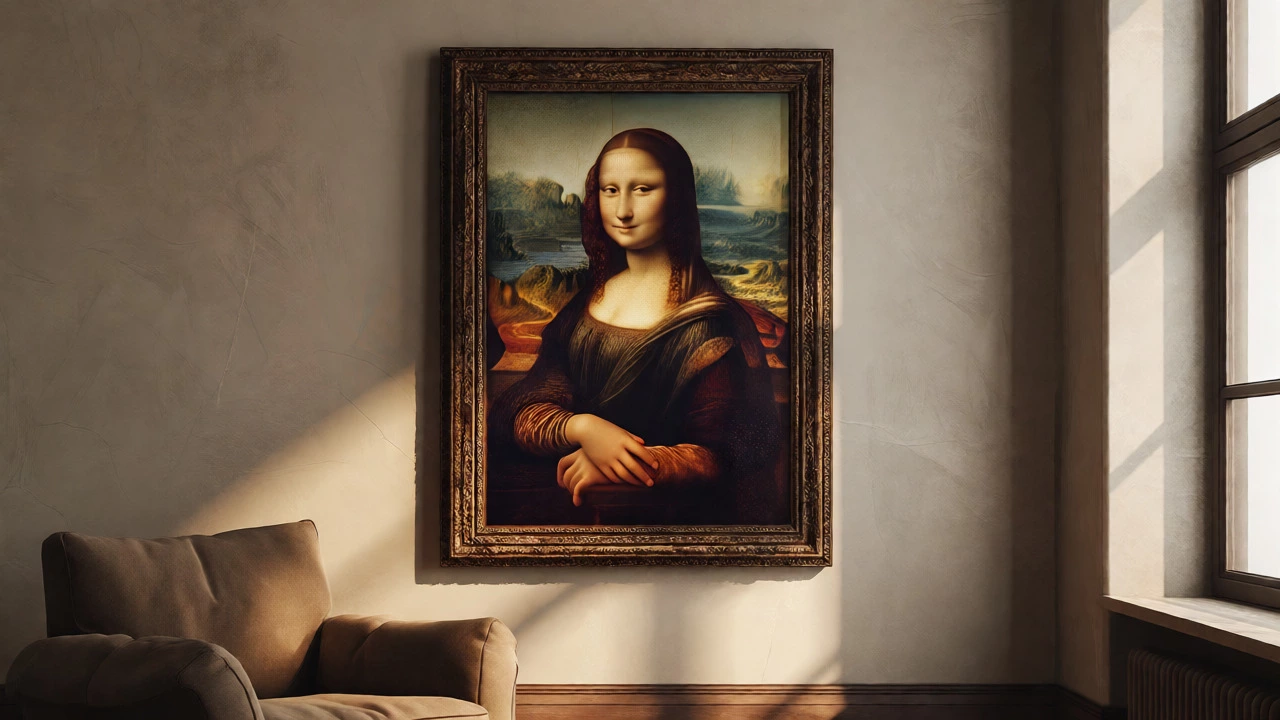
Since buying the original is impossible, let's talk about what you can actually do. You can own a piece of the conversation. High-end Art Reproductions are high-fidelity copies of original artworks, distinct from cheap posters, often used for interior design and education have come a long way. We aren't talking about the blurry, color-shifted posters you see in college dorms. We are talking about museum-grade reproductions.
When you look at a top-tier print, you are seeing the same brushstrokes, the same sfumato technique (that smoky blending Leonardo was famous for), and the same composition. Here is how to get it right:
- Choose the Right Medium: Avoid standard paper. Look for archival cotton rag paper or canvas. These materials mimic the texture of the original poplar wood panel better than glossy photo paper.
- Check the Resolution: A true high-res reproduction will show details invisible to the naked eye from across the room in the Louvre. The cracks in the varnish (craquelure) should be visible.
- Framing Matters: Don't use a modern minimalist frame. Use a dark, ornate wood frame. It anchors the piece in its historical context and makes the reproduction feel intentional, not lazy.
Why bother? Because art is about impact. When guests walk into your living room and see a crisp, large-format Mona Lisa, they react. It sparks conversation. It shows you appreciate classical mastery. And unlike the $1 billion hypothetical purchase, a great print costs between $50 and $500 depending on size and vendor.
The Ethical Side of Reproduction
Some purists argue that owning a copy is tacky. They say you're diluting the brand. But consider this: the Mona Lisa is so ubiquitous that it has become part of global visual language. From Salvador Dali mustaching her to Andy Warhol silkscreening her, she has been reinterpreted endlessly.
Owning a print isn't about trying to trick anyone into thinking you bought the original. It's about integrating iconic imagery into your daily life. In Vancouver, where I live, many local cafes and offices use art prints to create atmosphere without the overhead of loaning originals. It democratizes access. You don't need a plane ticket to Paris to experience Da Vinci's genius every morning with your coffee.
Plus, supporting reputable printmakers helps sustain the ecosystem around art history. Many organizations donate a portion of print sales to conservation efforts or educational programs. So, your $100 print might actually help preserve the real thing for the next generation.
What About Other "Unbuyable" Masterpieces?
The Mona Lisa isn't alone in being legally untouchable. Several other famous works share this fate:
- The Last Supper by Leonardo da Vinci: Located in Milan, Italy. Owned by the Italian state. Too fragile to move, let alone sell.
- The Sistine Chapel Ceiling by Michelangelo: Part of Vatican City. Owned by the Catholic Church. Not for sale.
- Girl with a Pearl Earring by Vermeer: Held in the Mauritshuis in The Hague. Owned by the Dutch foundation. Protected by similar laws.
If you are building a collection of "impossible" dreams, focus on acquiring prints of these icons. It allows you to curate a gallery of human achievement without needing to negotiate with governments.
Practical Tips for Buying Your First Art Print
If you decide to go the print route, here is a checklist to ensure you get quality:
- Source Verification: Buy from established galleries or specialized print shops (like Etsy sellers with high ratings for fine art, or sites like Artsy). Avoid random Amazon listings unless reviews confirm color accuracy.
- Color Calibration: Ask if the printer uses Pantone-matched colors. Cheap printers shift greens and blues, which ruins the subtle tones of Renaissance art.
- Size Appropriateness: Don't shrink it too much. The Mona Lisa is relatively small (77 cm × 53 cm). A print larger than 24x18 inches starts to lose detail if the source file isn't ultra-high-res. Stick to moderate sizes for clarity.
Remember, the goal is enjoyment. If the print makes you smile or think, it has done its job. You haven't failed because you didn't buy the original. You've succeeded because you brought art into your space.
Who currently owns the Mona Lisa?
The Mona Lisa is owned by the French Republic. It has been part of the French national collection since 1797 and is displayed at the Louvre Museum in Paris. It is considered part of the public domain and cannot be sold.
Has the Mona Lisa ever been stolen?
Yes, the Mona Lisa was stolen from the Louvre in 1911 by Vincenzo Peruggia, an Italian handyman. He hid it under his coat and walked out. It was recovered two years later in Florence, Italy.
Is it illegal to take photos of the Mona Lisa?
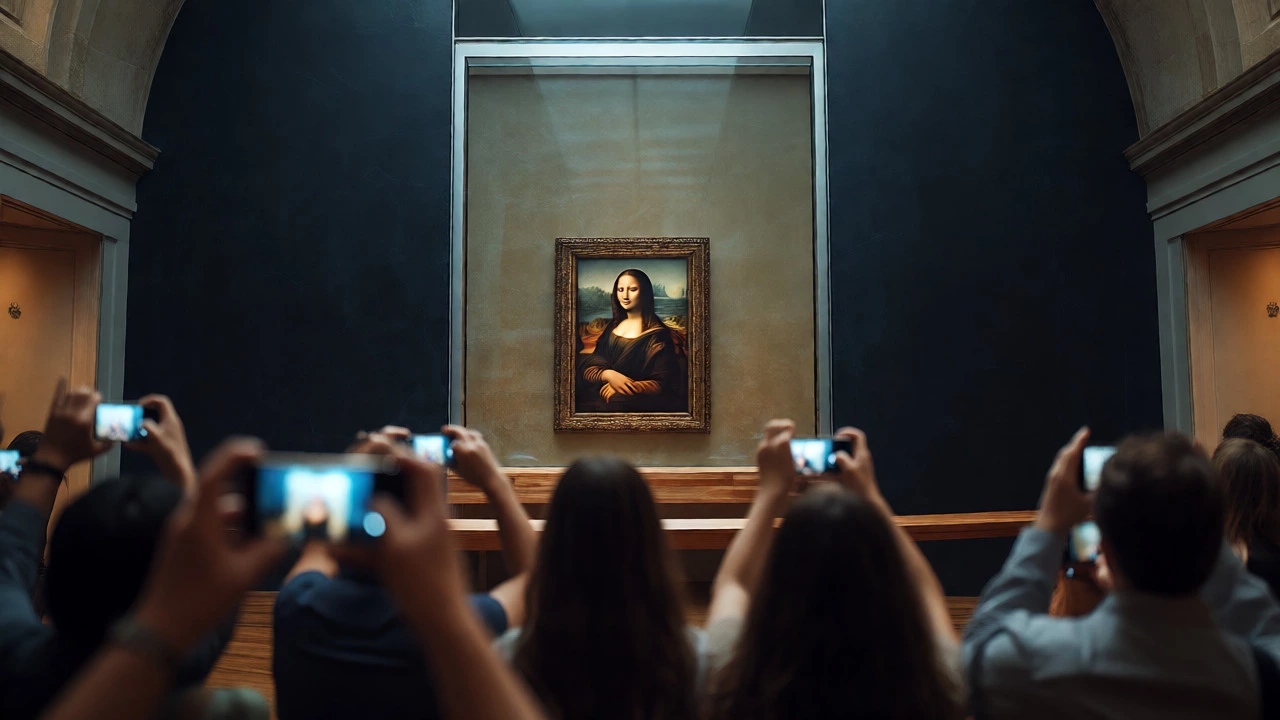
No, it is not illegal to take personal photographs of the Mona Lisa. However, flash photography is prohibited to protect the artwork, and tripods are generally not allowed due to crowd control. Commercial photography may require special permits.
Why is the Mona Lisa so famous?
Its fame stems from a combination of factors: Leonardo da Vinci's artistic innovation (particularly the sfumato technique), the mystery surrounding the subject's identity, its theft in 1911 which generated global media coverage, and its extensive marketing and reproduction in popular culture.
Can I buy a replica of the Mona Lisa?
Yes, you can buy replicas and high-quality art prints of the Mona Lisa. Since the original work is in the public domain (copyright expired), there are no copyright restrictions on reproducing the image. Quality varies significantly, so look for museum-grade reproductions.
Where is the Mona Lisa kept now?
The Mona Lisa is housed in the Salle des États at the Louvre Museum in Paris, France. It is protected behind bulletproof glass and maintained in a climate-controlled case to preserve the aging poplar wood panel.