Modern Art Perspective Guide
How to use: Select an artistic style to see how the "Three-Step Reading Method" from the article applies to that specific approach.
Analysis Guide
The moment the camera changed everything
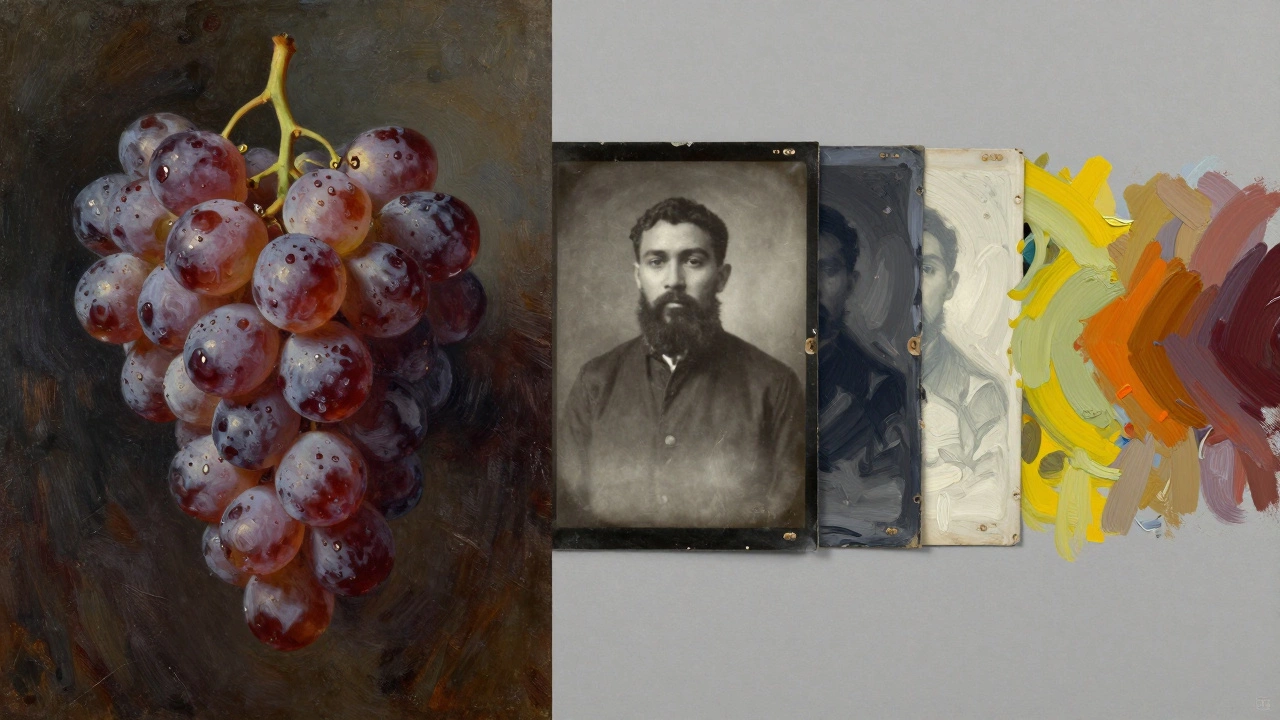
To understand why art stopped looking like a photograph, you have to realize that for a long time, the artist's primary job was documentation. Before the 1830s, if you wanted to remember what your grandmother looked like or record a historic battle, you hired a painter. But when Louis Daguerre and others popularized the first practical photographic processes, the "documentation" job was suddenly taken by a machine. Artists were left with a crisis: if a camera can capture reality perfectly in seconds, why spend six months painting a portrait that looks exactly like the real thing?
This sparked a massive pivot. Painters realized they didn't need to compete with the camera's accuracy. Instead, they started exploring things a camera couldn't see-inner emotions, subconscious dreams, and the raw energy of color. This is where the seeds of modern art were planted. They stopped painting the object and started painting the experience of the object.
Breaking the world into shapes
As artists moved away from realism, they started experimenting with how to simplify the world. Enter Impressionism, which was the first major crack in the wall of tradition. Instead of blending colors smoothly, artists like Claude Monet used short, thick brushstrokes to capture the fleeting quality of light. They weren't interested in the exact anatomy of a lily pond; they wanted to capture how the light hit the water at 4:00 PM on a Tuesday.
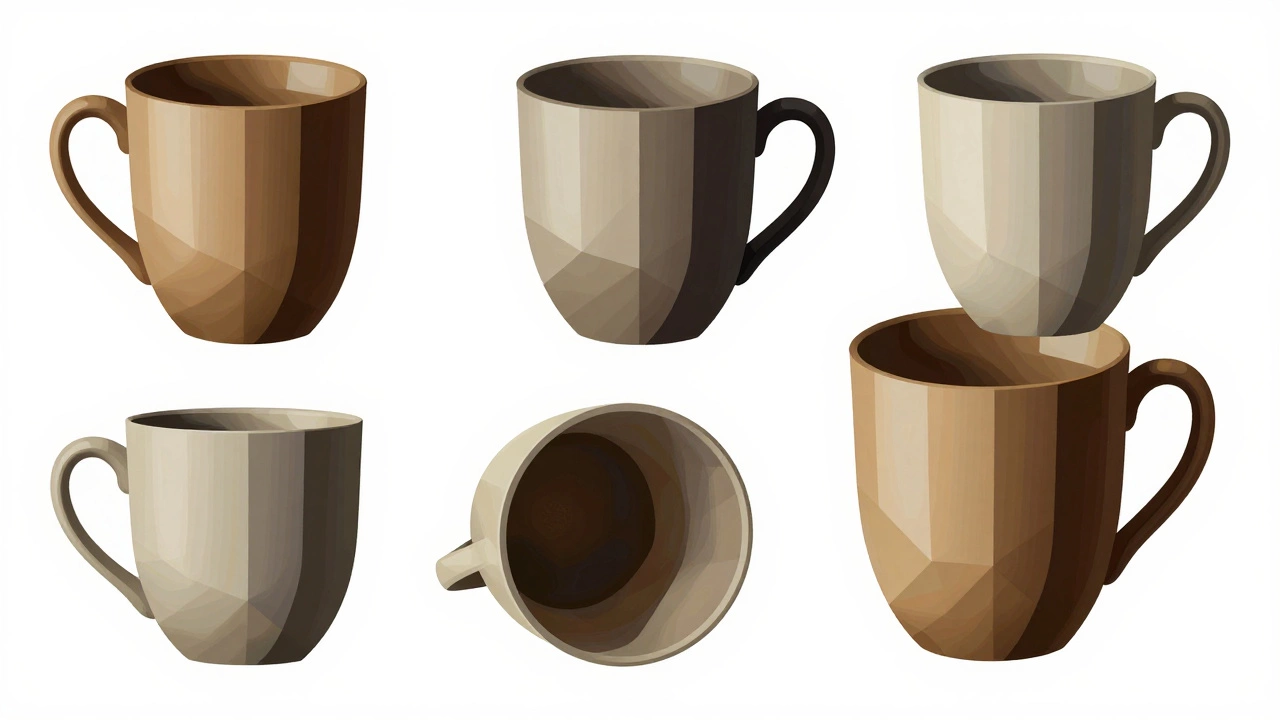
Once the door was open, it didn't stay halfway. Cubism, led by Pablo Picasso, took this a step further. Instead of looking at a person from one angle, Cubists tried to show multiple viewpoints at once. Imagine taking a coffee mug, smashing it, and then gluing the pieces back together on a flat canvas. It looks chaotic, but it's actually a more "honest" way of seeing because we never see a 3D object from just one frozen perspective in real life; we move around it.
| Era/Style | Primary Goal | Key Technique | Relationship to Reality |
|---|---|---|---|
| Renaissance | Idealized Realism | Linear Perspective | Mirror-like |
| Impressionism | Capturing Light | Broken Color | Suggestive |
| Cubism | Analytical Structure | Geometric Fragmentation | Deconstructed |
| Abstract Art | Pure Emotion | Non-representational forms | Detached |
The jump into total abstraction
The most confusing part for most people is when art becomes "non-representational." This is when the artist stops painting things that exist in the physical world entirely. Wassily Kandinsky is often credited with this leap. He believed that colors and shapes had their own language, much like music. You don't ask a symphony, "What is this song a picture of?" You just feel the tension of the strings or the boom of the drums. Kandinsky wanted painting to work the same way.
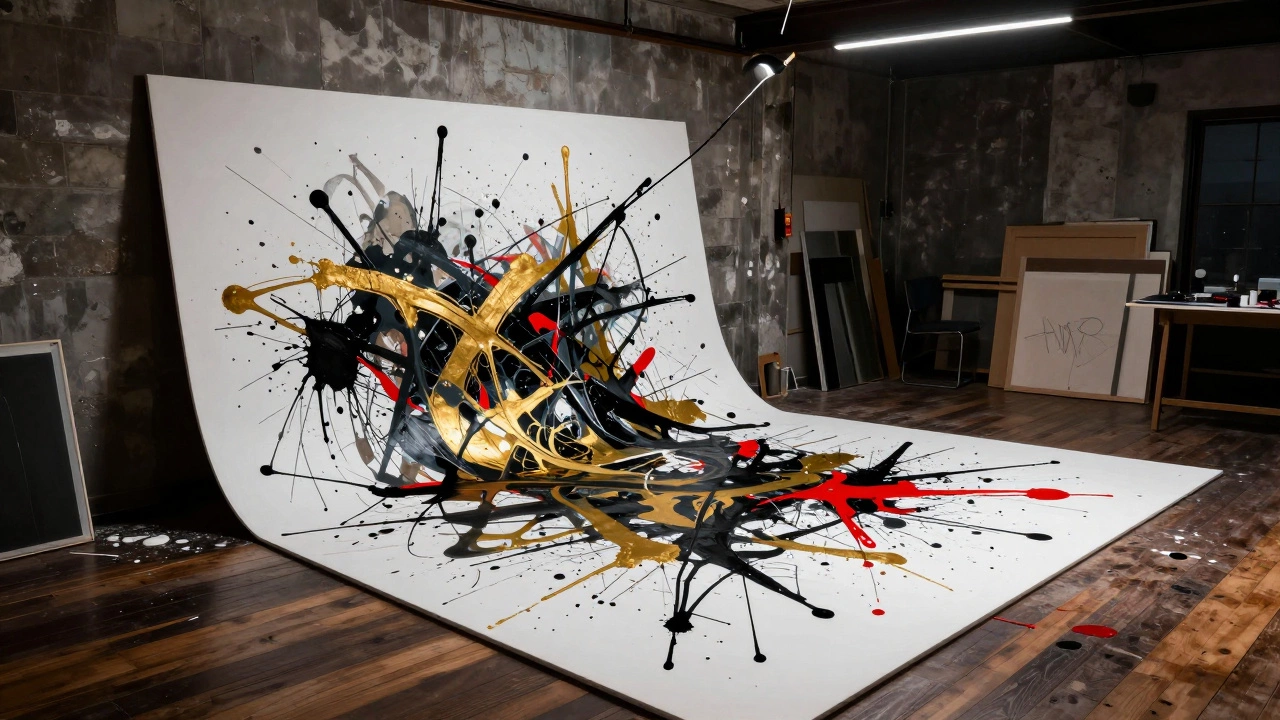
Later, after the trauma of World War II, Abstract Expressionism took over in New York. This wasn't about a planned composition. Jackson Pollock started dripping paint directly onto canvases laid on the floor. The "art" wasn't just the final painting, but the act of painting itself-the physical movement, the aggression, the spontaneity. It was a way of screaming on canvas when words weren't enough to describe the horror and confusion of the era.
When the idea is the art
By the 1960s, some artists decided that the physical object-the painting or the sculpture-wasn't actually the most important part. This led to Conceptual Art, where the idea behind the work is more valuable than the finished product. This is where we get the "pile of bricks" or the "invisible sculpture."
Take Marcel Duchamp and his "Readymades." He took a porcelain urinal, signed it with a fake name, and called it "Fountain." He wasn't saying, "Look at how beautifully I crafted this urinal." He was asking a question: "If an artist says this is art, does that make it art?" He shifted the focus from the artist's hand to the artist's mind. At this point, art became a philosophical conversation rather than a craft competition.
How to actually "read" a modern piece
If you're staring at a piece of modern art and feeling totally lost, stop trying to find a hidden picture. When you look at a landscape, you're looking *through* the painting into a window. When you look at modern art, you're looking *at* the painting as an object. Try these three steps to make it more rewarding:
- Check your gut reaction first. Does the red color make you feel anxious? Does the giant scale of the piece make you feel small or protected? That reaction is exactly what the artist was aiming for.
- Look at the materials. Is the paint thick and chunky, or thin and watery? Is it made of recycled trash or expensive gold leaf? The medium often tells you more about the meaning than the image does.
- Read the title. Sometimes the title is the key. A painting of a blue square called "Tuesday" might be a comment on the boredom of a work week, whereas a blue square called "The Infinite Ocean" changes the entire context.
The lasting impact of the avant-garde
While it can feel pretentious or confusing, the Avant-garde movement-the people who pushed the boundaries-actually changed everything you see today. The clean lines of your iPhone, the layout of your favorite website, and even the architecture of modern skyscrapers all come from the experiments of early modernists. They taught us that form follows function and that simplicity can be more powerful than clutter.
Modern art isn't about tricking you or pretending a mess is a masterpiece. It's about the freedom to explore the human psyche without the baggage of "doing it right." It's the difference between a textbook and a poem; one tells you the facts, and the other tries to make you feel the weight of a moment.
Is modern art just a way to hide a lack of talent?
Not usually. Many of the most famous modern artists, like Picasso or Mondrian, were classically trained and could paint photorealistic portraits by the time they were teenagers. They chose to move away from realism not because they couldn't do it, but because they felt realism had become a limitation that prevented them from expressing deeper truths or new perspectives.
What is the difference between modern art and contemporary art?
While people use them interchangeably, they are different. Modern art generally refers to the period from the 1860s to the 1970s (Impressionism through Pop Art). Contemporary art refers to art made in our current time-roughly from the 1970s to today. Contemporary art is often even more varied, incorporating digital media, VR, and social commentary.
Why are some "simple" modern paintings worth millions of dollars?
The value usually comes from the historical significance rather than the labor involved. A painting isn't priced by how many hours it took to paint, but by how much it changed the course of art history. A work that introduced a completely new way of seeing the world becomes a "landmark," and collectors pay for the prestige of owning that piece of history.
Do I need a degree in art history to enjoy modern art?
Absolutely not. While context helps, the most honest way to experience art is through your own emotional response. If a piece of art makes you feel something-even if that feeling is anger or confusion-it has successfully done its job. You don't need to know the theory to feel the impact.
How do I know if a piece of abstract art is actually 'good'?
"Good" is subjective, but you can look for intentionality. Does the composition feel balanced? Does the use of color create a specific mood? In a gallery setting, consider if the work challenges your thinking or evokes a memory. If it leaves you indifferent, it might not be for you, but that doesn't mean it lacks value for others.