Oil Painting Layering Guide
Painting Sequence
Click a stage to view the recommended formula and risk level.
Welcome! Select a painting stage from the list to see the chemistry and medium requirements for that layer.
Layer Details
Recommended Formula:
Select a layer to see the mix.
Follow the Fat Over Lean rule to prevent cracking.
Key Takeaways for Your Studio
- The golden rule: fat over lean to prevent cracking.
- "Fat" means more oil; "lean" means more solvent (like mineral spirits).
- Layering involves moving from thin, fast-drying washes to thick, slow-drying glazes.
- The right medium depends on whether you want a matte finish or a high-gloss glow.
The Chemistry of the "Fat Over Lean" Rule
If you've heard any advice about oil painting, you've probably heard the phrase "fat over lean." But what does that actually mean in practice? Oil Painting is a process of applying pigments mixed with a drying oil, most commonly linseed oil, to a surface. The "formula" here is all about drying times. Oil paint doesn't dry by evaporation like acrylics; it dries through oxidation. This means the oil reacts with oxygen and hardens over time.
A "lean" layer is paint mixed with a lot of solvent, such as Odourless Mineral Spirits, which is a refined petroleum distillate used to thin paint and clean brushes. This layer dries quickly. A "fat" layer has more oil, which takes much longer to cure. If you put a fast-drying lean layer on top of a slow-drying fat layer, the top layer will shrink and crack as the bottom layer continues to shift and settle. To avoid this, you always put the slower-drying (fattest) layer on top.
Building Your Layering Formula
Think of your painting as a building. You can't put the roof on before the foundation. Most professional artists follow a specific sequence of stages to ensure the painting lasts for centuries rather than decades. Here is how that formula usually breaks down in a real studio scenario:
- The Imprimatura: This is a thin, lean wash of color (often burnt sienna or raw umber) used to kill the white of the canvas. Use a high ratio of solvent to paint here.
- The Underpainting: Here, you map out your values. This layer should still be relatively lean. If you're doing a portrait, this is where you establish the deep shadows and light shapes.
- The Blocking-In Phase: Now you start adding more paint. You might introduce a small amount of Linseed Oil, which is the primary drying oil used in oil paints, derived from flax seeds. This increases the "fat" content slightly.
- The Final Pass: This is where you apply the thickest highlights (impasto) and final details. This layer is the "fattest," containing the most oil or medium.
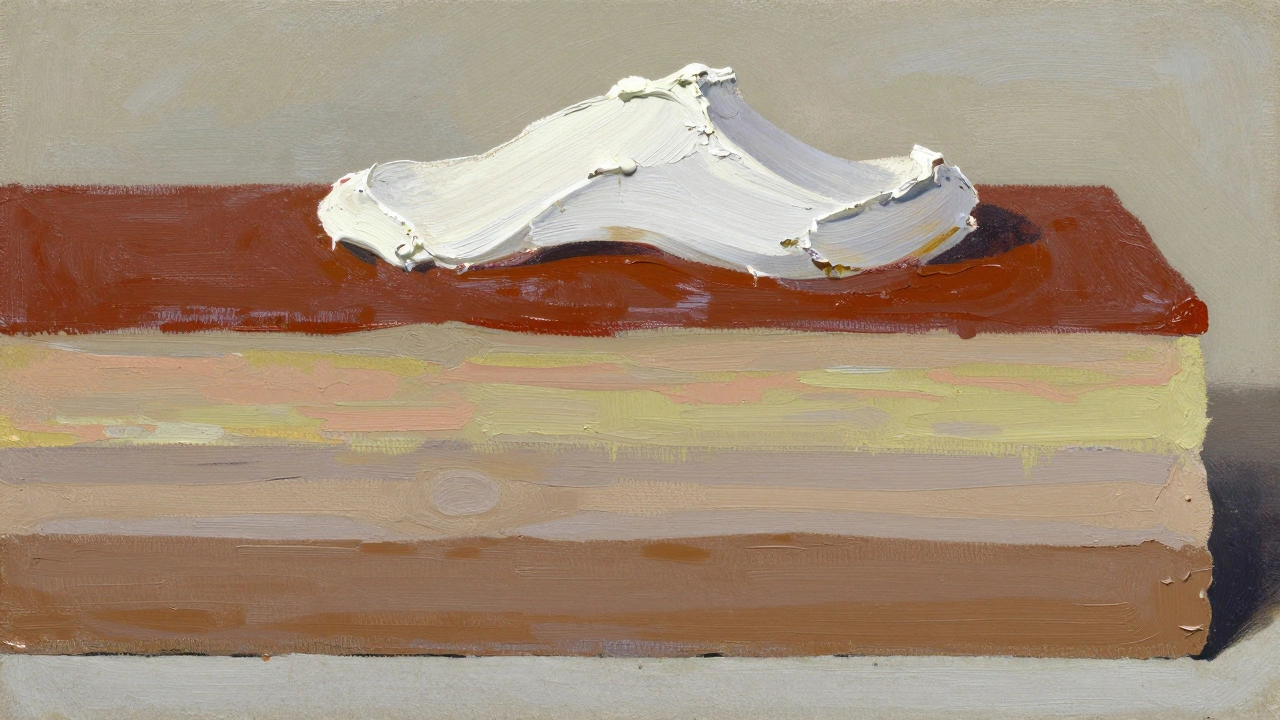
Choosing Your Mediums: The Mixing Formula
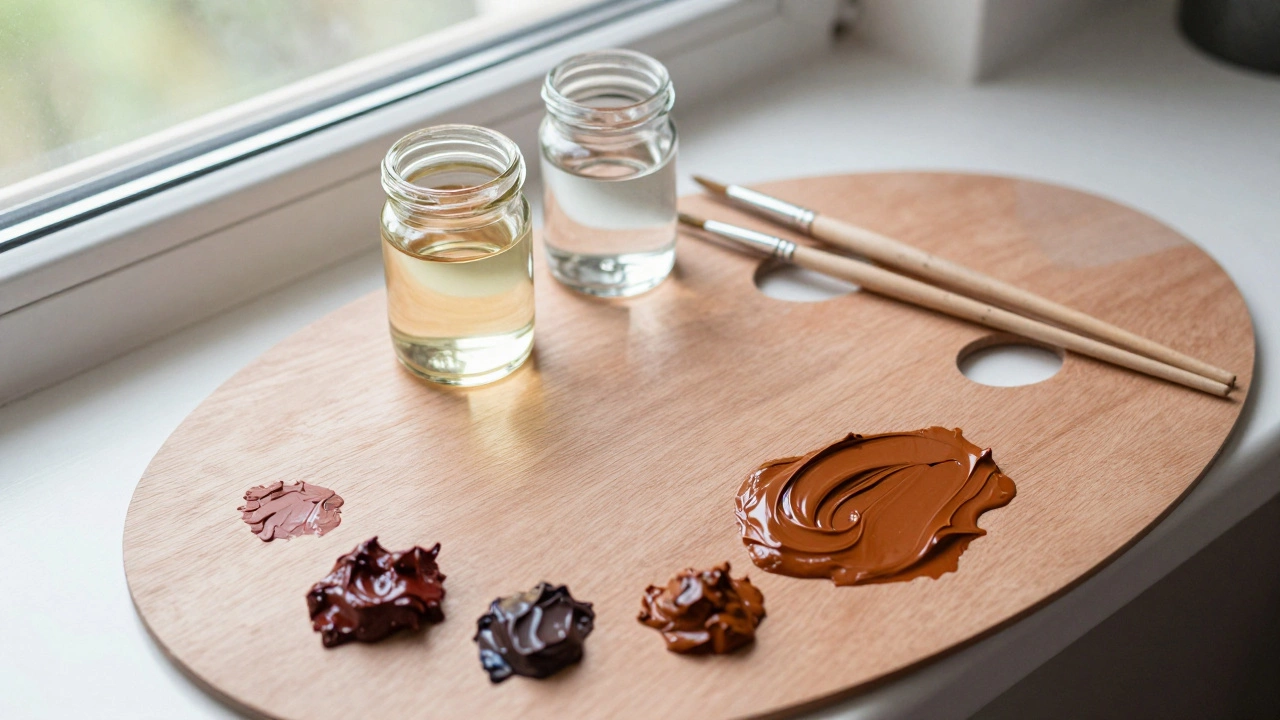
You can't just use paint straight from the tube for every stage. Depending on the effect you want, you need to adjust the formula of your medium. A medium is simply a liquid you mix with paint to change its consistency, drying time, or finish.
| Medium Type | Formula Components | Drying Speed | Best Use Case |
|---|---|---|---|
| Lean Mix | Paint + Mineral Spirits | Fast | Underpainting and sketching |
| Standard Medium | Linseed Oil + Mineral Spirits | Medium | General layering and blending |
| Glazing Medium | Damar Varnish + Linseed Oil | Slow | Creating deep, transparent glows |
| Alkyd Medium | Synthetic Resin + Oil | Accelerated | Fast-tracking a painting's cure time |
For those who hate waiting weeks for a layer to dry, Alkyd Mediums are a game changer. These are synthetic resins that speed up the oxidation process. By adding an alkyd medium to your mix, you can get the richness of oil with a drying time closer to acrylics, though you still need to be careful about the fat-over-lean principle.
The Secret of Glazing and Scumbling
Once you've mastered the basic structural formula, you can experiment with optical mixing. This is where you don't mix the colors on the palette, but rather layer them on the canvas to let light pass through.
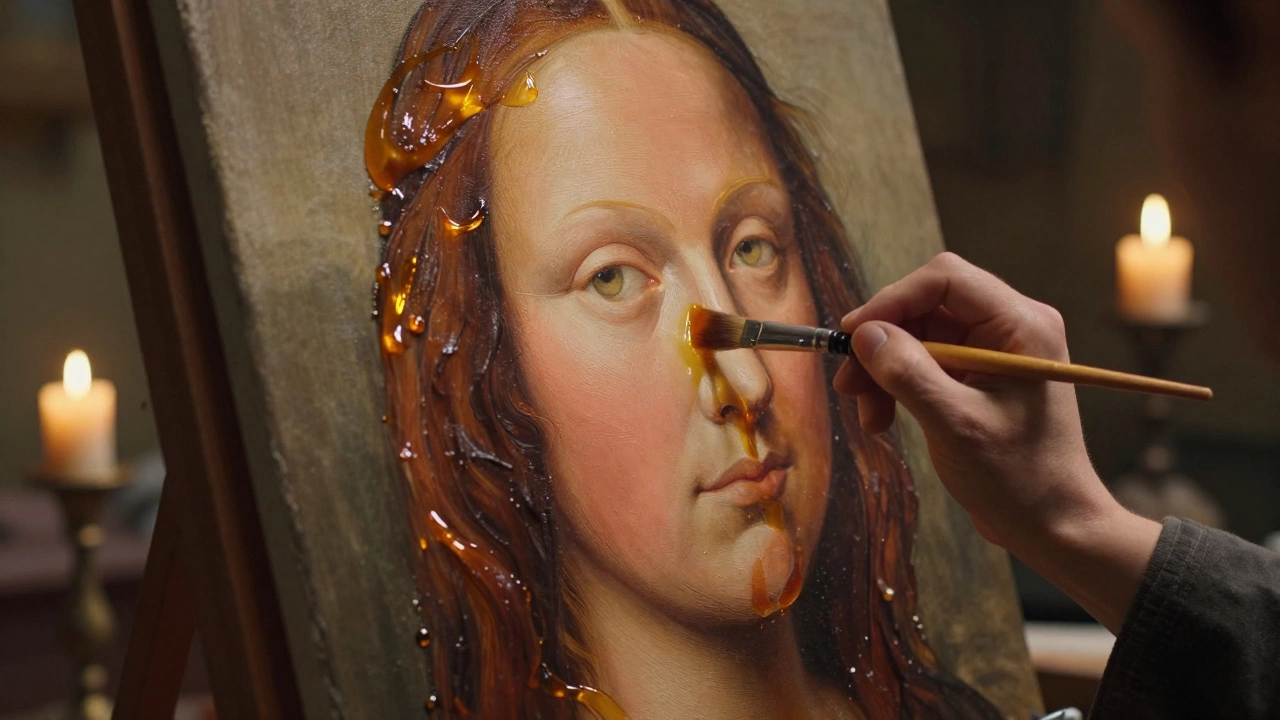
Glazing involves applying a thin, transparent layer of "fat" paint (lots of oil or glazing medium) over a dried, lighter color. For example, if you paint a face in a light peach tone and then apply a transparent burnt sienna glaze over the cheekbones, you get a depth and warmth that is impossible to achieve by simply mixing brown into peach. This is the "formula" for that luminous, skin-like quality found in Renaissance art.
Scumbling is the opposite. You take a thick, opaque light color and drag it lightly over a darker, dried layer. Because you're only hitting the "peaks" of the canvas texture, the dark color peeks through. It's a fantastic way to create the look of fog, smoke, or shimmering light on water.
Common Pitfalls and How to Fix Them
Even with a formula, things go wrong. The most common mistake is using too much oil too early. If your first layer is too "fat," the rest of your painting will essentially be floating on a layer of grease. This leads to "sliding," where the paint doesn't adhere properly, and eventual cracking.
Another issue is "sinking in." This happens when the canvas or gesso absorbs the oil from the paint, leaving you with a dull, matte spot. To fix this, you can apply a very thin coat of Damar Varnish, which is a natural resin derived from the Pterocarpus tree used for finishing and glazing, to saturate the area and bring back the color intensity.
Can I use vegetable oil instead of linseed oil?
Absolutely not. Vegetable oils (like olive or canola) are non-drying oils. They will never harden, meaning your painting will stay sticky forever and likely rot the canvas or grow mold over time. Always use a dedicated drying oil like linseed, poppy, or walnut oil.
How long should I wait between layers?
It depends on the "fatness" of the layer. Lean layers can often be painted over in a few hours or a day. However, fat layers-especially those with heavy linseed oil-can take a week or more to be "touch-dry." If you're glazing, wait until the layer is completely cured (which can take months) to avoid "muddying" the colors.
What is the best ratio for a general-purpose medium?
A safe, standard starting formula is a 1:1 ratio of Linseed Oil to Odourless Mineral Spirits. This gives you a balanced drying time and a medium consistency that works for most middle-stage layering. Adjust by adding more spirits for leaner layers or more oil for fatter ones.
Does the "fat over lean" rule apply to acrylics?
No, because acrylics dry by evaporation of water, not by oxidation. While you should still be mindful of layering (don't put a very thin, flexible layer over a rigid, thick one), you don't have to worry about the oil-to-solvent ratio that makes oil painting so technical.
Why is my paint cracking in a "crocodile skin" pattern?
This is almost always a result of violating the fat-over-lean rule. You likely put a lean, fast-drying layer over a fat, slow-drying one. The top layer hardened and snapped while the bottom layer was still moving. Unfortunately, once this happens, it's hard to fix; your best bet is to scrape it back or accept it as a "character" mark.
Next Steps for Your Art Practice
If you're just starting, don't get bogged down by the chemistry. Start with a simple lean underpainting using only mineral spirits. Once you feel comfortable, introduce a 1:1 medium. Experiment with a small "test canvas" where you deliberately break the fat-over-lean rule on one corner just to see what happens-it's the best way to learn the limits of your materials.
Once you've mastered the structural layers, move into the world of glazes. Try adding a touch of Poppy Oil (which is a drying oil that is slower and lighter in color than linseed oil) to your light colors to prevent them from yellowing over time.