Photography Artistry Checker
Based on the article's arguments about authorship, intent, and post-processing, use this tool to analyze a hypothetical photo scenario.
Define Your Photo Scenario
Awaiting Analysis
Adjust the sliders above to determine if your photo leans towards Documentation or Fine Art.
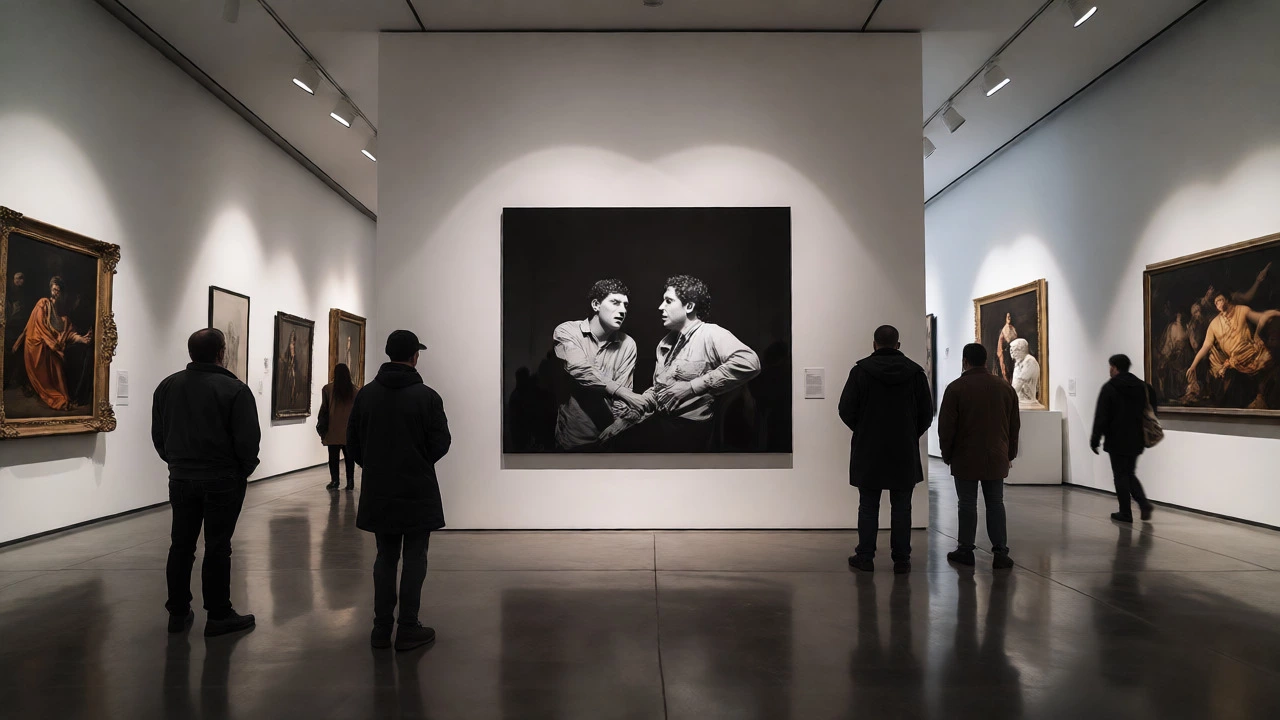
Walk into any major museum today and you’ll see photographs hanging alongside oil paintings and marble sculptures. But ask a traditionalist why that is, and you might still hear a grumble about "just pressing a button." The debate over whether photography is truly art or merely a technical craft has raged since the daguerreotype hit Paris in 1839. It’s not just an academic squabble; it affects how much photographers get paid, which galleries represent them, and whether we view a snapshot as equal to a sketch.
The core friction comes down to one word: authorship. For centuries, art was defined by the hand. If you didn’t mix the pigment, carve the stone, or stretch the canvas, were you really making something? Critics argued that the camera was a machine, and machines don’t have souls. They claimed the photographer was just recording reality, not interpreting it. This perspective ignores the massive amount of human decision-making involved in every single frame, from lighting choices to post-processing. Let’s break down why this old argument doesn’t hold water anymore, and where the real line between "picture" and "art" actually lies.
The Mechanical Reproduction Argument
In 1936, philosopher Walter Benjamin wrote his famous essay "The Work of Art in the Age of Mechanical Reproduction." He wasn’t attacking photography directly, but he highlighted a fear that still lingers: if you can copy something perfectly, does the original lose its "aura"? Critics used this idea to dismiss photography because cameras could produce infinite identical prints. A painting is unique; a photograph is reproducible. Therefore, they argued, a photograph lacks the singular value of high art.
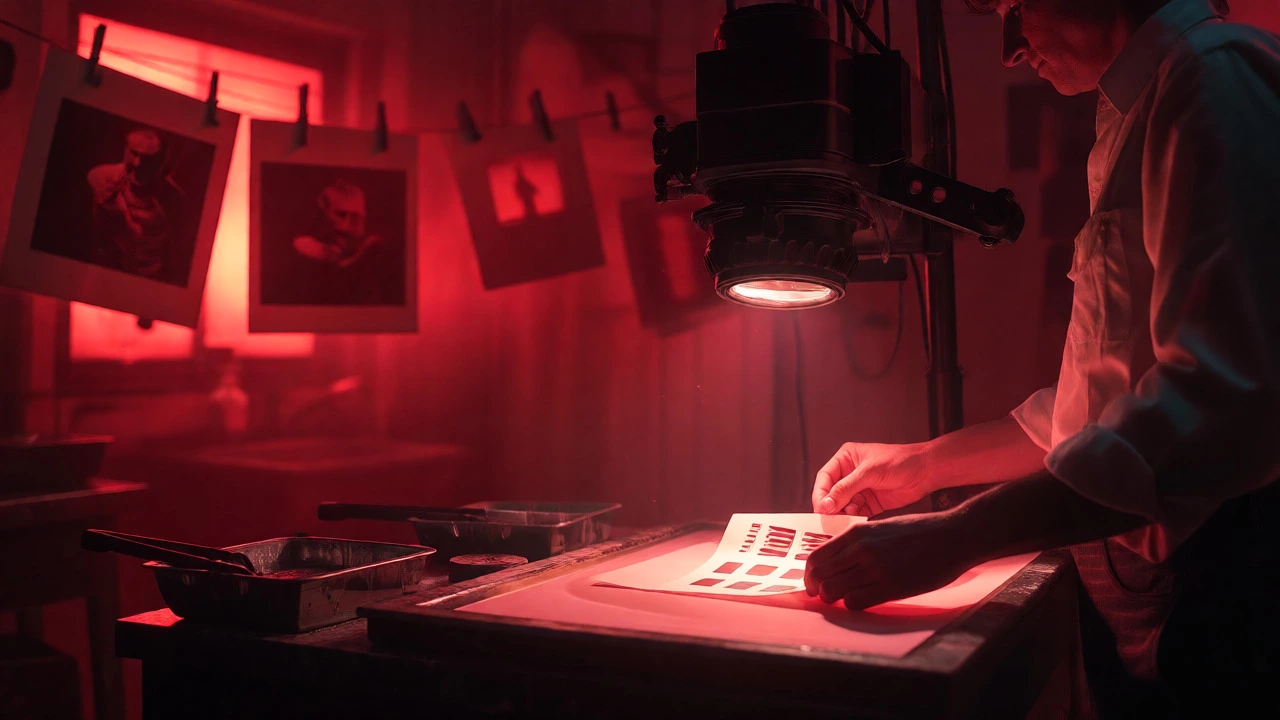
This logic falls apart when you look at how artists actually work. A printmaker creates multiple copies of a woodcut, yet no one denies that Albrecht Dürer was an artist. The key isn’t uniqueness of the object, but the uniqueness of the vision. When Ansel Adams spent hours dodging and burning parts of a negative in the darkroom, he wasn’t just developing film; he was sculpting light. His zone system allowed him to manipulate contrast so precisely that two different photographers shooting the same scene would produce wildly different emotional results. The camera captures data; the artist curates meaning.
Intent vs. Documentation
Not all photos are art, just as not all writing is poetry. This is the easiest way to settle the debate. There is a massive difference between taking a picture for documentation and creating a piece for expression. Think about your own phone album. You have thousands of images of your lunch, your dog, and blurry street signs. These serve a functional purpose: memory storage. They are records.
Fine art photography, however, starts with an idea before the shutter clicks. The photographer asks: What emotion do I want to evoke? How does the composition guide the eye? What story is being told through the juxtaposition of elements? Cindy Sherman, a pioneer in conceptual photography, uses her camera not to document the world, but to stage fictional narratives about identity and gender. Her work is indistinguishable from performance art or theater. If you judge her work solely on technical sharpness, you miss the point entirely. The image is a vehicle for a concept, which is the very definition of modern art.
| Feature | Documentation Photo | Fine Art Photograph |
|---|---|---|
| Primary Goal | Record facts/events accurately | Evoke emotion or convey concept |
| Editing Role | Minimal correction (crop/exposure) | Creative manipulation (color grading/composition) |
| Viewer Reaction | "That happened." | "I feel something / I wonder what this means." |
| Context | Newspaper, archive, personal log | Gallery, magazine editorial, collection |
The Darkroom and Digital Post-Processing
One of the biggest misconceptions is that digital editing is "cheating." In the early days, critics attacked darkroom techniques like solarization or double exposure as unnatural. Today, Photoshop gets the same hate. But consider this: Ansel Adams famously said, "The negative is the score, and the print is the performance." Just as a musician interprets a musical score differently than another musician, a photographer interprets a RAW file differently than their peers.
Post-processing allows photographers to align the final image with their initial visual intent. Our eyes see dynamic range that sensors cannot capture. By blending exposures or adjusting curves, photographers recreate what they *felt* rather than just what the sensor recorded. This interpretive layer is identical to a painter choosing specific brushstrokes or a writer selecting precise vocabulary. If a novelist changes a sentence ten times to get the right rhythm, we call it craft. If a photographer adjusts the hue of a sky to match the mood of a portrait, we should call it the same thing.
Historical Resistance and Institutional Acceptance
Resistance to new mediums is a pattern in art history. When Impressionism emerged, critics called it unfinished and lazy compared to Academic realism. When jazz arrived, classical purists dismissed it as noise. Photography faced similar gatekeeping. Early 20th-century institutions like the Royal Academy refused to exhibit photographs as fine art. It took decades of advocacy from groups like Photo-Secession, led by Alfred Stieglitz, to force museums to take the medium seriously.
Stieglitz opened the "291" gallery in New York, explicitly placing photographs next to works by Cézanne and Rodin. He proved that a photograph could possess the same aesthetic weight and intellectual depth as a painting. Today, the MoMA in New York has a dedicated Department of Photography with a budget rivaling some smaller national museums. The institutional shift validates the medium, but public perception often lags behind. Many people still struggle to separate the tool (the camera) from the artist (the person holding it).
Defining the Artist’s Eye
If you’re trying to determine if a specific photo is art, ignore the gear. A $50 disposable camera can produce a masterpiece, and a $10,000 Hasselblad can produce a boring snapshot. Artistry resides in three areas:
- Composition: How the photographer arranges shapes, lines, and space to create balance or tension.
- Timing: Capturing a fleeting moment that reveals truth or humor, often requiring patience and anticipation.
- Vision: The ability to see potential in chaos. While others see a messy room, the artist sees geometric patterns and light interplay.
These skills are learned and refined over years, just like drawing or sculpting. The camera doesn’t compose the shot for you. It doesn’t decide when to press the shutter. It doesn’t choose the lens focal length to compress the background or expand the foreground. Those are conscious artistic decisions made by a human brain processing visual information in real-time.
Why the Debate Still Matters
You might wonder why we’re still arguing about this in 2026. Because the label affects value. When photography was excluded from "high art," it was cheap. Now that it’s accepted, fine art prints sell for millions. But the stigma persists among casual observers who devalue professional work because they think, "My cousin could do that with his iPhone." Understanding the distinction between casual snapshots and deliberate artistic practice helps us appreciate the skill involved.
It also impacts education. If schools teach photography only as a technical skill-how to use aperture and ISO-students miss the historical and theoretical context of visual storytelling. Recognizing photography as art encourages students to study composition theory, color psychology, and cultural criticism, turning them into better communicators regardless of their career path.
Is digital editing considered cheating in photography?
No. Editing is part of the creative process, similar to developing film in a darkroom. It allows the photographer to realize their artistic vision by adjusting tone, color, and contrast to match what they perceived emotionally, not just technically.
Can anyone be a photographer without being an artist?
Yes. Anyone can operate a camera to record events. However, becoming a photographic artist requires developing a distinct style, understanding visual language, and using the medium to express ideas or emotions beyond simple documentation.
Why did critics originally reject photography as art?
Critics believed the camera was a mechanical device that removed human handcraftsmanship. They argued that because the image was produced by light hitting a chemical plate rather than manual application of paint, it lacked the soul and intentionality required for fine art.
What makes a photograph "fine art"?
A photograph becomes fine art when it is created primarily for aesthetic purposes or to convey a message, rather than for commercial or documentary utility. It involves intentional composition, lighting, and post-processing to evoke an emotional or intellectual response.
Does expensive gear make a photo more artistic?
No. Artistic merit comes from the photographer's vision, creativity, and technical control, not the price tag of the equipment. Many iconic artistic photographs were taken with inexpensive or outdated cameras.