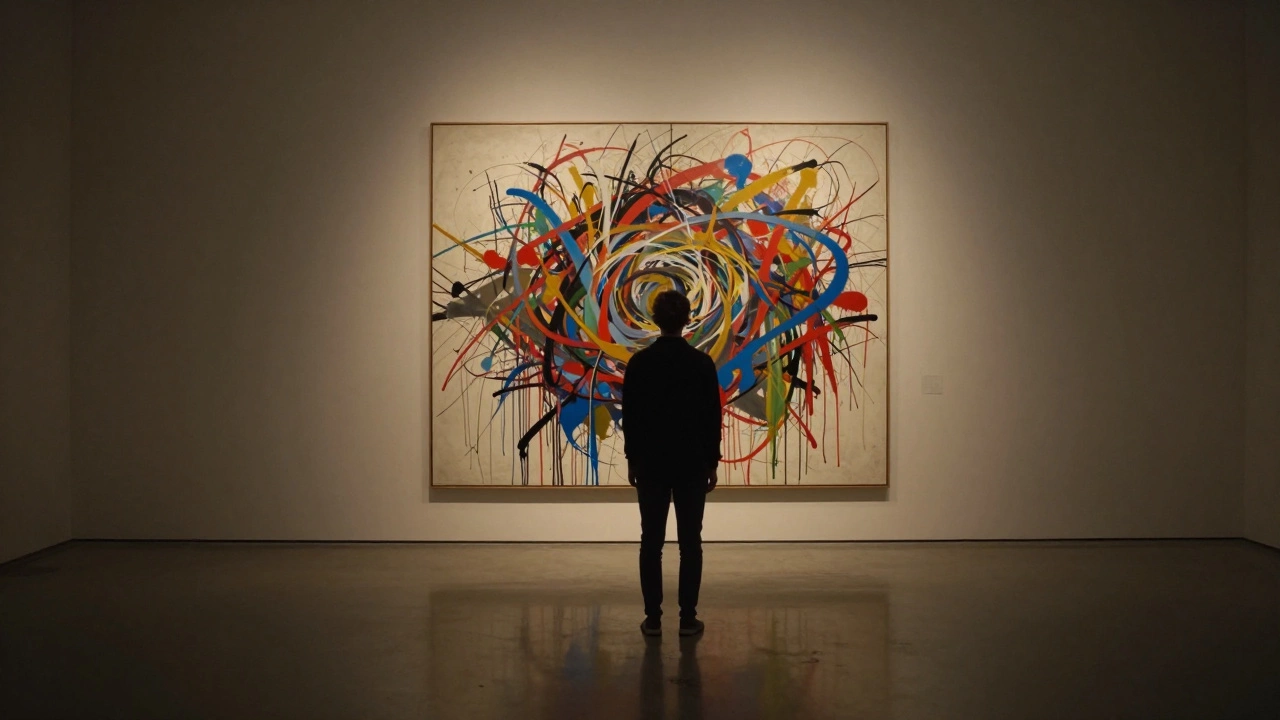
Why do people look at a splatter of paint on a canvas and say it’s beautiful? Or stand in front of a bare metal sculpture and feel something deep inside? It’s not about technical skill. It’s not about realism. And it’s not always about what you see-it’s about what you feel, remember, or question.
Modern art doesn’t need to be pretty to matter
For centuries, art was about capturing beauty, telling stories, or showing power. A portrait had to look like the person. A landscape had to feel real. But in the early 1900s, everything changed. Artists like Picasso, Kandinsky, and Pollock stopped trying to copy the world. They started asking: What if art didn’t need to represent anything at all?
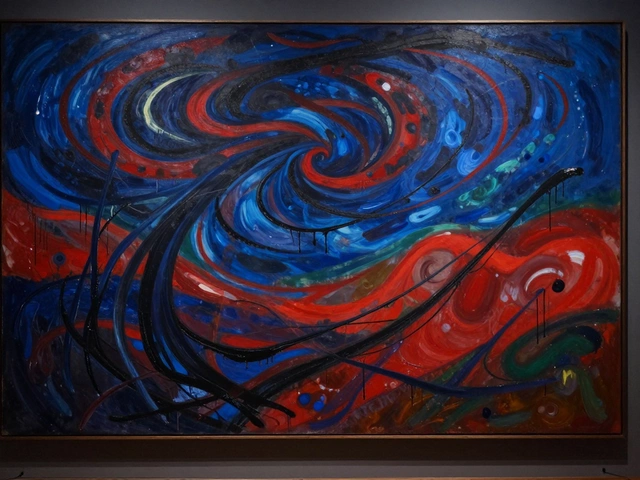
That’s when modern art was born-not as a rejection of skill, but as a rejection of rules. People who prefer modern art aren’t fooled by it. They’re not confused. They’re engaged. They see a Jackson Pollock drip painting and don’t think, "My kid could do that." They think, "What was he feeling when he made this?"
Modern art asks you to participate. It doesn’t hand you an answer. It hands you a question. And that’s why it sticks.
It reflects the chaos-and beauty-of modern life
Think about your day. Emails, news alerts, social media feeds, traffic, deadlines. Life doesn’t move in neat lines or perfect symmetry. It’s messy. Fast. Overwhelming. Modern art mirrors that.
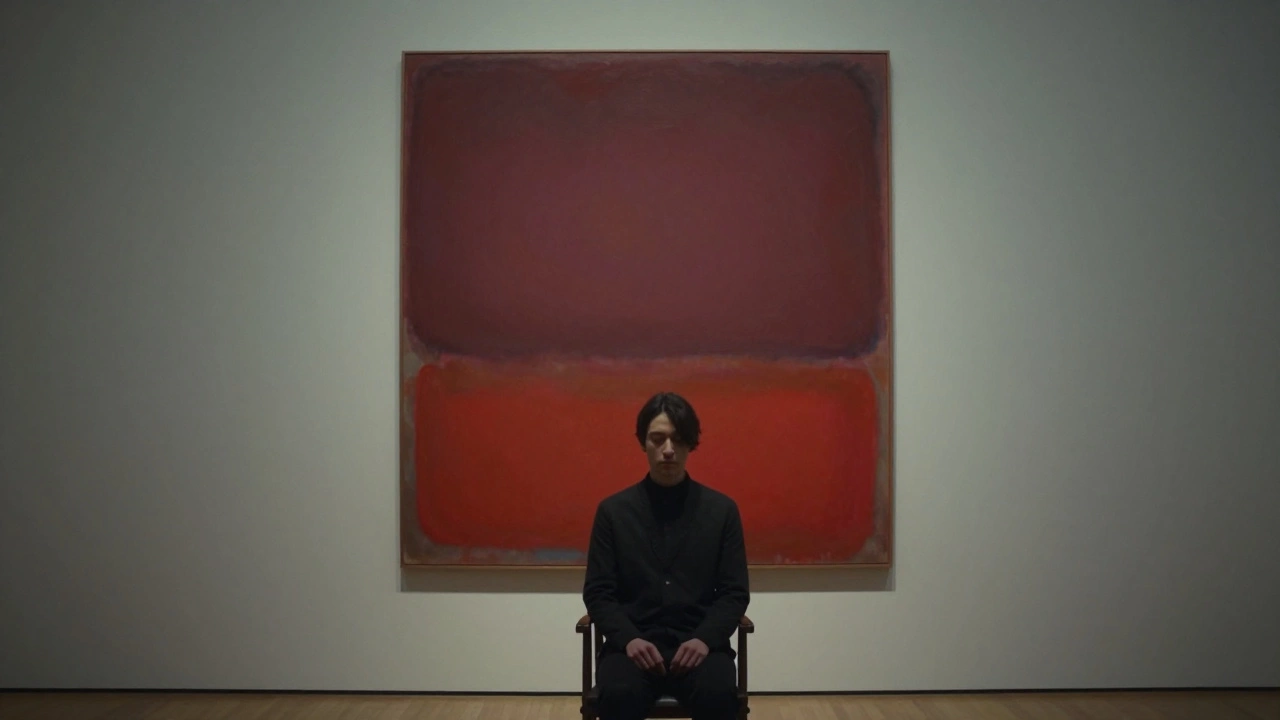
Take Mark Rothko’s color fields. Two blocks of deep red over dark maroon. No figures. No story. Just color and light. But when you stand in front of one, something happens. Your breathing slows. Your thoughts quiet. It’s not decoration-it’s a space to breathe.
People who connect with modern art often say they feel seen. Not because the artwork shows their face, but because it shows their inner state: confusion, longing, exhaustion, wonder. In a world full of noise, modern art gives you silence you can feel.
It’s personal, not universal
Unlike a Renaissance painting of the Virgin Mary, which was meant to be understood by everyone in the same way, modern art thrives on subjectivity. There’s no right interpretation. Your meaning is just as valid as the artist’s.
A woman in Berlin once told me she cried in front of a white canvas with a single black line. She said it reminded her of her mother’s hospital monitor after her diagnosis. No one else saw that. The artist didn’t intend it. But it was real to her. That’s the power of modern art-it becomes a mirror, not a window.
This is why galleries don’t label modern pieces with long explanations. They want you to bring your own story. The artwork isn’t complete until you interact with it. That’s why people keep coming back. Every visit feels different.
It challenges what art is supposed to be
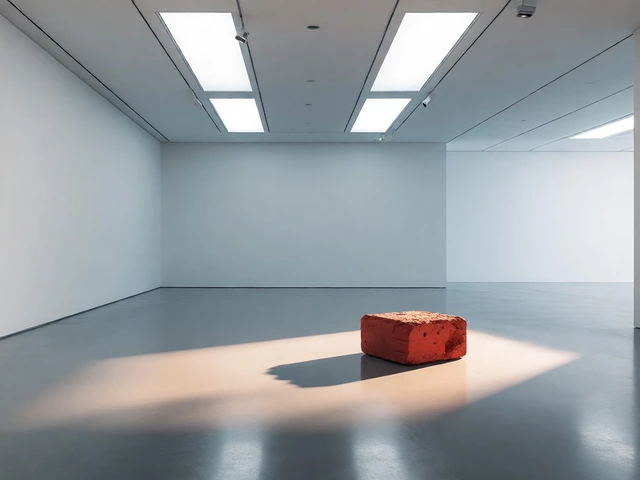
Modern art doesn’t just paint pictures. It uses toilets (Marcel Duchamp’s Fountain), shredded banknotes (Piero Manzoni’s Artist’s Shit), and piles of bricks (Carl Andre). These aren’t jokes. They’re provocations.
People who prefer modern art aren’t drawn to it because it’s easy. They’re drawn because it’s bold. It forces you to ask: What makes something art? Who gets to decide? Is it the gallery? The price tag? Or the feeling it gives you?
That’s the real appeal. Modern art doesn’t ask you to admire it. It asks you to think about why you admire anything at all.
It’s accessible-even if it’s expensive
Yes, a Basquiat painting can sell for $110 million. But you don’t need to buy one to feel connected to modern art. Most museums offer free admission days. Many public spaces have modern installations you can walk past without paying a cent.
In Vancouver, the Vancouver Art Gallery’s outdoor sculptures are open 24/7. People sit on the steps, take photos, argue about what they mean. One man told me he comes every Sunday with his coffee. "I don’t know what it’s supposed to mean," he said. "But it makes me feel less alone in my thoughts."
Modern art doesn’t require money. It requires attention. And that’s something anyone can give.
It’s a conversation across time
When you stand in front of a 1960s minimalist sculpture by Donald Judd, you’re not just looking at metal boxes. You’re in dialogue with a person who lived through the Cold War, the rise of consumer culture, and the collapse of old beliefs.
Modern art is a record of how people thought, felt, and reacted to their world. It’s not about perfect technique-it’s about honest expression. And that’s why it lasts.
People who prefer modern art aren’t trying to be cool. They’re not following trends. They’re searching for truth in a world full of noise. And sometimes, truth doesn’t look like anything you’ve seen before.
It’s not about understanding. It’s about feeling.
You don’t need to know the history of Cubism to feel the tension in a Braque collage. You don’t need to study color theory to be moved by a Yves Klein blue. Modern art speaks to the part of you that doesn’t use words.
It’s why children often respond to modern art more honestly than adults. They don’t overthink it. They say, "It looks like lightning," or "It feels like running through rain." And they’re right.
Modern art isn’t meant to be decoded. It’s meant to be experienced. And the people who prefer it? They’re not confused. They’re awake.