Historical Portrait Simulator
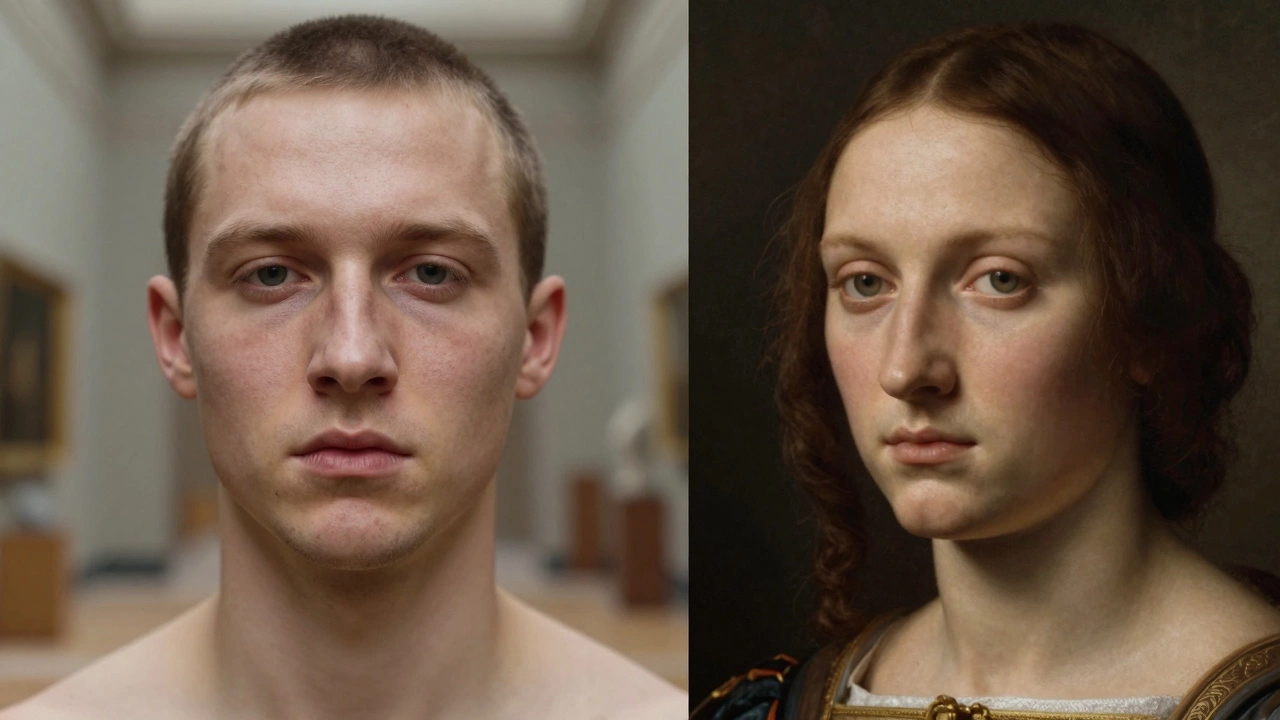
Have you ever stared at a Renaissance portrait and felt an inexplicable sense of unease? The eyes seem to follow you from the wrong angle. The mouth looks slightly crooked, even though it’s supposed to be straight. The skin has a strange, waxy sheen that feels less like flesh and more like polished marble. You aren’t imagining things. Those faces do look weird. But they weren’t painted by artists who couldn’t draw. They were painted by masters who followed strict rules, used specific materials, and worked within cultural frameworks that valued symbolism over photorealism.
To understand why a 16th-century nobleman looks like he’s having a mild stroke, or why a Victorian child’s face appears frozen in time, we have to look past our modern obsession with photographic accuracy. We need to examine the tools, the theories, and the intentions behind the brushstrokes. It’s not about bad anatomy; it’s about a different definition of beauty and truth.
The Myth of Photorealism in Pre-Modern Art
We live in an era where the camera is the ultimate arbiter of reality. If a photo shows a double chin, we accept it as truth. In the centuries before photography, however, "truth" in art was philosophical, not optical. When you look at a portrait painting from the 1500s or 1700s, you are not looking at a snapshot. You are looking at an idealized construct.
Artists like Leonardo da Vinci and Raphael studied human anatomy obsessively. They dissected corpses to understand muscle structure. Yet, they rarely painted people exactly as they appeared in life. Why? Because asymmetry was considered a flaw of character or health. A perfectly symmetrical face represented divine order and moral virtue. If a subject had a slightly larger left eye or a crooked nose, the artist would subtly correct it to align with classical ideals of harmony.
This creates a cognitive dissonance for modern viewers. Our brains are wired to detect micro-asymmetries in faces because they signal emotion and authenticity. When an artist removes those asymmetries to create a "perfect" face, the result can feel uncanny. It’s the same mechanism that makes CGI characters sometimes look creepy-their features are too perfect, lacking the random noise of real biology. This phenomenon is often linked to the Uncanny Valley effect, where near-human but not-quite-right visuals trigger a subconscious rejection response.
Lighting Conditions and the Problem of Shadows
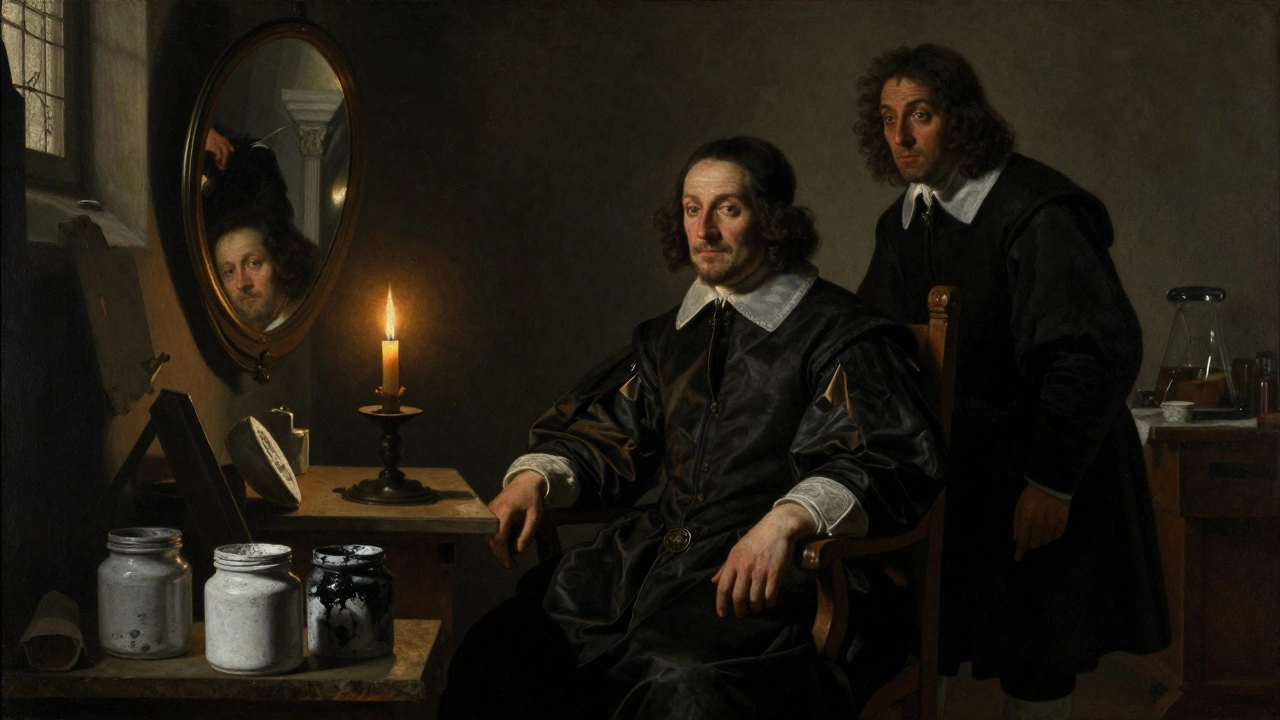
Another major factor is lighting. Modern portraits are often lit with softboxes or natural window light that wraps around the face, revealing texture and depth. Old masters often worked in dimly lit studios or relied on single, harsh light sources like candles or small windows. More importantly, they often painted subjects in formal poses under controlled, artificial conditions.
Consider the technique of Chiaroscuro, popularized by Caravaggio. This method uses strong contrasts between light and dark to give volume to figures. While dramatic, it can flatten facial features if not handled carefully. In many earlier periods, such as the Early Netherlandish school, artists avoided deep shadows altogether. They believed that shadows obscured the soul. As a result, faces were painted with even, flat lighting that eliminated the subtle gradations we associate with three-dimensional form. This makes noses look flatter and cheeks look rounder than they naturally are.
Furthermore, sitters often sat for hours, sometimes days, without moving. Fatigue sets in. Muscles relax into unnatural positions. An artist capturing a moment of stillness might inadvertently paint a face that looks slack or tired, which modern eyes interpret as "weird" rather than "resting."
Materials That Change Over Time
You might think the painting looked fine when it was new, but materials degrade in unpredictable ways. The medium itself plays a huge role in how we perceive these faces today. Oil paint, for instance, dries slowly and allows for blending. However, over centuries, varnishes yellow. Linseed oil oxidizes. Pigments shift in hue.
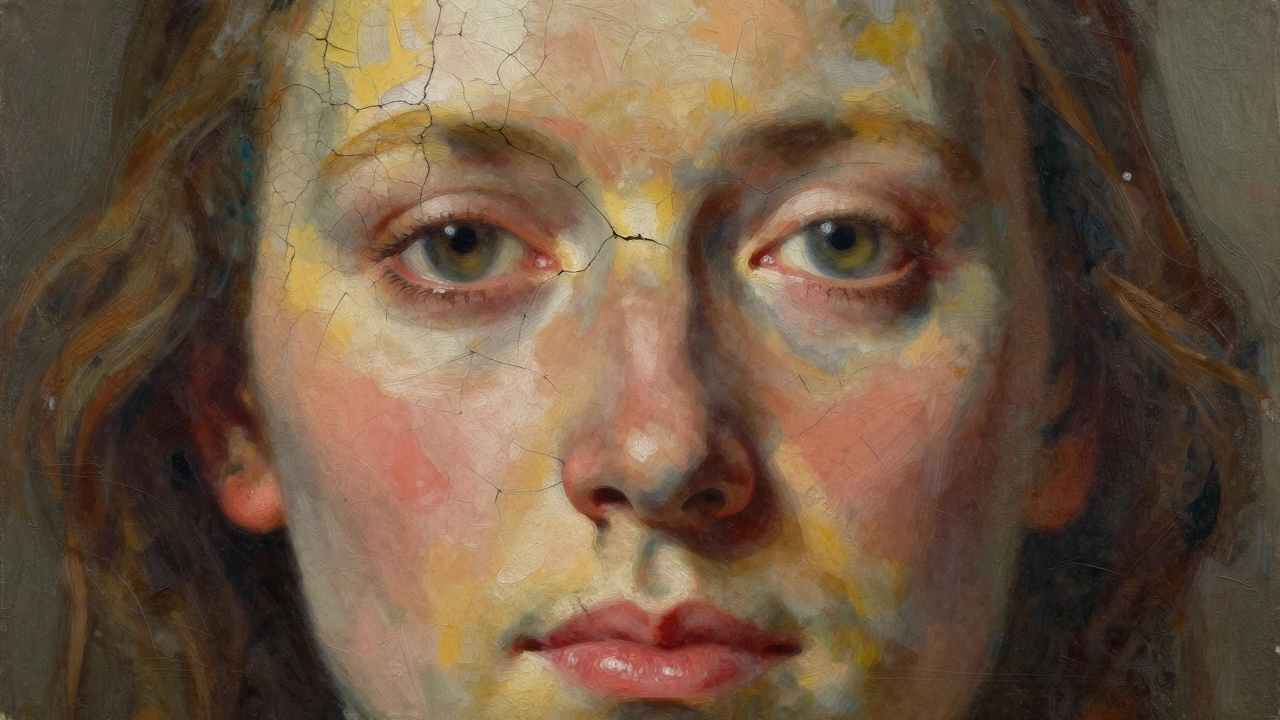
A particularly notorious culprit is lead white, the standard highlight pigment for hundreds of years. Lead white reacts with hydrogen sulfide in the air to form lead sulfate, which turns brown or black. This means that bright highlights on foreheads, noses, and chins may have darkened significantly. A face that once glowed with luminous skin now appears muddy or bruised. Conversely, some organic pigments fade faster than others. Red lakes derived from insects (like kermes or cochineal) can fade to pink or disappear entirely, altering the balance of warm and cool tones on a face.
Then there’s the issue of crackle patterns. As canvas expands and contracts with humidity, the paint layer cracks. These craquelure lines can create visual noise that disrupts the smooth contours of a face, making expressions look distorted or fragmented.
Cultural Symbols vs. Anatomical Accuracy
In many historical contexts, a portrait was not just a likeness; it was a document of status, wealth, and lineage. Artists included symbolic elements that dictated facial proportions. For example, during the Baroque period, large foreheads were considered a sign of intelligence. To achieve this, artists might shave the sitter’s hairline or simply paint the forehead higher than it actually was. This elongates the face, changing the ratio of features in a way that looks unnatural to us.
Eyes were also treated symbolically. Large, wide-open eyes suggested vigilance and piety. Narrow, squinting eyes could imply cunning or secrecy. Artists exaggerated these traits to convey personality. If you see a portrait where the eyes seem disproportionately large, it’s likely an intentional exaggeration to communicate the sitter’s alertness or spiritual awareness, not a mistake in proportion.
Smiles are another tricky area. Before the widespread use of dentistry and cosmetic care, showing teeth was often associated with animals or madness. Smiling in a portrait could be seen as undignified. Thus, most subjects kept their lips closed or pressed together. This neutral expression, combined with rigid posture, can read as cold or robotic to modern audiences accustomed to candid, smiling photos.
The Influence of Camera Obscura and Optics
Some historians argue that certain "weird" effects come from the use of optical aids. Devices like the Camera Obscura projected images onto surfaces, allowing artists to trace outlines. While this helped with perspective, it didn’t always help with focus. Early lenses suffered from chromatic aberration and limited depth of field. Parts of the face might be sharp while others blurred unexpectedly. If an artist copied this projection directly, the resulting painting might have areas of hyper-realistic detail next to strangely vague zones, creating a disjointed visual experience.
Moreover, mirrors were imperfect. Many artists used convex mirrors to view themselves or their sitters. Convex mirrors distort peripheral vision, stretching edges and compressing centers. A self-portrait painted using a convex mirror might show a wider nose or narrower temples than reality. Hans Holbein the Younger famously explored these distortions in his work, challenging viewers to question what they saw.
| Factor | Effect on Appearance | Historical Context |
|---|---|---|
| Idealization | Perfect symmetry, erased flaws | Renaissance & Neoclassicism |
| Flat Lighting | Lack of depth, waxy skin tone | Early Netherlandish School |
| Pigment Degradation | Yellowed varnish, faded reds | All pre-20th century works |
| Symbolic Proportions | Enlarged foreheads, stylized eyes | Baroque & Mannerist periods |
| Optical Distortion | Warped edges, uneven focus | Camera Obscura usage |
How to Appreciate These Paintings Today
So, how do you look at these paintings without feeling unsettled? First, shift your expectation. Don’t ask, "Does this look like the person?" Ask, "What does this image say about the person’s status, beliefs, and era?" Second, try to mentally restore the colors. Imagine the varnish clear, the whites bright, the reds vibrant. Third, notice the details that are realistic: the texture of fabric, the reflection in jewelry, the play of light on a hand. These elements ground the image in reality, even if the face feels distant.
Understanding the "why" behind the weirdness transforms confusion into appreciation. You’re no longer seeing a bad drawing; you’re seeing a complex interplay of science, culture, and material decay. The next time you visit a museum, take a closer look. You might find that the weirdness is actually a window into a very different world.
Did old painters lack anatomical knowledge?
No, most trained artists had extensive anatomical knowledge. They dissected bodies and studied muscles. However, they prioritized idealized forms and symbolic representation over strict biological accuracy, leading to faces that look "too perfect" or stylized.
Why do some old paintings look yellow or brown?
This is usually due to aged varnish and oxidized oil binders. Varnishes applied to protect paintings yellow over decades. Additionally, lead white pigments can darken when exposed to sulfur compounds in the air, altering the original color balance.
Is the "Uncanny Valley" effect relevant to old art?
Yes. When faces are rendered with high technical skill but lack natural asymmetry or emotional nuance, they can trigger an Uncanny Valley response. Modern viewers expect micro-expressions and imperfections that historical idealization often removed.
Did artists use cameras to paint portraits?
Some artists used optical devices like the Camera Obscura to project images. This helped with perspective but could introduce lens distortions, such as warped edges or uneven focus, which might contribute to the "weird" appearance of certain features.