Abstract Art Perception Simulator
Select an emotional intent or artistic motivation below to generate a unique abstract composition. Observe how color, shape, and line weight shift to bypass logical recognition and engage the limbic system, as described by artists like Kandinsky and Rothko.
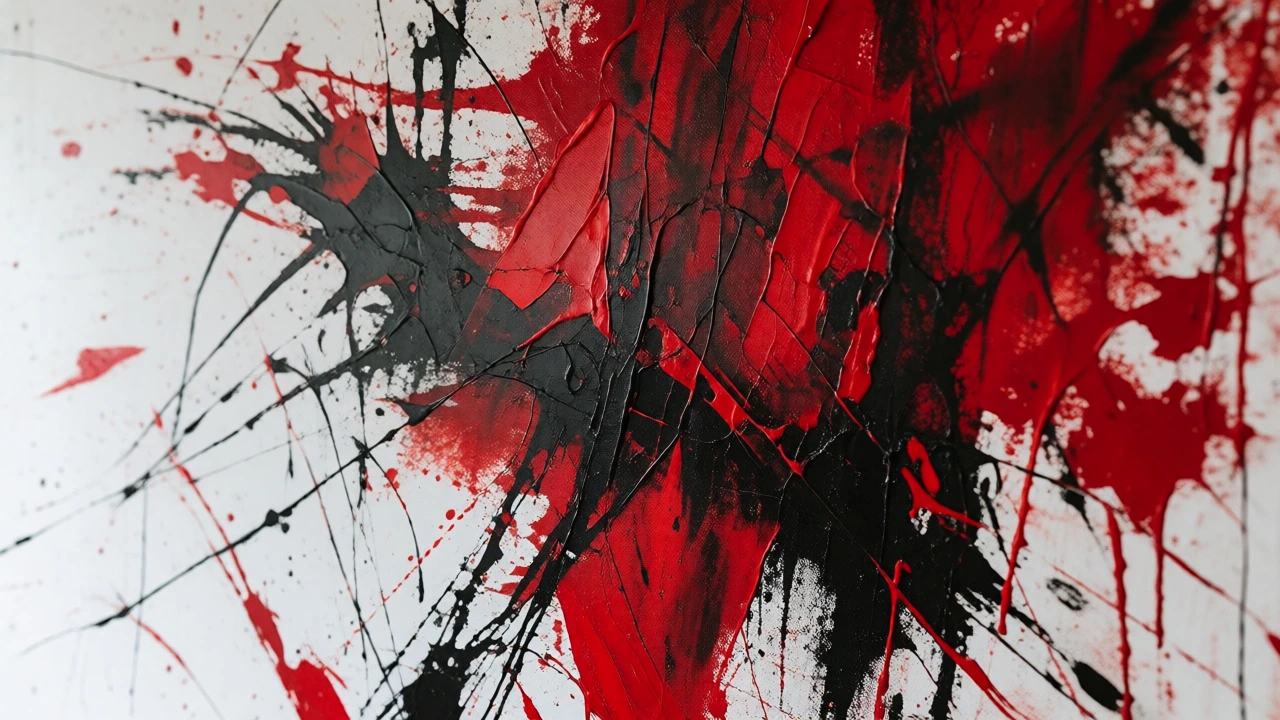
You stare at a canvas splashed with chaotic reds and jagged black lines. It doesn't look like a bowl of fruit or a mountain range. You might think, "My kid could do that," or worse, "This is just a scam." But here's the thing: the artist wasn't trying to copy a photograph. They were trying to copy a feeling.
Understanding abstract art requires shifting your brain from "what does this represent?" to "how does this make me feel?" It’s not about missing details; it’s about stripping away the noise to reveal the core emotion or idea underneath. Whether you’re an aspiring painter wondering if you should ditch the easel for pure color fields, or a collector confused by price tags on blank-looking canvases, the answer lies in the intent behind the brushstroke.
The Shift From Representation to Essence
For centuries, the primary job of visual art was documentation. If you wanted to remember what your grandfather looked like, you commissioned a portrait. If you wanted to record a battle, you painted a scene. But then photography arrived in the mid-19th century. Suddenly, a machine could capture reality faster and more accurately than any human hand. This didn't kill painting; it liberated it.
Impressionism was the first major crack in the foundation. Artists like Monet stopped worrying about perfect outlines and started capturing light and movement. But it was Wassily Kandinsky, often called the father of abstract art, who took the leap fully. In his 1911 treatise *Concerning the Spiritual in Art*, he argued that colors and shapes have their own inherent language, independent of objects. A triangle isn't just a shape; it has energy. Yellow isn't just a color; it screams. By removing the object, the artist removes the distraction, allowing the viewer to engage directly with these visual forces.
Think of it like music. When you listen to a symphony, you don't ask, "What specific chair is this note describing?" You just feel the tension, the release, the joy, or the sorrow. Abstract art attempts to do the same thing for the eyes.
Emotional Directness and Psychological Depth
One of the most powerful reasons artists go abstract is to bypass the logical brain and hit the gut. Realistic art engages your recognition centers: "Ah, that is a tree." Abstract art engages your limbic system, where emotions are processed. Mark Rothko, a giant of the Abstract Expressionist movement, famously said, "I'm interested only in expressing basic human emotions-tragedy, ecstasy, doom." He knew that if you put a recognizable figure in his paintings, viewers would focus on the figure rather than the overwhelming scale and color saturation designed to envelop them.
This approach allows artists to explore complex psychological states that words fail to capture. How do you paint anxiety? A realistic depiction might show a person sweating or pacing. An abstract approach might use tight, scratchy charcoal lines against a suffocating gray background. The viewer feels the claustrophobia without needing a narrative context. For many creators, this direct channel to emotion is more honest than trying to stage a scene.
Exploring Pure Form and Materiality
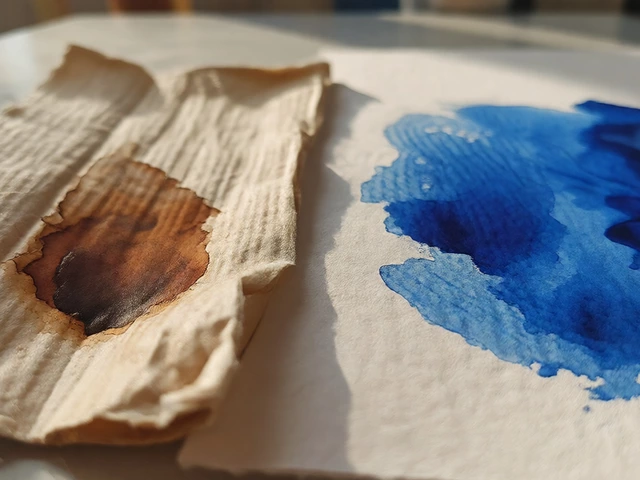
Sometimes, the subject of the art is the art itself. Artists become obsessed with the physical properties of their medium. What happens when you pour industrial enamel onto aluminum? How does oil paint behave when dragged with a squeegee? In Color Field painting, artists like Helen Frankenthaler explored how thin washes of turpentine-thinned oil soaked into unprimed canvas, creating a stain that felt part of the fabric rather than sitting on top of it.
This fascination with materiality turns the canvas into an object, not just a window. The texture becomes as important as the image. You can see the ridges of thick impasto, the smooth flow of acrylic, or the roughness of mixed media collage. For the artist, the process of manipulating these materials becomes a form of meditation or investigation. They aren't asking "What does this look like?" but "What can this material do?"
| Motivation | Focus | Viewer Engagement | Example Artist |
|---|---|---|---|
| Representation | Accurate depiction of reality | Recognition and narrative | Leonardo da Vinci |
| Expression | Conveying internal emotion | Empathy and visceral reaction | Edvard Munch |
| Abstraction | Pure form, color, and concept | Introspection and sensory experience | Piet Mondrian |
Freedom from Narrative Constraints
Realistic art often tells a story. And stories come with baggage. Who is that woman? Where is she going? Why is she sad? These questions can limit the artwork's meaning to a specific moment or character. Abstraction frees the artist from having to explain the plot.
Consider Jackson Pollock. His drip paintings don't tell you a story about a guy standing over a canvas. They are records of movement. Every drop captures a specific gesture, speed, and direction. The "story" is the dance of the body. By removing figures, landscapes, and symbols, the artist creates a space where the viewer brings their own interpretation. One person sees chaos; another sees rhythm. One sees anger; another sees freedom. This ambiguity is a feature, not a bug. It makes the art timeless because it doesn't rely on cultural references that might fade.

Challenging Perception and Tradition
Artists also create abstract work to break rules. Each generation wants to prove they aren't just repeating their predecessors. In the early 20th century, Cubism shattered perspective. Later, Minimalism stripped art down to simple geometric shapes to reject the emotional excess of Abstract Expressionism. Artists like Donald Judd created boxes that asked, "Is this sculpture? Is this furniture? Or is it just a box?"
This challenge keeps the conversation alive. When an artist presents a monochrome white canvas, they are forcing the audience to confront their expectations. Why do we expect complexity? Why do we need beauty to be decorative? These provocations push culture forward. Without artists willing to make things that confuse people, art would stagnate in comfortable repetition.
How to Engage With Abstract Art
If you're looking at an abstract piece and feeling stuck, try this checklist:
- Stop searching for objects. Give yourself permission to not know what it "is." Treat it like instrumental music.
- Notice the scale. Does the piece dwarf you or sit comfortably in your peripheral vision? Scale dictates intimacy.
- Track the eye. Where does your gaze land first? Where does it move next? Follow the path the artist laid out.
- Check the texture. If possible, look closely. Are there layers? Scrapes? Splatters? These reveal the time and effort invested.
Remember, the artist’s intent is just one half of the equation. Your reaction completes the work. If a splash of blue makes you feel calm, the art succeeded, regardless of whether the artist intended calm or melancholy.
Is abstract art easier to create than realistic art?
Not necessarily. While it may lack the technical requirement of precise anatomical proportion or perspective, abstract art demands a deep understanding of composition, color theory, and balance. Making a messy painting is easy; making a compelling abstract composition that holds the viewer's attention is difficult. Many abstract artists spend years mastering fundamental drawing skills before breaking the rules intentionally.
Why do some abstract paintings sell for millions?
Value in the art market is driven by historical significance, provenance, rarity, and critical acclaim, not just labor hours. Works by pioneers like Kandinsky or Pollock are considered foundational to modern history. Their prices reflect their status as cultural icons and investment assets, similar to how rare vintage cars or real estate hold value beyond their utility.
Can anyone learn to appreciate abstract art?
Yes. Appreciation is a skill that develops with exposure. Start by spending five minutes with a single piece instead of rushing through a gallery. Read about the artist's intent to get a starting point, but prioritize your own sensory response. Over time, you'll begin to distinguish between successful compositions and those that feel flat or arbitrary.
What is the difference between abstract and non-objective art?
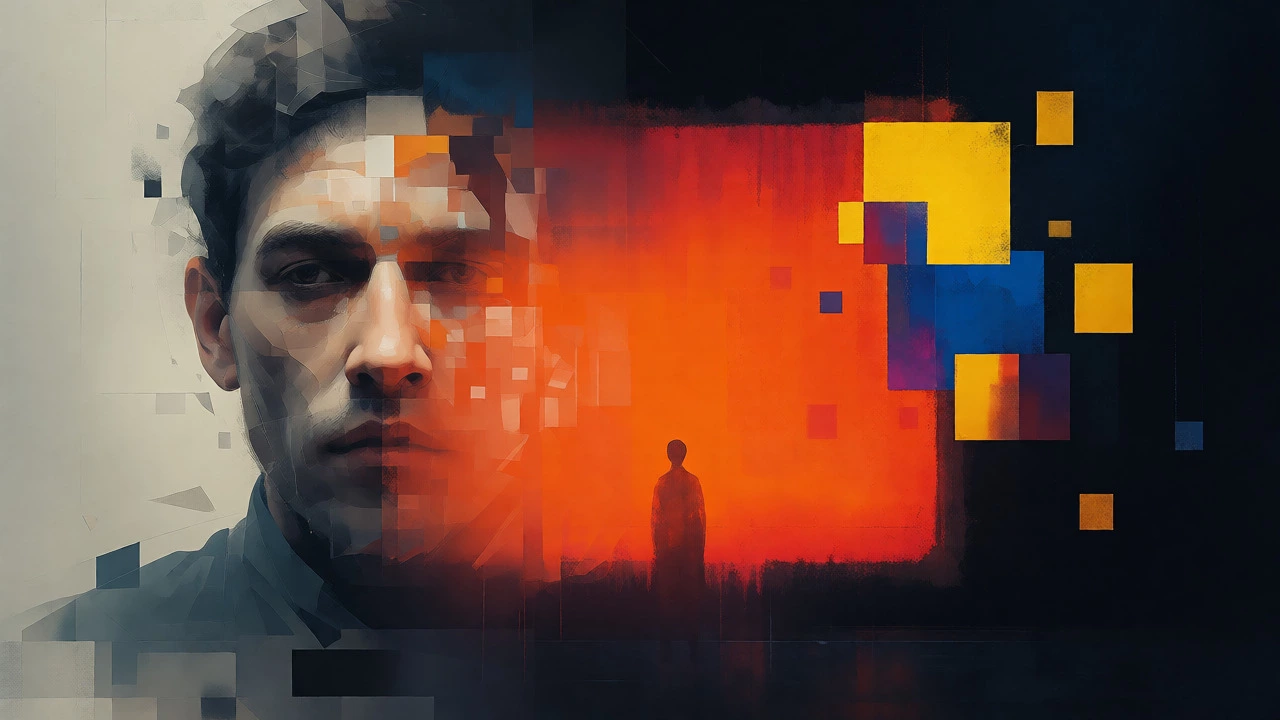
Abstract art usually starts with a real-world reference (like a landscape) and distorts or simplifies it until it's barely recognizable. Non-objective (or purely abstract) art has no reference to the physical world at all. It exists solely as shapes, colors, and lines. For example, a distorted portrait is abstract; a grid of colored squares is non-objective.
Does abstract art have a hidden message?
Sometimes, but not always. Some artists embed political or social commentary (like the Dadaists mocking WWI). Others are exploring purely aesthetic or spiritual concepts. Often, the "message" is simply the experience of the visual elements themselves. Don't assume every swirl hides a secret code; sometimes a circle is just a circle exploring geometry.