Picasso Paint Timeline
Affordable, quick-drying materials for sketching and studies
Affordable, portable, fast-drying
Used for sketches and emotional expression
Notable works: The Old Guitarist (1901)
Transparent layers for melancholy expression
Layered thin washes for depth without heavy pigment
Suitable for melancholic, fragile mood
Notable works: The Old Guitarist
Rich, reworkable materials for structural experimentation
Linseed oil-based paints (Talens, Schmincke)
Slow drying for reworking surfaces
Notable works: Les Demoiselles d'Avignon, Guernica
Mixed media approach with paint as unifying element
Used to blend paper, rope, and other materials
Mimicked wood grain, darkened edges of scraps
Notable works: Still Life with Chair Caning
Fast-drying, unconventional materials for bold expression
Ripolin commercial enamel paint
Fast drying, bright colors, non-yellowing
Notable works: La Rêve
Experimental materials for simplified, bold works
Fast drying, no odor, bold flat colors
Used sparingly in late portraits
Notable works: Late portraits of Marie-Thérèse Walter
When you look at a Picasso painting-whether it’s the sharp angles of Les Demoiselles d’Avignon or the soft blues of his Blue Period-you’re not just seeing art. You’re seeing the physical result of choices he made with brushes, canvases, and, most importantly, paint. What kind of paint did Picasso use? The answer isn’t simple. He didn’t stick to one. He changed materials as his style changed, as new paints became available, and as his needs shifted from emotional expression to structural experimentation.
Picasso’s Early Years: Watercolor and Gouache
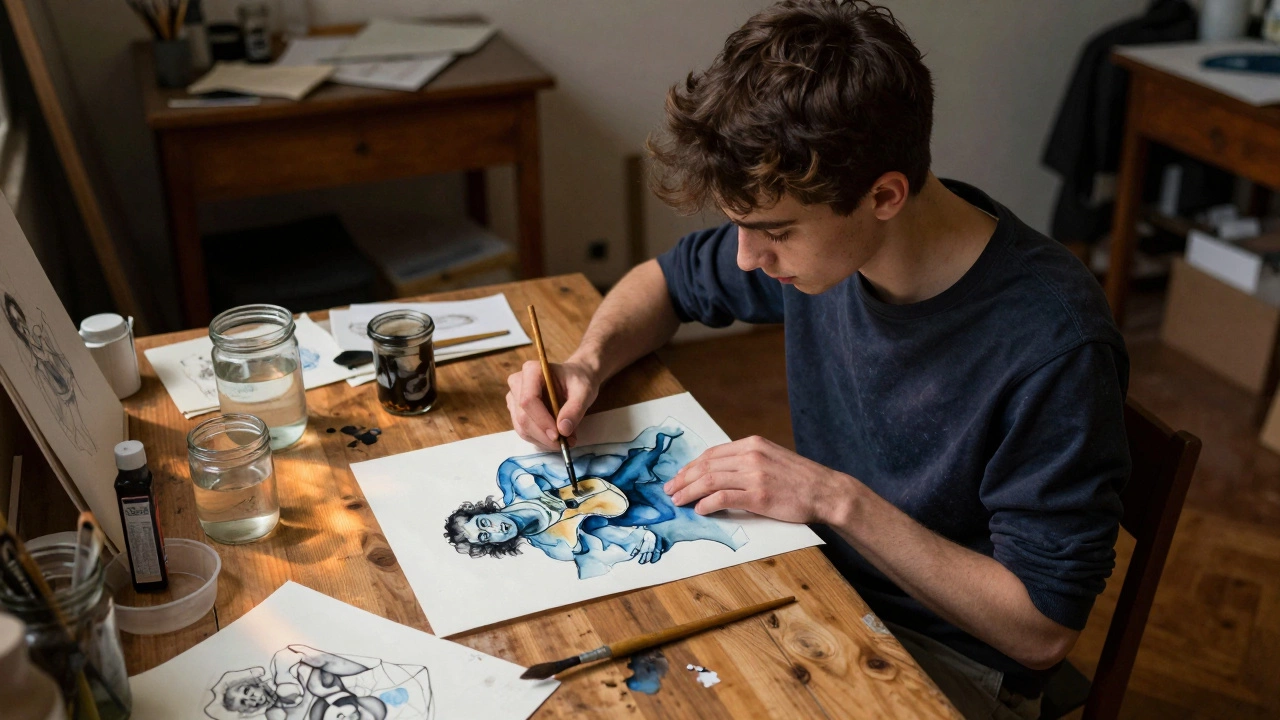
In his teens and early twenties, Picasso worked fast. He sketched constantly, often using watercolor and gouache. These were affordable, quick-drying, and portable-perfect for a young artist moving between Barcelona, Madrid, and Paris. Watercolor allowed him to capture fleeting moments: a street performer, a seated woman, the shadows of a café. He didn’t treat watercolor as a lesser medium. In 1901, during his Blue Period, he painted The Old Guitarist in watercolor and ink on paper, layering thin washes to build depth without heavy pigment. The transparency of watercolor suited his mood-melancholy, fragile, haunting.
Gouache, an opaque water-based paint, gave him more control. He used it to add bold highlights or flat areas of color without the bleed of traditional watercolor. You can see this in his 1904 sketchbook pages, where figures emerge from pale washes with solid, chalky tones. These weren’t finished works-they were studies. But they show he understood how to push water-based paints beyond their limits.
The Shift to Oil: Heavy, Slow, and Powerful
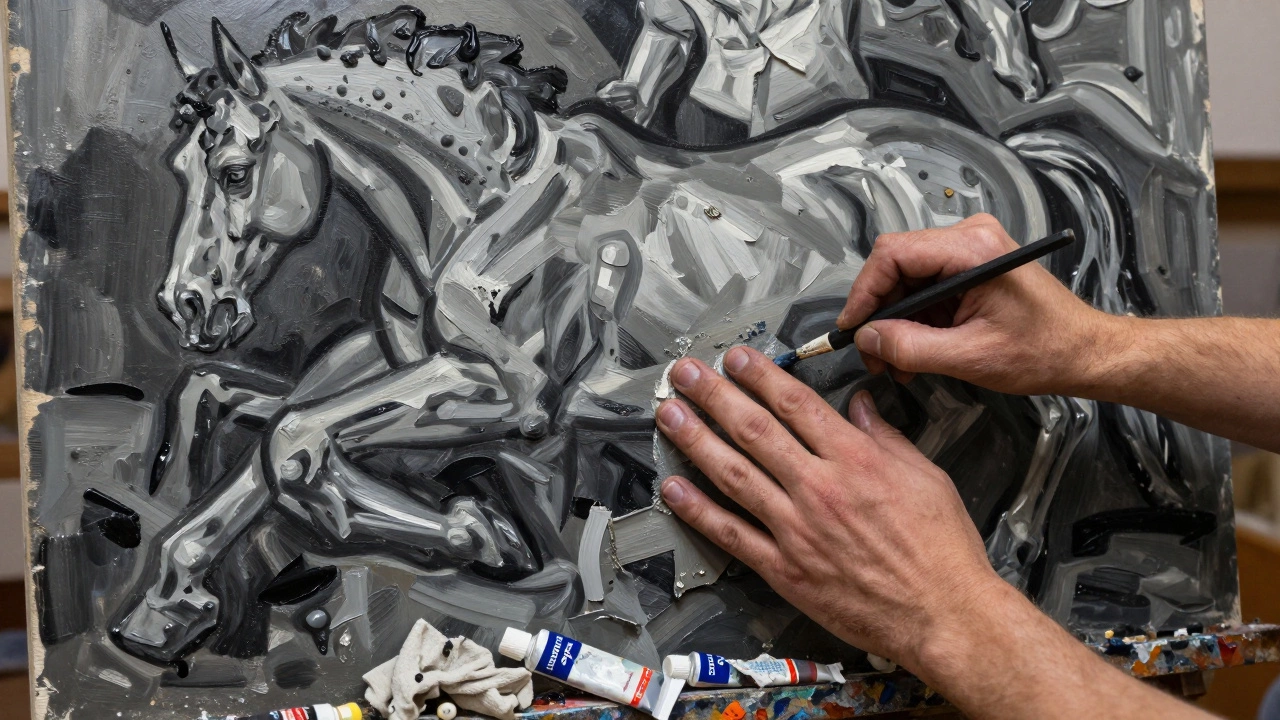
By 1906, Picasso began moving away from watercolor. He was preparing for Les Demoiselles d’Avignon, a painting that would break the rules of Western art. Oil paint was the only medium that could handle the scale, the texture, the rawness he needed. He switched to linseed oil-based paints-standard artist-grade oils from brands like Talens and Schmincke. These paints dried slowly, letting him rework surfaces for weeks. He mixed them with turpentine to thin them, or with stand oil to create glossy, enamel-like finishes.
He didn’t just use oil because it was traditional. He used it because it was forgiving. He could scrape off a face and repaint it. He could build up thick impasto on a shoulder, then drag a brush through it to reveal layers underneath. In Guernica (1937), he used oil to create a grayscale nightmare-no color, just texture and weight. The paint was applied in thick strokes, almost sculpted. You can see the ridges of the brush in the horse’s mane, the gritty buildup on the fallen warrior’s body. That wasn’t luck. That was control.
Collage and Mixed Media: Breaking the Rules of Paint
By 1912, Picasso had grown bored with paint alone. He started gluing newspaper clippings, wallpaper, and rope onto canvas. He called it collage. But even here, paint was still part of the game. He painted over the glued paper to blend it into the composition. He used oil paint to mimic wood grain, or to darken the edges of a newspaper scrap so it looked like it belonged. In Still Life with Chair Caning, he painted a rope frame around a piece of oilcloth-then painted a lemon on top. The lemon wasn’t real. The oilcloth wasn’t paint. But the paint holding it all together was real, and intentional.
This wasn’t a rejection of paint. It was an expansion. He treated paint as one tool among many. He didn’t care if something was ‘supposed’ to be paint. He cared if it worked.
Later Years: Experimentation and New Materials
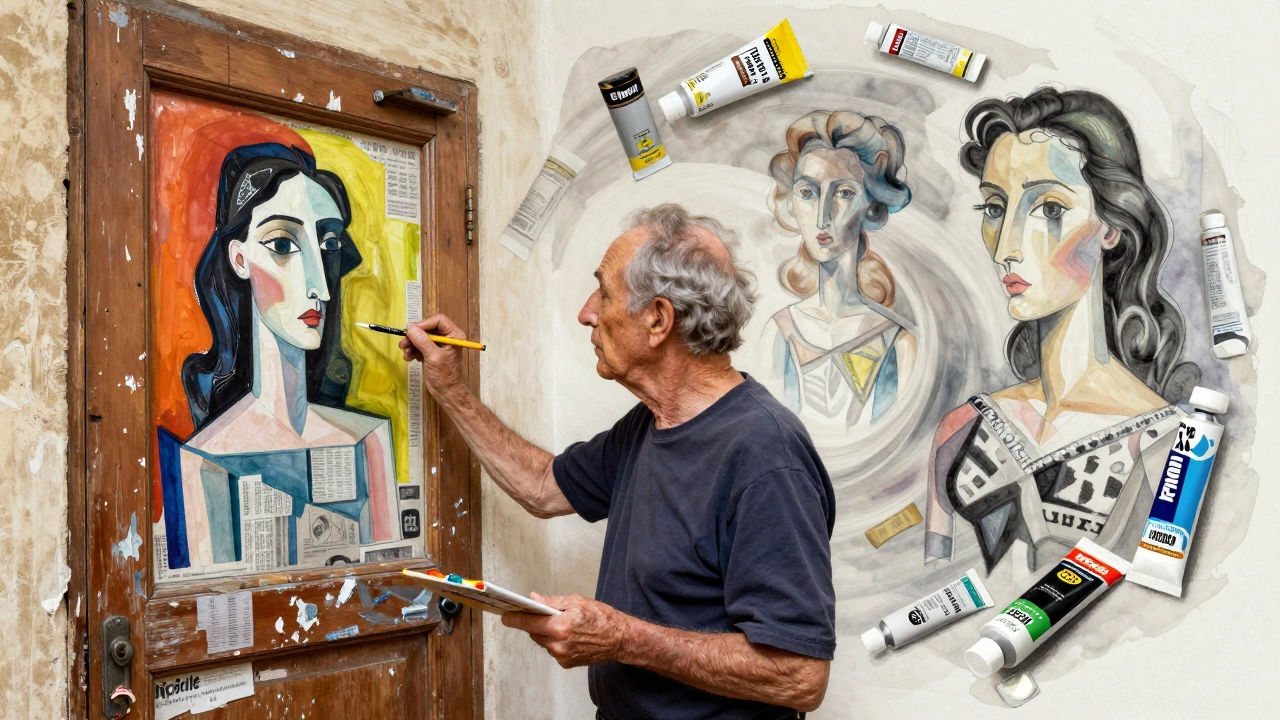
In the 1950s and 60s, Picasso was in his 70s and 80s. He painted like a man who had nothing left to prove. He used house paint-brand names like Ripolin, a commercial enamel sold in hardware stores. Why? Because it dried fast, didn’t yellow, and came in bright, unnatural colors. He used it on cardboard, on plywood, on old doors. In La Rêve (1932), he used a mix of oil and Ripolin to get that glossy, almost plastic skin tone on Marie-Thérèse Walter’s face. It looked surreal. It looked alive.
He also used acrylics later in life, though sparingly. Acrylics were still new in the 1960s. Most artists didn’t trust them. But Picasso did. He liked that they dried fast and didn’t smell like turpentine. He used them in his final portraits-simple, bold, almost childlike. He didn’t need slow-drying oils anymore. He had the confidence to work fast.
What About Watercolor? Did He Ever Go Back?
Yes. Even after he became famous for oil and collage, Picasso returned to watercolor. In 1959, at age 77, he painted a series of watercolor portraits of his wife Jacqueline. They’re loose, quick, full of energy. He didn’t use expensive paper. He used cheap, thin sheets. He let the colors bleed. He didn’t fix mistakes. He let them stay. These weren’t studies. They were finished works. And they’re among his most intimate.
Watercolor wasn’t a beginner’s medium to him. It was a way to think quickly, to feel without overworking. He once said, ‘I don’t seek, I find.’ That applied to his materials too. He didn’t choose paint because it was ‘right.’ He chose it because it helped him find what he was looking for.
What Paint Did He Avoid?
Picasso didn’t use tempera much. It was too brittle, too old-fashioned. He didn’t use pastels for large works-they didn’t hold up. He avoided spray paint until the very end, and even then, only in sketches. He didn’t use digital tools-there weren’t any. He didn’t use synthetic polymer paints early on because they didn’t exist. His choices were shaped by what was available, and what felt true to his vision.
Why Does This Matter Today?
When you paint, you’re not just choosing colors. You’re choosing time. Oil lets you wait. Watercolor forces you to act. Acrylics let you rush. House paint lets you be reckless. Picasso didn’t care about tradition. He cared about what each material could do for his idea.
Modern artists still ask: ‘What should I use?’ The answer isn’t in the brand. It’s in the question behind the brushstroke. What do you want to say? How fast? How rough? How permanent? Picasso didn’t have a favorite paint. He had a favorite way of thinking-and he let his materials follow.
Did Picasso use watercolor?
Yes. Picasso used watercolor throughout his career, especially in his early years and later in life. He painted watercolor studies in his teens, created finished works during his Blue Period, and returned to it in the 1950s for intimate portraits of his wife Jacqueline. He valued its speed and transparency, using it for quick sketches and emotional expression.
What oil paint brands did Picasso use?
Picasso used artist-grade oil paints from European brands like Talens and Schmincke. These were standard in early 20th-century studios. He mixed them with turpentine for thin washes and stand oil for glossy finishes. He wasn’t loyal to one brand-he used what was available and worked best for the effect he wanted.
Did Picasso use house paint?
Yes. In the 1930s and 1940s, Picasso began using Ripolin, a commercial enamel paint sold in hardware stores. He liked its fast drying time, bright colors, and lack of yellowing. He used it on unconventional surfaces like cardboard and wood, and in paintings like La Rêve, where its glossy finish gave skin a surreal, smooth quality.
Did Picasso use acrylic paint?
Yes, but sparingly. Acrylics became available in the late 1950s. Picasso experimented with them in his 80s, drawn to their quick drying time and lack of odor. He used them in late portraits, where bold, flat colors suited his simplified style. He didn’t rely on them-he used them as another tool, not a replacement.
Why didn’t Picasso use tempera or pastels?
Tempera dried too fast and cracked over time, making it unsuitable for his layered, reworked style. Pastels were too fragile for large or long-lasting works. Picasso needed materials that could be scraped, built up, or painted over. He avoided anything that limited his ability to change his mind.