National Park Conservation Impact Calculator
How Artists Saved America's Wild Places
Based on historical records from Thomas Moran and Albert Bierstadt's work, this tool estimates how many national parks might not exist today if their paintings hadn't influenced conservation efforts.
Enter a year to see the impact of landscape artists on national parks.
When people ask who was America’s best landscape artist, they’re not just looking for a name-they’re asking who captured the soul of the country’s wild places better than anyone else. The answer isn’t just about technical skill. It’s about how deeply an artist felt the land, how they made others see it with awe, and how their work shaped the nation’s identity.
The Land as a Sacred Space
In the mid-1800s, America was expanding westward. Railroads cut through forests, settlers cleared prairies, and the government began mapping the unknown. At the same time, painters started traveling into places no one had painted before-Yellowstone, the Grand Canyon, the Sierra Nevada. These weren’t just scenes. They were revelations.
Artists like Thomas Moran and Albert Bierstadt didn’t paint pretty views. They painted sacred spaces. Their canvases showed mountains rising like cathedrals, rivers glowing with golden light, skies that felt infinite. These weren’t just landscapes. They were spiritual experiences made visible.
Before photography, these paintings were how most Americans saw the West. People in New York and Boston bought prints of Bierstadt’s Among the Sierra Nevada, California and thought, That’s real? That’s ours? Moran’s The Grand Canyon of the Yellowstone helped convince Congress to protect the area as a national park in 1872-the first in the world.
Thomas Moran: The Painter Who Made Yellowstone Real
If you had to pick one artist who defined American landscape painting, Thomas Moran is the strongest candidate. Born in England in 1837, he moved to the U.S. as a child and became the visual voice of America’s wild heart.
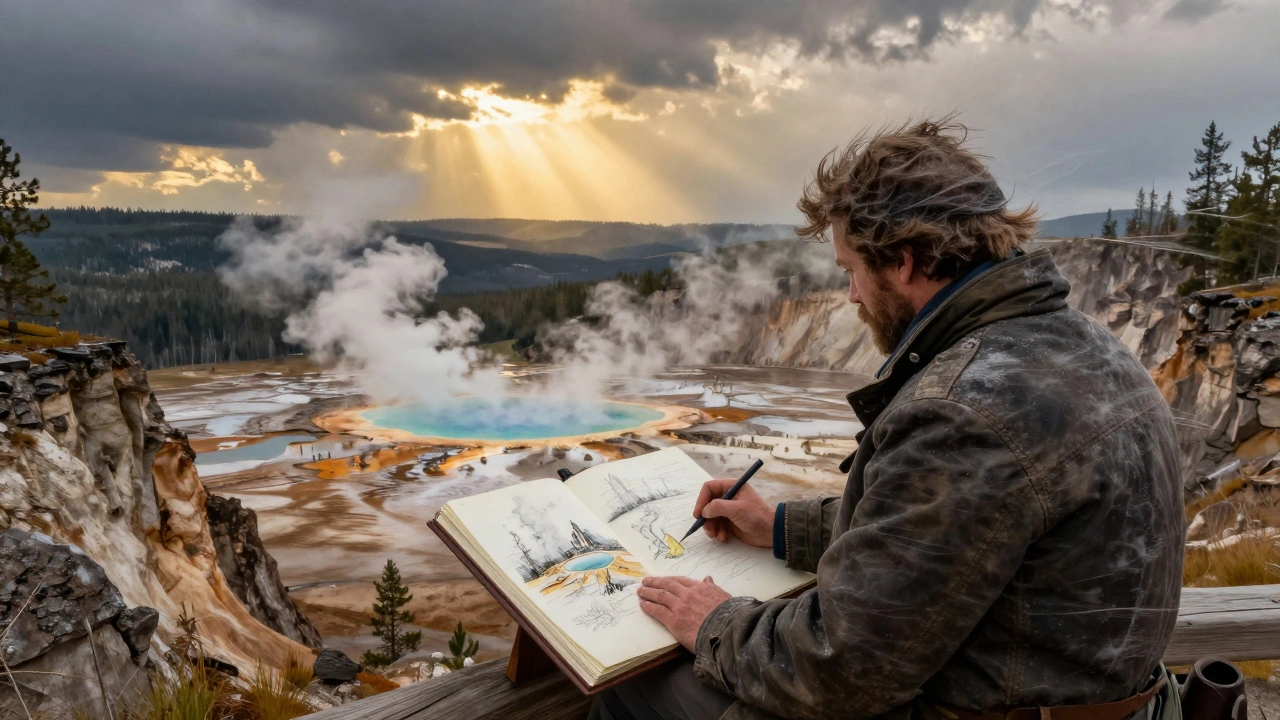
His breakthrough came in 1871 when he joined the U.S. Geological Survey expedition to Yellowstone. He sketched for weeks in freezing conditions, sometimes climbing cliffs just to get the right angle. He didn’t just copy what he saw-he amplified it. The turquoise pools, the steam vents, the towering cliffs-he painted them with colors so vivid they looked unreal. But they weren’t fake. They were truer than reality.
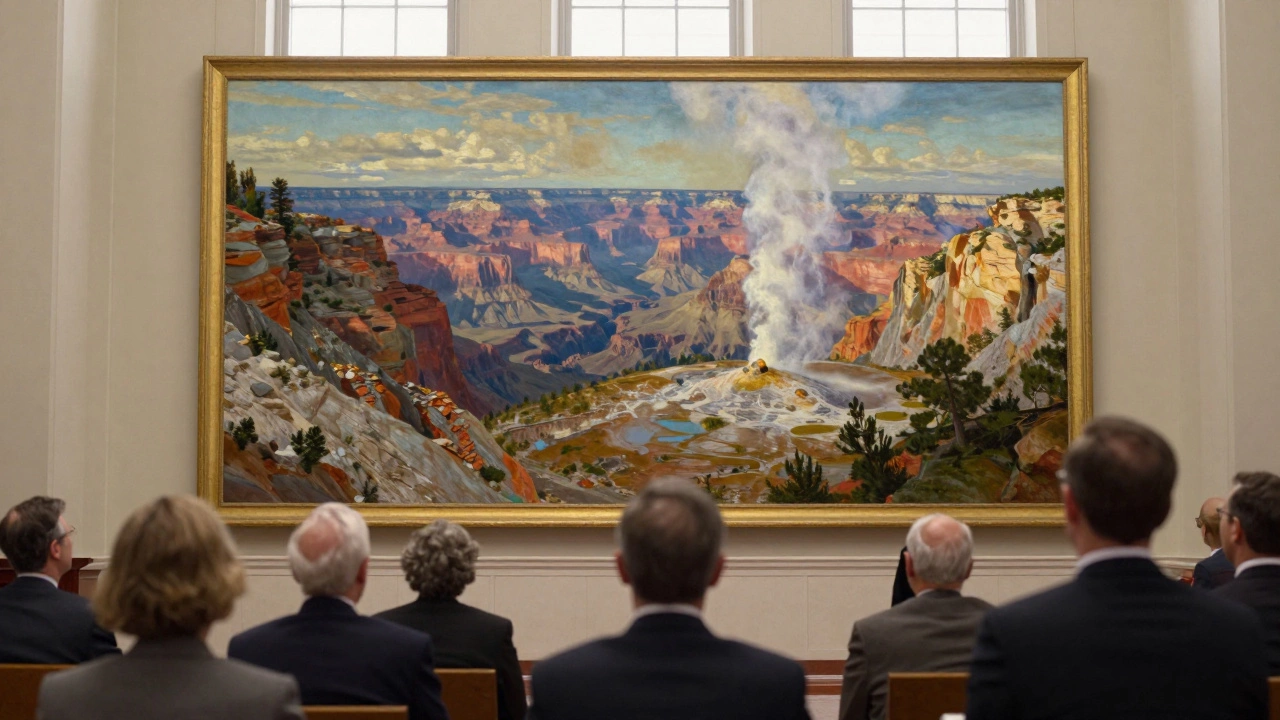
When he returned, he painted The Grand Canyon of the Yellowstone in a massive 7-by-12-foot canvas. It was displayed in the U.S. Capitol. Lawmakers saw it. They didn’t just see rocks and water. They saw a national treasure. That painting helped turn Yellowstone into a protected space.
Moran’s style wasn’t just about detail. It was about emotion. He used light like a composer uses music-swelling, fading, building tension. His skies weren’t blue. They were alive.
Albert Bierstadt: The Master of Scale
If Moran was the poet of color, Bierstadt was the architect of awe. His paintings were enormous-some over 10 feet tall. He painted the Rocky Mountains so large they dwarfed the tiny figures of explorers below. Viewers had to step back to take it all in.
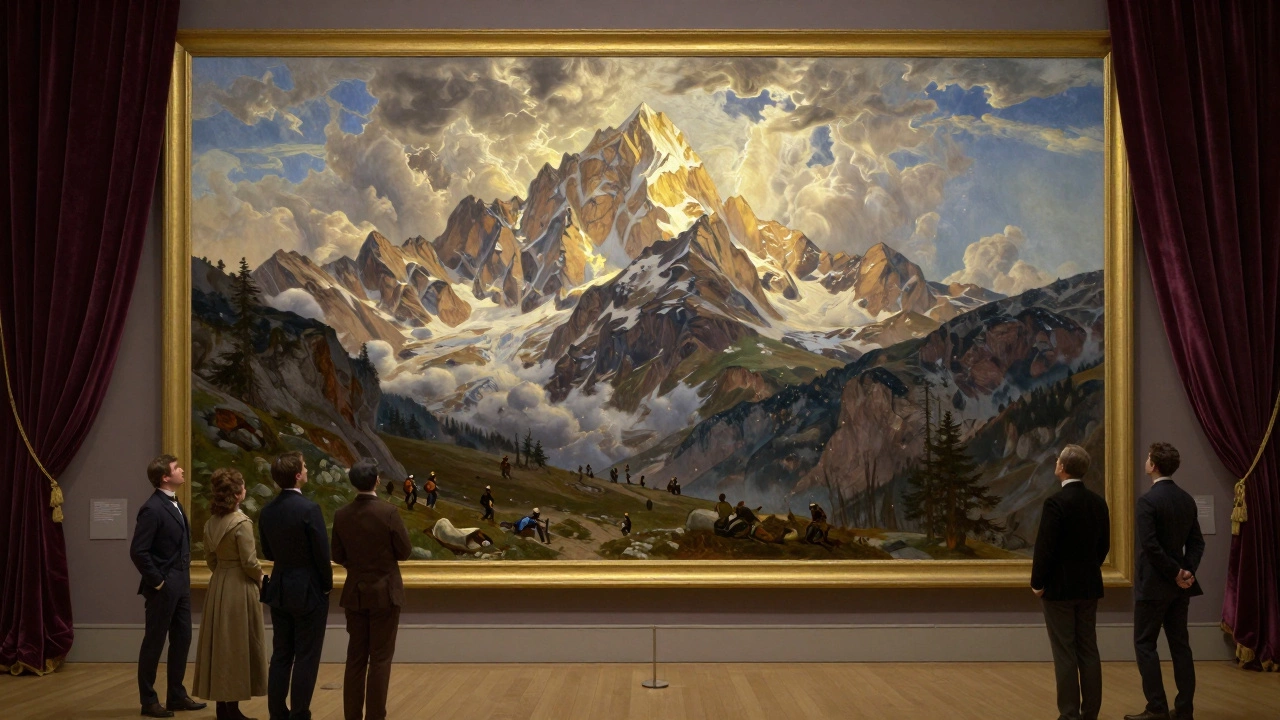
Bierstadt’s The Rocky Mountains, Lander’s Peak (1863) was shown in New York with a velvet curtain and dramatic lighting. People paid to see it. They called it a spectacle. But behind the showmanship was deep research. He traveled with survey teams, studied geology, and sketched for months. He didn’t invent scenes-he revealed their grandeur.
His work was sometimes criticized for being too dramatic. Critics said he exaggerated the light, the clouds, the size of the peaks. But that’s exactly why he mattered. He didn’t paint what was there. He painted what people felt when they stood in front of those mountains.
The Hudson River School and Its Legacy
Moran and Bierstadt weren’t alone. They were part of the Hudson River School, a loose group of painters who believed nature was a source of moral truth. Thomas Cole, the founder, painted The Oxbow in 1836-a scene of wild forest meeting cultivated land. It wasn’t just a view. It was a warning and a promise.
These artists didn’t just record scenery. They told stories. A lone figure on a cliff wasn’t just hiking. It was standing at the edge of a new nation. A storm over a lake wasn’t weather-it was divine power.
Their work shaped how Americans saw themselves. In a country still finding its identity, these paintings said: You are part of something vast, beautiful, and worthy of protection.
Why Moran Stands Above the Rest
Bierstadt painted bigger. Asher Durand painted more quietly. Frederic Church painted more dramatically. But Moran had something the others didn’t: direct impact.
His paintings didn’t just hang in museums. They changed laws. They saved land. He was the first American artist whose work directly influenced national policy. That’s rare.
He also painted more places-Yellowstone, the Grand Canyon, Yosemite, the American Southwest. He didn’t just stick to the East Coast. He went where no one else had, and he made those places real for millions.
His technique was unmatched. He used watercolor sketches on-site, then built massive oil paintings back in his studio. He layered pigments to make light glow from within the canvas. You can still see the brushwork in his best pieces-the way he scraped white paint across blue to mimic mist over a canyon.
Today, his original sketches from the Yellowstone expedition are held at the Smithsonian. They’re not just art. They’re historical documents.
What Made Them Different From European Artists
European landscape painters like Turner or Constable focused on mood, memory, or the sublime. But American artists had a different mission: to show a land that was new, untouched, and vast.
They painted mountains that hadn’t been named. Rivers that hadn’t been charted. Forests that hadn’t been logged. Their job wasn’t to romanticize the past. It was to define the future.
That’s why their work still matters. They didn’t just paint scenery. They painted possibility.
Where to See Their Work Today
If you want to stand where these artists stood, visit the Smithsonian American Art Museum in Washington, D.C. You’ll find Moran’s The Grand Canyon of the Yellowstone in its original size. The Metropolitan Museum of Art in New York holds Bierstadt’s The Rocky Mountains. The Yellowstone Historic Center in Gardiner, Montana, has his original field sketches.
These aren’t just old paintings. They’re the reason we still have national parks. They’re the reason we still go hiking, camping, and staring at horizons with wonder.
Legacy: More Than Art
Thomas Moran didn’t just make beautiful pictures. He made people care. He showed a nation that its wild places weren’t obstacles to be conquered-they were treasures to be preserved.
That’s why he’s considered America’s best landscape artist. Not because his brushstrokes were perfect. Not because he sold the most paintings. But because his art changed how a country saw itself-and what it was willing to protect.
Next time you stand on a cliff overlooking a canyon, or watch the sun set over a lake, remember: someone once painted that view-and because they did, we still get to see it.