Music Lyric Emoji Decoder
How It Works
Enter emoji sequences from song lyrics to see what they mean. Our tool breaks down each emoji and explains the overall meaning in context.
Artists use these emojis to bypass content filters while still communicating explicit meanings.
Decoded Meaning
Overall Meaning
Individual Emoji Meanings
Why Artists Use These
Did you know?
Artists use emojis to bypass content filters on streaming platforms. Spotify and Apple Music flag explicit language, but emojis like 🍆 or 💦 aren't recognized as words.
You’ve seen it: a song on Spotify, a TikTok clip, a lyric video - and suddenly there’s 🍆🍑🍒💦. No words. Just fruit and fluids. You pause. You wonder. Is this some new code? A secret handshake between artists? Or just a glitch in the algorithm?
It’s not a glitch. It’s language. And it’s been around longer than you think.
What these emojis actually stand for
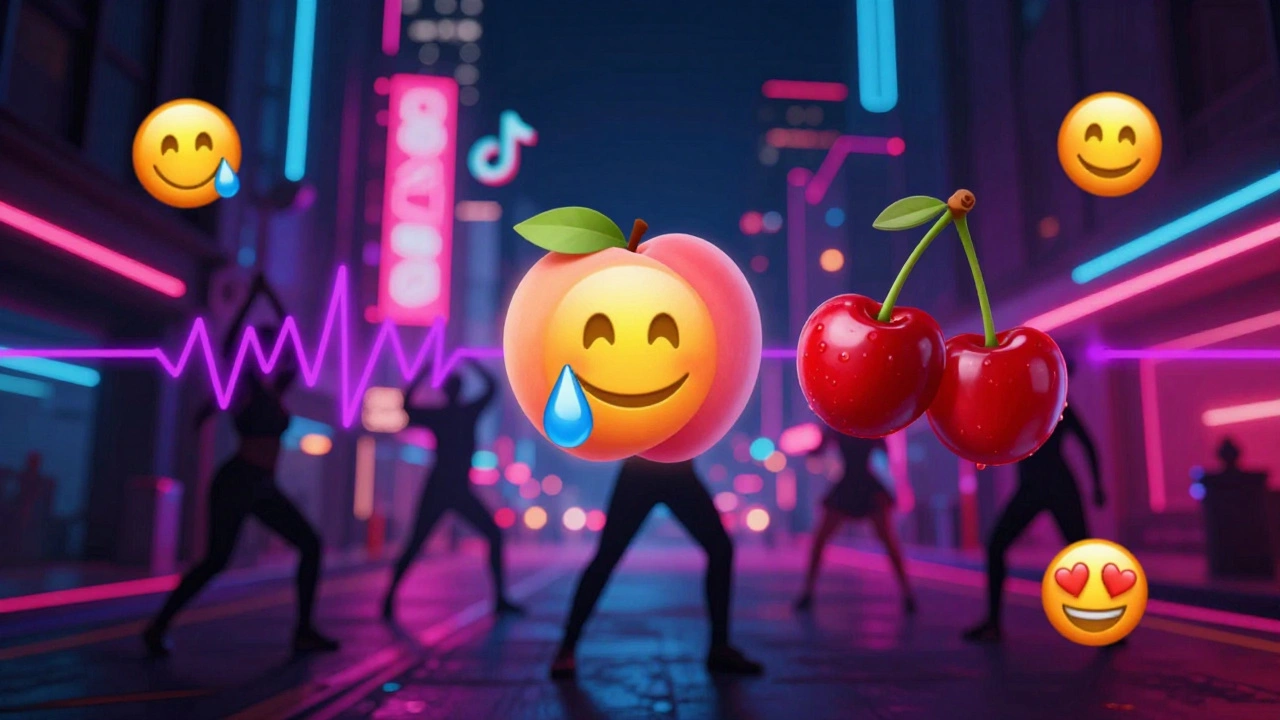
🍆 = penis. 🍑 = buttocks. 🍒 = lips or nipples. 💦 = semen or sweat. These aren’t random. They’re visual slang, used heavily in hip-hop, R&B, and pop music since at least 2018. They’re not just decorative - they’re substitutes for explicit language. A way to say something vulgar without saying it outright.
Artists use them to bypass content filters on streaming platforms. Spotify, Apple Music, YouTube - they all auto-flag explicit lyrics. But emojis? They’re invisible to most automated systems. So instead of writing “I’m gonna fuck you till you cry,” an artist writes “🍆🍑💦.” The meaning doesn’t change. The delivery does.
It’s not new. Think back to how rappers used “b*tch” and “n*gg*” as coded words. Emojis are just the next evolution. They’re digital hieroglyphs. And like all slang, they spread fast - especially with Gen Z and millennials who grew up texting with stickers and GIFs.
Why artists choose these specific emojis
Not every fruit or liquid works. There’s a reason 🍆 and 🍑 dominate. They’re universally recognizable as body parts. A banana? Too ambiguous. A grape? Too small. An apple? Too innocent. But an eggplant? Everyone knows what that means now. Thanks to years of meme culture, it’s become the go-to symbol for male anatomy.
🍑 is the same. It’s round, plump, and sits in the right place. It’s not just about shape - it’s about cultural association. In music videos, you’ll see artists pointing at their own butts while the emoji flashes on screen. It’s a visual punchline.
🍒? That one’s trickier. It can mean lips - think of the phrase “kiss me with your cherry lips.” But it’s also used for nipples, especially in songs about intimacy. The red color matters. It’s not just a fruit - it’s a signal. Think of it like lipstick on a microphone. Sexy. Attention-grabbing.
💦? That’s the climax. Literally. It means release - sweat, cum, tears. In trap music, it often signals sexual release. In ballads, it might mean emotional overflow. Context decides. But in most cases, it’s the final emoji in a sequence. The punctuation mark at the end of a sentence you never had to say out loud.
Real examples from real songs
You don’t have to guess. These emojis are in official releases.
In 2020, Lil Baby’s song “Emotionless” featured 🍆🍑🍒 in the lyric video. No words. Just those three emojis flashing with the beat. Fans immediately knew what he meant. The song hit #3 on Billboard. No one censored it.
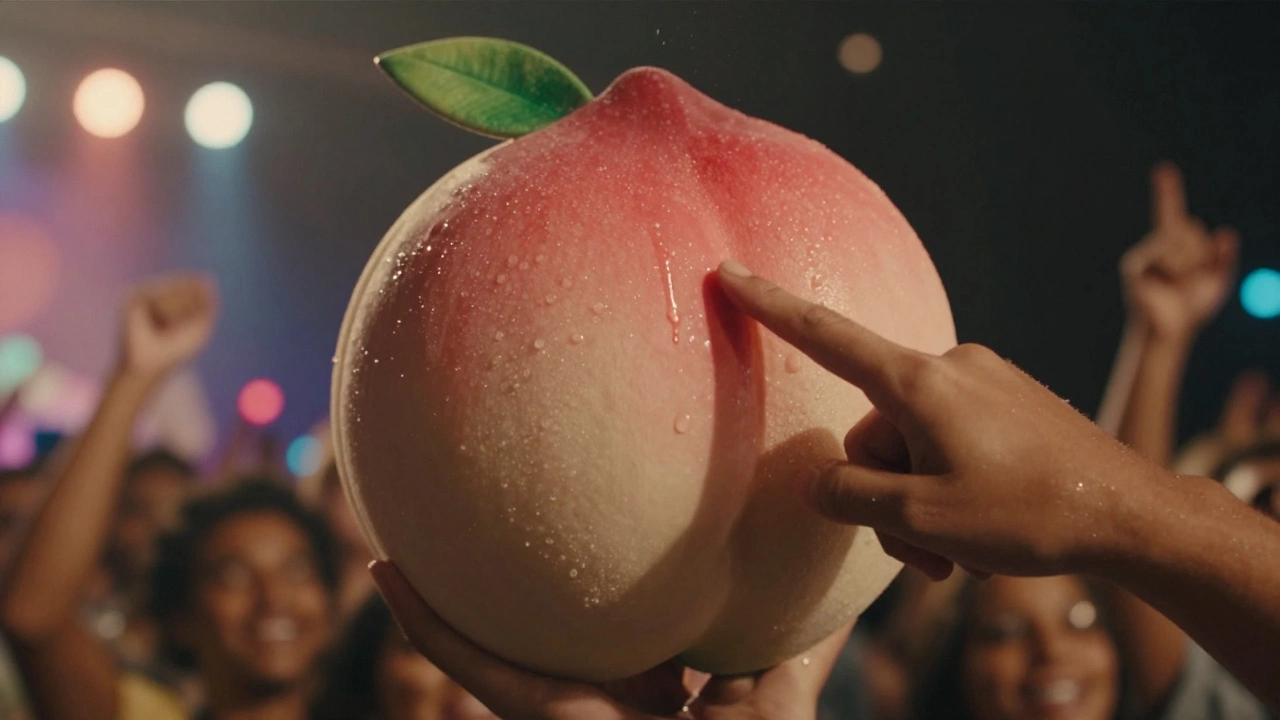
Doja Cat used 🍑💦 in her 2021 hit “Say So (Remix).” The video showed her dancing with a literal peach-shaped prop. The emoji wasn’t an afterthought - it was choreographed. The track went viral. Over 1.2 billion streams. The emojis? They didn’t hurt.
Even pop stars like Ariana Grande and The Weeknd have slipped them into captions or Instagram stories. They’re not just for rap. They’re for anyone who wants to flirt without saying a word.
Why this trend exploded on TikTok
TikTok didn’t invent this - but it turned it into a global language.
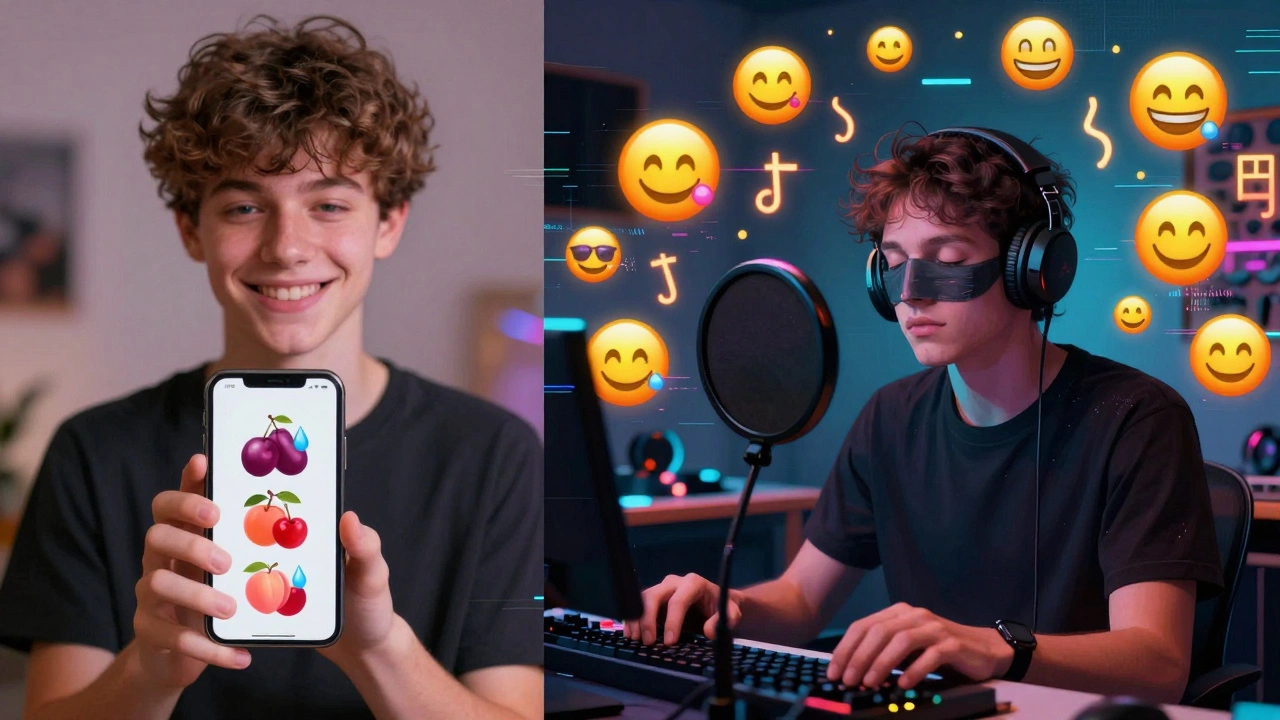
On TikTok, users started making videos with these emojis as audio captions. “When he texts 🍆🍑🍒💦 after 3 AM” - 2 million likes. “Me trying to explain to my mom why my song has 🍑 in it” - 4.7 million views. The platform rewards ambiguity. It rewards humor. It rewards mystery.
And here’s the kicker: kids as young as 13 are learning this code. They don’t need to hear the explicit lyrics. They just need to see the emojis. And suddenly, they’re fluent.
Parents panic. Teachers notice. But the artists? They’re not trying to hide. They’re trying to communicate. And if the audience gets it - then the message lands.
Is this just a fad?
Maybe. But probably not.
Slang evolves. Back in the ’90s, “yo” and “dawg” were everywhere. In the 2000s, it was “lit,” “bae,” “on fleek.” Now? It’s emojis. And they’re not going away because they’re too useful.
They’re visual. They’re fast. They’re cross-cultural. A teenager in Tokyo gets the same meaning as one in Atlanta. No translation needed. No dictionary required.
Plus, record labels love it. It keeps songs eligible for radio play. It avoids parental advisory stickers. It makes music more shareable. It’s marketing disguised as art.
And let’s be real - sometimes, saying it outright feels cheap. Letting the emojis do the talking? That’s art.
What to do if you’re confused
If you’re not sure what an emoji means in a song, check the lyrics video. Watch the artist’s Instagram. Look at fan forums. Reddit threads like r/hiphopheads and r/lyrics have entire threads dissecting emoji sequences.
Don’t assume. Don’t judge. Just observe. This isn’t about being “offended.” It’s about understanding a new layer of expression.
Think of it like jazz. The notes aren’t always played - sometimes, the silence between them tells the story. These emojis are the silence. The space. The unspoken.
How this changes how we listen to music
Before, you had to read the lyrics to get the full meaning. Now, you have to read the visuals too.
Music isn’t just audio anymore. It’s a multi-sensory experience. The emoji is part of the song. It’s a visual hook. A meme. A meme that carries meaning.
Artists are no longer just writing songs - they’re designing symbols. And the audience? We’re learning to decode them.
This isn’t dumbing down music. It’s upgrading it. It’s turning lyrics into visual poetry.
Next time you hear a track with 🍆🍑🍒💦, don’t scroll past. Pause. Listen. Watch. Let the emojis tell you what the words won’t.
Do emojis in music lyrics get flagged by streaming platforms?
Most platforms don’t flag emojis because they’re not text. Spotify and Apple Music use keyword filters for explicit language, but emojis like 🍆 or 💦 aren’t recognized as words. That’s why artists use them - they slip through content moderation while still communicating the same meaning.
Are these emojis only used in hip-hop and rap?
No. While they started in hip-hop, they’ve spread to pop, R&B, and even indie music. Artists like Ariana Grande, The Weeknd, and Dua Lipa have used them in social media captions and lyric videos. They’re now part of mainstream music culture, not just one genre.
Why not just use the actual words?
There are two reasons: censorship and style. Explicit words trigger parental advisories, limit radio play, and get removed from playlists. Emojis avoid that. Plus, they’re playful. They turn something vulgar into something clever - a visual pun that feels more artistic than crude.
Can emojis replace lyrics entirely?
Not fully - but they can carry the emotional core. Some tracks now use only emojis in their official lyric videos, relying on the music and visuals to convey meaning. Fans decode them, remix them, and turn them into memes. In that sense, yes - they’re replacing words in the way visuals now replace dialogue in silent films.
Is this appropriate for younger listeners?
It’s complicated. Kids as young as 12 are learning these emojis through TikTok and YouTube Shorts. Parents often don’t realize what they mean until their child starts using them. The emojis themselves aren’t illegal or harmful - but the underlying meaning is adult. Awareness and conversation matter more than censorship.