Sculpture Style Identifier
Describe the artwork to discover its sculptural style
1. Does it look like a recognizable object or person?
2. What is the primary goal of the piece?
2. How is the abstraction presented?
Style Name
Description goes here...
To understand where sculpture fits, we have to look at it as sculpture art, a three-dimensional expression that occupies real space. Unlike a painting, which tricks your eye into seeing depth on a flat surface, a sculpture is actually there. You can walk around it, touch it (if the museum guard isn't looking), and see how the light hits it from different angles. This physical presence is what separates it from every other visual art form.
The Big Divide: Figurative vs. Abstract
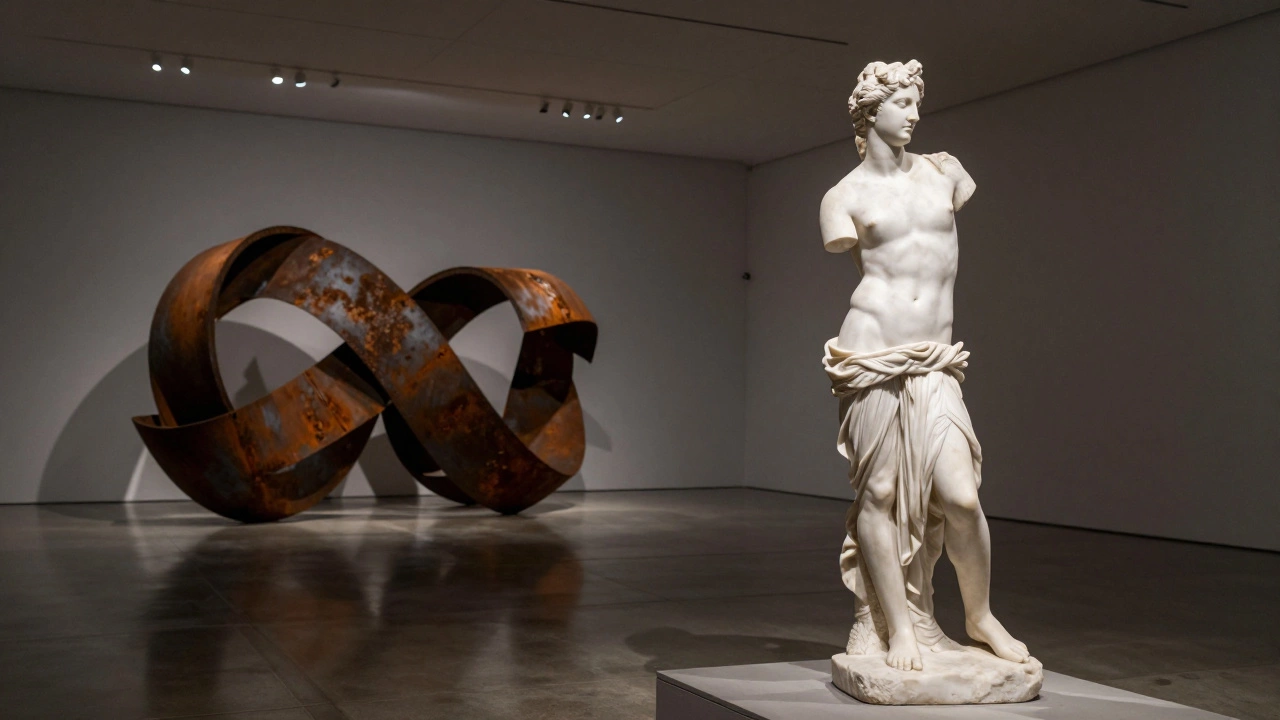
If you're trying to categorize a piece, the first question to ask is: "Does this look like something I recognize?" This is the divide between figurative and abstract styles.
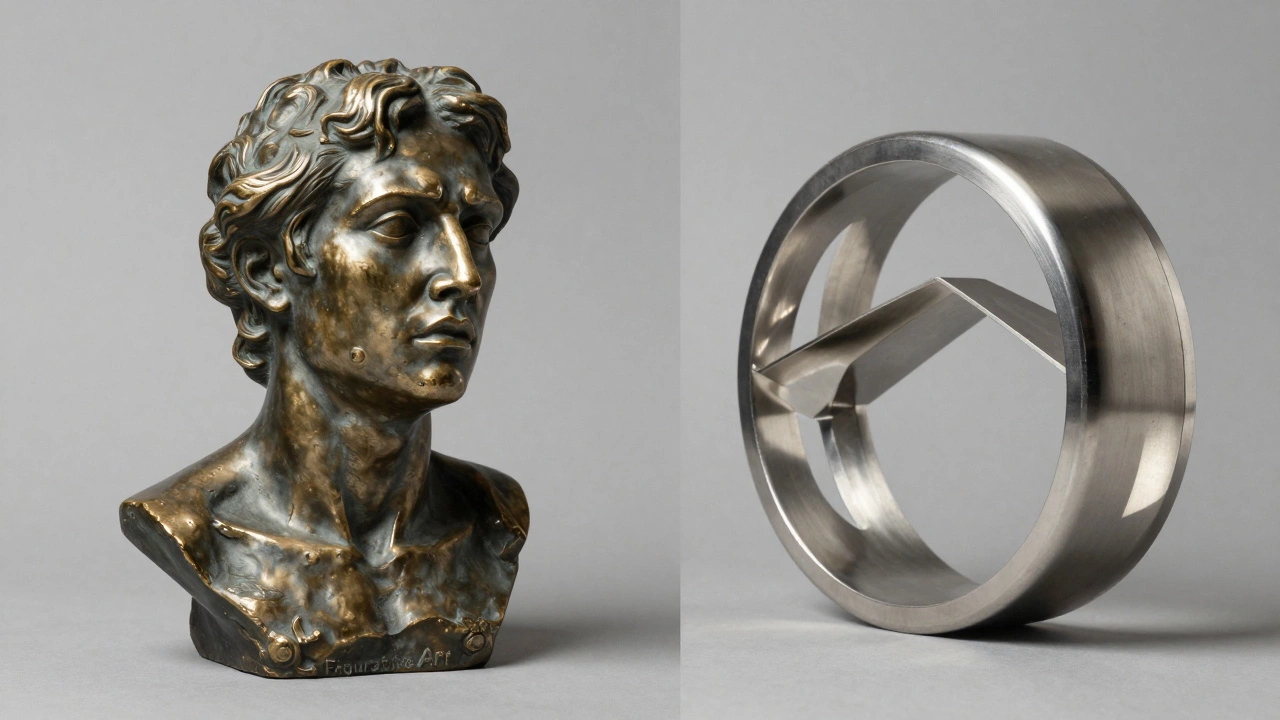
Figurative Art is art that represents recognizable forms from the real world, most often the human figure. When you see a statue of a Greek god or a bronze bust of a politician, you're looking at figurative sculpture. The goal here is often mimicry-capturing the tension in a muscle, the fold of a dress, or the sadness in a face.
Abstract Art, on the other hand, doesn't try to copy nature. Instead, it uses shapes, colors, and textures to evoke a feeling or an idea. An abstract sculpture might just be a series of interlocking steel rings. It's not "of" anything; it's about the balance, the weight, and the space it occupies.
| Feature | Figurative | Abstract |
|---|---|---|
| Visual Goal | Representation / Realism | Emotion / Form / Concept |
| Common Subjects | People, Animals, Nature | Geometry, Lines, Voids |
| Viewer Experience | Recognition & Narrative | Interpretation & Intuition |
Classical and Traditional Styles
For centuries, sculpture was dominated by a desire for perfection. In Classical Sculpture is the art of ancient Greece and Rome characterized by idealized human proportions and naturalistic poses , the focus was on the "ideal." They didn't just carve a person; they carved the most perfect version of a person possible. This style gave us the "Contrapposto" pose-that slight shift in weight where one leg is relaxed and the other is tense, making the stone look like it's actually breathing.
As we moved into the Renaissance, artists like Michelangelo took this further. They didn't just want things to look real; they wanted to capture the psychological state of the subject. If you look at the David, the intensity in the eyes and the veins in the hands aren't just for show-they tell a story of anxiety and readiness before a fight.
The Shift to Modernism
By the early 20th century, artists got bored with perfection. They started asking, "Why does a statue have to look like a person?" This led to Modernism, which broke sculpture into a few daring directions.
- Cubism: Imagine taking a sculpture, breaking it into pieces, and gluing it back together from three different angles at once. This style emphasizes the geometry of the object rather than its appearance.
- Surrealism: This is the "dream logic" of art. Think of Salvador Dalí's lobster telephones or melting clocks. Surrealist sculpture often combines two things that don't belong together to create a feeling of unease or wonder.
- Minimalism: This style strips everything away. A Minimalist sculpture might be a single black cube of steel. The art isn't in the "object" itself, but in how that object changes the room around it.
How the Material Changes the Style
You can't talk about sculpture style without talking about what it's made of. The material often dictates the mood. If you use Marble, you're leaning into a tradition of elegance and permanence. Marble allows for incredible detail-you can actually make stone look like soft skin or translucent fabric.
Then there's Bronze. Because it's cast from a liquid, bronze allows for much more daring poses. A marble statue needs a thick base so it doesn't snap; a bronze statue can have a figure leaning far out into space or balancing on one toe without worrying about gravity.
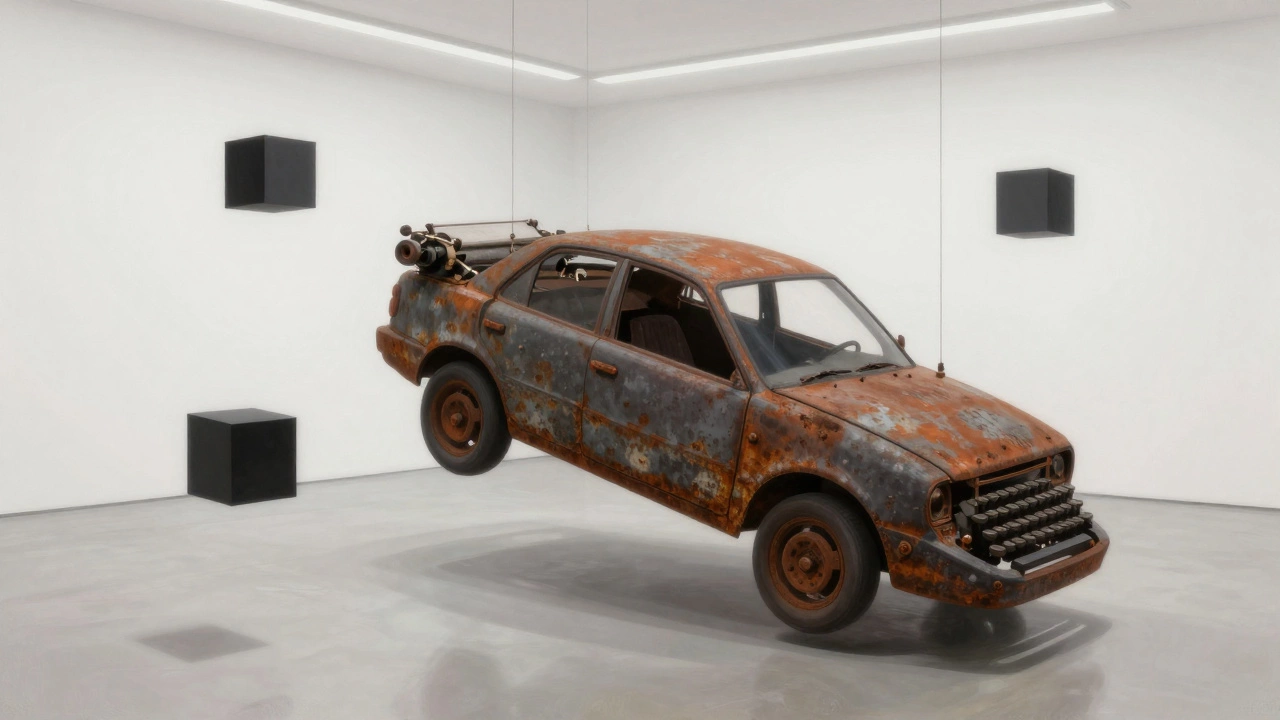
In the contemporary world, we see the rise of Found Object Art (also known as Assemblage). This is where the "style" is actually the act of curation. An artist might take a rusty car door and a vintage typewriter and weld them together. Here, the meaning comes from the history of the objects themselves, not the skill of the carving.
Understanding the Process: Additive vs. Subtractive
To really get why different sculptures look the way they do, you have to understand how they were made. There are two main paths: taking away or adding on.
Subtractive sculpture is like carving. You start with a big block of stone or wood and chip away everything that isn't the statue. It's a high-stakes game-one wrong hit with the chisel and you've lost a finger or a nose, and there's no "undo" button. This process usually leads to more compact, solid forms.
Additive sculpture is like building. You start with nothing and add material-clay, wax, or welded metal. This is much more fluid. You can add a limb, take it off, and reshape it a thousand times. This process is why additive sculptures often feel more organic, sprawling, and experimental.
Kinetic and Installation Art: The New Frontiers
Sculpture doesn't always have to stay still. Kinetic Art is a style where movement is the main point. Whether it's a wind-driven mobile by Alexander Calder or a complex motorized machine, the "style" here is about time and change. The piece is never the same twice because it's always moving.
Then you have Installation Art. This is where the sculpture becomes the entire room. Instead of looking at a statue on a pedestal, you walk *into* the art. This style shifts the focus from the object to the experience. It's not about "what is this?" but "how does being in here make me feel?"
Is sculpture considered a fine art?
Yes, sculpture is one of the core pillars of fine art. Historically, it was grouped with painting and architecture as the primary ways humans recorded history and beauty. Today, it encompasses everything from traditional museum pieces to massive public installations in city centers.
What is the difference between a statue and a sculpture?
All statues are sculptures, but not all sculptures are statues. A statue specifically refers to a sculpture that represents a person or animal, usually life-sized or larger. A sculpture is the broader term that includes abstract shapes, mobiles, and installations that don't look like living beings.
Can digital art be a sculpture?
In a way, yes. 3D modeling and digital sculpting (using software like ZBrush) create three-dimensional forms in a virtual space. While they start as pixels, many are now brought into the physical world using 3D printing, turning a digital style into a physical sculpture.
What makes a sculpture "modern"?
A sculpture is generally considered modern if it breaks away from the tradition of realistic representation. This includes the use of industrial materials (like steel and plastic), a focus on abstraction, and the rejection of the "pedestal" to let the art interact directly with the viewer's space.
What are the most common materials used in sculpture?
Traditional materials include marble, granite, bronze, wood, and clay. Modern and contemporary artists have expanded this to include stainless steel, resin, plastic, neon lights, and even biodegradable materials like ice or salt.
Next Steps for Art Lovers
If you're looking to get a better handle on sculpture, stop looking at photos online and go to a local gallery or public park. The magic of sculpture is in the scale. Stand right next to a piece and look at the texture-can you see the chisel marks in the stone? Can you see the fingerprints in the clay? Once you start noticing the "how" of the construction, the "style" becomes much easier to identify. Try comparing a classical piece with a contemporary one in the same space to see how the energy of the room changes.