Art Era Classifier
Instructions: Select the attributes that best describe the artwork you are analyzing.
Classification Result
Alignment Score:
Why this result?
Analysis details will appear here...
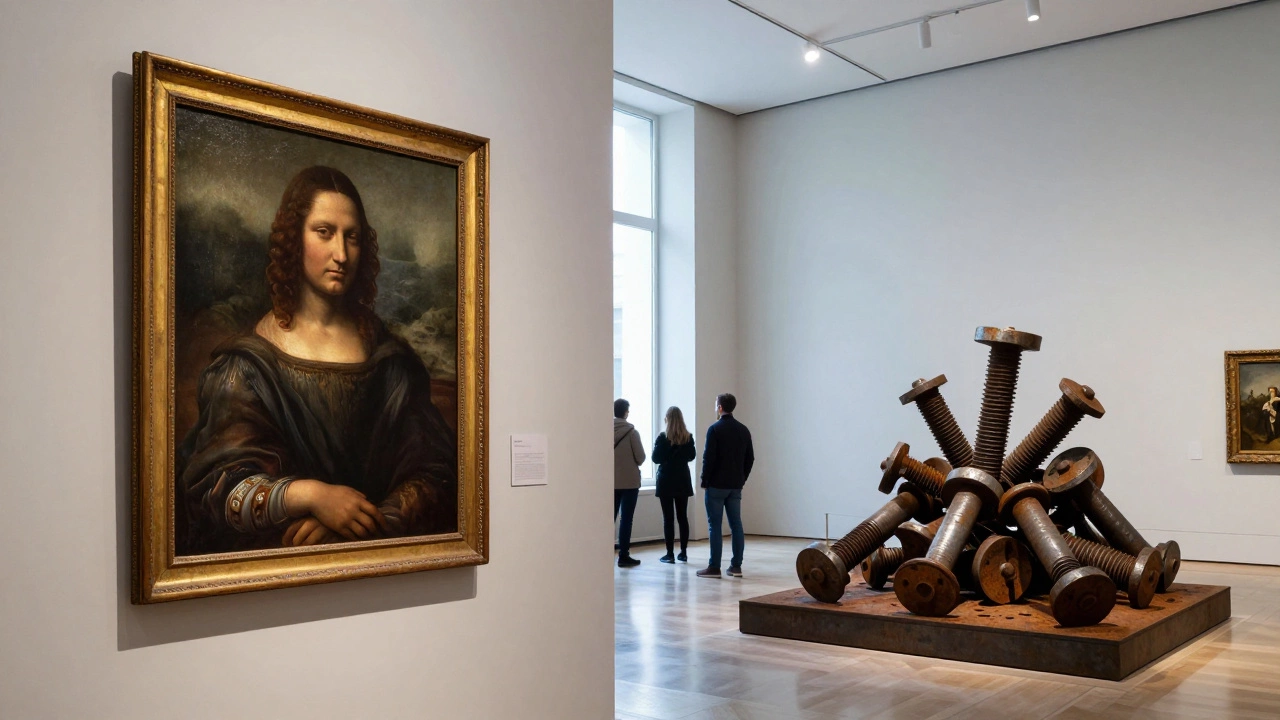
Have you ever walked into a gallery and felt completely lost? You stand before a hyper-realistic oil painting on the left and a pile of rusty metal bolts on the right. One feels familiar, crafted with obvious skill. The other feels like a challenge, asking, "Is this really art?" That feeling of disconnect isn't random. It comes from a fundamental clash between two distinct worlds: Traditional Art and Contemporary Art. Understanding the gap between them doesn't require an advanced degree, but it does require knowing what rules each set of artists is following.
The Foundation: What Defines Traditional Art?
When we talk about traditional art, we usually mean work created before the early 20th century, though the style persists. This category is rooted in established techniques passed down through apprenticeships. Think of the Renaissance workshops where young painters learned to mix pigments and stretch canvas. The goal was often representation: depicting the world as it appears to the eye, or idealized versions of it. Skill level was the ultimate metric.
If you look at a work from the 1500s or even the 19th-century Academic art, you are evaluating mastery. Did the artist capture light correctly? Are the proportions anatomically accurate? How beautifully were the materials handled? This focus creates a universal language. A viewer in Italy understands the same visual cues as a viewer in China, provided they recognize the shared conventions of realism and perspective.
The mediums here are tangible and enduring. We are talking about oil on canvas, marble sculpture, fresco on walls, and charcoal drawings. These materials demand physical labor and patience. An artist spends weeks glazing a layer of skin tones to achieve a lifelike glow. This material commitment is part of the identity. The art object itself is sacred; you handle it with gloves, and museums display it behind glass. The viewer’s job is to admire the hand of the creator.
The Shift: Entering the World of Contemporary Art
Contemporary Art refers to art made by living artists or created after 1970, focusing on concepts rather than craft. Moving past the mid-20th century, the rules began to change dramatically. By the time we reached the 1970s and 1980s, the definition of art expanded to include almost anything the artist declared as such. The focus shifted from "how well is it made" to "what idea does it convey?" The medium became secondary to the message.
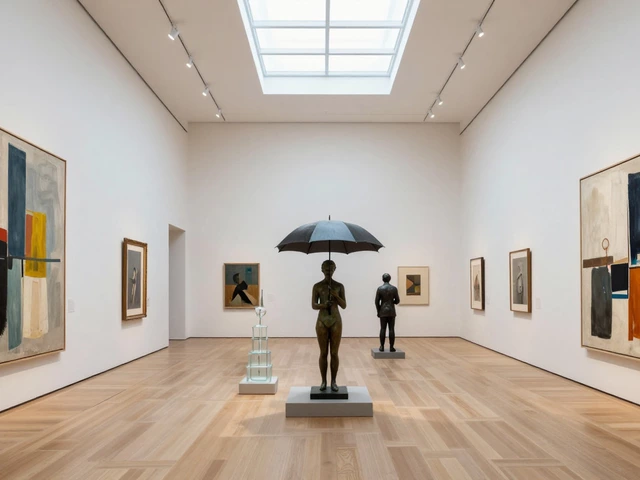
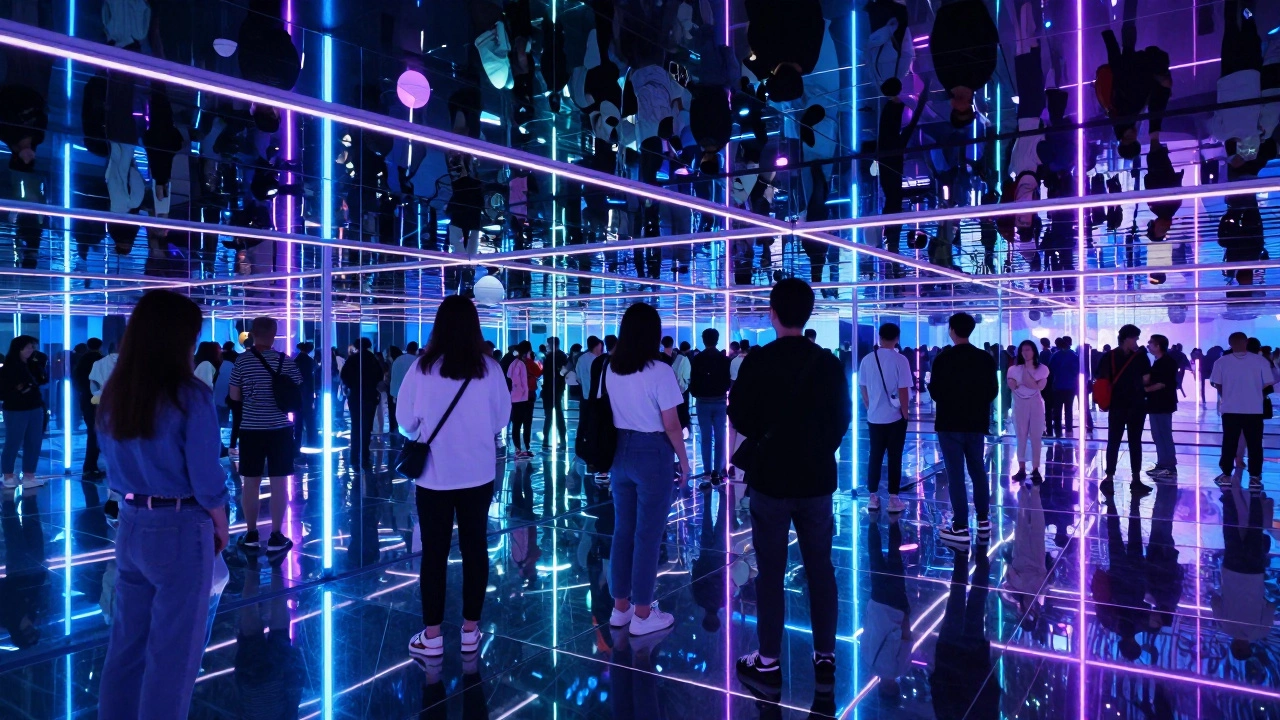
This is why you find installations, video projections, and performance pieces in major galleries today. An artist might set up a room filled with mirrors or ask you to wear a blindfold. The object isn't necessarily beautiful or skillful in the traditional sense. Instead, it provokes a reaction. Does it make you angry? Does it make you think about climate change or political borders? The success of the work depends on your intellectual engagement, not just your visual appreciation.
We must also talk about the timeline. While "modern art" covers roughly 1860 to 1970, contemporary art starts roughly there and continues to the present day, which means we are currently living in the contemporary era. Living artists define this period. This immediacy connects the work to current events. Art is no longer just a reflection of society; it is an active participant in cultural debates.
The Role of Materials and Technology
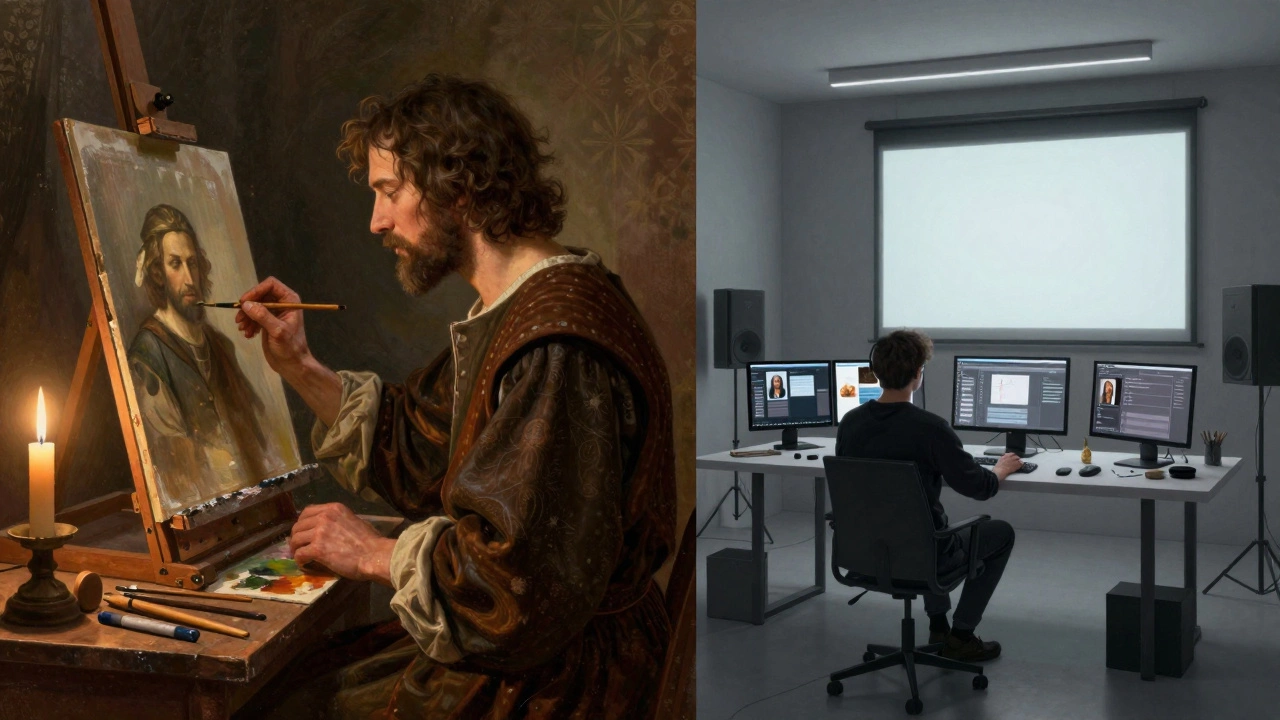
One of the most visible differences lies in the tools. Traditional artists rely on manual manipulation of physical substances. You hold a brush; you carve stone. There is friction involved. Contemporary artists have access to a much wider toolkit, including digital technology. With the rise of computers, Digital Art has become a dominant form. We see algorithmic generation, virtual reality environments, and interactive screens.
Consider how materials dictate longevity. A marble statue is meant to last centuries. Many contemporary pieces are ephemeral. Performance art ends the moment the performer stops moving. Video art degrades as screens die. Some works are designed to exist only temporarily. This challenges the traditional museum model of preservation. How do you archive a performance that only happened once? It shifts the value from the permanent object to the documentation of the event.
Understanding the "Modern" Confusion
A frequent point of confusion for visitors is the overlap between Modern Art and Contemporary Art. People often use "modern" to mean "new." In art history, these terms are distinct epochs. Modern art broke away from tradition starting in the late 19th century with movements like Impressionism and Cubism. Picasso and Matisse were modernists. They experimented with form, but they still largely worked within the realm of painting and sculpture.
Contemporary art takes a different leap. It moved beyond formal experimentation into pure conceptual territory. Marcel Duchamp, who placed a urinal in a gallery in 1917, is often cited as the grandfather of this shift, though he lived during the Modernist era. His Fountain readymade suggested that the choice of the artist was more important than the skill of the hand. This philosophy matured fully in the late 20th century, defining what we now call the contemporary condition. Knowing this distinction helps you navigate exhibitions without getting tripped up by labels.
Comparison of Core Attributes
| Attribute | Traditional Art | Contemporary Art |
|---|---|---|
| Primary Goal | Mimesis (imitation of nature) | Concept and critique |
| Key Timeframe | Pre-20th Century / Ongoing practice | Post-1970s to Present |
| Typical Mediums | Oil paint, marble, bronze, charcoal | Video, installation, digital, mixed media |
| Viewer Interaction | Passive observation | Active participation required |
| Value Metric | Technical proficiency | Intellectual depth and context |
The Evolution of Value and Commerce
How money flows through these worlds differs significantly. Traditional art markets often rely on provenance. Who owned this painting before? Can we authenticate it? The value is tied to the rarity and condition of the physical object. Auction houses specialize in these high-value items that appreciate over decades.
In contrast, the contemporary market is highly speculative and driven by taste and relevance. A piece by a rising artist might skyrocket in price if the narrative around them aligns with current cultural conversations. Galleries act as incubators, building an artist's career rather than just selling finished products. There is a constant churn of new names. While Old Masters have stable prices, contemporary works can fluctuate wildly based on trends, celebrity endorsements, and biennale selection.
Examples You Might Know
To make this concrete, let's look at specific names. When you think of Leonardo da Vinci, you imagine the Mona Lisa. That is traditional. It relies on mystery, technique, and the beauty of the subject. The artist is a master craftsman hidden behind the work.
Now consider Andy Warhol or Damien Hirst. Warhol took a canned soup box and turned it into pop art. He questioned mass production. Hirst places animals in formaldehyde. He forces us to confront mortality. These aren't just pictures; they are statements. Then there is the contemporary figure Yayoi Kusama with her infinity rooms. She builds immersive environments that trap the viewer in endless reflection. You step inside the art; the art steps inside you. That immersive relationship is a hallmark of the contemporary approach that simply wasn't possible in earlier centuries.
Why the Distinction Matters
You might wonder why we bother separating these categories at all. Art evolves continuously. Why draw a hard line? It matters because the criteria for judgment change. If you judge a contemporary photo-concept work by the standards of Renaissance drawing, you will miss the point entirely. Conversely, dismissing traditional skills as "outdated" ignores the immense discipline required to master them.
Recognizing the difference empowers your viewing experience. It allows you to appreciate the technical wizardry of the past while engaging critically with the provocative questions of the present. It helps you understand why a $5 million auction might sell for a bag of candy or a blank canvas. The conversation shifts from "who painted this well" to "why did the artist choose this image?"
Is digital photography considered traditional art?
Digital photography sits on the border. The technique involves capturing reality like traditional photography, but the editing tools and distribution methods align with contemporary practices. It is often classified as contemporary if the intent is conceptual.
Does traditional art still exist today?
Yes. Many artists continue to paint in classical styles using oil and acrylics. However, they are less visible in major contemporary institutions compared to conceptual artists. They often exhibit in dedicated traditional societies.
When did contemporary art officially begin?
There is no single date, but historians generally agree on the early 1970s as the start of the contemporary period. This follows the end of Modernism and marks the rise of Conceptual Art and minimalism.
Can a contemporary artwork be ugly?
Absolutely. Beauty is not a requirement for contemporary art. Discomfort or shock is often a deliberate tool used by the artist to provoke a reaction from the audience.
Which is worth investing in?
Traditional art tends to be a stable store of value due to historical significance. Contemporary art offers higher risk but potentially higher returns depending on the artist's future career trajectory.