People often mix up graffiti and street art, but they’re not the same thing-even when they look similar. Both show up on walls, bridges, and alleyways. Both use spray paint. Both can be bold, colorful, and impossible to ignore. But if you dig a little deeper, the differences aren’t just about style-they’re about intent, history, and even legality.
Where did they come from?
Graffiti has roots in ancient times. Romans carved messages into walls. Greeks left names on temples. But modern graffiti as we know it started in the late 1960s and early 1970s in New York City. Kids from the Bronx and other neighborhoods began tagging their names-often just a nickname or alias-on subway trains and building walls. It was about claiming space, getting seen, and building reputation within a tight-knit crew. The goal wasn’t to make art for everyone. It was to make your name unforgettable to other taggers.
Street art, on the other hand, emerged later, mostly in the 1980s and 1990s. It borrowed from graffiti’s raw energy but added something new: message, imagery, and technique. Artists like Banksy, Shepard Fairey, and Keith Haring didn’t just want their names on a wall-they wanted you to stop, look, and think. Street art often includes detailed murals, stencils, stickers, and installations. It’s designed to communicate, provoke, or even beautify.
It’s not just about looks-it’s about purpose
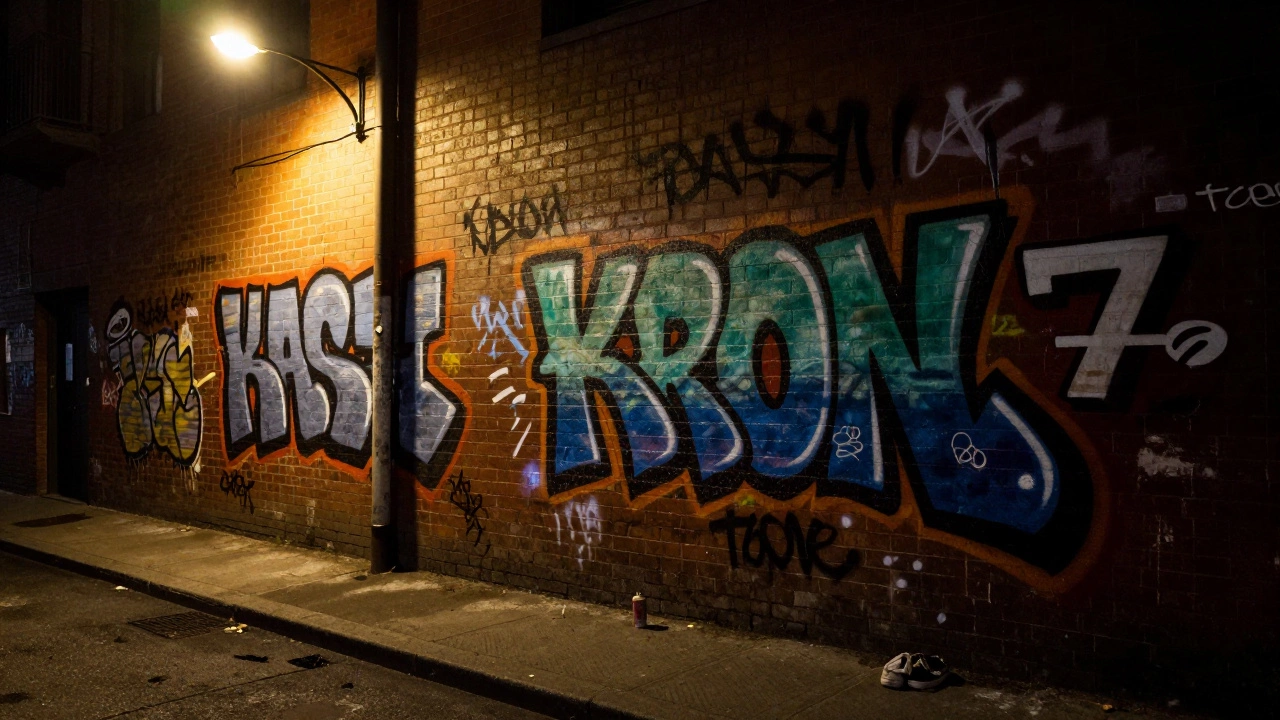
Graffiti is mostly name-based. You’ll see pieces like “BAS1”, “KRON”, or “TONE 7”. These are tags, throw-ups, or pieces meant to dominate a surface. The artist doesn’t care if you understand it. They care that you see it. It’s a signature. A mark of presence. In some crews, painting over someone else’s tag is a challenge. A war.
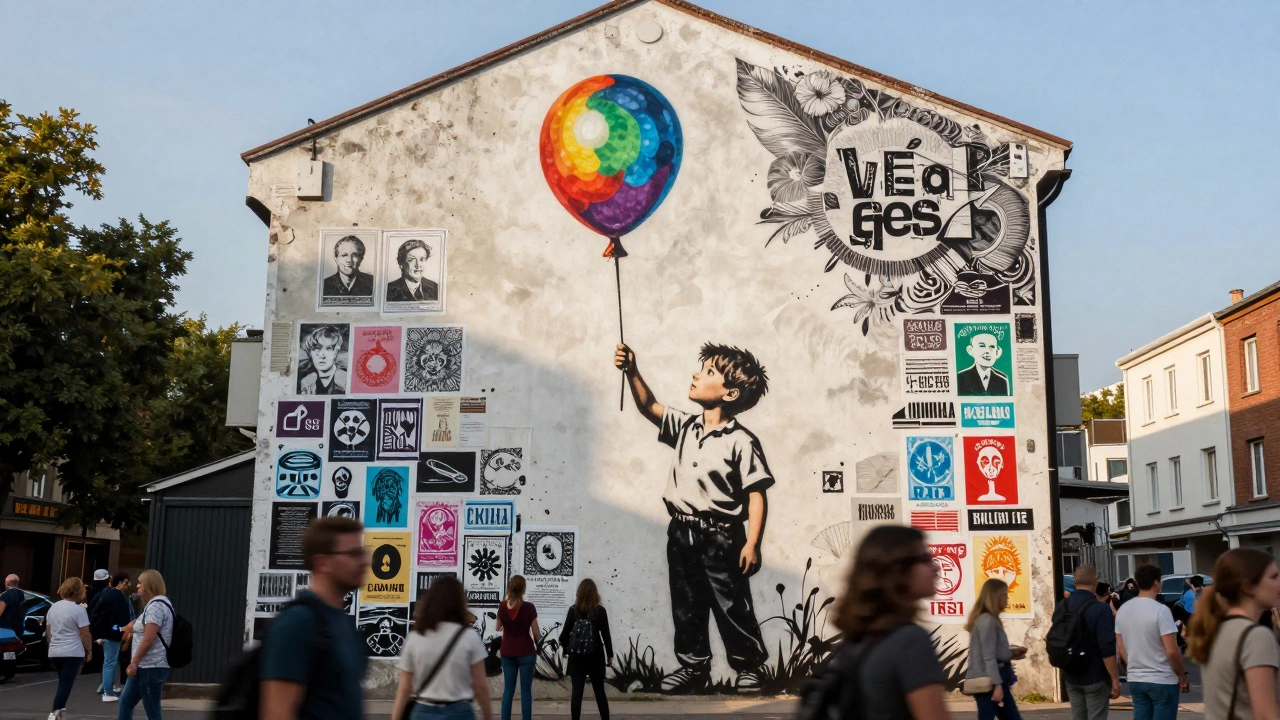
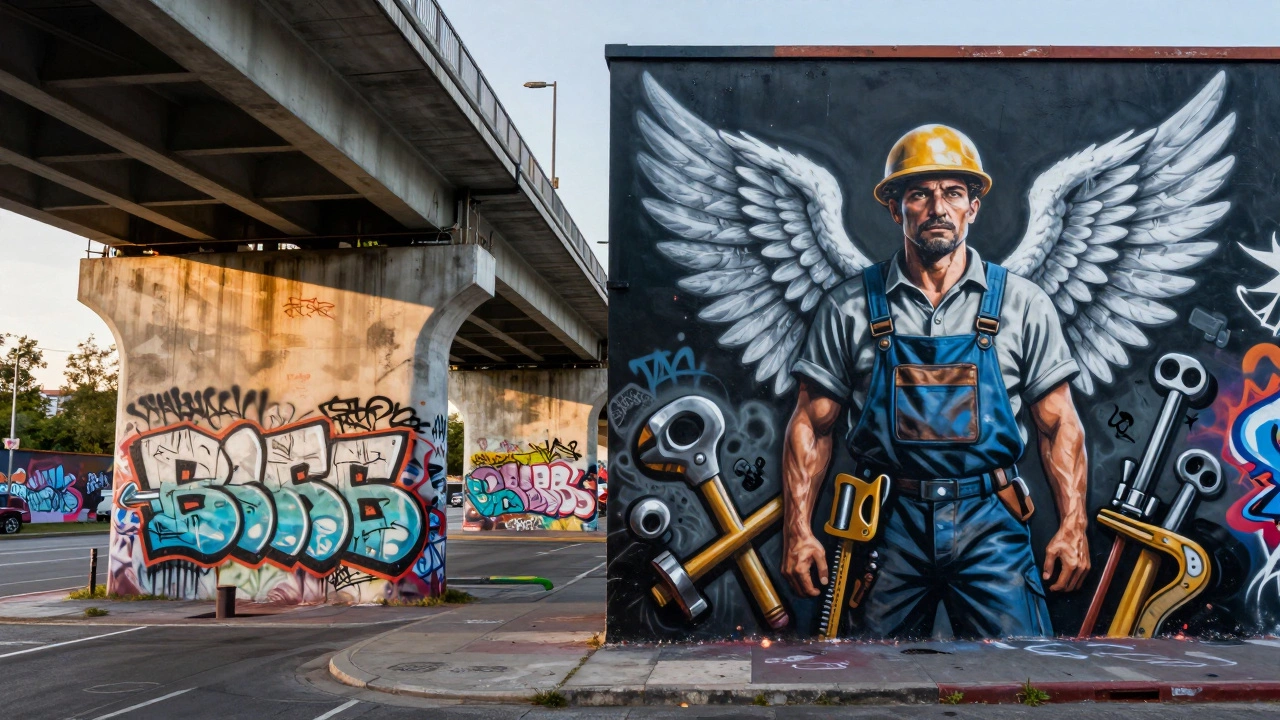
Street art is about meaning. A stencil of a child holding a balloon. A mural of a worker with tools turned into wings. A sticker with a political slogan. These aren’t random. They’re planned. Often, street artists spend weeks sketching, testing, and perfecting a design before putting it up. They’re trying to say something-to the public, to the city, to power.
Legality? That’s where it splits wide open
Graffiti is almost always illegal. If you tag a wall without permission, you’re breaking the law. That’s why you see it in hidden alleys, under bridges, or on trains. It’s done fast, often at night, with minimal tools. It’s risky. And that risk is part of the culture.
Street art? Sometimes legal. Sometimes not. Many cities now commission street artists to paint murals on public buildings. Vancouver has dozens. Berlin’s East Side Gallery is one of the biggest legal street art sites in the world. Artists get permits, paint for weeks, and even get paid. But plenty of street art is still done without permission-just with more care and planning than graffiti.
Tools and techniques are different too
Graffiti artists rely on spray cans. They use caps to control spray width. They work fast. A tag might take 30 seconds. A full piece might take an hour. They’re all about flow, rhythm, and speed. The style is loose, wild, often hard to read unless you’re in the scene.
Street artists use more tools. Stencils. Rollers. Brushes. Projections. Glue. Even wheatpaste. They might spend days preparing a stencil, then spend hours applying it. A mural can take weeks. The result? Cleaner lines, more detail, higher contrast. Think of Banksy’s rats or Fairey’s Obama “Hope” poster. Those aren’t random spray jobs. They’re precision work.
Who’s the audience?
Graffiti speaks to other writers. If you don’t know the rules of tagging, the hierarchy of crews, the meaning behind a particular color scheme-you’re not the target. It’s a language only insiders understand. That’s why you’ll see graffiti in places no one else goes: behind gas stations, on abandoned trains, under freeway overpasses.
Street art speaks to everyone. It’s made for the sidewalk, the bus stop, the corner store. It doesn’t need context. You don’t need to be part of a crew to get it. That’s why street art often ends up in galleries, books, and Instagram feeds. It’s designed to go viral. To be shared. To be understood.
Is one more “real” than the other?
Some graffiti purists look down on street art. They call it “commercial” or “sell-out.” They say it’s too polished, too safe. And some street artists roll their eyes at graffiti, calling it childish or destructive.
The truth? Neither is better. They’re different tools for different jobs. Graffiti is about identity. Street art is about message. One doesn’t need the other to exist. But together, they’ve changed how we see public space.
Think about it: a city without either would be dull. Blank walls. No color. No surprise. No conversation. Graffiti adds rebellion. Street art adds depth. Both turn concrete into canvas.
What about murals?
You might be wondering: “Aren’t murals just big street art?” Yes-and no. Murals are often commissioned. They’re funded by cities, businesses, or community groups. They’re meant to celebrate local culture, history, or identity. A mural of a local hero, a native plant, or a community event? That’s street art with permission. It’s still public art. But it’s not born from rebellion. It’s born from collaboration.
That’s why you’ll see murals in downtown Vancouver, Toronto, or Melbourne-and graffiti tucked under the same bridges. They coexist. Sometimes even side by side. One says, “I’m here.” The other says, “Think about this.”
Why does it matter?
Understanding the difference isn’t about labeling art. It’s about understanding why people put art in public spaces. Graffiti says: “I exist. I matter.” Street art says: “Look around. This matters too.”
One isn’t more valid than the other. But if you walk past a wall and don’t know which is which, you miss half the story.
Can they overlap?
Yes. Some artists do both. A tagger might start with a name, then evolve into a muralist. A street artist might throw up a quick tag on the way to a mural. The lines blur. But the core difference stays: one is about the artist’s identity. The other is about the message.
So next time you see bold letters on a wall, ask: Is this someone trying to be seen? Or is this someone trying to make you see something else?