Art Pricing Calculator
Pricing Formula
This calculator follows the method used by successful artists: Materials + (Time × Hourly Rate) + Profit Margin
Your Pricing Breakdown
Why this matters: Charging $50 for a 20-hour painting means you're making $2.50/hour. This calculation ensures you're compensated for your time and materials.
Most new artists think selling their work means waiting for a gallery to discover them. That’s not how it works anymore. You don’t need a fancy degree, a studio in SoHo, or a million followers to sell your first piece. You just need to start showing up - the right way, in the right places.
Start with what you already have
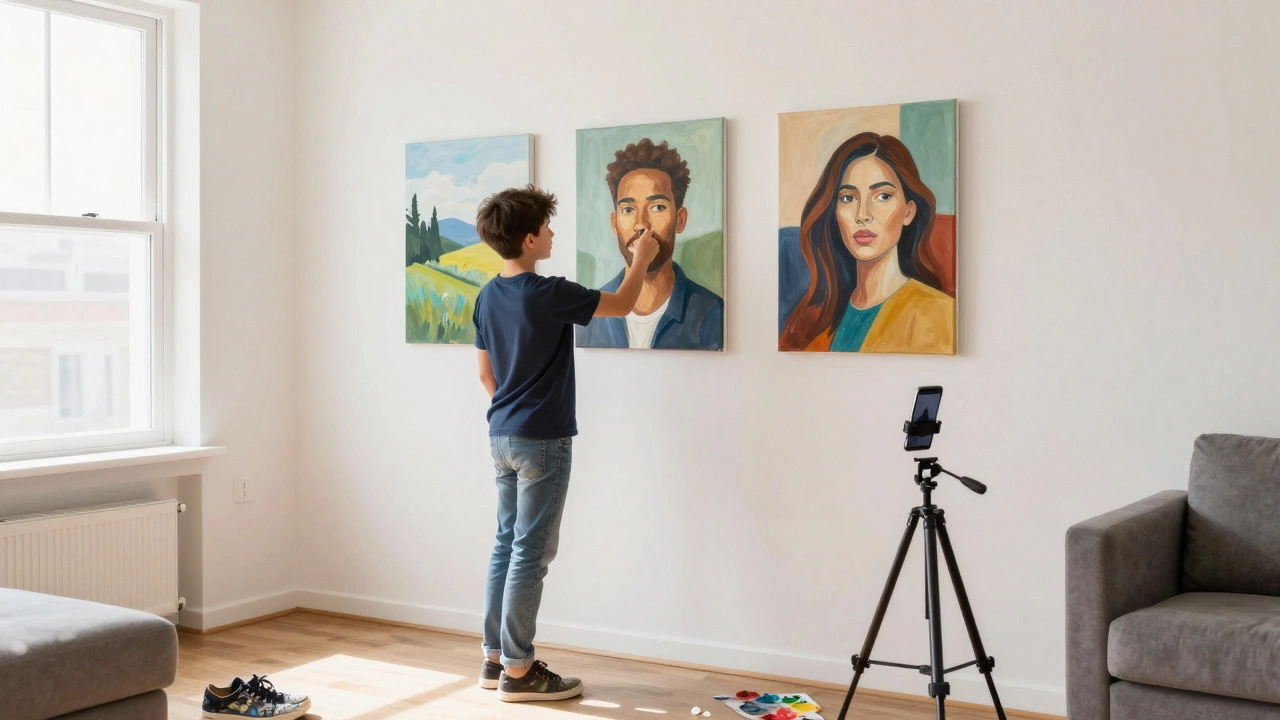
You don’t need a perfect portfolio to begin selling. You need three completed pieces that you’re proud of. Not ten. Not fifty. Three. One landscape, one portrait, one abstract - whatever feels true to your voice. These don’t have to be museum-ready. They just need to be finished. People buy art because it speaks to them, not because it’s flawless.Look around your home. What do you have hanging on the wall? That’s your starting point. Take clear photos in natural light. Use your phone. No need for professional gear. A well-lit photo of your painting on a white wall is better than a blurry studio shot with bad shadows.
Pricing your art isn’t magic - it’s math
Too many beginners underprice because they’re afraid no one will buy. Others overprice because they think high cost equals high value. Neither works. Here’s the simple formula used by artists selling consistently:- Calculate the cost of materials (canvas, paint, brushes, varnish) - say $30
- Time spent: 10 hours × $15/hour = $150
- Base price: $30 + $150 = $180
- Add 20% for profit: $180 × 1.2 = $216
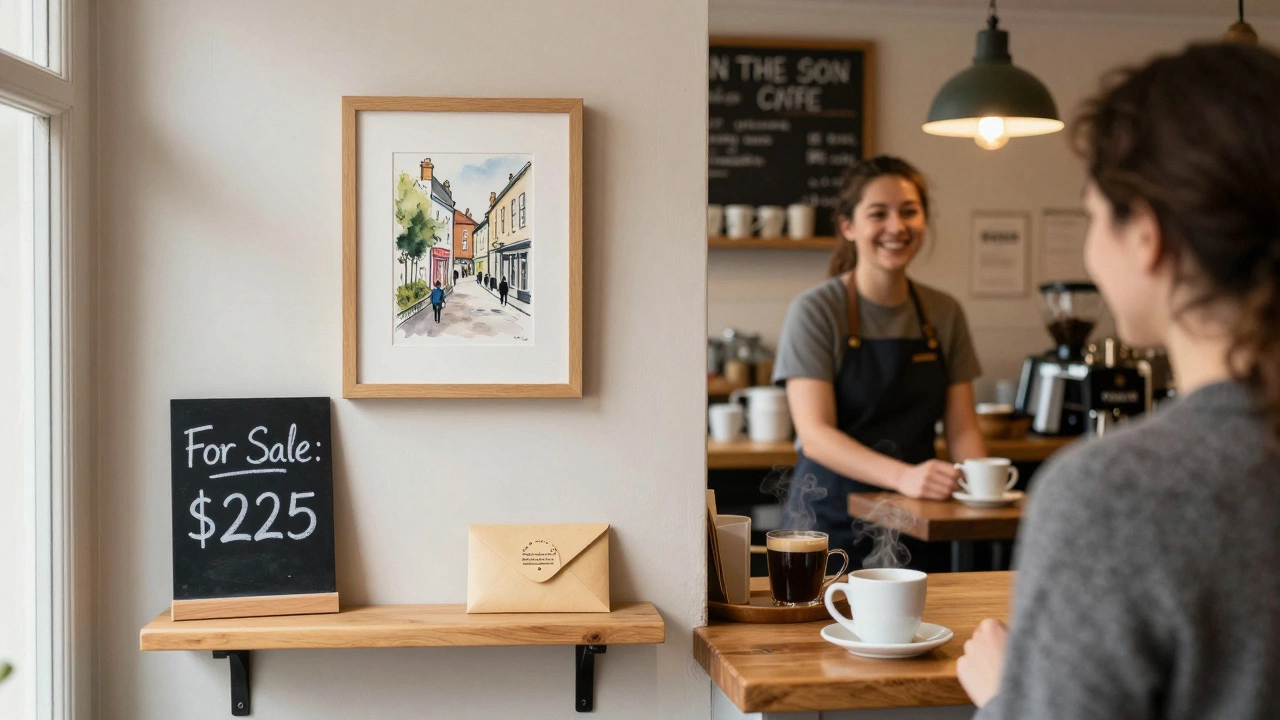
- Round to the nearest easy number: $225
This isn’t about what you think your art is worth. It’s about covering your time and materials, then adding a fair profit. If you charge $50 for a painting that took 20 hours, you’re making $2.50 an hour. That’s not sustainable. Charge enough so you can keep making art without burning out.
Sell locally before you sell online
Online platforms are tempting, but they’re noisy. Instagram is flooded with art. Etsy has over 8 million art listings. How do you stand out? Start local.Walk into coffee shops, bookstores, or hair salons in your neighborhood. Ask if they’d display your work on consignment. Most small businesses are happy to help. They get free decoration. You get exposure. You split the sale - say 70/30 in your favor. No upfront cost. No shipping. No fees.
In Vancouver, places like Granville Island Public Market host weekend artist booths for $25 a day. You show up with three pieces, a small sign, and cash envelope. One artist I know sold her first watercolor there for $150. She didn’t have a website. She didn’t have ads. She just showed up.
Use Instagram like a tool, not a trophy case
Instagram isn’t about posting your best work and hoping for likes. It’s about showing the process. Post:- A timelapse of you painting
- A messy studio with coffee cups and paint-splattered shoes
- A close-up of brushstrokes
- Someone hanging your piece in their living room
Use hashtags like #localartistvancouver, #buylocalart, #beginnerartist, #paintingprocess. Don’t use #art or #painting - those have millions of posts. Be specific. Engage with other local artists. Comment on their posts. Reply to every comment on your own. Build relationships, not followers.
One artist in North Vancouver posted a video of her painting a mountain scene while listening to jazz. She didn’t say, “Buy my art.” She just showed up. Three days later, a woman DM’d her: “That painting feels like my childhood cabin. I’ll take it.” She sold it for $350.
Exhibitions aren’t just for galleries
You don’t need a solo show at a downtown gallery to be called an exhibiting artist. Look for community events:- Library art shows
- University student exhibitions
- Community center open calls
- Art walks in your neighborhood
These are low-pressure, low-cost ways to get your work seen. Submitting to a group show at the local library costs nothing. You might get one or two sales. But more importantly, you get a name on a wall. A real, physical presence. That builds credibility.
When someone sees your name on a poster at the library, then finds you on Instagram, they’re more likely to trust you. People buy from people they feel they know - even if they’ve never met you.
Make it easy to buy
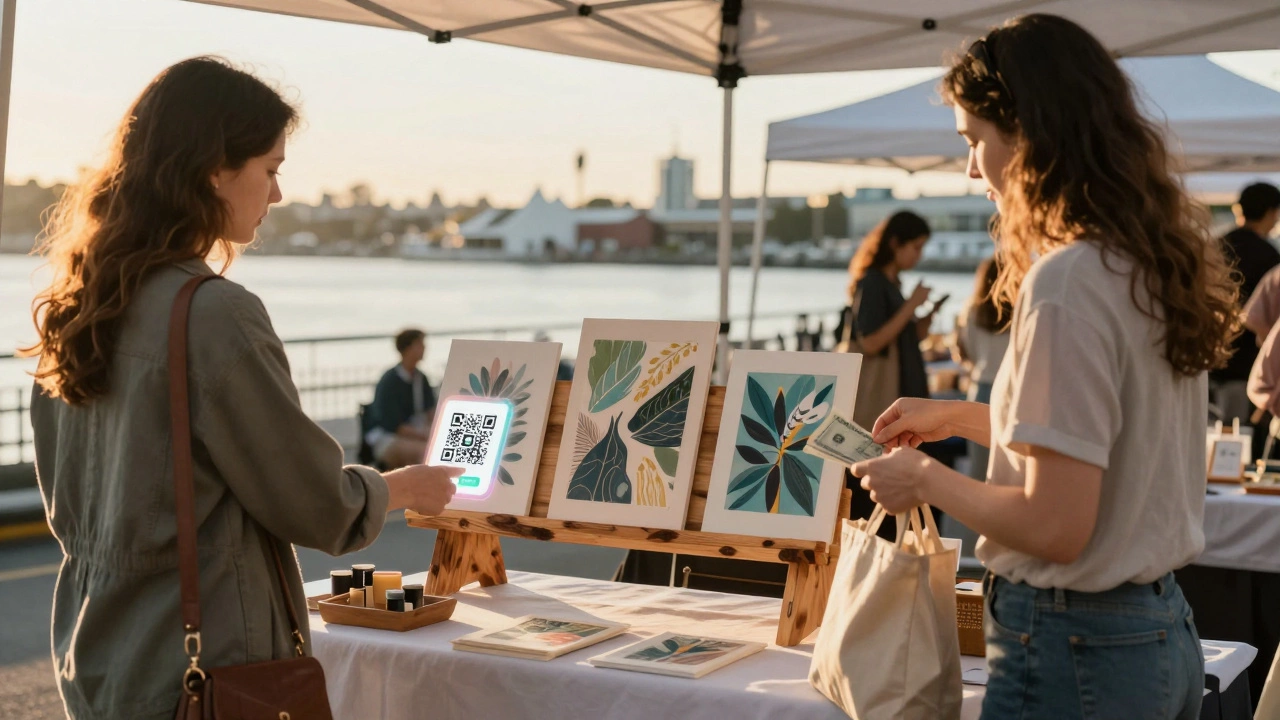
You’ve done the hard part - made the art, found the space, shown up. Now make it stupid simple to buy.- Have a QR code on your display sign that links to a simple PayPal invoice
- Use a free tool like Linktree to create one page with your Instagram, email, and payment link
- Accept cash, Venmo, or Interac e-Transfer - no credit card fees, no platform cuts
Don’t make people hunt for a way to pay. If they like your art and want to buy it, they’ll walk away if it takes more than 30 seconds. I’ve seen three sales lost because the artist said, “I’ll email you the link.” By the time they got the email, the buyer had moved on.
Track what works - not just sales
Keep a simple notebook or Google Sheet. Log:- Where you showed your art (coffee shop, art walk, Instagram post)
- How many people stopped to look
- How many asked questions
- How many bought
After five shows, you’ll see patterns. Maybe your abstract pieces sell better at galleries. Maybe your landscapes do well in coffee shops. Maybe Instagram posts with behind-the-scenes videos get more DMs. You don’t need to guess anymore. You’ll know.
It’s not about being discovered - it’s about showing up
The biggest mistake beginners make is waiting. Waiting for the perfect time. Waiting for more experience. Waiting for someone to validate them.There is no perfect time. There’s only now.
Sell your first painting for $75. Not because it’s valuable. But because you made it. Because you showed up. Because you didn’t wait.
Every artist who sells today started with one sale. No one handed them a gallery. No one gave them a grant. They just kept making art - and kept putting it out there.
You don’t need to be the best. You just need to be the one who doesn’t quit.
Do I need a website to sell my art as a beginner?
No. You don’t need a website to start. Use Instagram, local events, or a simple Linktree page with your payment link. A website is useful later, once you have consistent sales. Focus on showing your art where people already are - not building a new place for them to find you.
How do I know if my art is good enough to sell?
If you finished it and you’re proud of it, it’s good enough. Art isn’t judged by technical perfection - it’s judged by connection. Someone will feel something when they see your work. That’s what matters. Don’t wait for external validation. Start showing your art and see who responds.
Should I sell prints or originals first?
Sell originals first. Prints are easier to make, but they devalue your work in the eyes of buyers. People pay more for something unique. Once you’ve sold a few originals and built trust, you can offer limited prints as a lower-priced option. But don’t start with prints - they make you look like you’re not confident in your original work.
What if no one buys anything at my first show?
That’s normal. The first few shows are about practice, not profit. Talk to people. Ask them what they like. Take notes. Learn what draws attention. One person stopping to ask a question is a win. One person saying, “I’ll think about it,” is progress. Sales come later. First, you’re building confidence - yours and theirs.
Can I sell art without social media?
Yes. Many artists sell through local exhibitions, craft fairs, consignment shops, or word of mouth. If you don’t want to use social media, focus on physical spaces: cafes, libraries, community centers. Bring your art to where people already gather. Personal interaction builds trust faster than any post.