Realistic Painting Style Explorer
Test your knowledge of realistic painting styles and explore the key differences between the major movements in visual accuracy.
Loading question...
Quiz Complete!
You scored 0/4.
Key Takeaways:
- Hyperrealism is currently considered the most detailed, enhancing photos with artistic interpretation.
- Trompe-l'œil focuses on spatial illusion (deceiving the eye about depth).
- Photorealism aims for mechanical precision mimicking a camera.
- Academic Realism prioritizes idealized beauty and narrative over raw accuracy.
Quick Comparison Chart
| Feature | Hyperrealism | Photorealism | Trompe-l'œil |
|---|---|---|---|
| Goal | Enhance detail beyond photo | Mimic photographic accuracy | Deceive eye regarding space |
| Brushwork | Invisible (glazing) | Invisible (smooth) | Invisible (flat) |
| Emotion | Intense/Immersive | Cold/Objective | Surprise/Wit |
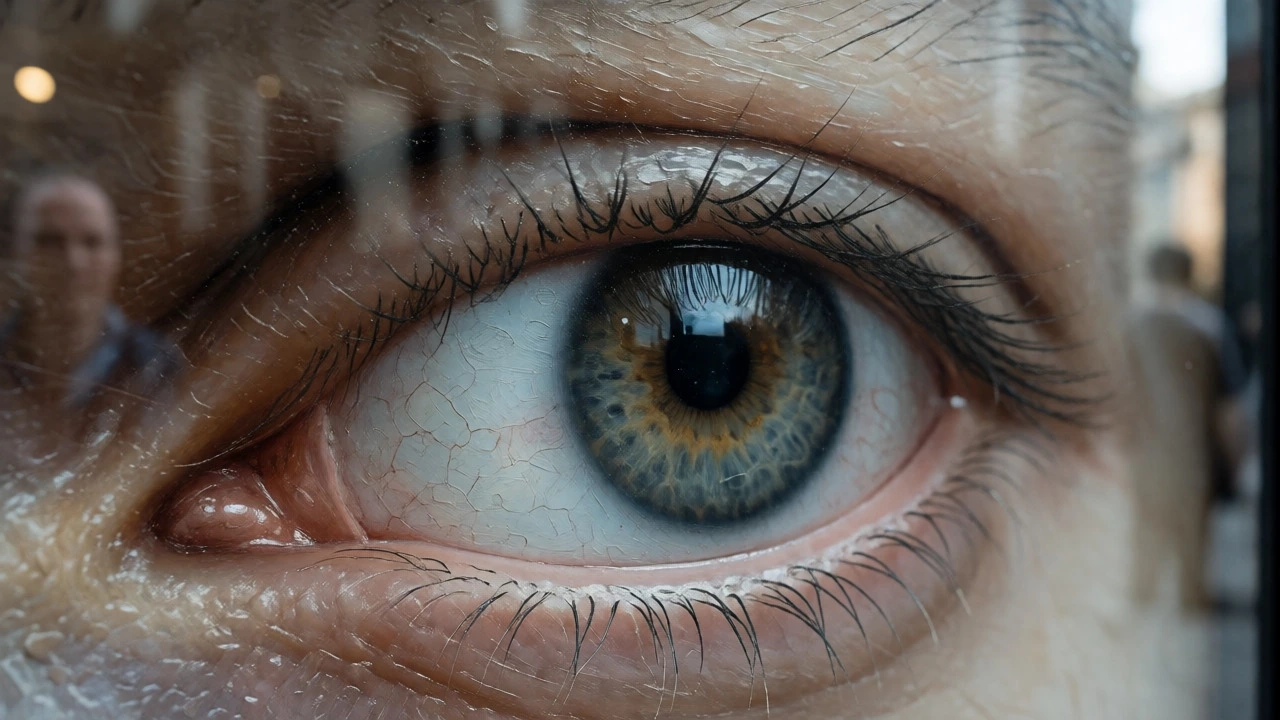
You know that feeling when you’re walking past a gallery window, see what looks like a high-resolution photograph taped to the glass, walk up to it, and realize it’s actually paint on canvas? That moment of confusion-where your brain tries to reconcile the texture of oil or acrylic with the sharpness of a digital image-is exactly where Hyperrealism lives. It is not just about copying a photo; it is about surpassing the limitations of the camera lens to create something that feels more real than reality itself.
But if you dig deeper into art history and current trends, you’ll find that "realism" isn’t a single finish line. It’s a spectrum. Depending on whether you are looking at 17th-century Dutch masters or modern Vancouver street art, the definition of "most realistic" changes. Are we talking about Trompe-l’œil, which literally means "deceive the eye"? Or are we discussing Photorealism, the movement born in the late 1960s as a reaction against Abstract Expressionism? And where does traditional Academic Realism fit in?
This guide breaks down the different tiers of visual accuracy in painting. We will look at the techniques, the history, and the specific reasons why some styles feel "truer" to the human eye than others. By the end, you won’t just know which style is technically the most detailed-you’ll understand why our brains react differently to each one.
The Hierarchy of Visual Accuracy
To answer the question directly: Hyperrealism is currently considered the most realistic type of painting. However, this distinction comes with a major caveat. While Photorealism aims to mimic a photograph, Hyperrealism uses the photograph as a starting point to add details that the camera misses, such as subtle skin textures, emotional nuances, or exaggerated depth of field effects.
Think of it this way: If a photograph captures light bouncing off an object, Photorealism copies that capture. Hyperrealism interprets the data, enhancing contrast and clarity to make the image pop with a vibrancy that raw photography sometimes lacks. This is why hyperrealist portraits often look "sharper" than actual faces. The artist removes the noise and blur inherent in optical lenses, presenting an idealized version of reality.
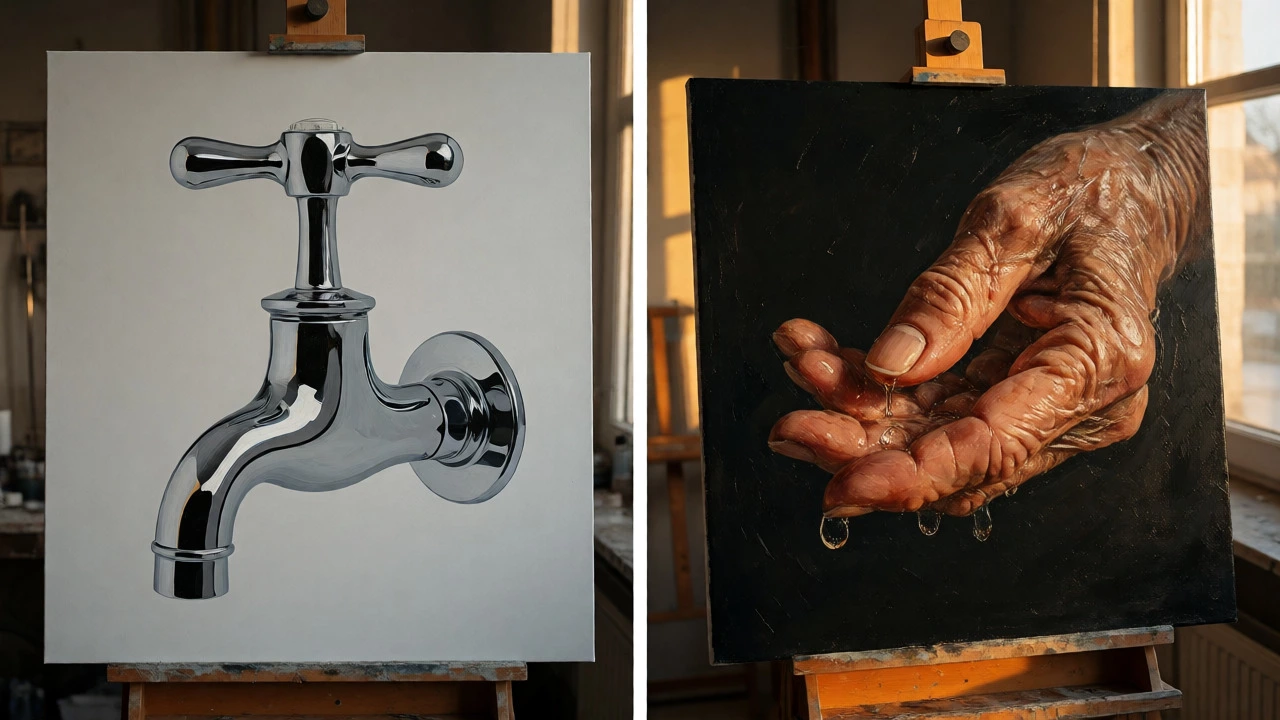
Before we get lost in modern movements, we have to acknowledge the grandfather of all realistic painting: Trompe-l’œil. Originating from ancient Greek myths (like Zeuxis painting grapes so real birds tried to eat them), this technique focuses on illusion rather than mere representation. A classic Trompe-l’œil painting doesn’t just show you a bowl of fruit; it makes you think the bowl is sitting on the wall, protruding into your space. In terms of spatial deception, Trompe-l’œil wins. But in terms of textural fidelity-how a pore looks, how silk reflects light-modern Hyperrealism takes the crown.
Photorealism vs. Hyperrealism: What’s the Difference?
People often use these terms interchangeably, but artists and critics treat them as distinct categories. Understanding the difference helps you appreciate the skill involved.
Photorealism emerged in the United States around 1968-1972. Artists like Chuck Close and Richard Estes wanted to prove that painting could compete with photography in the age of mass media. Their goal was mechanical precision. They would project slides onto canvases and trace outlines, then fill in colors to match the photo exactly. The result is flat, crisp, and devoid of the artist’s "hand." You don’t see brushstrokes because they are deliberately hidden to mimic the smooth surface of a print.
Hyperrealism, which gained traction in the early 2000s, evolved from this foundation. Pioneered by artists like Denis Peterson, it accepts the photograph as a reference but rejects its limitations. Hyperrealists use advanced software to analyze pixel data, then manually adjust lighting and shadows to enhance three-dimensionality. They might deepen the shadows under an eyelid to make the gaze more piercing, or brighten a highlight on a wet lip to emphasize moisture. It is realism, but dialed up to eleven.
| Feature | Trompe-l’œil | Photorealism | Hyperrealism | Academic Realism |
|---|---|---|---|---|
| Primary Goal | Deceive the eye regarding depth/space | Mimic photographic accuracy | Enhance detail beyond photographic limits | Idealize beauty and narrative |
| Source Material | Direct observation or staged setup | High-resolution photographs | Digital photos + artistic interpretation | Live models, sketches, classical studies |
| Brushwork Visibility | Invisible (flat application) | Invisible (smooth blending) | Invisible (glazing layers) | Often visible (impasto, scumbling) |
| Emotional Tone | Surprise, wit, illusion | Cold, detached, objective | Intense, immersive, detailed | Romantic, historical, dignified |
| Common Medium | Oil or Acrylic | Acrylic (for fast drying/precision) | Oil (for blending/glazing) | Oil |
Why Oil Paint Still Dominates High-End Realism
You might wonder why Hyperrealism isn’t done exclusively in digital mediums. After all, computers can render pixels perfectly. The reason lies in the physical properties of Oil Paint. Oils have a unique refractive index. When light hits a layer of transparent oil glaze, it penetrates the paint, bounces off the white canvas underneath, and travels back out through the colored layers. This creates a luminosity and depth that matte acrylics or digital screens simply cannot replicate.
For portrait painters aiming for maximum realism, this optical effect is crucial. Skin is translucent. Light doesn’t just bounce off the surface of your cheek; it enters the epidermis, scatters through blood vessels and collagen, and exits. This is called subsurface scattering. Oil Paint allows artists to build up thin, transparent layers (glazes) over opaque underpaintings to simulate this biological complexity. An acrylic painter might achieve a similar look, but it requires far more effort and often results in a flatter appearance.
This is why many top-tier realistic portraitists still work in oils, despite the slow drying times. The ability to blend edges seamlessly-making a shadow fade into light without any visible boundary-is essential for creating the illusion of living tissue. In Vancouver, studios specializing in commissioned portraits often prefer oils for this very reason: clients want their likeness to feel alive, not just accurately copied.
The Role of Technology in Modern Realism
Gone are the days when artists relied solely on grid methods or freehand projection. Today’s most realistic paintings are hybrids of traditional craft and digital tech. Artists use tools like Photoshop to correct perspective distortions before they even touch the canvas. They might take multiple photos of a model from slightly different angles, merge them digitally to eliminate blink artifacts or motion blur, and then use that composite image as their master reference.
Some painters even use 3D scanning technology. For complex subjects like intricate machinery or architectural scenes, a 3D scan provides exact geometric data. The artist can then rotate the model virtually to check reflections and shadows from every angle. This ensures that the final painting adheres to strict laws of physics, avoiding the subtle errors that happen when relying on memory or a single static photo.
However, technology is just a tool. The skill lies in knowing when to break the rules. A computer might calculate that a reflection should be a certain color based on RGB values, but the human eye perceives contrast differently. A skilled hyperrealist knows to exaggerate that reflection slightly to make it read correctly to a viewer standing three feet away. It’s not about mathematical perfection; it’s about perceptual truth.
How to Spot the Fakes: Identifying True Realism
If you are browsing an online marketplace or a local gallery, how do you tell if a piece is truly hand-painted realism or just a printed canvas with a clear coat? Here are a few checks:
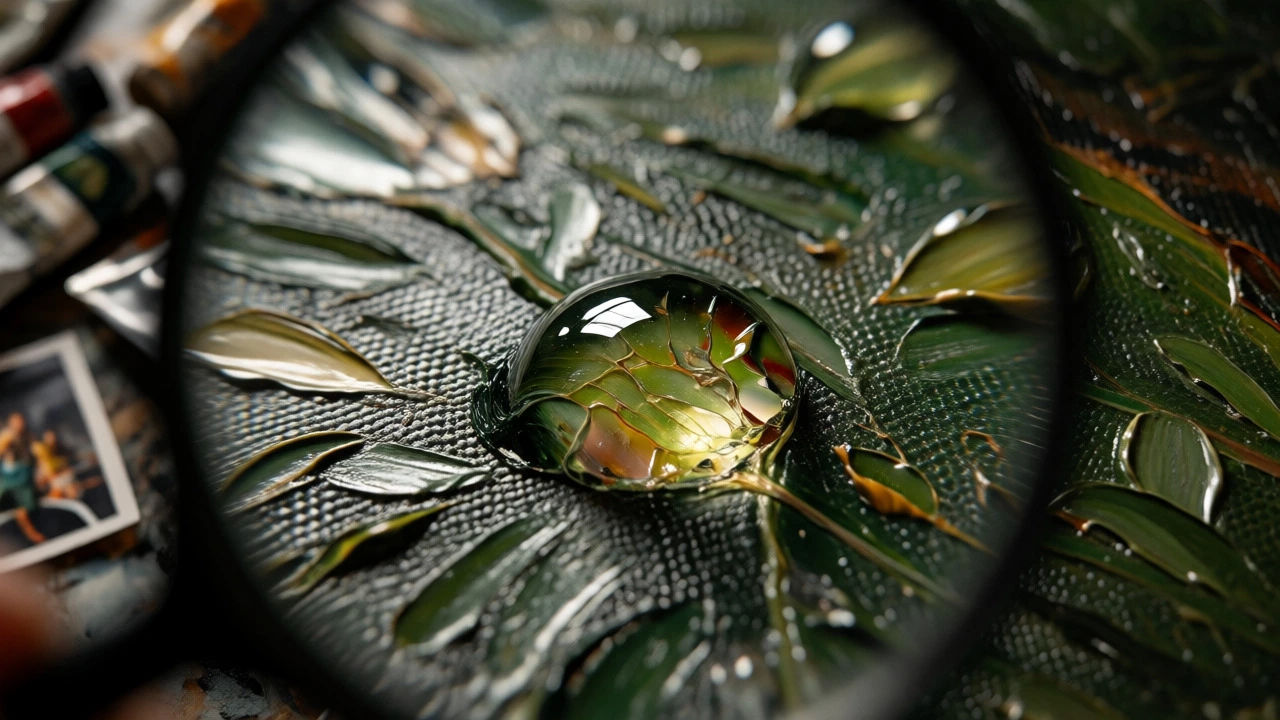
- The Glare Test: Tilt the artwork under a light source. A real oil painting has a textured surface (canvas weave) and varying levels of gloss depending on the paint thickness. A printed copy usually has a uniform, plastic-like sheen.
- Edge Inspection: Look closely at the edges of objects. In true realism, especially Hyperrealism, edges are often softened to mimic depth of field. Printed images tend to have uniformly sharp edges everywhere, which looks unnatural to the trained eye.
- Color Depth: Zoom in on dark areas. In oil paintings, blacks are rarely pure black; they contain hints of deep blue, brown, or purple. Digital prints often use pure carbon black, which can look flat and lifeless.
Also, consider the subject matter. Trompe-l’œil works best with simple, recognizable objects like books, letters, or fruit. Hyperrealism excels with complex organic forms like eyes, water droplets, or hair. If a painting claims to be hyperrealistic but fails to capture the sparkle in an eye or the individual strands of hair, it’s likely falling short of the genre’s standards.
Is There a Limit to Realism?
As AI image generators become more sophisticated, the question shifts from "which painting style is most realistic?" to "does realism still matter?" Some argue that since a machine can generate a perfect photo-realistic image in seconds, the value of manual realism is diminishing. Others believe the opposite: that the human effort required to achieve such precision adds a layer of meaning and prestige that automation cannot provide.
There is also the concept of the "Uncanny Valley." Sometimes, when a painting gets too close to photographic perfection, it starts to feel eerie or dead. This happens because we lose the subtle imperfections that signal life. The best realistic painters navigate this carefully. They introduce slight irregularities-a stray hair, an uneven skin tone-that remind us we are looking at a human subject, not a mannequin.
Ultimately, the "most realistic" type of painting depends on what you value. Do you value spatial illusion? Go with Trompe-l’œil. Do you value cold, hard facts? Choose Photorealism. Do you want an immersive, emotionally resonant experience that tricks your brain into seeing flesh and bone? Then Hyperrealism is the pinnacle of the craft.
Is hyperrealism harder than photorealism?
Generally, yes. While both require immense technical skill, hyperrealism demands a deeper understanding of optics and anatomy. Photorealism is largely about accurate replication of a source image. Hyperrealism requires the artist to interpret the image, enhancing details like skin texture and lighting to create a heightened sense of reality. This often involves working with finer brushes and more complex glazing techniques over longer periods.
Can acrylics achieve the same realism as oils?
Yes, but it is more challenging. Acrylics dry quickly, which makes blending difficult. To achieve realistic gradients and soft transitions, artists must use retarders (slow-drying mediums) or work in small sections. Many hyperrealists prefer oils because their slow drying time allows for seamless blending, which is critical for rendering realistic skin tones and atmospheric effects. However, modern acrylic technologies have improved significantly, making them viable for high-end realism.
What is the difference between Trompe-l'œil and realistic painting?
Realistic painting depicts a scene or subject accurately within the frame of the canvas. Trompe-l'œil (French for "deceive the eye") goes a step further by creating an optical illusion that the depicted objects exist in three-dimensional space outside the picture plane. For example, a realistic painting shows a nail on a board; a Trompe-l'œil painting makes you try to pull the nail out of the wall.
Why do hyperrealist paintings look sharper than photos?
Cameras have inherent limitations, including lens distortion, diffraction, and sensor noise. Hyperrealist artists use these flaws as guides but correct them. They increase local contrast, sharpen key focal points, and remove optical blurring that occurs naturally in photography. By doing so, they present an image that is clearer and more detailed than what the human eye typically sees in a single glance, creating a "super-real" effect.
Is academic realism considered realistic?
Yes, but it is stylized. Academic realism, popular in the 19th century, prioritizes idealized beauty, proper composition, and narrative clarity over raw photographic accuracy. While highly skilled and lifelike, it often smooths out imperfections and arranges elements for dramatic effect. It is realistic in form but subjective in presentation, unlike the objective approach of photorealism.