Contemporary Art Spotter
Are you looking at a piece of Contemporary Art? Use this checker to analyze the features of the work you are viewing or imagining.
Analysis Result
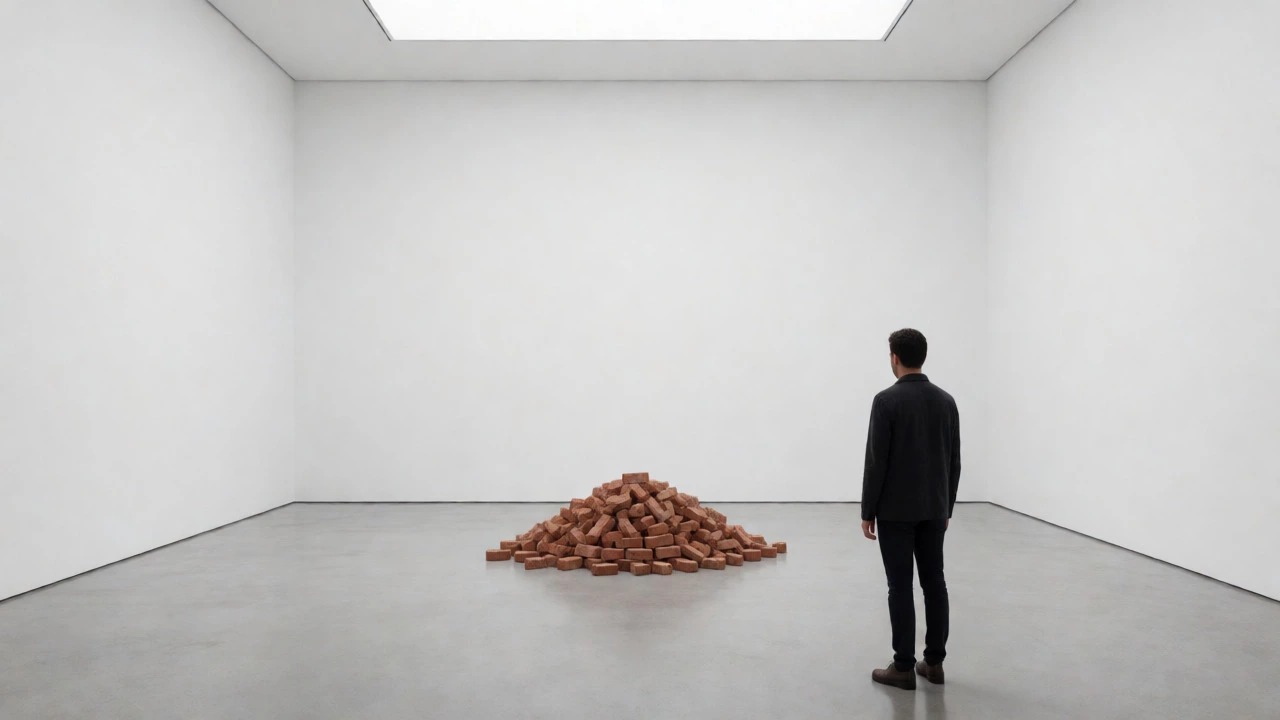
UnknownYou walk into a gallery and see a pile of bricks on the floor. Or maybe it’s a video loop of someone sleeping. You might think, "Is this even art?" That confusion is actually the point. Contemporary art is art produced in the second half of the 20th century or in the 21st century, and it doesn’t follow one single rulebook. Unlike the strict techniques of the Renaissance or the specific movements of Modernism, contemporary work is defined by its diversity, global perspective, and focus on ideas rather than just technical perfection.
If you are trying to spot it in the wild-whether at a museum, an online feed, or a local exhibition-you need to look for specific signals. It’s not about finding the prettiest painting. It’s about understanding what the artist is asking you to feel or question. Here is how to recognize the visual language of today.
The Dominance of Concept Over Craft
In earlier eras, skill was the primary metric. If you could paint a realistic horse, you were good. Today, that bar has shifted. While technical skill still exists, many contemporary artists prioritize the concept. This is often called conceptual art. The idea behind the work matters more than the object itself.
Think about Marcel Duchamp’s readymades from the early 20th century, which paved the way for this shift. He took a urinal and signed it. Why? To challenge the definition of art. Contemporary artists take that baton and run with it. They use everyday objects, digital files, or performances to make a statement. When you look at a piece, ask yourself: What is the artist saying? Are they critiquing consumerism? Exploring identity? Highlighting climate change? The "look" of contemporary art is often simple because the complexity lives in the mind, not the brushstroke.
A Global Palette and Mediums
One of the biggest visual shifts in contemporary style is the move away from Eurocentric traditions. We live in a connected world, and the art reflects that. You will see influences from African textiles, Japanese minimalism, Latin American muralism, and Indigenous storytelling woven together.
This globalization changes the materials used. Artists aren’t limited to oil on canvas anymore. The toolkit has exploded:
- Digital Media: NFTs, AI-generated images, and VR experiences are now standard parts of the landscape.
- Mixed Media: Combining photography, fabric, neon lights, and found objects in one installation.
- Performance: The artist’s body becomes the medium, often documented through video.
- Installation: Transforming entire rooms into immersive environments rather than hanging pictures on walls.
Because of this variety, there is no single color palette or shape language. One artist might use stark black and white minimalism, while their neighbor next door uses chaotic, vibrant street-art graffiti styles. Both are contemporary. The common thread isn't the aesthetic; it's the context.
Engagement and Interaction
Older art forms often asked you to stand back and admire. Contemporary art frequently asks you to step in. Many works are interactive. You might be invited to touch a sculpture, walk through a light tunnel, or even contribute to the artwork by leaving a note or moving an object.
This shift breaks the "fourth wall" between the viewer and the creator. It makes the experience personal. For example, Olafur Eliasson’s installations use fog, mirrors, and light to alter your perception of space. You don’t just look at his work; you inhabit it. This participatory nature is a hallmark of the contemporary style. It suggests that art is a dialogue, not a monologue.
Dealing with Ambiguity
If you leave a contemporary exhibit feeling unsure if you "got it," you’re having a normal reaction. Ambiguity is a feature, not a bug. Contemporary artists often avoid clear answers. They want to provoke thought, not provide instruction manuals.
Consider Banksy. His stencils are visually striking, but their power comes from the mystery and the social commentary embedded in the location and timing of the piece. Is it vandalism or high art? The debate is part of the artwork. Similarly, Ai Weiwei’s work often leaves viewers questioning authority and history without offering a simple resolution. Embracing that uncertainty is key to appreciating the style.
| Feature | Modern Art (approx. 1860s-1970) | Contemporary Art (1970-Present) |
|---|---|---|
| Primary Focus | Aesthetic experimentation, form, color theory. | Ideas, social issues, identity, technology. |
| Materials | Traditional paints, stone, bronze, film. | Digital, mixed media, found objects, data, bodies. |
| Viewer Role | Passive observer/admirer. | Active participant/critic. |
| Global Scope | Largely Western-centric narratives. | Truly global, inclusive of diverse cultures. |
How to Spot It in Daily Life
You don’t need a degree in art history to identify contemporary style. Look for these three markers when browsing Instagram, visiting a mall, or walking through a city center:
- Context Matters: The meaning changes based on where it is displayed. A urinal in a bathroom is plumbing; in a gallery, it’s a critique of hygiene norms.
- Rejection of Tradition: Does it break the rules of composition? Is it intentionally ugly, messy, or boring to make a point?
- Current Events: Does it reference something happening right now? Politics, tech, pop culture, or environmental crises are frequent subjects.
Remember, contemporary art is a living conversation. It reacts to the news, the internet, and societal shifts in real-time. That immediacy gives it a distinct energy that older, historical styles lack. So next time you see a weird object in a white cube room, don’t dismiss it. Ask what it wants to tell you about our current moment. That curiosity is the best tool you have.
Is contemporary art the same as modern art?
No. Modern art refers to the period roughly from the 1860s to the 1970s, characterized by movements like Impressionism and Abstract Expressionism. Contemporary art is art created from the late 20th century to the present day. While they overlap in some themes, contemporary art is broader, more global, and less focused on formal aesthetics.
Why does contemporary art look so simple or random?
Many contemporary works prioritize the concept over technical execution. An artist might choose simplicity to highlight a message, such as using a blank canvas to discuss emptiness or consumerism. The value lies in the intellectual engagement and the context provided by the artist, not necessarily in complex craftsmanship.
Can I buy contemporary art if I don't understand it?
Absolutely. Buying art is personal. You don't need to decode every metaphor to enjoy a piece. Many collectors buy contemporary art because it resonates emotionally or aesthetically with them, regardless of whether they grasp the full theoretical background. Trust your gut reaction-if it speaks to you, that's valid.
What role does technology play in contemporary style?
Technology is central to much contemporary art. Artists use digital tools, AI, virtual reality, and social media platforms both as mediums and as subjects. Digital art allows for infinite reproducibility and new forms of interaction, challenging traditional notions of uniqueness and ownership in the art market.
Is street art considered contemporary art?
Yes, street art is a significant subset of contemporary art. Artists like Banksy and Shepard Fairey have brought public spaces into the gallery conversation. It shares the contemporary traits of addressing social issues, using unconventional materials (spray paint, wheatpaste), and engaging directly with the community outside institutional walls.