Portrait Commission Cost Estimator
Estimate your budget for a custom portrait. This tool uses average market rates from 2026 to provide a realistic price range.
You’ve decided you want a custom portrait. Maybe it’s for an anniversary, a graduation, or just because your dog deserves his day. Then you ask around, and the answers range from "free if you buy them lunch" to "$5,000." Why is there such a massive gap? It’s not just about talent; it’s about time, materials, and market positioning.
If you’re trying to budget for a commissioned piece, you need to know what drives the price tag. Is it the medium? The size? The artist’s Instagram following? Let’s break down the actual numbers so you don’t get sticker shock when you see the quote.
The Short Answer: Typical Price Ranges
Before we get into the weeds, here’s the rough landscape of portrait painting costs in 2026. These are averages for professional, independent artists working with traditional media like oil or acrylic. Digital portraits often start lower but can spike based on complexity.
| Artist Level | Small Headshot (8x10") | Medium Half-Body (16x20") | Large Full-Body/Family (24x36")+ |
|---|---|---|---|
| Emerging / Hobbyist | $150 - $400 | $400 - $800 | $800 - $1,500 |
| Established Professional | $500 - $1,200 | $1,200 - $3,000 | $3,000 - $7,000 |
| Master / Well-Known | $1,500 - $3,500 | $3,500 - $10,000 | $10,000+ |
Notice the spread? A $500 headshot from a local art grad looks very different from a $2,000 headshot by someone who shows at regional galleries. The difference isn't always visible to the untrained eye, but it reflects the artist's experience, reputation, and the sheer number of hours they’ve spent refining their craft.
Why Do Prices Vary So Wildly?
It’s easy to think, "I’m paying for paint and canvas." But that’s only a tiny slice of the pie. When you hire a painter, you’re buying three main things: labor, materials, and overhead.
Labor is the biggest chunk. A realistic oil portrait isn’t something you whip up in an afternoon. An established artist might spend 40 to 60 hours on a single large piece. If they value their hour at $50 (which is modest for skilled creative work), that’s $2,000-$3,000 just in wages. Add in the cost of high-quality linen canvas, archival oils, and brushes, and you’re looking at another $100-$300 depending on size.
Overhead matters too. Renting studio space, heating, lighting, insurance, and marketing all add up. Artists aren’t working in a vacuum. They have business expenses. If an artist works from home, they might charge less, but if they maintain a gallery presence, that cost gets baked into the price.
Key Factors That Drive Up the Cost
Not all portraits are created equal. Here’s what makes the meter run faster.
- Complexity of Composition: A simple headshot against a neutral background is straightforward. Add hands, patterned clothing, multiple subjects, or a complex background scene, and the difficulty spikes. Hands are notoriously hard to paint realistically. Each extra person adds significant time.
- Size Matters: Doubling the surface area doesn’t just double the price. Larger canvases require more structural integrity, more paint, and often a different approach to composition. Shipping a 36x48" framed piece is also way more expensive than mailing an 8x10" print.
- Medium Choice: Oil paints are durable and blend beautifully, but they dry slowly. This means longer project timelines. Acrylics dry fast, allowing quicker turnaround, which can sometimes lower the cost slightly. Watercolors are tricky; mistakes are hard to fix, requiring high skill levels, which can drive prices up despite smaller paper sizes.
- Reference Quality: Garbage in, garbage out. If you send blurry photos taken in bad light, the artist has to guess details. Good reference photos save time. Some artists charge extra if they have to do extensive photo editing or composite multiple images together before starting.
Digital vs. Traditional: Where’s the Value?
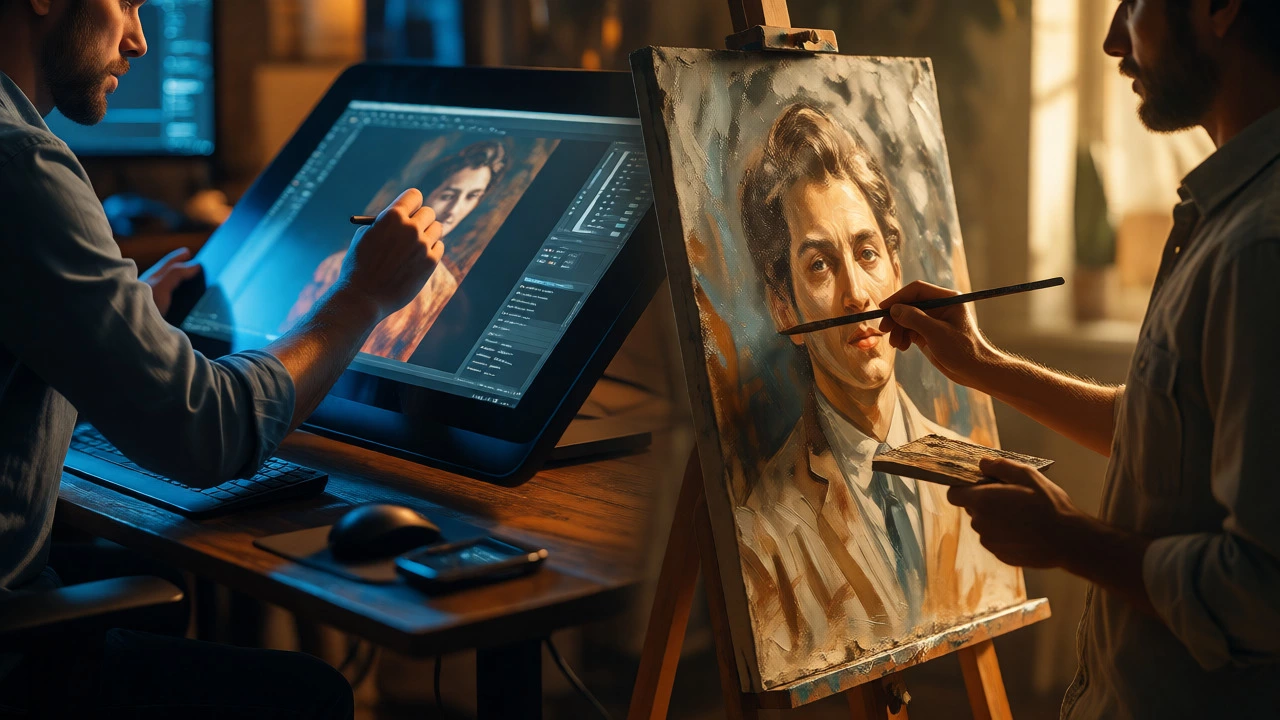
You might see digital portraits for $100 online. Why pay $1,000 for oil? Because physical art holds value differently. A digital file can be copied infinitely. An original oil painting is a unique object. It ages, it has texture, and it exists in one place.
Digital art is great for quick gifts, social media avatars, or if you plan to print it yourself. But if you want an heirloom piece to hang in your hallway, traditional media usually commands higher respect-and higher prices. However, some top-tier digital illustrators now charge as much as traditional painters because their style is distinct and highly sought after.
How to Get an Accurate Quote
Don’t just email an artist and ask, "How much?" You’ll get a vague answer. Be specific. Here’s a checklist to include in your inquiry:
- Subject Count: How many people or pets are in the picture?
- Desired Size: Give dimensions in inches or centimeters.
- Medium Preference: Are you open to any medium, or do you specifically want oil?
- Timeline: Do you need it for a specific date? Rush jobs often incur a 20-50% surcharge.
- Photos: Attach 3-5 high-resolution photos from different angles.
- Budget Range: If you have a cap, say it upfront. "My budget is around $800." This saves everyone time.
Most professional artists will provide a written estimate within a few days. Read it carefully. Does it include framing? Shipping? Revisions? Clarify these points before signing anything.
Hidden Costs You Might Miss
The quoted price isn’t always the final price. Watch out for these extras:
- Framing: Custom framing can easily add $100-$500+ to the total. Ask if the artist offers framing services or if you need to source it yourself.
- Shipping: Insured shipping for fragile, heavy paintings can cost $50-$200 depending on distance and size. International shipping is significantly higher due to customs and handling.
- Revisions: Most contracts allow for minor tweaks during the process (e.g., changing the color of a shirt). Major changes after the painting is finished often cost extra. Agree on a revision limit beforehand.
- Taxes: Depending on where the artist lives, sales tax might apply.
Is It Worth Paying More?
This depends on your goal. If you want a decorative piece for a rental apartment, a $300 watercolor from a talented student might be perfect. It looks good, it’s affordable, and you won’t cry if it gets damaged.
But if you’re commemorating a milestone-like a wedding or a retirement-you might want something that lasts decades. Higher-priced artists typically use archival-grade materials that resist yellowing and cracking. Their technique ensures the likeness remains accurate over time. You’re paying for longevity and emotional resonance.
Also, consider the artist’s availability. Top-tier painters often have waitlists of 3-6 months. If you need it sooner, you might have to look at mid-level professionals or accept a rush fee.
Final Tips for Hiring a Portrait Painter
Start early. Good artists are booked out. Look at their portfolio critically. Do they specialize in the style you like? Some are photorealistic; others are impressionistic. Make sure their aesthetic matches your taste.
Communicate clearly. Share your vision, but trust their expertise. If they suggest a change to improve the composition, listen. They’ve painted hundreds of faces; you haven’t.
And finally, remember that you’re building a relationship. Many collectors return for future commissions. A positive experience with one artist can lead to years of beautiful artwork in your home.
How long does a portrait take to complete?
Timelines vary widely. A small digital portrait might take 1-2 weeks. A medium-sized oil painting typically takes 4-8 weeks, including drying time. Large, complex family portraits can take 3-6 months. Always ask for an estimated completion date before committing.
Do I need to sit for the portrait?
No, most modern portrait painters work from photographs. Sitting for a portrait is rare and usually reserved for high-end classical commissions. High-quality photos are sufficient and often preferred because they capture natural expressions better than posed sittings.
Can I get a refund if I don’t like the result?
Refund policies differ. Most artists require a non-refundable deposit (usually 50%) to secure your slot. If you approve sketches and progress photos along the way, refunds are rarely granted unless the artist fails to deliver the agreed-upon specification. Always read the contract terms regarding dissatisfaction.
Are prints cheaper than originals?
Yes, significantly. Giclée prints (high-quality inkjet reproductions) typically cost $50-$200, depending on size and edition limits. Originals are one-of-a-kind and priced accordingly. Prints are a great way to own a piece of an artist’s work without the full commission cost.
What if my pet or subject moves in the photo?
Blurred or poorly lit photos make the artist’s job harder and may increase the price. Provide multiple clear shots. If you only have bad photos, expect to pay extra for the artist’s time in interpreting details or reconstructing features.