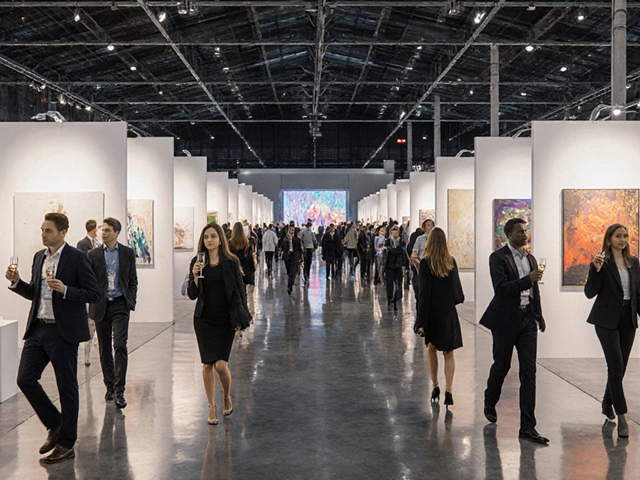
Right now, the biggest art trend isn’t a new brushstroke or a fresh color palette. It’s not even a movement born in a studio or a gallery. It’s something happening on your phone, your laptop, and in the backrooms of major museums: AI-generated art. If you’ve scrolled past a surreal portrait of a cat as a Roman emperor, or a landscape that looks like it was painted by Van Gogh after a dream, you’ve seen it. This isn’t a niche experiment. It’s the dominant force reshaping how art is made, seen, and sold in 2025.
AI Art Isn’t Just a Tool - It’s a New Medium
People still talk about AI art like it’s a glitch in the system - something that happens when you type the wrong prompt into Midjourney or DALL·E. But that’s like calling a camera a glitch in painting. AI-generated art is a medium, not a shortcut. It uses massive datasets of existing images, combined with neural networks trained to understand style, composition, and emotion. The result? Images that didn’t exist before, created in seconds.
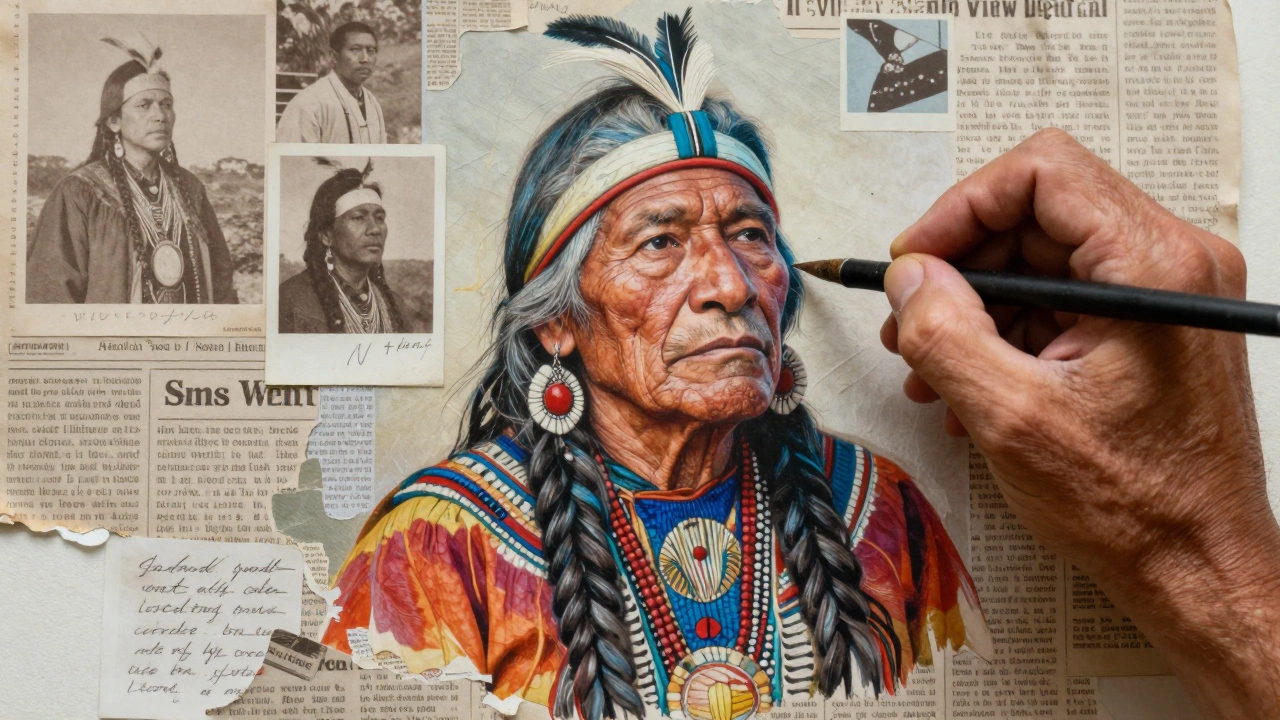
Artists aren’t just using AI to make pretty pictures. They’re using it to explore identity, bias, and authorship. In Vancouver, a local artist named Lena Cho used Stable Diffusion to generate 200 portraits of people who’ve disappeared from Indigenous communities. Each image was trained on historical photos, newspaper clippings, and oral histories. The final collection, called Missing Faces, was shown at the Vancouver Art Gallery this spring. It didn’t just draw attention - it sparked national debate about who gets remembered in art.
Why This Trend Is Bigger Than Filters or Filters
Remember when Instagram filters turned everyone into a vintage film filter? Those were cosmetic. AI art is structural. It’s changing the entire pipeline of creation.
Traditional art takes months: sketching, layering, revising, waiting for paint to dry. AI art can go from idea to finished piece in minutes. That speed has opened the door for people who never thought they could be artists. A 12-year-old in Winnipeg made a series of AI-generated mythological creatures based on Cree folklore. It went viral. A retired nurse in Toronto used AI to recreate her late husband’s favorite landscapes - not from memory, but from photos he took. She printed them and hung them in her living room. That’s not just art. That’s healing.
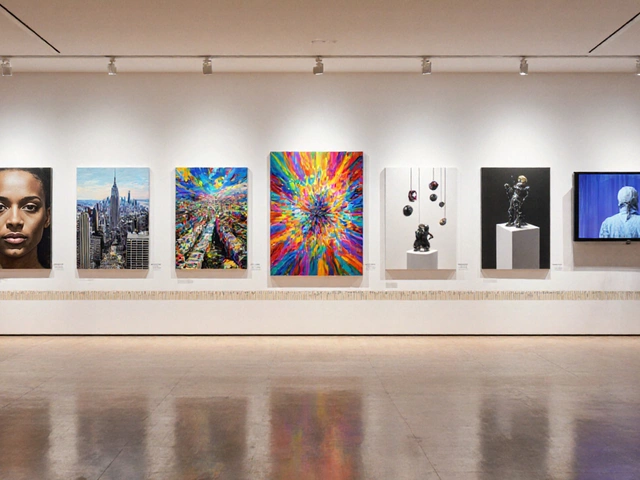
And galleries are noticing. The Whitney Biennial in New York featured 17 AI-generated works in 2024. In 2025, that number jumped to 42. The Venice Biennale now has a dedicated AI section. Even the Louvre, which once refused digital art, hosted a small exhibition called Machine Dreams last fall, featuring AI interpretations of Renaissance masterpieces.
The Controversy: Who Owns the Image?
But here’s the problem: AI art doesn’t exist in a vacuum. It learns from millions of images uploaded by real artists - many without permission. A 2024 study by the University of Toronto found that 87% of the images used to train the most popular AI models were scraped from platforms like DeviantArt, Instagram, and ArtStation. Many of those artists never signed a license. Some didn’t even know their work was being used.
That’s led to lawsuits. In 2023, a group of 10,000 artists filed a class-action suit against Stability AI, Midjourney, and OpenAI. The case is still ongoing. The core question? If an AI generates a painting that looks exactly like a living artist’s style, is that theft? Or is it inspiration?
Some artists say it’s theft. Others say it’s evolution. Painter Maria Delgado, who works in oil and acrylic, says she started using AI to generate backgrounds for her figurative pieces. "I don’t use the AI image as-is," she told me. "I print it, paint over it, tear it up, and rebuild it. The AI is my sketchpad. It’s not replacing me - it’s giving me more to work with."
What Artists Are Actually Doing With AI (Not What You Think)
Most people assume AI artists just type "a cyberpunk owl wearing a crown" and call it a day. That’s not what’s happening at the top level.
Here’s what real artists are doing in 2025:
- Using AI to generate hundreds of variations of a single concept - then hand-selecting and refining the best 3.
- Training custom models on their own portfolios to preserve their unique style.
- Combining AI outputs with traditional mediums: ink, clay, collage, embroidery.
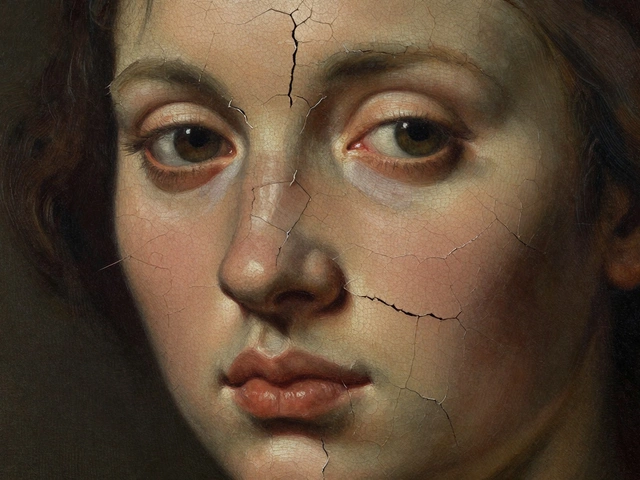
- Using AI to restore damaged historical artworks - like re-coloring faded frescoes based on fragments.
- Creating interactive installations where viewers type prompts that generate real-time visuals projected on walls.
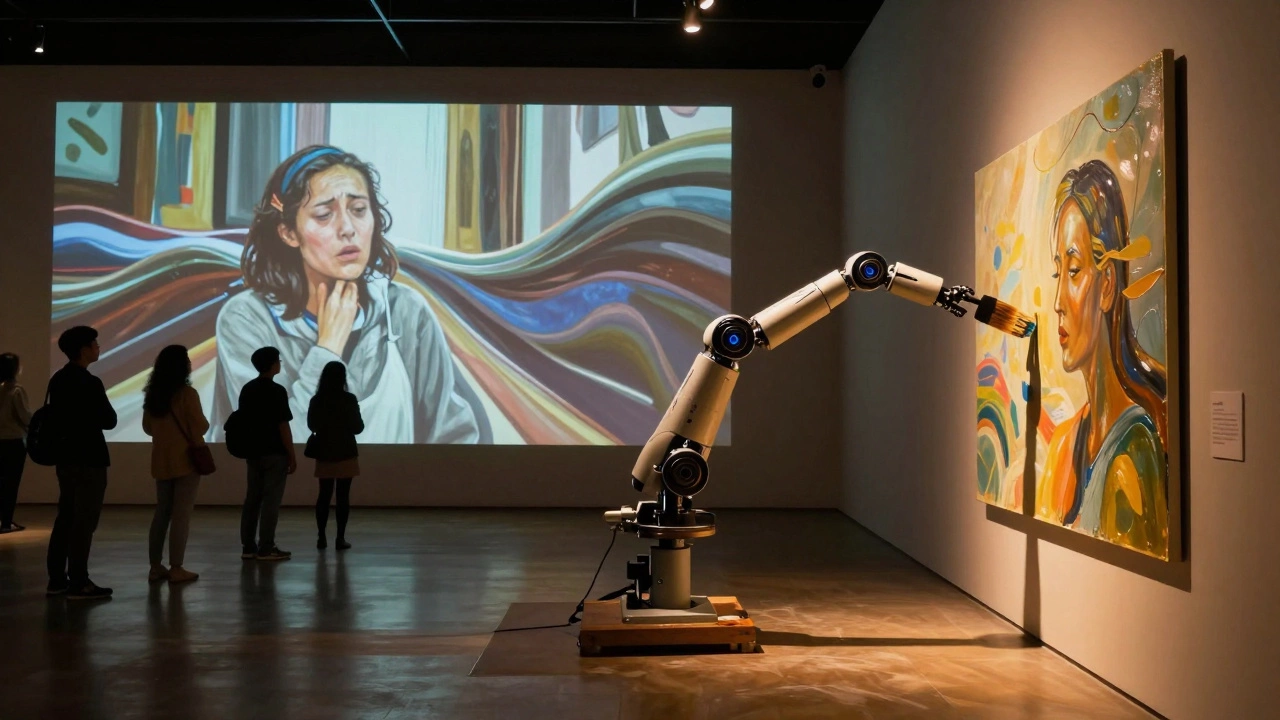
In Berlin, an artist collective called Neural Canvas built a room where visitors speak their emotions into a mic. AI translates those words into abstract visuals, then a robotic arm paints them onto a canvas in real time. The result? A painting made from your sadness, your joy, your confusion. It’s not just art - it’s a mirror.
The Market Is Going Wild
People are buying AI art - and paying real money. In March 2025, a piece called Portrait of Edmond de Belamy - originally made in 2018 by the French collective Obvious - sold for $432,500 at Christie’s. That was a fluke, right? Not anymore.
Last month, a digital artist named Rina Kim sold a series of 10 AI-generated portraits of Canadian poets, printed on linen and framed in hand-carved cedar. Each sold for $8,500. She didn’t paint them. She curated them. She spent 18 months training a model on the poets’ letters, biographies, and voices. Then she generated 12,000 images and chose the 10 that felt most alive.
That’s the new skill: curation. The artist’s job is no longer just to make - it’s to decide. Which image carries meaning? Which one feels true? Which one makes you stop scrolling?
What’s Next? The Line Is Blurring
AI isn’t replacing artists. It’s replacing the idea that art must be made by a single human hand. The next big trend won’t be AI art versus human art. It’ll be hybrid art - where the human and the machine collaborate in ways we haven’t even named yet.
Some galleries are starting to label pieces with a new tag: "Co-Created by Human and AI." That’s the future. Not machines making art. Not humans making art. Humans and machines making art - together.
If you’re wondering whether this trend will last, ask yourself: did photography kill painting? No. It changed it. Painting got more expressive, more emotional, more personal. AI is doing the same thing. It’s forcing artists to ask harder questions: What makes something art? Who deserves credit? And what does it mean to create something that didn’t exist before?
The biggest art trend right now isn’t a style. It’s a question. And the answer is still being painted - one prompt at a time.
Is AI-generated art really art?
Yes - if you define art as something that evokes emotion, challenges thought, or reflects culture. AI doesn’t feel, but it can reflect what humans have created. The artist still chooses the prompt, refines the output, and gives it context. That’s where the art lives - not in the algorithm, but in the intention behind it.
Can I sell AI-generated art?
Yes, but with conditions. You can’t sell art made from copyrighted images without permission. Many platforms now require you to disclose AI use. The most successful sellers train their own models using original or licensed content, then add significant human modification - like hand-painting, collage, or mixed media. Transparency builds trust.
Do galleries accept AI art?
Absolutely. Major institutions like the Tate Modern, MoMA, and the Vancouver Art Gallery have all included AI-generated works in exhibitions since 2023. The key is presentation: galleries want to see the artist’s process, not just the final image. They’re looking for meaning, not magic.
What tools are artists using in 2025?
Midjourney, Stable Diffusion XL, and DALL·E 3 are still popular, but artists are moving toward custom models. Tools like Invoke AI and Leonardo.ai let users train models on their own images. Some are even using open-source models like Flux and Kandinsky 3, which offer more control over style and output. The best artists combine these with traditional software like Photoshop and Procreate for final touches.
Is AI art ethical?
It depends. Using AI to mimic a living artist’s style without permission is widely seen as unethical. Training on scraped data without consent is legally risky. But using AI to explore new forms, restore cultural artifacts, or give voice to underrepresented stories? That’s where the ethical potential lies. The key is transparency, respect, and credit.