Feb 11, 2025
Creating Your Own Digital Art: A Beginner's Guide
When you paint a landscape, perspective in landscapes, the technique of creating the illusion of depth on a flat surface. It's what turns a flat painting into a window into a real place. Without it, your hills look like paper cutouts, your trees stand in a row like soldiers, and the sky feels stuck on top. This isn’t just about rules—it’s about how our eyes actually see the world. When you stand on a cliff and look out over a valley, the faraway mountains don’t just get smaller—they lose color, detail, and contrast. That’s not decoration. That’s atmospheric perspective, the way air and distance affect how we perceive color and clarity in distant objects. And when a road narrows as it heads toward the horizon? That’s linear perspective, the system of using converging lines to show depth and spatial relationships. These aren’t fancy art school terms. They’re the hidden math behind why some paintings feel real and others feel flat.
Most beginners think realism means adding more details—more leaves, more rocks, more texture. But the truth? Realism comes from getting the space right. The foreground, middle ground, and background, the three essential layers that structure any landscape painting. The foreground is where your eye lands first—maybe a rock, a patch of grass, a path. It’s detailed, sharp, and full of contrast. The middle ground is where your subject lives—a field, a lake, a cluster of trees. It’s softer than the foreground but still clear. The background? That’s where the mountains or sky fade into haze. Less color, less detail, less everything. That’s not laziness. That’s how light and air work. If you paint all three layers correctly, your painting breathes. If you ignore them, even the most detailed brushwork looks fake.
You don’t need to be a math genius to use perspective. You just need to look. Next time you’re outside, notice how power lines or fences get closer together as they go into the distance. Watch how a distant tree loses its green and turns blue-gray. See how a river narrows as it flows away from you. These aren’t tricks. They’re observations. The best landscape painters didn’t invent perspective—they paid attention to it. And that’s what you’re doing here too. You’re learning to see like an artist, not just paint like one.
What you’ll find below isn’t a list of rules to memorize. It’s a collection of real, practical guides from artists who’ve figured out how to make land, sky, and water feel alive on canvas. From how to mix colors for distance to how to place a horizon line so it doesn’t cut your painting in half, these posts cut through the noise. You’ll learn what actually works—no fluff, no theory without practice. Whether you’re just starting out or you’ve been painting for years, you’ll find something that clicks.
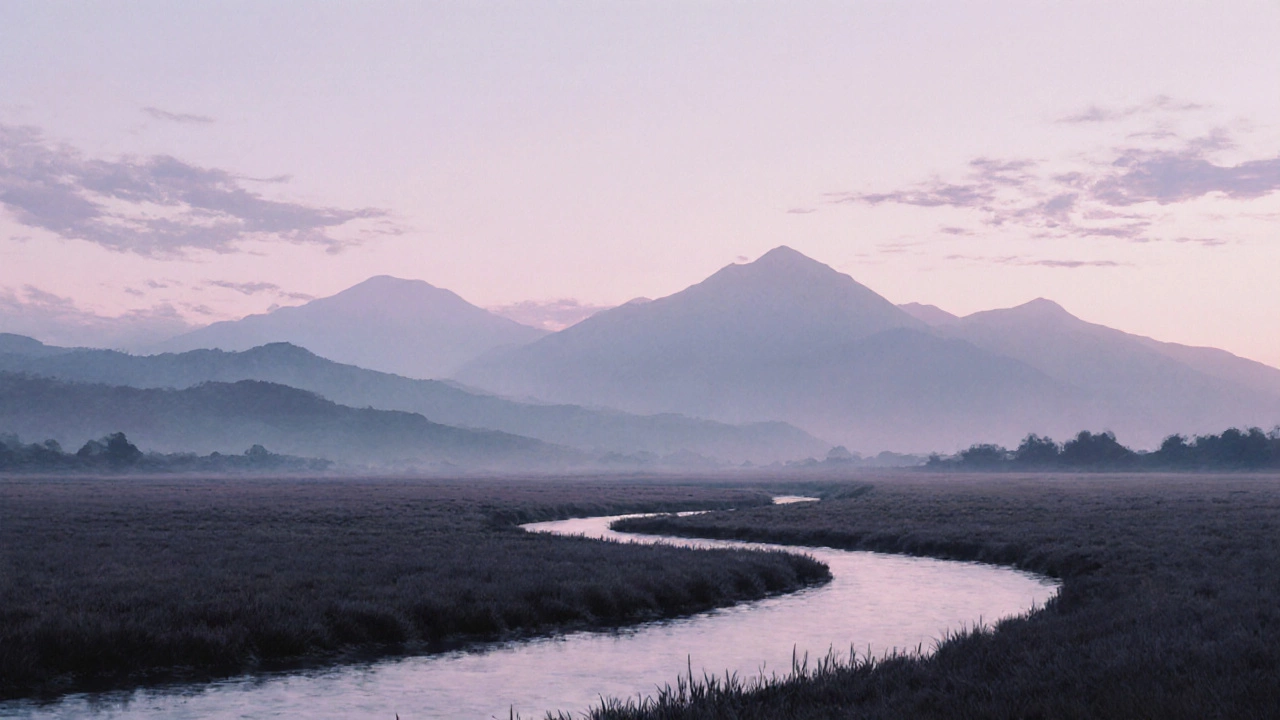
Learn the essential rules of drawing landscapes-from perspective and value to focal points and texture. These proven techniques help you create depth, mood, and realism without overworking details.