Oct 17, 2025
Best‑Selling Art Print Sizes on Etsy: What Works and Why
When you paint nature realistically, you’re not just copying what you see—you’re translating light, texture, and atmosphere into something that feels alive on the canvas. Painting nature realistically, the practice of rendering natural scenes with accurate detail, proportion, and lighting to create believable imagery. Also known as realist landscape painting, it’s the foundation many artists return to, even when they later move toward abstraction. It’s not about perfection. It’s about honesty. A tree doesn’t need perfect symmetry to feel real. A stream doesn’t need to mirror the sky exactly to look like water. What matters is how you capture the way light falls on moss, how shadows pool under rocks, or how wind bends grass in a way that makes viewers pause and think, "I’ve seen that."
Realism in nature painting relies on three key things: observation, value control, and color truth. You need to spend time outside—not just looking, but studying. Notice how the same green in a pine tree changes under noon sun versus late afternoon. Learn how to mix earth tones that don’t look muddy. Understand that shadows aren’t just gray—they carry hints of blue, purple, even warm red from reflected light. Many artists skip this and end up with flat, lifeless landscapes. The ones who succeed? They study the real world like scientists, then paint like poets.
Landscape painting, the art of depicting natural scenery like mountains, valleys, trees, rivers, and forests. It’s not just a genre—it’s a language. And like any language, it has grammar. The foreground, middle ground, and background aren’t just sections—they’re tools to create depth. Oil painting, a medium that allows slow drying, rich blending, and deep layering ideal for natural textures. is the go-to for many because it gives you time to adjust, correct, and build up subtle transitions. But you don’t need oils. Acrylics, watercolors, even digital tools can work—if you respect the rules of how light and form behave in nature.
One of the biggest mistakes? Using too many bright colors. Real nature is quiet. The greens are muted. The blues are cool but soft. The reds in autumn leaves are often buried under grays and browns. A good palette for realism starts with just five or six pigments. Burnt umber, ultramarine blue, cadmium yellow, titanium white, and maybe a touch of alizarin crimson. That’s it. The rest comes from mixing, not squeezing more tubes.
Realism isn’t outdated. It’s essential. Even artists who make abstract work often start here. It teaches you to see. To slow down. To notice the way a single leaf curls, or how fog lifts off a river at dawn. The posts below give you step-by-step breakdowns from artists who’ve done this for years. You’ll find guides on mixing skin tones for figures in landscapes, choosing the right paper or canvas, scanning your finished work for prints, and even how to avoid the common trap of overworking a painting. Whether you’re just starting or you’ve been at it for years, painting nature realistically is a skill that never stops rewarding you—with better art, deeper calm, and a sharper eye for the world outside your window.
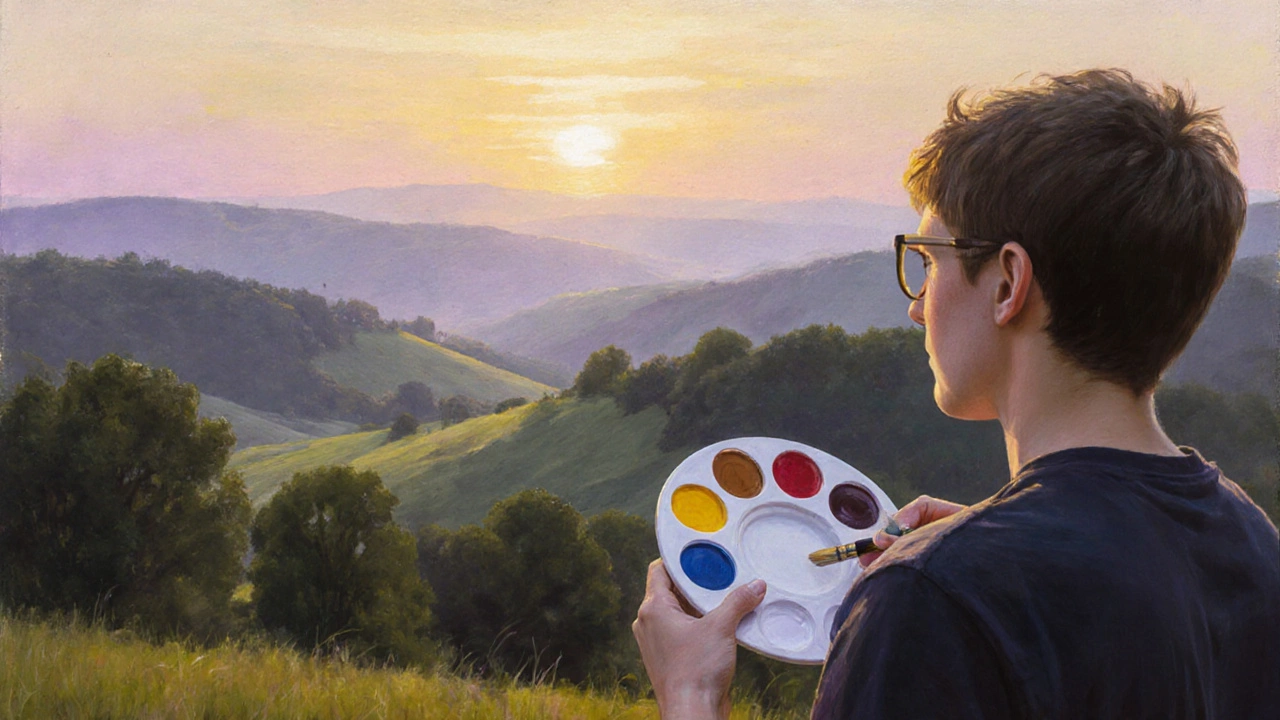
Learn how to paint realistic landscapes by focusing on light, value, and atmospheric perspective instead of details. Step-by-step techniques for beginners using oil or acrylics.