Modern Art Interpretation Guide
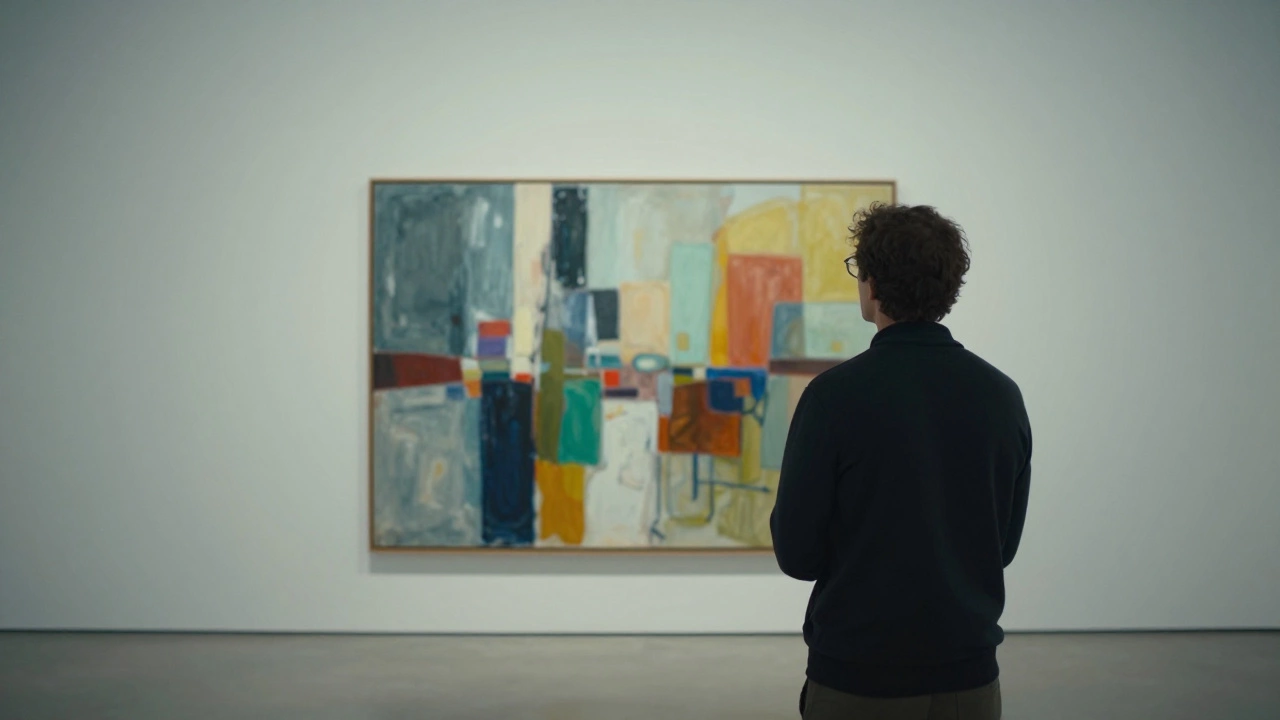
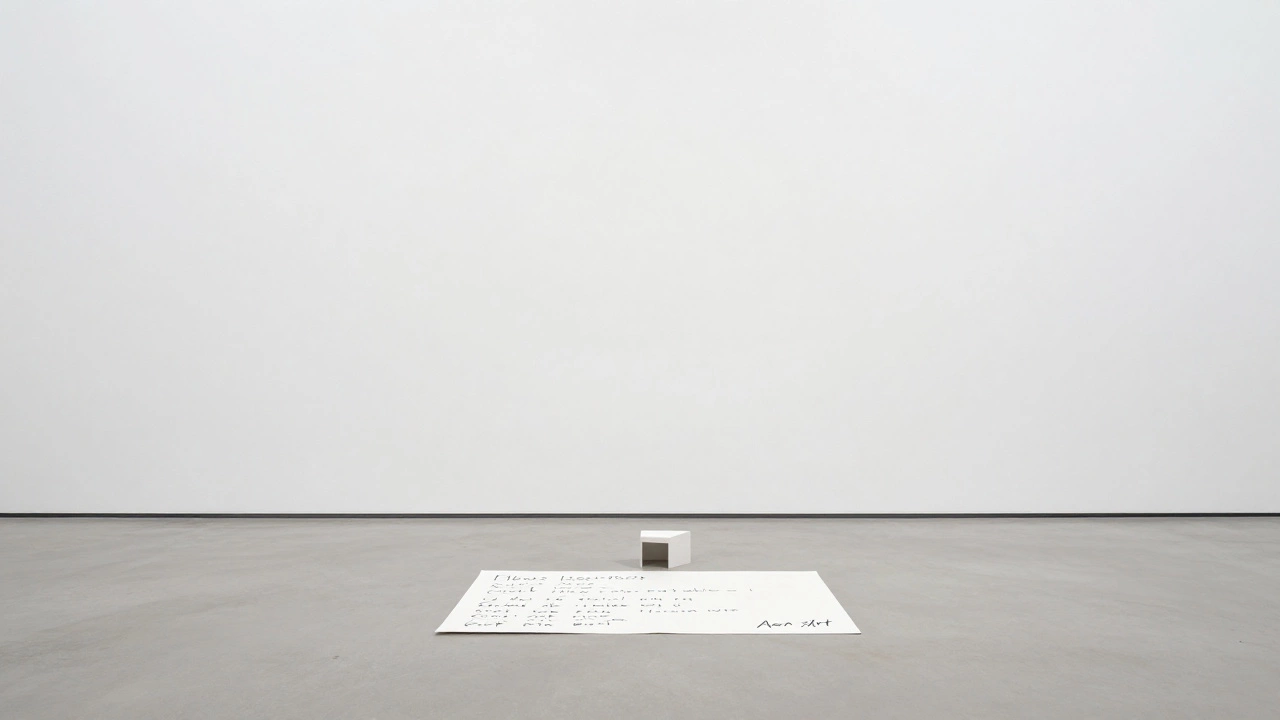
Walk into a gallery. You see a canvas that looks like it was painted by a toddler with a box of crayons. Or maybe you stare at a pile of bricks labeled as a masterpiece. Your first instinct might be confusion, or even frustration. "I could do that," you think. But here is the thing: modern art isn’t about how well something is drawn. It’s not about realistic portraits or perfect landscapes.
So, what does modern art actually show? It shows us the shift in human consciousness. It reflects the chaos of industrialization, the trauma of world wars, the rise of psychology, and the questioning of traditional values. When you look at a work from this era, you aren't just looking at paint on canvas; you are looking at a mirror held up to society's changing identity.
The Shift from Representation to Expression
To understand what modern art shows, we have to look at what came before it. For centuries, art was mostly about representation. If you commissioned a painting, you wanted a likeness of yourself, your family, or a biblical scene. The skill lay in mimicking reality.
Then came the camera. In the mid-19th century, photography took over the job of recording reality accurately. Artists realized they didn't need to compete with machines. They could do something cameras couldn't: express internal states. This is the core of modern art. It stopped showing us the outside world and started showing us the inside world.
Consider Impressionism, which began in France in the 1860s. It focused on capturing the fleeting effect of light rather than detailed forms. Artists like Claude Monet weren't trying to paint a perfect haystack. They were painting how the haystack *felt* in the morning mist. This was the first crack in the wall of realism. It showed that perception is subjective.
Chaos, Anxiety, and the Human Condition
As the 20th century progressed, the world became more complex and often darker. Two World Wars, the rise of psychoanalysis, and rapid technological changes created a sense of instability. Modern art began to reflect this anxiety.
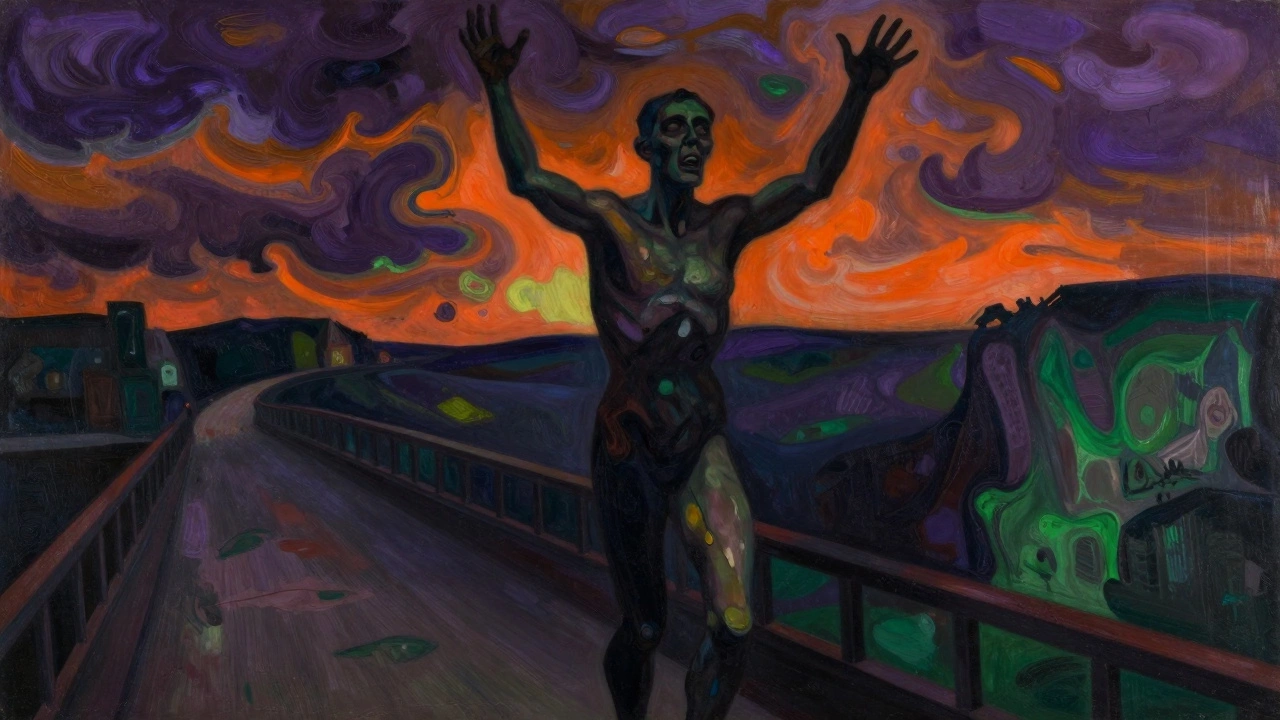
Expressionism emerged as a direct response to this turmoil. It used distorted forms and vivid colors to convey emotional experience rather than physical reality. Look at Edvard Munch's The Scream. The face isn't anatomically correct. The sky isn't blue. But the feeling of existential dread is unmistakable. The art shows us the raw nerve of human emotion.
Later, Dadaism reacted to the absurdity of war. It embraced nonsense, chance, and anti-art statements. Artists like Marcel Duchamp presented everyday objects, like a urinal, as art. Why? To challenge the very definition of art itself. It showed that context matters more than craftsmanship. If an artist says it's art, and the institution accepts it, then it is art. This shifted the focus from the object to the idea.
The Rise of Abstraction and Pure Form
If Dada questioned the purpose of art, Abstract Art removed the subject entirely. What does a painting show if there is nothing recognizable in it?
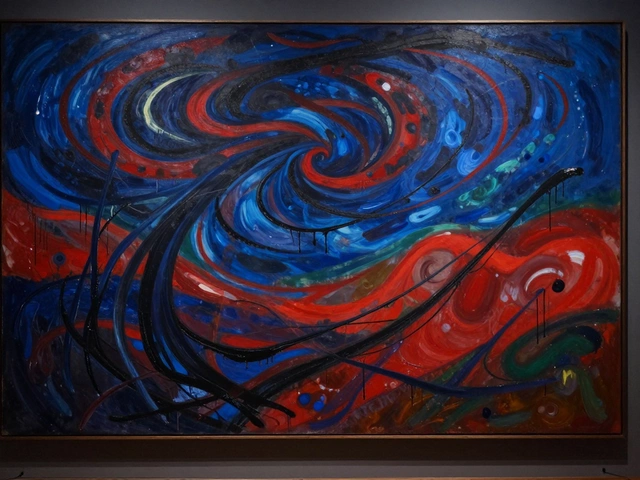
Abstract Expressionism, which flourished in New York after World War II, argued that art should be about the act of creation itself. It emphasized spontaneous, automatic, or subconscious creation. Artists like Jackson Pollock didn't stand at an easel. They threw paint onto canvases on the floor. The result wasn't a picture of anything. It was a record of energy, movement, and gesture.
For these artists, the canvas was an arena in which to act. What the art shows is the physical presence of the artist. It’s about rhythm, color relationships, and texture. It invites you to feel the energy rather than decode a narrative. It’s similar to listening to instrumental music-you don't need lyrics to feel the mood.
Conceptual Art: Ideas Over Objects
By the 1960s and 70s, the focus shifted again. This time, it wasn't even about the visual experience. It was about the concept. Conceptual Art posited that the idea behind the work was more important than the finished object. It prioritized intellectual engagement over aesthetic pleasure.
An example is Sol LeWitt's wall drawings. He would write instructions for others to follow. The final drawing might vary depending on who executed it, but the *idea* remained constant. What does this show? It shows that art can be a system, a logic, or a language. It challenges the romantic notion of the artist as a unique genius with special hands. Instead, it presents the artist as a thinker.
How to Read Modern Art
Knowing what modern art shows helps you appreciate it, but you still need a framework for viewing it. Here is how you can approach a piece without feeling lost:
- Ask questions, not demands. Don't ask, "What is this?" Ask, "What does this make me feel?" or "Why did the artist choose these materials?"
- Look at the composition. Notice where your eye goes. Is it chaotic? Calm? Balanced? Off-kilter? These choices guide your emotional response.
- Consider the context. When was it made? What was happening in the world? Art doesn't exist in a vacuum. A painting from 1945 carries different weight than one from 1995.
- Accept ambiguity. Modern art often resists single meanings. That’s okay. It’s meant to provoke thought, not provide answers.
Common Misconceptions About Modern Art
There are many myths that cloud our understanding of what modern art shows. Let’s clear them up.
| The Myth | The Reality |
|---|---|
| "Any child could make this." | A child makes marks intuitively. An artist makes marks intentionally to communicate specific ideas, emotions, or critiques. The difference lies in intent and context. |
| "It has no rules." | Every movement has strict internal rules. Cubism deconstructs form based on geometric principles. Minimalism adheres to severe constraints of shape and color. Breaking tradition requires mastering new systems. |
| "It’s just random." | Even seemingly random works, like Pollock’s drips, involve careful control of viscosity, speed, and composition. Chance is a tool, not a lack of effort. |
| "It’s too expensive because it’s easy to make." | Price reflects historical significance, rarity, and market demand, not just labor hours. Early Impressionist paintings were cheap when sold; now they are priceless due to their role in art history. |
The Role of the Viewer
In traditional art, the viewer was passive. You looked at a story and understood it. In modern art, the viewer becomes active. You complete the work. Without your interpretation, the art is incomplete.
This is why two people can look at the same Rothko color field and feel completely different things. One might see peace; another might see despair. Both are valid. The art shows a space for projection. It acts as a screen for your own psyche. This democratizes the experience. You are not being lectured to; you are being invited into a dialogue.
Ultimately, modern art shows us that reality is multifaceted. It teaches us to question our assumptions, to embrace uncertainty, and to find meaning in abstraction. It’s not about what you see; it’s about what you think.
Why is modern art so abstract?
Modern art became abstract because artists moved away from representing the external world (which photography had already mastered) toward expressing internal states, emotions, and concepts. Abstraction allows for a more direct communication of feelings and ideas without the distraction of recognizable objects.
How do I know if I'm interpreting modern art correctly?
There is no single "correct" interpretation in modern art. The goal is personal engagement. If the work provokes thought, emotion, or curiosity, you are engaging with it successfully. Researching the artist's intent can add depth, but your personal reaction is equally valid.
What is the difference between modern art and contemporary art?
Modern art generally refers to art produced from the late 19th century to the 1970s, focusing on breaking from tradition and exploring new forms. Contemporary art refers to art created from the late 20th century to today, often addressing current social, political, and cultural issues using diverse media including digital technology and performance.
Why is some modern art worth millions of dollars?
High prices are driven by historical significance, rarity, provenance, and market demand. Works that defined movements or changed the course of art history are rare commodities. Additionally, the art market operates like any other luxury market, where scarcity and reputation drive value.
Can anyone create modern art?
Anyone can create art, but creating significant modern art requires understanding the context, history, and theoretical frameworks of the medium. While the techniques may appear simple, the conceptual depth and intentional choice behind the work distinguish professional artistic practice from casual doodling.