Look at a wall in any modern home. Chances are, you’ll see something labeled as an art print. But is it really art? Or is it just a fancy poster? This question comes up more often than you think - especially when you’re trying to decide what to hang above your sofa or what to gift someone who claims to "love art." The truth? Art prints and posters aren’t the same thing. Not even close. And understanding the difference isn’t just about sounding knowledgeable. It’s about making sure you’re paying for what you actually want.
What even is an art print?
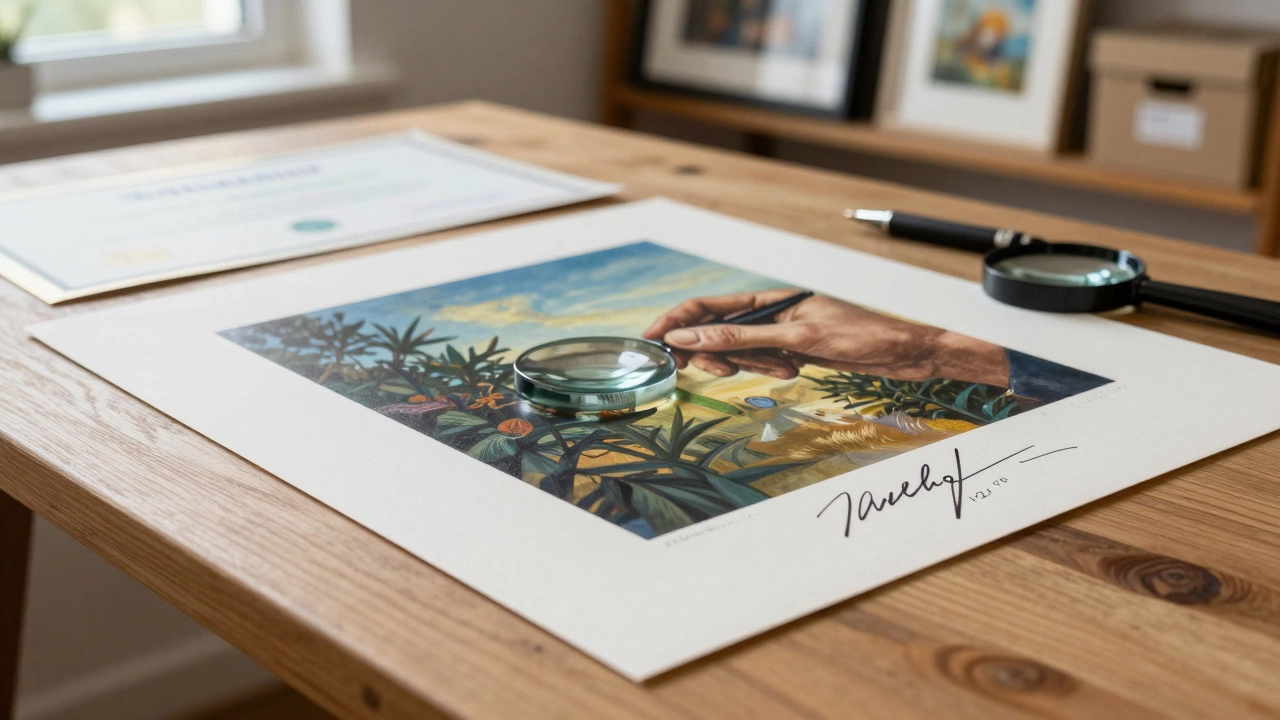
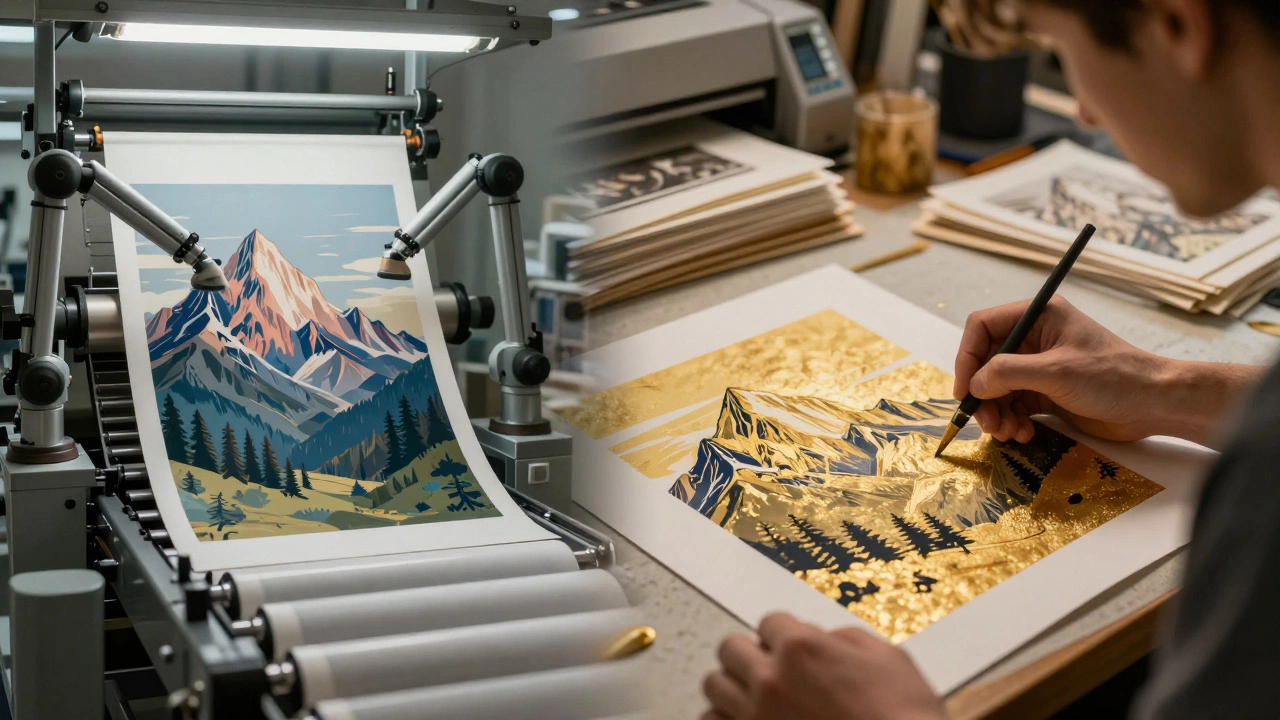
An art print is a reproduction of an original artwork, made with care, quality materials, and often signed by the artist. These aren’t mass-produced in a warehouse. They’re printed in small batches - sometimes just 50 or 100 copies - using high-end inkjet printers that lay down pigment-based inks on archival paper. This process is called giclée (pronounced "zhee-klay"), and it’s the gold standard for fine art reproduction. The paper? Acid-free, cotton rag, thick enough to feel substantial. The colors? Matched to the original using color profiles calibrated for accuracy. Some artists even hand-embellish their prints with brushstrokes or gold leaf after printing.When you buy an art print, you’re not just buying an image. You’re buying a piece of the artist’s process. Many come with a certificate of authenticity, a numbered edition (like "12/50"), and sometimes even the artist’s signature. That signature? It’s not a stamp. It’s handwritten. And it matters.
What makes a poster different?
A poster is made for mass appeal, not lasting value. You’ve seen them: bright, bold, printed on thin, glossy paper, rolled up and sold at college bookstores, tourist shops, or online marketplaces. They’re often based on popular movie scenes, band logos, or generic landscapes. The printing? Offset lithography - fast, cheap, and designed for volume. The paper? Thin, prone to fading in sunlight, and usually not archival. No signatures. No numbering. No certificate.Posters are meant to be temporary. They’re decorative, yes - but they’re not collectible. If you hang one in your living room for five years, it’ll likely yellow, curl at the edges, and lose its color. An art print? With proper care, it can last over 100 years.
Price tells the story
You can buy a poster for $5. Maybe $15 if it’s from a trendy brand. An art print? Start at $50 and go up to $5,000 or more, depending on the artist, rarity, and demand. That price gap isn’t just about branding. It’s about materials, labor, and intent.Take a giclée print of a limited edition watercolor by a Canadian artist like Emily Carr. You’re paying for the artist’s time, the cost of archival paper, the calibration of the printer, the proofing process, and the fact that only 30 were ever made. A poster of the same image? It’s probably printed in China on 80gsm paper, shipped in bulk, and sold for $12. The image might look similar from across the room - but up close? The difference is obvious.
Who makes what, and why?
Art prints come from galleries, artist studios, or reputable print houses that work directly with creators. You’ll find them on websites like Saatchi Art, Artsy, or directly from an artist’s own shop. These sellers often provide details about the edition size, paper type, and printing method.Posters come from big retailers: Urban Outfitters, Amazon, Etsy sellers with 10,000 listings, or even IKEA. They’re designed for quick turnover. The goal isn’t to preserve art - it’s to sell as many as possible.
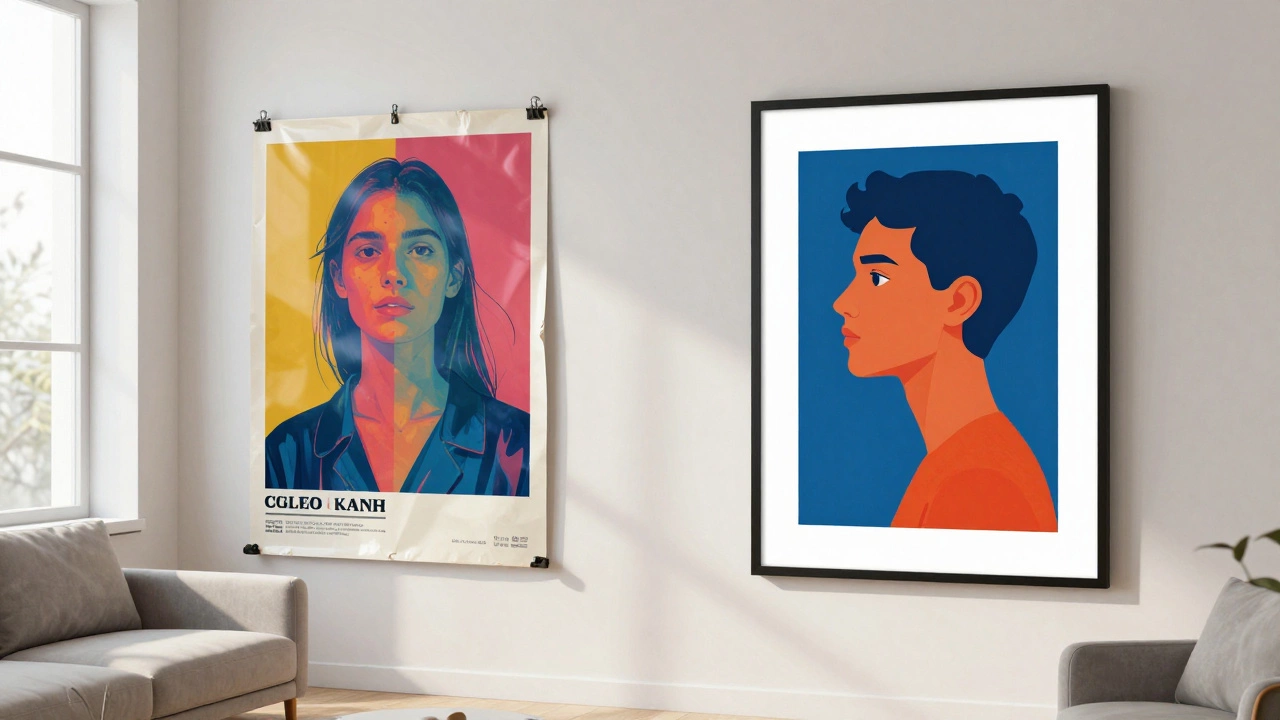
Why does it matter if you’re just hanging it on the wall?
Because your wall deserves better than something that fades in a year. If you care about the art you live with, you care about how it’s made. An art print holds value - not just monetary, but emotional. It connects you to the artist’s hand, their vision, their process. A poster? It’s just a picture.Think of it like this: Would you rather drink wine from a plastic cup or a hand-blown glass? Both hold liquid. But one elevates the experience. The same goes for art.
What to look for when buying an art print
If you’re shopping for something that’s more than decoration, here’s what to check:- Material: Is it printed on cotton rag, archival paper, or canvas? Avoid glossy, thin paper.
- Edition size: Is it numbered? (e.g., 7/100) Smaller editions mean higher value.
- Signature: Is it hand-signed by the artist? Not a printed name.
- Certificate: Does it come with a document verifying authenticity?
- Printing method: Look for "giclée" or "pigment-based ink." Avoid "inkjet" unless it’s specified as archival.
- Artist background: Is this a known artist? Or is it a stock image repackaged as "fine art"?
If any of those answers are "no," you’re probably looking at a poster in disguise.
Can a poster ever become an art print?
Not really. Once something is mass-produced on cheap paper without artist involvement, it stays a poster. But here’s a twist: sometimes, artists take their own poster designs and re-release them as limited art prints. That’s when the same image becomes two different things - depending on how it’s made.For example, a band might release a tour poster in 2023 - printed on thin paper, sold at shows. Then, in 2025, the artist re-prints that same design using archival inks on 300gsm cotton paper, signs 50 copies, and sells them as fine art. Same image. Different soul.
What about digital art prints?
Digital art - created entirely on a tablet or computer - can absolutely be printed as fine art. Many digital artists sell limited edition prints of their work, signed and numbered, using the same giclée process. The medium doesn’t matter. The process does. If it’s printed on archival paper, signed, and limited, it’s an art print. If it’s just a JPEG downloaded and printed at Staples? That’s a poster.How to care for your art print
If you’ve invested in a real art print, protect it:- Use UV-filtering glass or acrylic when framing.
- Avoid hanging it in direct sunlight.
- Keep humidity below 50% to prevent warping or mold.
- Don’t use tape or glue - use acid-free mounting corners.
Follow these steps, and your print will look as good in 20 years as it did the day you bought it.
Final thought: It’s not about the image - it’s about the intention
The same photo of a mountain can be a poster or an art print. The difference isn’t in what you see - it’s in how it was made, who made it, and why. Art prints honor the artist. Posters honor the sale.If you want something that lasts - something that carries meaning beyond decoration - choose the print. Not because it’s expensive. But because it’s real.
Are art prints worth more than posters?
Yes, art prints are worth more - not just in price, but in value. They’re made with archival materials, often signed and numbered by the artist, and produced in limited quantities. Posters are mass-produced on low-quality paper and have no artist involvement. Over time, art prints can retain or even increase in value; posters typically fade and lose all worth.
Can I turn a poster into an art print by framing it nicely?
No. Framing a poster in a beautiful wooden frame doesn’t change what it is. The value comes from the materials and production process, not the frame. A poster on acid-free paper with UV glass will still fade and degrade faster than a true art print. You can make it look nicer, but you can’t make it authentic.
What’s the difference between giclée and regular inkjet printing?
Giclée uses pigment-based inks that resist fading for over 100 years and is printed on thick, archival paper. Regular inkjet printers use dye-based inks that fade within months under light and print on thin, glossy paper meant for photos, not art. Giclée is the standard for fine art reproduction; standard inkjet is for quick, disposable prints.
Do all art prints have signatures?
Most limited edition art prints do, but not all. Some contemporary artists omit signatures for stylistic reasons, especially in digital art. However, if there’s no signature and no certificate of authenticity, you should question whether it’s truly an art print or just a high-quality poster. Look for edition numbers and printing details instead.
Where should I buy real art prints?
Buy directly from the artist’s website, a reputable gallery, or platforms like Saatchi Art, Artsy, or 1x.com. Avoid general marketplaces like Amazon or Etsy unless the seller clearly states the print is limited, signed, and printed on archival paper. Check for details on paper type, ink, edition size, and provenance.