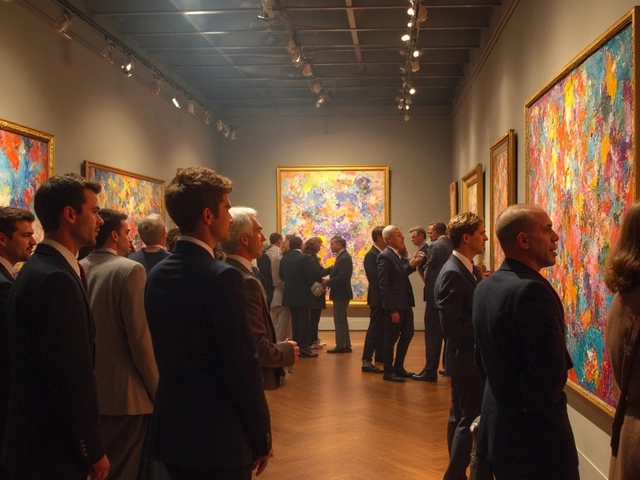
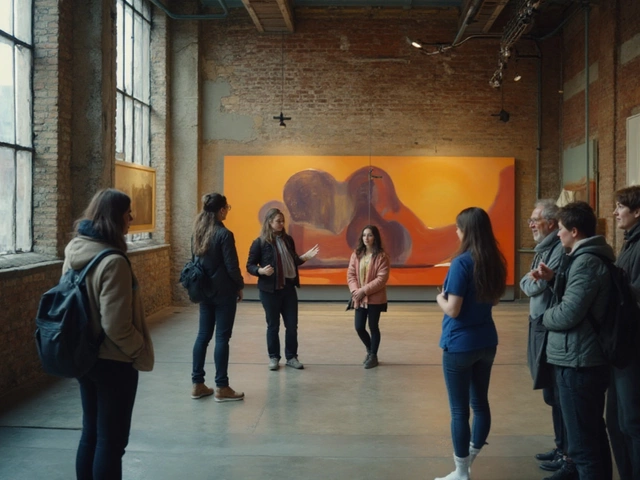
Contemporary art doesn’t just make people uncomfortable-it makes them angry, confused, and sometimes laugh out loud. You’ve probably seen it: a pile of bricks labeled as a masterpiece, a painting of a banana taped to a wall that sold for $120,000, or a room filled with nothing but blinking lights. People ask: contemporary art is just a scam, right? Or is there something deeper going on?
It’s Not About Beauty Anymore
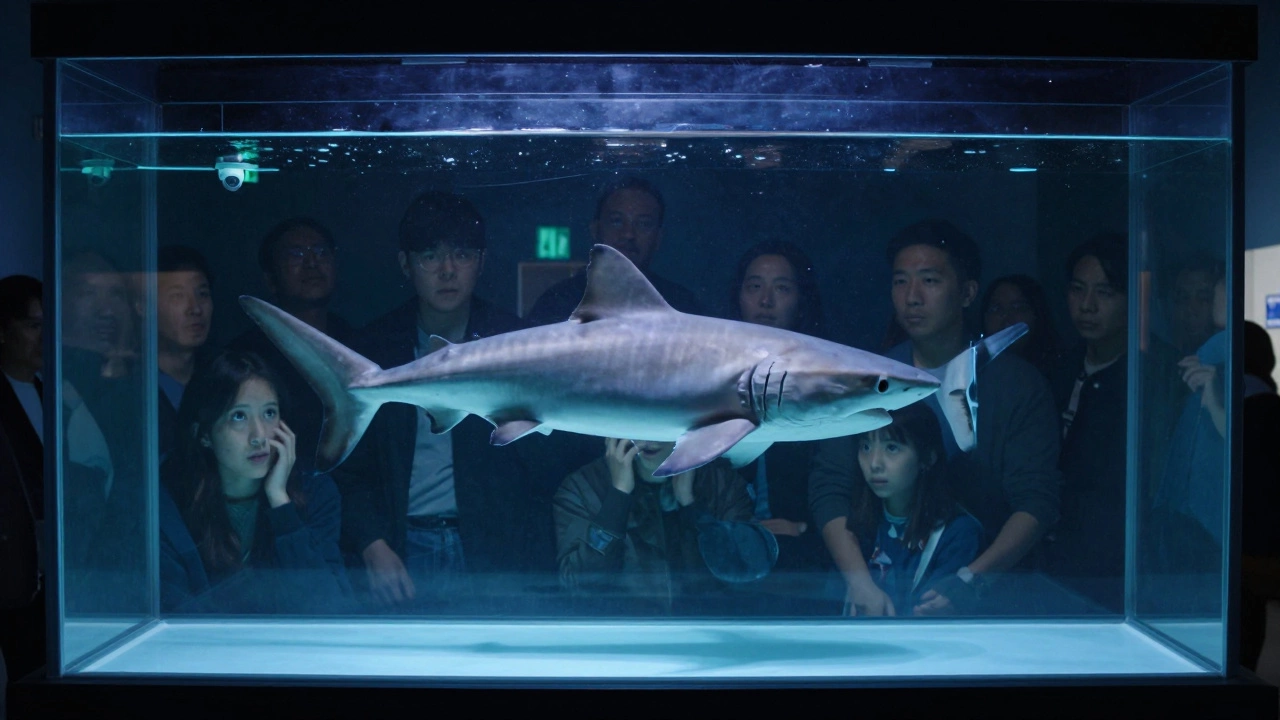
For centuries, art was judged by how well it captured reality-perfectly painted faces, realistic landscapes, detailed still lifes. People expected art to be beautiful, skillful, and familiar. Contemporary art throws that out the window. It doesn’t care if it’s pretty. It cares if it makes you think.Take Damien Hirst’s The Physical Impossibility of Death in the Mind of Someone Living-a shark preserved in formaldehyde. It’s not a skillful sculpture. It’s not even meant to be. It’s a question: What happens when we confront death head-on? Is the shark art, or is it just a dead animal in a tank? The controversy isn’t accidental. It’s the point.
Artists today aren’t trying to please galleries or collectors. They’re trying to shake up systems-capitalism, politics, identity, technology. If you walk away confused, you’re doing it right.
Who Decides What’s Art?
A century ago, the art world was controlled by academies, museums, and wealthy patrons. Today, it’s galleries, curators, auction houses, and social media influencers. The gatekeepers changed, but the power didn’t disappear. It just moved.When a piece like Maurizio Cattelan’s Comedian-a banana duct-taped to a wall-sells for six figures, it’s not because the banana is rare. It’s because the right people said it was art. The art market doesn’t care if you understand it. It cares if someone else will pay for it later.
This is why so many people feel cheated. They see a $10 banana and think, My kid could do that. But they’re missing the real question: Why did the art world say yes? The answer isn’t about technique. It’s about context, history, and power.
Art as a Mirror, Not a Decoration
Contemporary art doesn’t hang quietly on your living room wall. It yells. It provokes. It points fingers.Banksy’s shredded painting at Sotheby’s wasn’t a glitch. It was a performance. A statement about the absurdity of art as a luxury commodity. The moment the shredder activated, the piece became more valuable-not because it was prettier, but because it exposed the system.
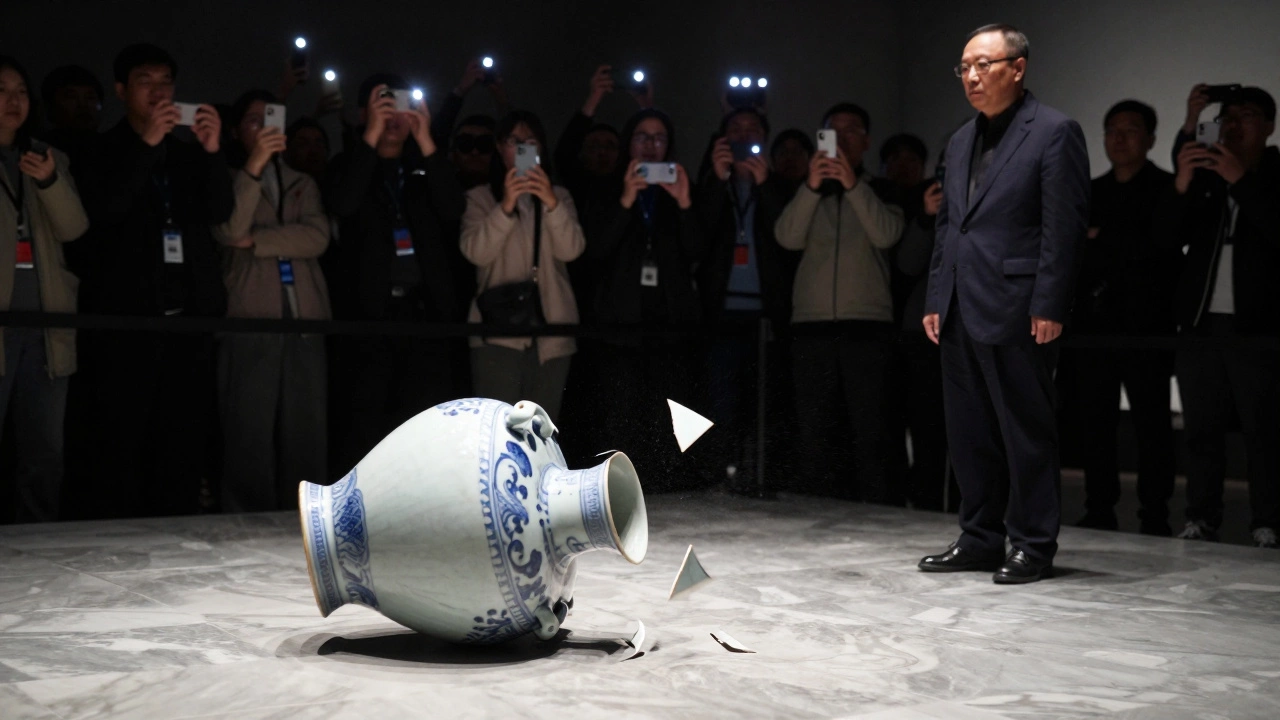
Similarly, Ai Weiwei’s Dropping a Han Dynasty Urn-a photo of him smashing a 2,000-year-old artifact-wasn’t vandalism. It was commentary on cultural erasure and the commodification of history. In China, destroying ancient artifacts is illegal. In the art world, it became a global sensation.
These works aren’t random. They’re calculated. They’re designed to trigger reactions. And that’s exactly why they’re controversial.
Technology Changed the Rules
Twenty years ago, art required physical materials: paint, clay, canvas. Now, it can be code, data, algorithms, or a tweet. NFTs, digital installations, AI-generated images-these aren’t just new tools. They’re new arguments.When an AI creates a portrait that sells for $432,500, who owns it? The programmer? The algorithm? The person who fed it data? The buyer? No one agrees. And that’s the point.
Contemporary art now asks: Can a machine be an artist? Is value in the object, or in the story behind it? Is art still human if it’s made by a bot? These aren’t just technical questions. They’re philosophical. And they’re unsettling.
People get angry not because they don’t understand the art. They get angry because they don’t understand the world it’s reflecting.
It’s Not About the Artist-It’s About You
The most uncomfortable truth about controversial contemporary art? It’s not about the artist. It’s about you.When you say, This isn’t art, you’re really saying: This doesn’t match what I was taught to value. You’re defending a system that told you art should be skillful, beautiful, and timeless.
But the world isn’t like that anymore. Inflation, climate change, social media, surveillance, inequality-these aren’t quiet topics. And art isn’t supposed to be quiet either.
Contemporary art doesn’t give you answers. It gives you mirrors. And mirrors are hard to look at.
That’s why the same piece can be called genius by one person and garbage by another. It’s not about taste. It’s about what you’re willing to see in yourself.
Why Does It Keep Getting More Extreme?
You might wonder: Why do artists keep pushing further? Why not just make something nice?Because the art world is a feedback loop. Once something becomes accepted-like abstract painting or photography-it loses its shock value. To stay relevant, artists have to break the next boundary. That’s how we got from Monet’s water lilies to a toilet in a gallery.
It’s not about being edgy for the sake of it. It’s about survival. If you don’t challenge, you disappear. And in a world flooded with images, attention is the only currency.
Every controversial piece is a test: How much can we get away with? How far can we stretch the definition of art before it breaks? And every time it breaks, we rebuild it-with new rules.
Is There Any Value Left?
Yes. But it’s not in the object. It’s in the conversation.Contemporary art forces us to ask: What do we believe? Who gets to decide? Why does something cost so much? What does it mean to be human in 2026?
These aren’t easy questions. And they shouldn’t be. Art doesn’t need to be loved to matter. It just needs to make you feel something-even if that feeling is rage.
Maybe the real controversy isn’t the art. Maybe it’s that we’re being asked to change how we see the world. And that’s harder than buying a painting of a sunset.
Why do people say contemporary art is a scam?
People call it a scam because it often looks simple, expensive, and disconnected from traditional skills like drawing or painting. But it’s not about skill-it’s about ideas. The value comes from context, history, and the conversation it sparks, not from how long it took to make. A banana taped to a wall isn’t valuable because of the banana. It’s valuable because it makes people question what art is, who controls it, and why we pay for it.
Can anyone make contemporary art?
Technically, yes. You can tape a banana to a wall and call it art. But whether it becomes recognized as art depends on the system: galleries, curators, critics, collectors. It’s not about who makes it-it’s about who says it matters. That’s why some people with no formal training become major artists, while others with decades of skill remain unknown. The system is flawed, but it’s real.
Is contemporary art only for the rich?
The market for high-value contemporary art is dominated by wealthy collectors and investors. But the art itself is often displayed in public museums, biennales, and online platforms. You don’t need money to experience it. You just need to show up. The controversy isn’t about access to the art-it’s about access to the power that decides what counts as art.
Does contemporary art have any lasting value?
Some pieces fade quickly. Others become landmarks. Think of Duchamp’s urinal or Warhol’s soup cans-once shocking, now foundational. Contemporary art’s value isn’t always financial. Sometimes it’s cultural: it captures a moment, a mood, a crisis. The art that survives isn’t the prettiest. It’s the one that forced people to change how they saw the world.
Why do museums display controversial art?
Museums don’t just collect beautiful things-they collect history. Controversial art is often the most revealing. It shows what society was afraid of, what it ignored, what it fought over. Displaying it isn’t about endorsing it. It’s about preserving the conversation. If museums only showed safe art, they’d be decorating libraries, not documenting culture.