The Journey of Abstract Art: From Rejection to Acceptance
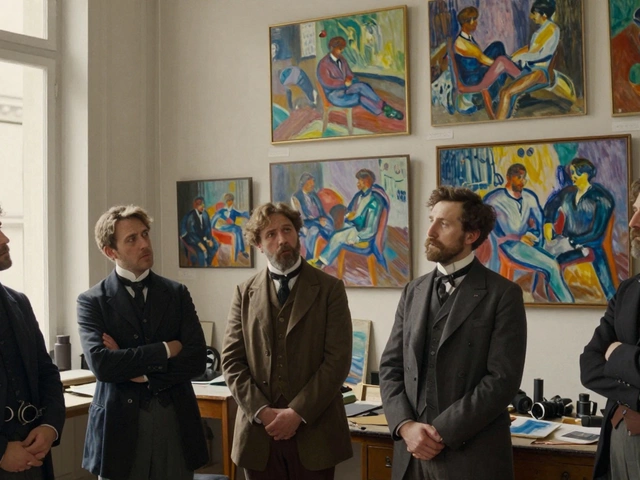
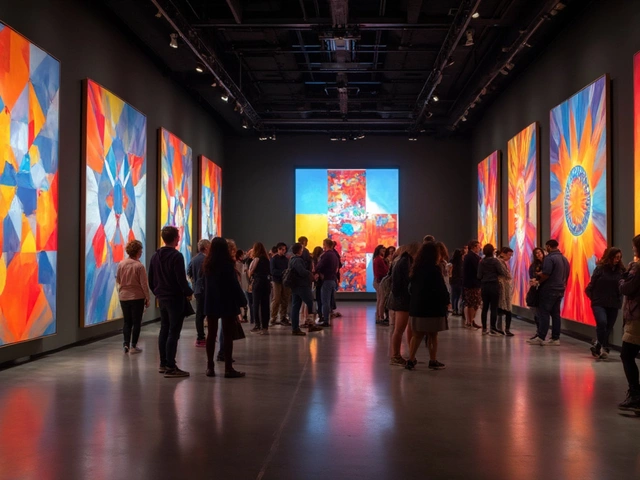
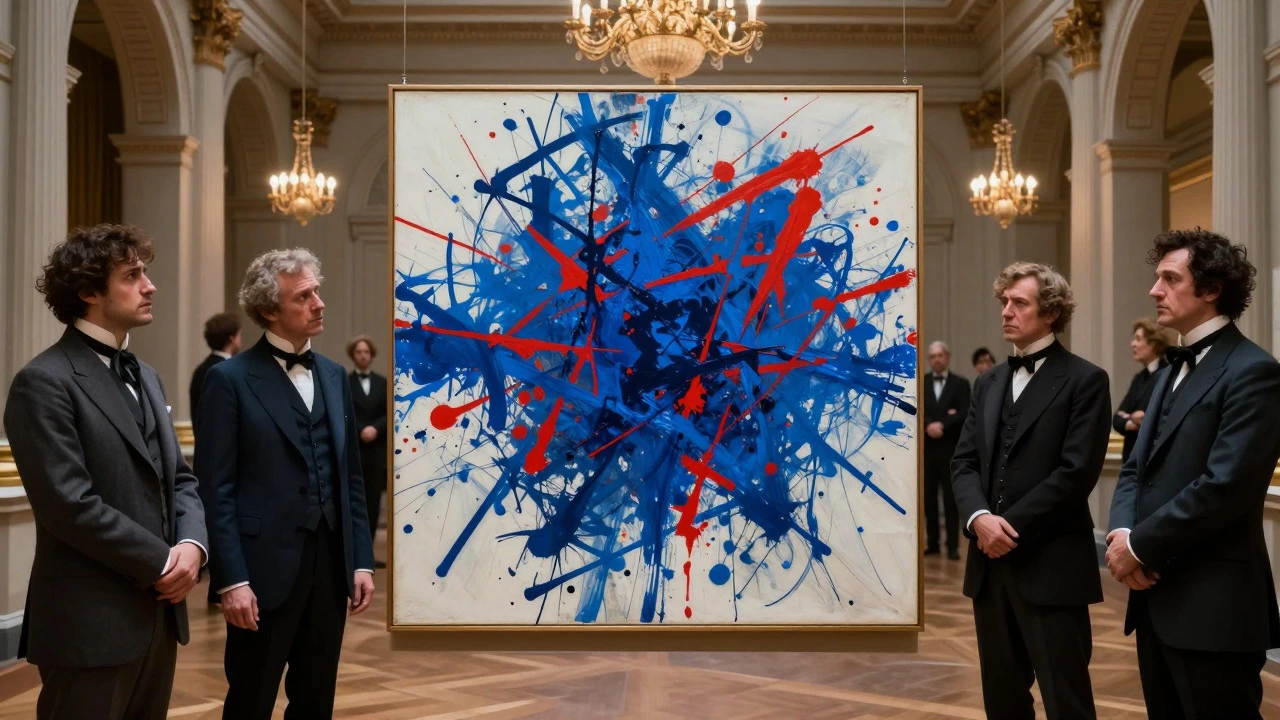
Imagine walking into a gallery in the early 20th century. You expect to see a detailed landscape or a realistic portrait. Instead, you see a canvas covered in chaotic splashes of blue and red, with no recognizable subject matter. Your first reaction? Confusion. Maybe anger. This was the reality for many viewers when abstract art is a form of visual art that uses shape, color, form, and gestural mark-making to achieve its effect instead of visual depictions of reality. It wasn't just "different"; it was seen as a failure of skill. But why did a movement that now dominates museum collections face such fierce rejection from critics, collectors, and the general public?
The Crisis of Representation
To understand the backlash, we have to look at what came before. For centuries, the primary job of painting was representation. If you couldn't paint a horse so realistically that it looked like it might kick you, were you even an artist? This standard was enforced by institutions like the Academy of Fine Arts is historical institutions that set standards for classical and realistic artistic training. They valued technical mastery above all else. When artists started breaking these rules, they weren't just changing style; they were challenging the definition of art itself.
The rejection stemmed from a fundamental cognitive disconnect. Human brains are wired to recognize patterns. We identify faces, objects, and scenes instantly. Abstract art strips away these cues. Without a reference point, viewers felt lost. Critics argued that if anyone could make a splash of paint on a canvas, then anyone could be an artist. This democratization threatened the established hierarchy where skill equaled status. The public didn't reject the art because it was ugly; they rejected it because it demanded a new way of thinking that hadn't been taught yet.
Famous Moments of Rejection
History is littered with specific incidents where abstract art faced direct hostility. One of the most famous occurred in 1964 in New York City. Claes Oldenburg is an American pop artist known for his large-scale sculptures of everyday objects. He created a sculpture called Spoonbridge and Cherry, but before that, he had a piece simply called Bag. It was a massive, deflated rubber bag hanging from a wire. Critics called it trash. The public laughed. Yet today, it is a staple of Pop Art history.
Another iconic moment involves Jackson Pollock is an American painter who was a major figure in the abstract expressionist movement. His drip paintings were criticized as lazy. Why spend hours carefully outlining a figure when you could just fling paint? A famous anecdote suggests that a critic once asked Pollock how long a painting took. Pollock replied, "A week." The critic scoffed, implying it should take longer to prove effort. This highlights a key reason for rejection: the lack of visible labor. In traditional art, you can trace the brushstrokes of careful work. In abstraction, the process is hidden, making the result feel effortless to the untrained eye.
The Role of Institutional Gatekeepers
It wasn't just random people in the street who disliked abstract art. The gatekeepers of the art world played a huge role. Museums, auction houses, and academic journals formed a tight circle that decided what was "legitimate." For decades, this circle favored realism and impressionism. When abstract works entered the market, they were often discounted or ignored entirely.
- Museum Curators: Often hesitant to display non-representational work for fear of alienating donors.
- Critics: Lacked a vocabulary to analyze abstract forms, so they defaulted to calling them "chaotic" or "childish."
- Collectors: Preferred art that displayed obvious skill, viewing abstraction as a risk to their investment.

Psychological Barriers to Abstraction
There is a deep psychological component to why abstract art is hard to accept. We rely on narrative. A painting tells us a story. Who is this person? What are they doing? Where are they? Abstract art removes the narrative. It forces the viewer to engage emotionally rather than intellectually. This can be uncomfortable.
Research in cognitive psychology suggests that humans experience a mild stress response when faced with ambiguous stimuli. We try to find order in chaos. When we fail, we feel a sense of unease. This is why many people say, "I don't get it." That feeling of not getting it is actually a sign that the brain is working hard to find meaning where none is explicitly provided. Once the viewer accepts that there is no single correct interpretation, the barrier lowers. The rejection, therefore, is often a temporary phase in the learning process of appreciating non-representational forms.
From Rejection to Mainstream Acceptance
So, how did abstract art go from being mocked to being worth millions? It wasn't overnight. It took several factors aligning:
- Economic Boom: Post-war prosperity meant more disposable income for art collecting. Wealthy individuals sought unique assets, and abstract art offered exclusivity.
- Education: Art schools began teaching theory alongside technique. Students learned to value composition and color over literal depiction.
- Media Exposure: Films and magazines started featuring modern art, normalizing it for the general public.
- Artist Advocacy: Artists like Piet Mondrian is a Dutch painter who pioneered the De Stijl movement, focusing on geometric abstraction. and Wassily Kandinsky is a Russian painter and art theorist who pioneered abstract art. wrote books explaining their philosophies, giving critics tools to discuss the work.

Lessons for Contemporary Artists
For artists working today, understanding this history is crucial. If you create work that challenges conventions, expect some level of rejection. It doesn't mean your work is bad; it means it's new. The key is persistence and education. Just as Pollock and Kandinsky waited for the world to catch up, contemporary artists must trust their vision. The art world moves slowly, but it does move. Every major movement in art history has faced initial skepticism before becoming accepted.
| Aspect | Early 20th Century View | Mid-to-Late 20th Century View |
|---|---|---|
| Perceived Skill | Low (Anyone can do it) | High (Requires theoretical knowledge) |
| Emotional Response | Confusion, Anger | Inspiration, Contemplation |
| Market Value | Negligible | High (Millions of dollars) |
| Institutional Status | Marginalized | Central to Museum Collections |
Frequently Asked Questions
Who invented abstract art?
While many artists contributed, Wassily Kandinsky is often credited with creating the first fully abstract watercolor in 1910. However, Kazimir Malevich and Piet Mondrian also developed distinct styles of abstraction around the same time.
Is abstract art still controversial today?
Yes, but less so than in the past. While pure abstraction is widely accepted, conceptual or minimalist pieces that appear "empty

Gideon Wynne
I specialize in offering expert services to businesses and individuals, focusing on efficiency and client satisfaction. Art and creativity have always inspired my work, and I often share insights through writing. Combining my professional expertise with my passion for art allows me to offer unique perspectives. I enjoy creating engaging content that resonates with art enthusiasts and professionals alike.