Abstract Art Personality Quiz
Do you find order in chaos or clarity in confusion? This interactive tool analyzes your responses to determine if your cognitive style aligns with the typical profile of an abstract art enthusiast. Answer honestly—there are no right or wrong answers, only different ways of seeing.
Your Abstract Art Profile
Psychological Insight:
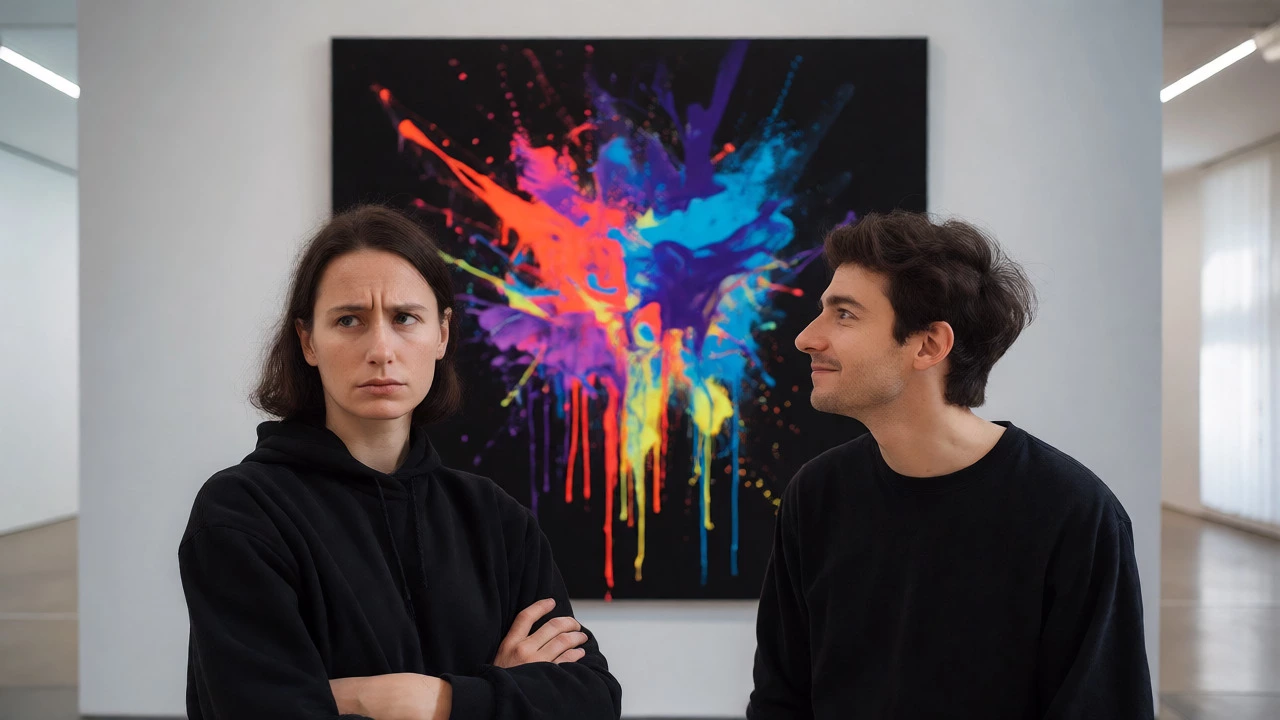
You’re standing in front of a canvas that looks like someone spilled a bucket of neon paint and then got angry at it. Your friend says it’s "genius." You say it’s a mess. Who is right? Neither of you, really. The difference isn’t intelligence or education-it’s how your brain processes chaos.
Most people assume liking abstract art is a sign of high IQ or deep cultural knowledge. But research suggests something more interesting: it’s often linked to specific personality traits, particularly those related to openness and tolerance for ambiguity. If you’ve ever wondered why some people stare lovingly at a blank white square while others want to throw their shoes at it, the answer lies in cognitive style, not just taste.
The Big Five Personality Traits and Visual Preference
Psychologists use the "Big Five" model to describe human personality: Openness, Conscientiousness, Extraversion, Agreeableness, and Neuroticism (OCEAN). When researchers correlate these traits with art preferences, a clear pattern emerges. People who score high on Openness to Experience are significantly more likely to enjoy abstract works.
Why? Because abstract art doesn’t hand you the answer. It requires you to build meaning from shapes, colors, and textures without a literal reference point. High-openness individuals thrive in this uncertainty. They view the lack of clear representation as an invitation to explore, not a failure of communication. Conversely, people high in Conscientiousness, who prefer order, structure, and predictability, often find abstract art frustrating. It violates their mental need for closure.
| Trait | Relationship to Abstract Art | Cognitive Reasoning |
|---|---|---|
| Openness to Experience | Strong Positive Correlation | Enjoys novelty, complexity, and ambiguous stimuli. |
| Conscientiousness | Negative or Neutral | Prefers clear rules, recognizable subjects, and order. |
| Neuroticism | Mixed/Negative | May find chaotic compositions stressful or unsettling. |
| Extraversion | Weak Positive | Often drawn to bold, energetic, large-scale works. |
| Agreeableness | Neutral | Less influenced by content, more by social context. |
Cognitive Style: Top-Down vs. Bottom-Up Processing
Your brain has two main ways of looking at things. Top-down processing uses prior knowledge and expectations to interpret what you see. You look at a painting of a horse, recognize the shape, label it "horse," and move on. This is efficient. Most representational art relies on this mechanism.
Bottom-up processing starts with the raw data: lines, colors, contrasts, and movements. You don’t ask "what is this?" You ask "how does this feel?" Lovers of abstract art tend to engage more heavily in bottom-up processing. They focus on the sensory experience rather than the semantic meaning. This doesn’t mean they ignore meaning; they just derive it from the visual elements themselves rather than external references.
This distinction explains why some people hate minimalist art. If you’re a top-down processor, a white canvas with a black dot feels like missing information. If you’re a bottom-up processor, you might notice the texture of the paint, the tension between the center and the edges, or the subtle shift in light across the surface. Both approaches are valid, but they lead to radically different experiences.
The Role of Emotional Regulation
Here’s a controversial idea: some people like abstract art because it helps them regulate emotions. Representational art can be too direct. A painting of a crying child forces a specific emotional response. Abstract art, however, acts as a mirror. Because it lacks a fixed subject, viewers project their own feelings onto it. If you’re feeling anxious, a jagged red composition might resonate deeply. If you’re calm, the same piece might seem aggressive.
Studies in neuroaesthetics suggest that viewing abstract art activates the prefrontal cortex-the part of the brain responsible for decision-making and self-reflection-more than viewing realistic images. This suggests that appreciating abstraction is an active, introspective process. You aren’t just receiving a message; you’re creating one. For people who enjoy introspection and self-analysis, this creates a rewarding feedback loop.

Education and Exposure: Nature or Nurture?
Does going to art school make you like abstract art? Yes, but not for the reasons you think. It’s not that educated people have better taste. It’s that exposure reduces the fear of the unknown. When you first see a Pollock drip painting, your brain screams, "This is random!" After seeing twenty of them, your brain starts to detect patterns in the randomness. You begin to appreciate the rhythm, the density, and the control within the chaos.
This phenomenon is known as the Mere Exposure Effect. The more you see something, the more you like it. However, this effect has limits. If the art is too complex or too disordered, repeated exposure won’t help if the viewer lacks the cognitive flexibility to handle it. That’s where personality traits re-enter the picture. Education provides the vocabulary, but openness provides the willingness to learn.
Who Doesn’t Like Abstract Art? (And Why That’s Okay)
If you hate abstract art, you’re not uncultured. You might simply value clarity and narrative. Humans are storytelling creatures. We evolved to recognize faces, track movement, and understand cause-and-effect. Abstract art strips away these evolutionary cues. For many people, this feels unnatural or even pretentious.
Consider the Uncanny Valley of art. Realistic paintings comfort us because they mimic reality. Hyper-realistic sculptures shock us because they are almost real but not quite. Abstract art sits at the other end of the spectrum. It rejects reality entirely. If you find comfort in familiarity, abstract art will always feel alien. And that’s fine. Art appreciation isn’t a moral virtue; it’s a personal preference.
How to Tell if You’re an Abstract Art Person
Want to know where you fall on the spectrum? Try this quick self-audit:
- The Ambiguity Test: Look at a geometric abstract painting. Does your first instinct try to find a hidden object (like a face or a tree), or do you immediately notice the balance of colors?
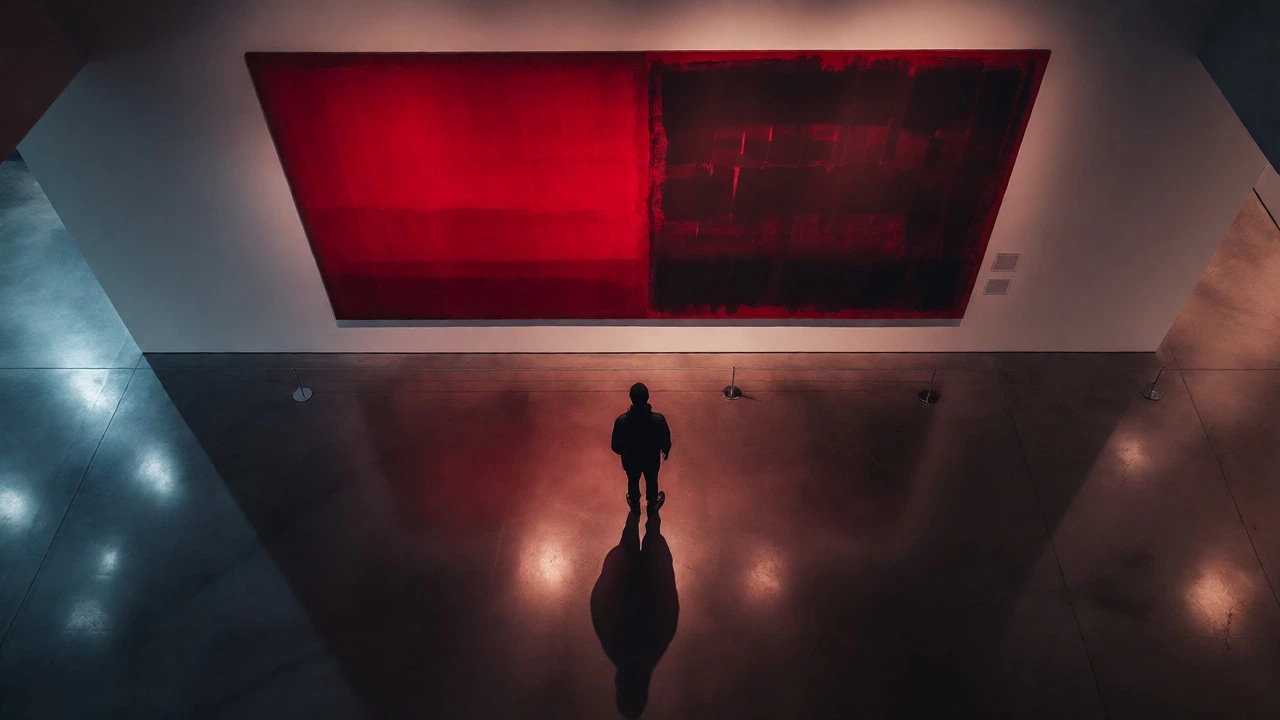
- The Boredom Threshold: Can you stand in front of a simple color field painting (like Rothko) for three minutes without checking your phone? If yes, you likely enjoy meditative visual states.
- The Control Factor: Do you prefer having a definitive interpretation of a movie, or do you enjoy debating what it meant? Abstract art lovers usually prefer the debate.
If you answered positively to the second and third points, you probably have the psychological profile of an abstract art enthusiast. You’re comfortable with uncertainty, you enjoy internal reflection, and you value aesthetic experience over literal meaning.
Final Thoughts: There Is No "Right" Way to See
The question isn’t really "who likes abstract art?" It’s "what kind of mental exercise do you enjoy?" Abstract art asks you to abandon the safety net of recognition. It demands that you trust your senses and your intuition. For some, this is liberating. For others, it’s exhausting.
Neither response is wrong. The art world often snobbishly implies that understanding abstraction is a mark of sophistication. But psychology tells us it’s mostly about cognitive style. So next time you’re in a gallery and you hate the modern exhibit, don’t feel inadequate. Just acknowledge that your brain prefers a map to a maze. And maybe buy a ticket to the Renaissance wing instead.
Do you need to be smart to like abstract art?
No, there is no strong correlation between IQ and abstract art preference. While higher education levels sometimes correlate with greater exposure, the primary driver is personality trait openness, not intelligence. Many highly intelligent people prefer representational art because they value precision and clarity.
Why do I feel stupid when looking at abstract art?
You likely feel this way because abstract art removes the usual clues for interpretation. If you are used to identifying objects and narratives, the lack of a clear subject can trigger anxiety or a sense of failure. This is a normal reaction for people who prefer structured information processing.
Is liking abstract art a sign of creativity?
It can be, but not necessarily. Creativity is broad. Some creative people express themselves through detailed realism, while others prefer abstraction. However, an enjoyment of abstract art often indicates a high degree of divergent thinking-the ability to generate multiple interpretations from a single stimulus.
Can you train yourself to like abstract art?
Yes, to an extent. Increasing exposure helps reduce the discomfort of ambiguity. Learning about the artist’s intent or the historical context can also provide a framework that makes the work less intimidating. However, if you fundamentally dislike ambiguity, you may never love it, and that’s okay.
What is the most common misconception about abstract art?
The biggest misconception is that "anyone could do it." While the technique may appear simple, the compositional choices regarding color balance, scale, and texture require significant skill and intention. Furthermore, critics argue that the difficulty lies not in making the marks, but in knowing when to stop.