Landscape Painting Starter Guide
Stuck on where to put the first brushstroke? Select your medium and preferred approach to get a tailored workflow recommendation.
You stare at the blank canvas. The white space feels less like an invitation and more like a challenge. You have your brushes, your paints, and a photo of a mountain or a field you want to capture. But where do you actually put the first mark? This paralysis is common among beginners and even seasoned artists returning to plein air. The fear isn't about running out of paint; it's about ruining the potential. The truth is simpler than you think: you don't start with the details. You start with the big shapes.
Preparation Before the Brush Touches Canvas
Before you worry about composition, get your workspace right. Landscape painting requires specific materials that behave differently than portrait or still life setups. If you are working in oils, you need a surface that won't buckle under heavy solvent use. Canvas panels are often better for beginners than stretched canvas because they are rigid and cheaper. For watercolors, cold-press paper (140 lb weight) provides enough texture for brush grip without being too rough.
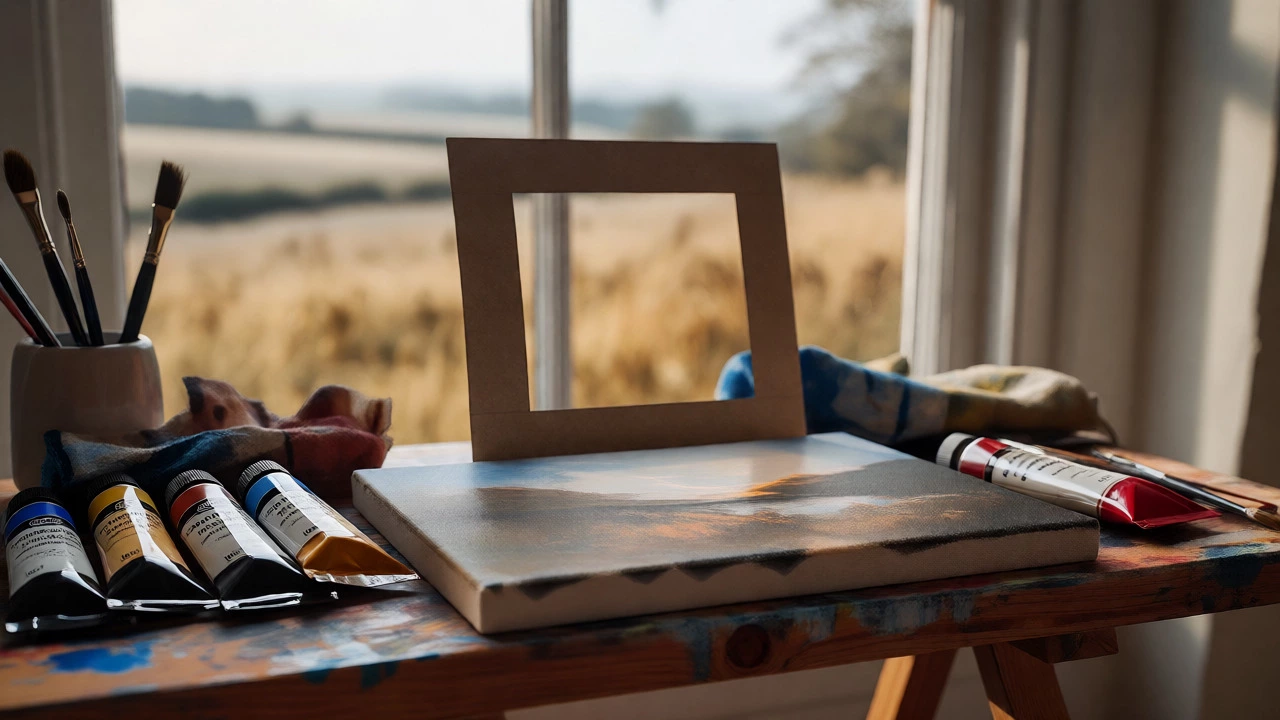
Gather your tools now so you aren't hunting for them later. Lay out your palette, rags, mediums, and brushes. Set up your reference photo or viewfinder. A viewfinder-a simple rectangle cut from cardstock-is invaluable. It helps you crop out distractions and focus on what matters. If you are painting from life, set up your easel so you can see both the subject and your canvas simultaneously without twisting your neck. This physical setup dictates how fluidly you can work.
The Power of the Thumbnail Sketch
Do not skip this step. It saves hours of frustration. A thumbnail sketch is a tiny, fast drawing-about two inches by three inches-that maps out the major values (lights and darks) of your scene. Why bother? Because when you look at a complex landscape, your brain tries to catalog every leaf, rock, and cloud. Thumbnails force you to simplify. They help you decide if the horizon line should be high or low, if the foreground needs a strong dark shape, or if the sky dominates the mood.
Try making three different thumbnails. In one, place the main subject in the center. In another, move it off-center using the rule of thirds. In the third, try cropping tightly to create intimacy. Choose the version that feels most balanced. This decision-making process happens before you mix any color, saving you from committing to a bad layout.
Choosing Your Starting Point: Sky vs. Land
This is the classic debate. Should you paint the sky first or the ground? There is no single right answer, but there are logical reasons for each approach depending on your medium and style.
| Approach | Best For | Pros | Cons |
|---|---|---|---|
| Sky First | Watercolor, Loose Oils | Sets the overall temperature and light source early; allows wet-on-wet blending. | Harder to preserve crisp edges of clouds or mountains if you're not careful. |
| Land First | Realistic Oils, Acrylics | Establishes solid forms and perspective; easier to control hard edges against the sky. | Risk of muddy colors if you accidentally drag land paint into the sky area. |
| Block-In All Shapes | All Media | Ensures correct proportions and relationships between elements; reduces anxiety. | Can feel mechanical if done too precisely; may lack initial energy. |
If you are new to oil painting, starting with the land often feels safer. You can block in the large masses of trees, hills, and fields using thin, transparent washes. This creates a roadmap. Once those shapes are established, you can tackle the sky with confidence, knowing exactly where the horizon sits.
Mixing Your Base Colors
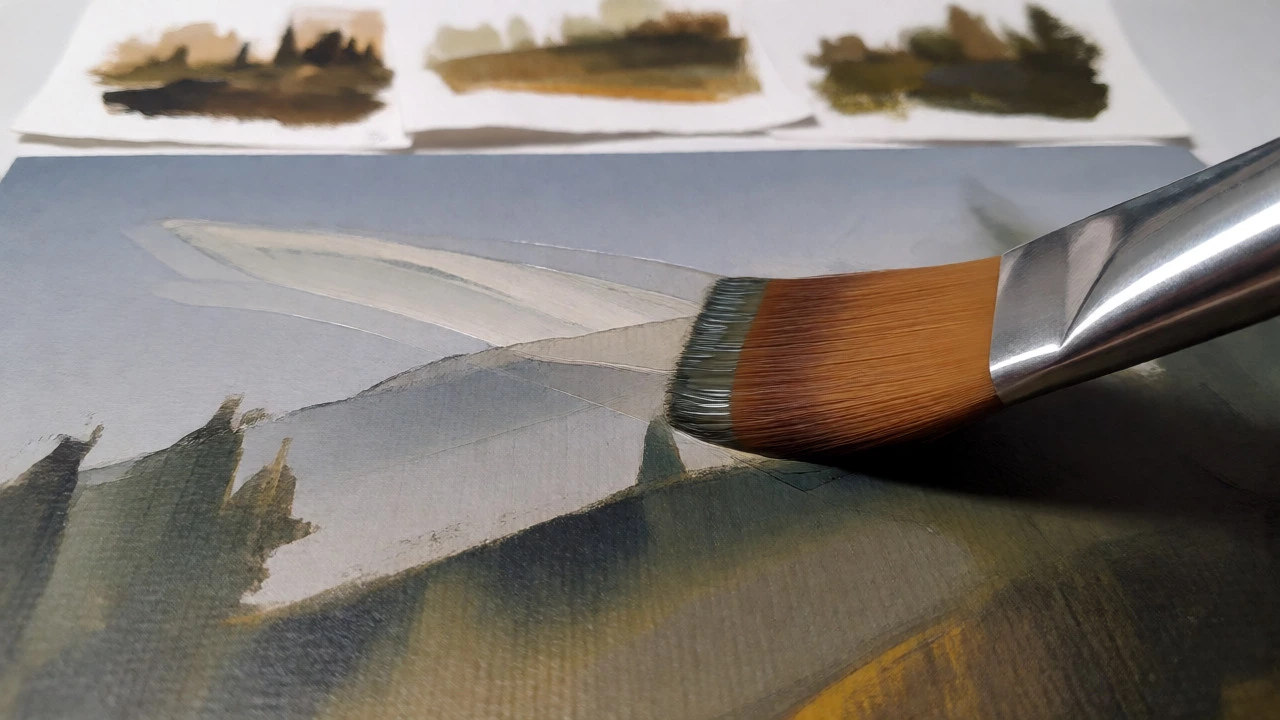
Don't squeeze straight-from-the-tube colors onto your canvas. Landscape scenes rarely contain pure reds or blues as seen in nature. You need to mix muted, atmospheric tones. Start by creating a limited palette. Try using just three primaries plus white: Ultramarine Blue, Yellow Ochre, and Alizarin Crimson. From these, you can mix greens, purples, oranges, and grays. This limitation forces you to understand color relationships rather than relying on pre-mixed tubes.
Mix a large amount of your dominant sky color first. If it's a cloudy day, mix a cool gray with hints of blue and violet. If it's sunset, mix warm oranges and pinks. Having this base ready means you can cover large areas quickly. Remember, the sky sets the lighting conditions for everything else. If your sky is cool, your shadows on the ground should likely lean cool too. Consistency here prevents the painting from looking disjointed.
Blocking In Large Masses
Now, take a large brush-maybe a 1-inch flat or a filbert-and load it with your thinnest paint. Use turpentine or odorless mineral spirits to make the paint runny, almost like tea. We call this "dead coloring" or "blocking in." You are not trying to finish the painting. You are mapping the big shapes. Paint the darkest areas first, then the mid-tones, then the lights. Or vice versa, depending on your preference. The goal is to establish value structure.
Ignore details. If you see a fence post, ignore it. See the mass of the tree instead. If you see individual flowers, see the patch of green grass. Squint your eyes. When you squint, small details blur out, leaving only the big shapes and values. This technique helps you avoid getting bogged down in minutiae too early. Keep your brushstrokes loose and directional. Let the stroke follow the form of the object-horizontal strokes for flat ground, vertical for trees.
Refining Edges and Adding Depth
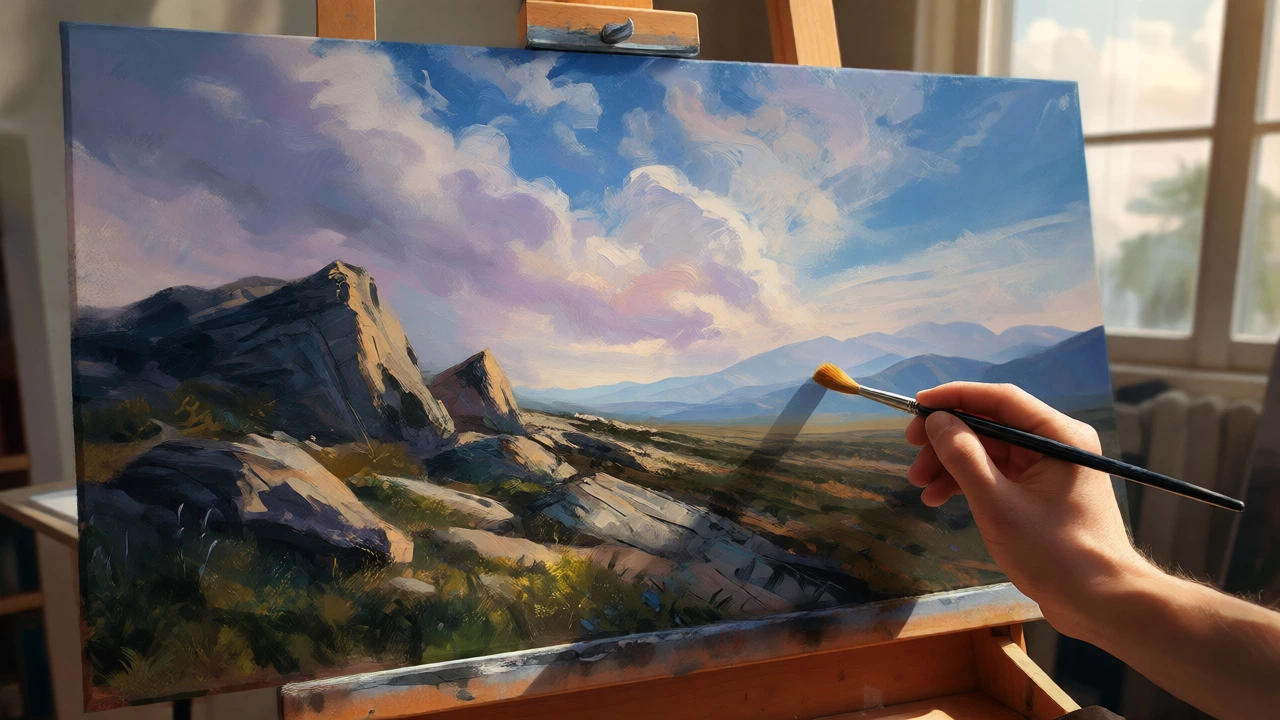
Once your dry underpainting or blocked-in layer is tacky or dry, you can start refining. This is where you introduce variety in edge quality. Not all edges in nature are sharp. Sharp edges attract attention; soft edges recede. Use a clean, damp brush to soften edges where objects fade into the distance or merge into shadows. Keep sharp edges only where light hits directly or where objects are close to the viewer.
Add atmospheric perspective by adjusting color saturation and contrast. Distant mountains should be lighter, cooler, and less detailed than nearby rocks. Mix a bit of your sky color into distant landforms to push them back visually. This trick creates depth without needing perfect linear perspective. Check your values regularly. Step back five feet from your canvas. Does the painting read clearly from a distance? If it looks muddy or flat, adjust your contrasts. Add your brightest highlights last, and save your deepest darks for final accents.
Common Pitfalls to Avoid
Beginners often fall into a few traps. One is overworking the painting. If you keep adding paint without letting layers dry, you'll end up with mud. Oil paintings need time to dry between layers, especially if you are using the fat-over-lean rule (more oil in upper layers). Another trap is ignoring the foreground. Many landscapes fail because the bottom quarter of the canvas is empty or boring. Add interest there with a rock, a path, or some vegetation to lead the eye into the scene.
Also, don't forget to sign your work! It’s a small thing, but it marks completion. And finally, accept imperfection. Your first landscape won't look like a photograph, and that's fine. Art is about interpretation, not replication. Focus on capturing the feeling of the place-the warmth of the sun, the chill of the fog-rather than every leaf.
What is the best medium for a beginner landscape painter?
Acrylics are often recommended for beginners because they dry quickly, are easy to clean with water, and are forgiving. You can fix mistakes easily. Watercolors are also good but require more planning since you can't paint over mistakes. Oils offer rich colors and blendability but require solvents and longer drying times.
How do I choose a reference photo for landscape painting?
Look for photos with clear light sources, interesting compositions, and distinct value ranges. Avoid images that are too busy or cluttered. High-resolution images are helpful, but sometimes lower resolution forces you to interpret shapes, which can improve artistic skill. Ensure the photo has good contrast; if it looks flat, it will be hard to translate into paint.
Should I paint the sky or the ground first?
It depends on your medium and style. Watercolorists usually paint the sky first to utilize wet-on-wet techniques. Oil painters might block in the land first to establish solid forms and perspective. Some artists block in all major shapes lightly before deciding. Experiment to see which workflow feels more natural to you.
What are essential supplies for starting landscape painting?
You need a support (canvas board or paper), brushes (a few flats and rounds in various sizes), paint (start with a limited palette of primaries plus white), a palette knife, rags or paper towels, and a medium (water for acrylics/watercolors, linseed oil or solvent for oils). An easel is helpful but not strictly necessary for small studies.
How do I fix a muddy landscape painting?
Muddiness usually comes from over-blending complementary colors or applying thick opaque paint over thin transparent layers prematurely. To fix it, let the layer dry completely, then glaze with a thin, transparent color to unify the tone. Alternatively, scrape off excess paint with a palette knife and repaint the area with cleaner, more distinct colors. Prevent it by keeping your brushes clean and limiting color mixing on the canvas.