Abstract Art Understanding Quiz
How Well Do You Understand Abstract Art?
Test your knowledge of the core concepts behind abstract art with this 5-question quiz. Your results will reveal how deeply you've grasped the emotional and philosophical foundations of this art form.
Question 1: What is the fundamental idea behind abstract art?
Question 2: What did Kandinsky believe about color?
Question 3: Why did Mark Rothko paint in dim light?
Question 4: What was Jackson Pollock's approach to painting called?
Question 5: Why is abstract art relevant in today's digital world?
Results
Answer the questions to see your results.
Abstract art doesn’t show you a tree, a face, or a city skyline. It doesn’t try to copy the world you see. So why does it exist? Why do people spend millions on a canvas full of splatters, lines, and smudges of color? The idea behind abstract art isn’t about what’s missing-it’s about what’s added. It’s about feeling before form, emotion before explanation.
It Started With Letting Go
In the early 1900s, artists began to question everything painting had been built on. For centuries, art was about accuracy: capturing a person’s likeness, showing a biblical scene, or recording a landscape. But then came photography. Suddenly, you didn’t need a painter to copy reality. So what was left for painting to do?
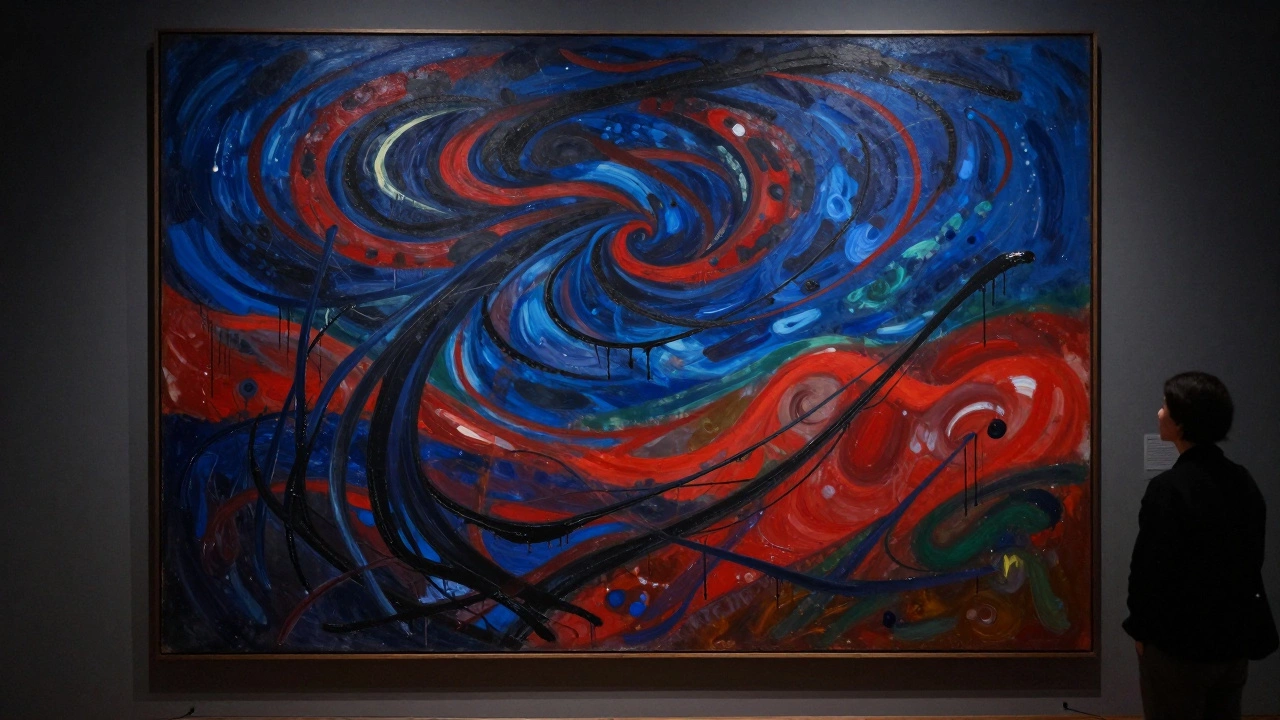
Wassily Kandinsky, a Russian painter and theorist, said it plainly: "Color is a power which directly influences the soul." He stopped painting recognizable things around 1910. Instead, he made paintings that looked like music-swirling blues, sharp reds, trembling lines. He called them "improvisations." He wasn’t painting a storm. He was painting the feeling of a storm.
Emotion, Not Objects
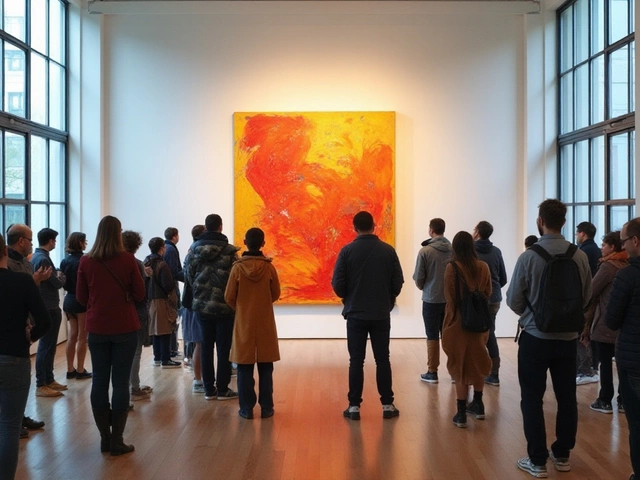
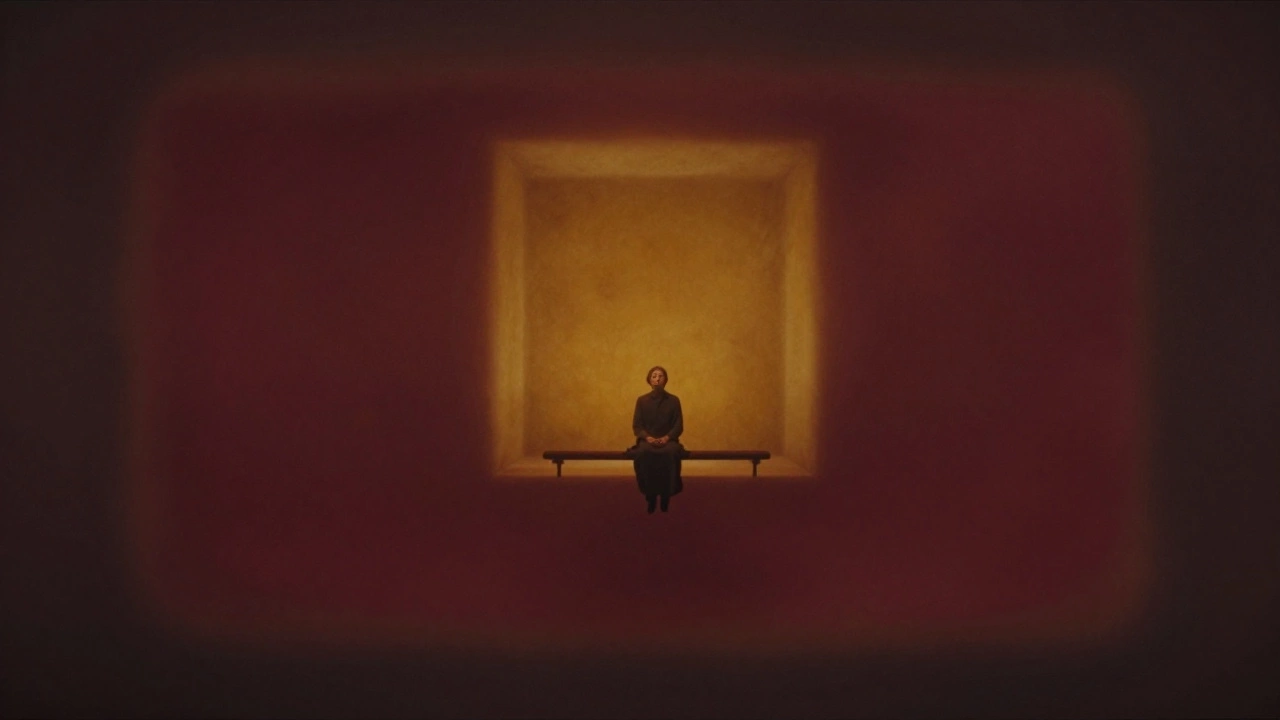
Abstract art trades detail for intensity. A realistic portrait tells you who someone is. An abstract portrait tells you how they felt. Mark Rothko’s large, floating rectangles of color don’t depict a person. But if you stand in front of one for a few minutes, you might feel loneliness, awe, or quiet grief. That’s not an accident. Rothko wanted viewers to have a spiritual experience. He painted in dim light so people would feel like they were standing in a chapel.
There’s no hidden image in his work. No hidden message. The meaning is in the reaction. It’s like listening to a piece of jazz-no lyrics, just emotion in sound.
Freedom From Rules
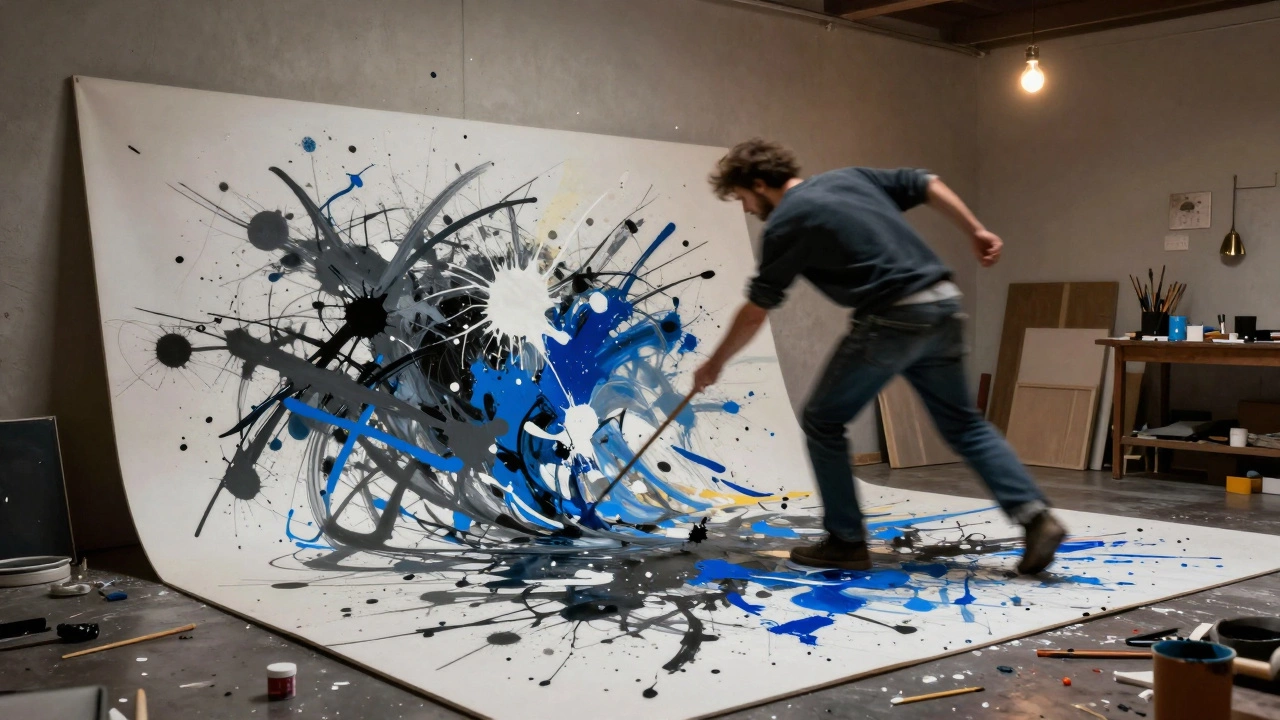
Before abstract art, artists followed strict rules: perspective, proportion, balance. Abstract artists threw those out. Jackson Pollock didn’t use brushes. He dripped, flung, and poured paint onto canvases laid on the floor. He called it "action painting." His work wasn’t about making something beautiful-it was about making something real. He moved like a dancer. His body became part of the art.
This wasn’t chaos. It was discipline. Pollock didn’t just fling paint randomly. He knew exactly how paint would behave on different surfaces, at different speeds, with different thicknesses. He controlled the unpredictable. That’s the paradox of abstract art: it looks wild, but it’s often deeply intentional.
What You See Depends on You
Abstract art doesn’t tell you what to think. It asks you to bring your own experience. One person sees a storm. Another sees a heartbeat. Someone else sees nothing at all-and that’s okay. There’s no right answer.
This is why abstract art can feel frustrating. People ask: "My kid could do that." But your kid didn’t spend ten years studying color theory, learning how pigment interacts with canvas, or living through war and loss to find a new way to express it. Abstract art isn’t about skill in the traditional sense. It’s about depth.
When you look at a Hilma af Klint painting from 1915, you’re not just seeing shapes. You’re seeing a woman who was exploring spirituality, science, and the unconscious mind decades before psychology even named those ideas. Her abstract works were meant to visualize invisible forces-energy fields, cosmic patterns, the soul.
It’s Not Just About Paint
Abstract art isn’t limited to canvas. It’s in music, dance, even architecture. The Bauhaus movement in Germany blended abstract forms into furniture and buildings. A chair wasn’t just functional-it was a rhythm of lines and angles. A building wasn’t just shelter-it was a composition of light and shadow.
Even in design today, you see it everywhere: Apple’s minimalist logos, Spotify’s swirling color gradients, the way Netflix’s interface uses motion to evoke mood. These aren’t accidents. They’re descendants of abstract art’s core idea: emotion through form.
Why It Still Matters
In a world full of images that try to sell you something, abstract art offers something rare: silence. It doesn’t explain. It doesn’t advertise. It doesn’t need to be understood. It just is.
Modern life moves fast. We’re told what to feel-by ads, by headlines, by algorithms. Abstract art asks you to slow down. To sit with discomfort. To let color and shape speak without words.
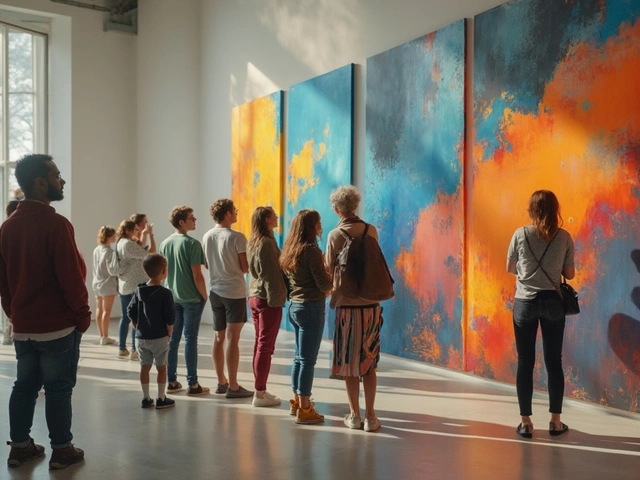
That’s why people still visit museums to stare at a single abstract painting for ten minutes. Not because they’re trying to "get it." But because, for once, they’re allowed to just feel.
It’s Not About What You See-It’s About What You Feel
Abstract art doesn’t need to make sense. It needs to move you. You don’t need to know the artist’s intention. You don’t need to recognize a style. You just need to be open.
That’s the idea behind it all: art doesn’t have to represent the world to reveal something true about it. Sometimes, the most honest thing you can say is the thing you can’t name.
Is abstract art just random splatters?
No. While some abstract works look chaotic, most are the result of years of study, deliberate choices, and deep intention. Artists like Mark Rothko spent decades refining their color relationships. Jackson Pollock developed precise techniques for controlling paint flow. What looks random is often carefully calculated.
Can anyone create abstract art?
Anyone can make marks on a canvas. But what separates abstract art from random doodles is context, history, and intention. Abstract art emerged from a century of artistic rebellion, philosophical shifts, and technical experimentation. It’s not about technique alone-it’s about saying something that can’t be said with words or realistic images.
Why do people pay millions for abstract paintings?
Because they’re not just buying paint on canvas. They’re buying a moment in art history, a breakthrough in how humans express emotion. A Rothko or a Kandinsky represents a radical shift in how we think about art, perception, and feeling. Their works are rare, historically significant, and emotionally powerful-making them valuable not just as objects, but as cultural landmarks.
Do I need to understand art history to appreciate abstract art?
No. You can feel the emotion in a Rothko without knowing he was influenced by Nietzsche. You can sense the tension in a Kandinsky without knowing he studied Theosophy. Abstract art speaks to feeling first, knowledge second. But understanding its history can deepen your experience-it doesn’t change whether you feel it.
Is abstract art still relevant today?
More than ever. In a world flooded with images designed to sell, distract, or persuade, abstract art offers something rare: space to pause, to feel without being told what to feel. Today’s digital interfaces, music videos, and even fashion use abstract forms because they tap into emotion faster than words. The core idea-emotion through form-is more alive now than in the 1920s.