Sculpture Uniqueness Analyzer
Explore what makes sculptures unique by selecting different characteristics. Each choice reveals how material, form, process, and context contribute to artistic singularity.
Step 1: Choose the Material
Marble
Translucent, smooth, brittle
Bronze
Durable, detailed, timeless
Steel/Iron
Industrial, large-scale, resilient
Wood
Organic, grain-textured, warm
Step 2: Define the Form
Solid Mass
Traditional, substantial, grounded
With Negative Space
Open, light-passing, dynamic
Step 3: Select the Process
Hand-Carved
Visible tool marks, human touch
Cast/Molded
Smooth finish, reproducible
Step 4: Consider the Context
Monumental/Public
Large scale, site-specific, historical
Intimate/Gallery
Small scale, personal, collectible
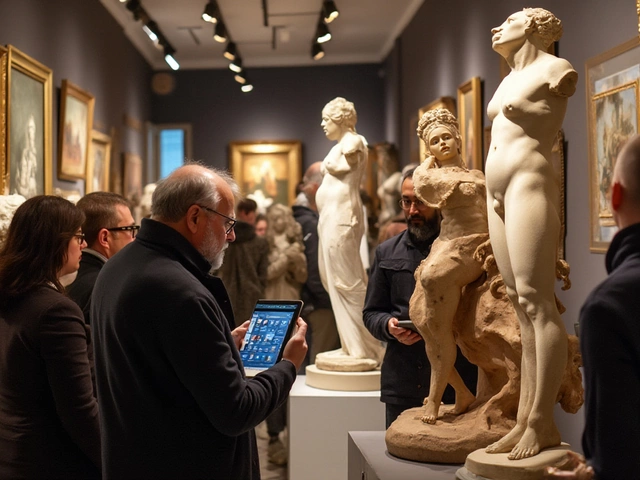
Walk into any major museum, from the Louvre to the Guggenheim, and you will see thousands of statues. Some are copies of ancient Greek gods; others are modern abstract forms. Yet, when you stand before Michelangelo’s David or Louise Bourgeois’s Maman, you feel something distinct. You recognize that these are not just objects occupying space-they are singular statements. But what actually makes a sculpture unique? Is it the chisel marks left by the artist? The specific block of marble used? Or is it something more intangible, like the emotion captured in stone?
The answer lies in a complex interplay of physical constraints, artistic decision-making, and historical context. A sculpture is never just a shape; it is a record of a process. Understanding this helps us move beyond seeing art as decoration and start appreciating it as a dialogue between matter and meaning.
The Physical Reality: Materiality and Texture
At its most basic level, a sculpture is defined by what it is made of. This concept, known as materiality, refers to the physical properties of the medium-whether it is bronze, clay, wood, steel, or recycled plastic. Unlike painting, where the canvas remains passive, the material in sculpture actively resists or yields to the artist.
Consider the difference between working with marble and working with clay. Marble is hard, brittle, and unforgiving. If you make a mistake, you cannot simply smooth it over; you must chip away carefully or risk shattering the piece. Clay, on the other hand, is malleable and forgiving. It allows for rapid changes but requires firing to become permanent. This resistance shapes the final form. The grain of the wood in a Constantin Brâncuși bird sculpture isn't just a texture; it's part of the narrative. The natural imperfections of the material interact with the artist's vision, ensuring that no two pieces can ever be exactly alike, even if they are cast from the same mold.
- Bronze: Allows for thin, delicate details and has been used for millennia due to its durability and ability to capture fine textures.
- Marble: Offers translucency and smoothness, ideal for representing human skin, but limits dynamic poses due to structural weakness.
- Steel/Iron: Enables large-scale, industrial aesthetics and outdoor resilience, often associated with modernist abstraction.
- Fiber/Textiles: Introduces softness and flexibility, challenging traditional notions of hardness and permanence in sculpture.
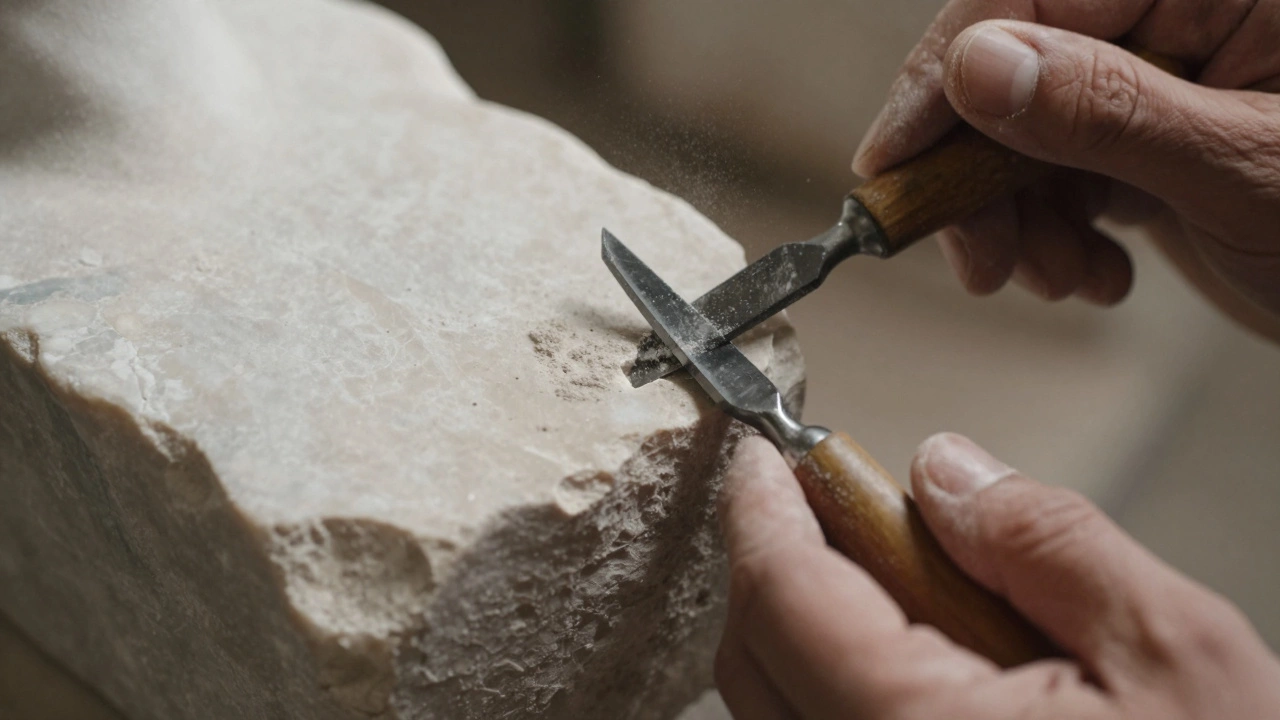
When you look at a sculpture, look closely at the surface. Are there tool marks? Is the paint chipping? These signs of handling are evidence of the artist's presence. They prove that a human hand touched this object, making it unique in a way that a mass-produced 3D print cannot replicate.
Form, Space, and Negative Space
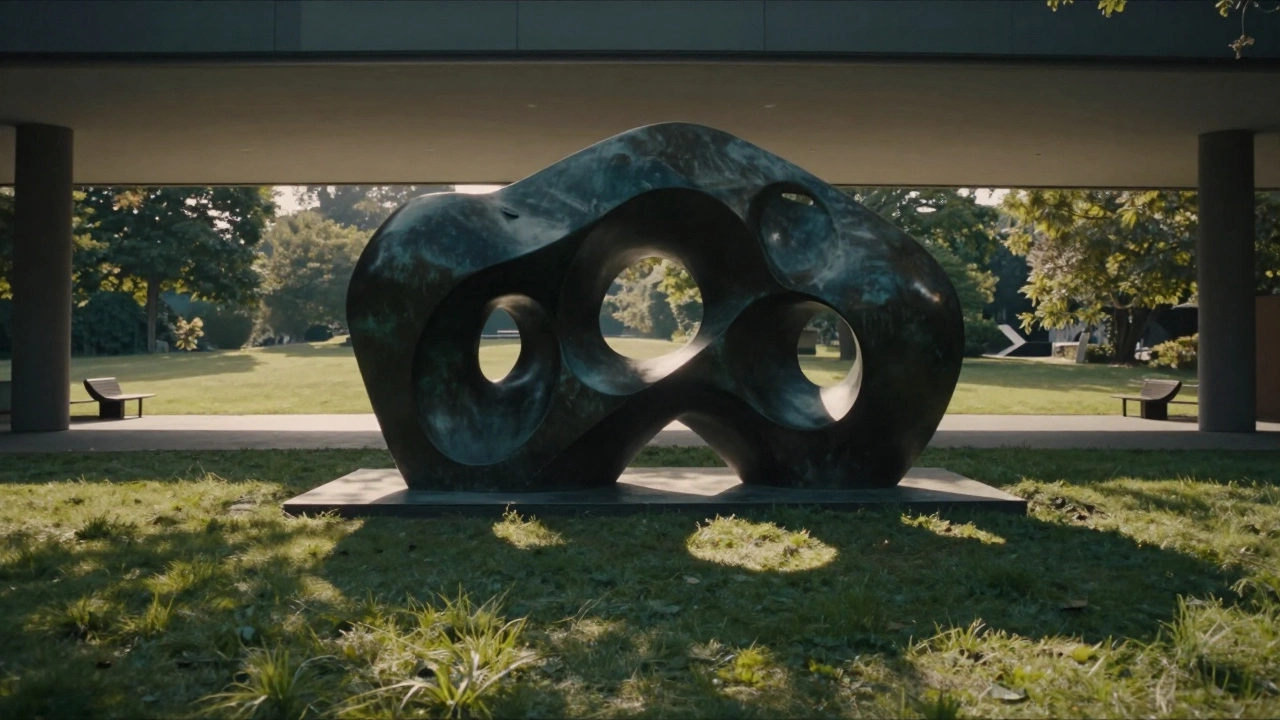
A common misconception is that sculpture is only about the solid object. In reality, sculpture is about the relationship between the object and the space around it. This is where negative space comes into play. Negative space is the empty area surrounding and within the sculpture. It is not nothing; it is an active component of the design.
Think of Henry Moore’s reclining figures. The holes in his sculptures aren't mistakes; they are deliberate invitations for light and shadow to pass through. As you walk around the piece, your view of the background changes, and the sculpture seems to breathe with the environment. This interaction with space makes each viewing experience unique. No two viewers will see the exact same arrangement of forms because their perspective shifts with every step.
| Element | Role in Uniqueness | Example |
|---|---|---|
| Material | Provides physical constraints and texture | Veins in marble affecting color variation |
| Negative Space | Defines form through absence | Holes in Henry Moore’s sculptures |
| Scale | Alters viewer perception and emotional impact | Anish Kapoor’s massive reflective mirrors |
| Process Marks | Evidence of human intervention | Chisel marks in Rodin’s rough surfaces |
Furthermore, scale plays a crucial role. A small figurine held in your palm invites intimacy and inspection. A monumental statue towering over you evokes awe or intimidation. The same form, scaled differently, communicates entirely different messages. This adaptability means that the uniqueness of a sculpture is partly determined by its context-where it is placed and how big it is relative to the human body.
The Artist’s Hand: Intent and Process
While material and form are tangible, the soul of a sculpture lies in the artist’s intent. Why did the artist choose this specific pose? Why did they leave one side rough while polishing the other? These decisions are rarely accidental. They reflect the artist’s philosophy, technical skill, and emotional state at the time of creation.
Auguste Rodin, for instance, famously left many of his sculptures unfinished. He believed that showing the struggle of the material-the transition from raw stone to human form-was more powerful than a polished, perfect surface. This "non-finito" style became his signature. When you see a Rodin, you are seeing his specific approach to revealing truth through incompleteness. That conceptual choice is unique to him.
In contemporary art, this extends to the use of technology. Does the artist use a CNC machine to cut the steel, or do they weld it by hand? The method of production affects the final aesthetic. Hand-welded seams have irregularities that tell a story of labor. Machine-cut edges are precise and cold. Both are valid, but they convey different meanings about the value of human effort versus technological precision.
Context and Provenance: The Story Behind the Object
A sculpture does not exist in a vacuum. Its uniqueness is also shaped by its history, or provenance. Who owned it? Where was it displayed? Was it created for a specific commission, such as a war memorial or a public park? These factors add layers of meaning that are invisible to the eye but palpable to the mind.
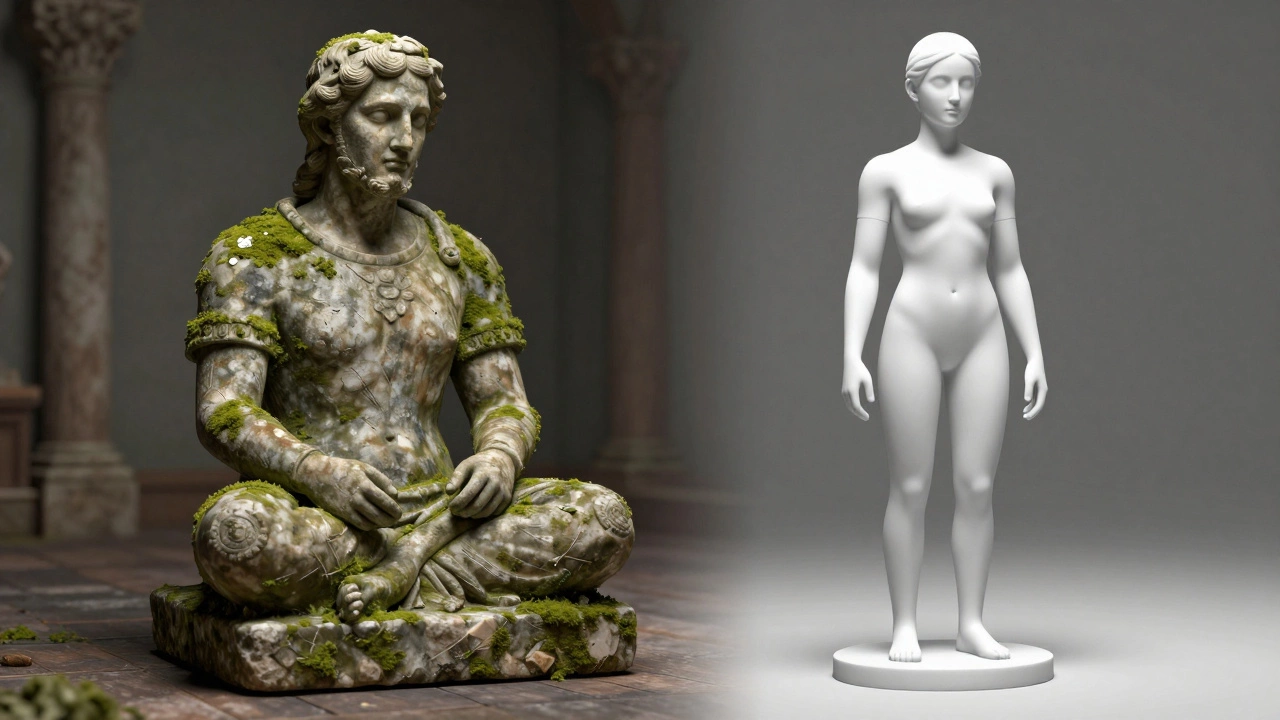
For example, a statue of a local hero in a town square carries the weight of community memory. It might be worn down by weather and touch over decades, becoming a living part of the city’s identity. If you were to create an identical replica today, it would lack that history. It would be a copy, not the original. The patina of age, the scratches from protests, the moss growing in the cracks-these are all part of the sculpture’s unique identity.
This is why authenticity matters so much in the art world. Even if a forgery looks identical to the naked eye, it lacks the chain of custody and the historical significance that gives the original its value. The story behind the object is as important as the object itself.
Contemporary Challenges: Reproduction and Digital Art
In the 21st century, the definition of uniqueness faces new challenges. With 3D printing and digital scanning, we can create near-perfect replicas of famous sculptures. Does this diminish the value of the original? Not necessarily, but it forces us to rethink what we mean by "unique."
If I scan Michelangelo’s David and print it in my backyard, is it unique? Physically, it is a new object. But culturally and historically, it is a derivative. The original remains unique because it is the source. However, some contemporary artists embrace reproduction as part of their practice. Andy Warhol, though primarily a painter, influenced sculptors to explore mass production. Today, artists like Ed Ruscha create editions of sculptures, selling multiple identical copies. In this case, the uniqueness lies in the limited edition number and the certificate of authenticity, rather than the physical singularity of the object.
This shift highlights a key distinction: uniqueness can be physical (one-of-a-kind) or conceptual (limited edition). Both are valid, but they appeal to different aspects of the collector’s and viewer’s psyche. One seeks rarity; the other seeks connection to a broader artistic movement.
Conclusion: Seeing Beyond the Surface
So, what makes a sculpture unique? It is not just one thing. It is the combination of the material’s resistance, the artist’s intentional choices, the interplay of positive and negative space, and the historical journey the object has taken. When you next encounter a sculpture, take a moment to look closer. Notice the texture. Walk around it. Consider the story it tells. You will find that each piece, no matter how similar it may seem to another, has its own voice waiting to be heard.
Can a sculpture be unique if it is made in multiple copies?
Yes, but the type of uniqueness changes. Limited edition sculptures are unique in terms of scarcity and certification. Each piece in an edition is considered an original work by the artist, but it shares the same form. True one-of-a-kind uniqueness is found in unique pieces where no other version exists, often due to the variability of natural materials like stone or wood.
How does material affect the meaning of a sculpture?
Material carries cultural and physical associations. Bronze suggests permanence and strength, often used for monuments. Glass implies fragility and transparency. Wood connects to nature and organic growth. The artist chooses materials to reinforce the message. For example, using rusted steel for a sculpture about decay creates a direct link between form and content.
What is negative space in sculpture?
Negative space is the empty area around and within a sculpture. It is not just background; it is an active element that defines the shape. Artists use negative space to create visual interest, allow light to pass through, and engage the viewer’s imagination by suggesting forms without explicitly carving them.
Why are tool marks important in sculpture?
Tool marks provide evidence of the artist’s hand and process. They show how the material was manipulated, adding texture and depth. These marks can convey energy, struggle, or precision, making the sculpture feel more alive and connected to the human creator. They distinguish handmade art from mass-produced items.
Does the location of a sculpture change its uniqueness?
Absolutely. Site-specific sculptures are designed for a particular location and lose their meaning if moved. Even non-site-specific works gain unique characteristics based on their surroundings, such as lighting, weather, and cultural context. The interaction between the sculpture and its environment creates a unique experience for each viewer.