Feb 17, 2025
Why Don’t People Like Abstract Art?
When you think of Vincent Van Gogh palette, the bold, swirling colors used by the post-impressionist painter known for his emotional intensity and thick brushwork. Also known as Van Gogh’s color scheme, it’s not just about the pigments he squeezed onto his board—it’s about how he used them to turn emotion into visible energy. Van Gogh didn’t paint what he saw; he painted how he felt. And his palette was the tool that made that possible.
He didn’t use fancy, obscure paints. He worked with what was available in the late 1800s: lead white, cadmium yellow, vermilion, cobalt blue, ultramarine, emerald green, and raw umber. These weren’t rare. What made them powerful was how he mixed them. He rarely blended colors smoothly. Instead, he layered them side by side, letting the viewer’s eye do the mixing. That’s why his skies vibrate, his wheatfields hum, and his cypress trees seem to twist with life. His technique wasn’t about realism—it was about vibration. He used complementary colors to make each other stronger. A patch of orange next to blue? That’s not a mistake. That’s strategy. He knew that putting red next to green made both pop. He didn’t avoid muddy colors—he embraced them when they served the feeling.
Van Gogh’s palette wasn’t just about paint. It was tied to his process. He painted outdoors, often in harsh light, and he worked fast. His brushstrokes were deliberate, not random. He used the edge of his brush to scrape paint, built texture with thick layers (impasto), and rarely used black. Even his shadows had color—deep blues, purples, greens. He didn’t need to mix a hundred shades. He made do with six or seven and pushed them to their limits. Modern artists still study his work because he proved you don’t need complexity to create power.
Today, painters trying to capture emotion—whether in oils, acrylics, or even digital—still reach for the same colors Van Gogh used. Artists in Pembrokeshire, painting coastal storms or sunlit fields, often start with his palette as a foundation. Why? Because his choices were rooted in truth, not trend. He didn’t follow rules. He bent them until they sang. If you’ve ever wondered why his paintings still feel alive, it’s not just the subject. It’s the way the paint itself breathes.
Below, you’ll find posts that explore how artists today use his methods, what colors work best for emotional impact, and how to build your own version of his palette without copying it. Whether you’re just starting out or you’ve been painting for years, there’s something here that’ll help you see color differently.
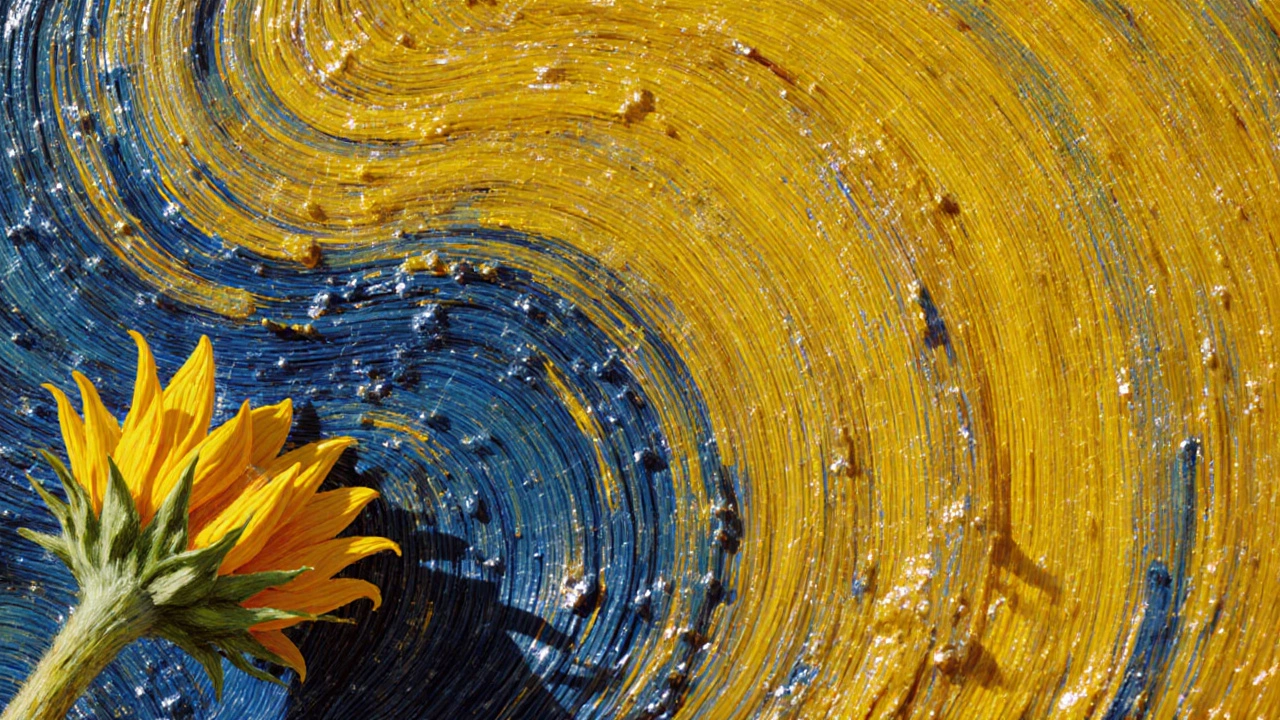
Vincent Van Gogh most often used yellow and blue in his oil paintings to express emotion, light, and depth. These colors defined his most famous works, from Sunflowers to The Starry Night.