Jul 22, 2025
Legit Musicals: What Makes a Musical Truly 'Legit'?
When you start painting in oil paint, a slow-drying medium that allows blending, layering, and rich color depth. Also known as oil-based painting, it’s prized for its versatility—but it’s also unforgiving if you skip the basics. Most beginners think the problem is their skill, but it’s usually a few simple oil painting mistakes they keep repeating. You don’t need years of training to avoid them—just awareness.
One of the biggest mistakes is using too much paint too soon. Oil paint doesn’t dry fast, so layering thick globs leads to cracking, yellowing, or muddy colors. Instead, start thin and build up slowly. Another common error is ignoring value contrast. Many artists focus on color and forget that light and dark create form. A painting with perfect hues but no clear shadows looks flat. Then there’s overworking—the urge to keep tweaking, blending, and reworking areas until the painting loses its energy. Oil paint lets you fix things, but too much correction kills spontaneity.
Also watch out for poor brush control. Using the wrong brush size for the job—like a tiny detail brush for a large sky—leads to frustration and messy edges. And don’t skip the underpainting. Skipping this step means you’re building color on a blank canvas instead of a tonal foundation. It’s like trying to paint a house without a frame. Many artists don’t realize that composition, how elements are arranged to guide the viewer’s eye. Also known as visual layout, it’s the backbone of every great oil painting. Without it, even the best colors fall apart.
And let’s not forget the palette. Using too many colors at once is a trap. Most masterpieces use three to five colors max. You don’t need every shade of green or blue. Learn to mix what you need. Also, never paint over a layer that’s not dry. Even if it feels touch-dry, oil can take days to cure underneath. Rushing leads to lifting, cracking, or dull layers. And always clean your brushes properly. Oil paint hardens if left in bristles—no matter how expensive they are.
These aren’t just tips. They’re lessons from artists who’ve painted over failed pieces, scraped down canvases, and started again. The good news? You don’t have to repeat their mistakes. The posts below show real examples of what goes wrong in oil painting—and how to fix it, step by step. Whether you’re mixing colors, building depth, or just trying to keep your brush from turning into a stiff brush, you’ll find clear, no-fluff advice here. No theory. No jargon. Just what actually works.
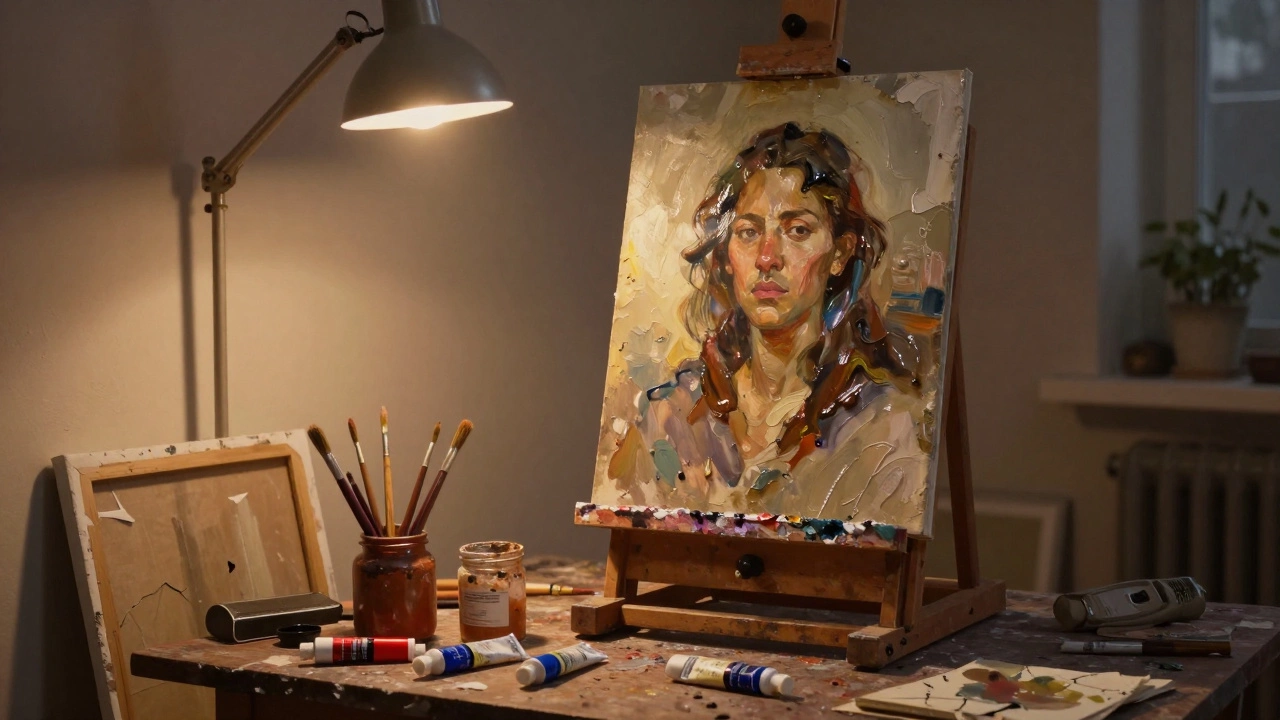
Oil painting is difficult because of its slow drying time, unforgiving blending, complex color mixing, and demanding technique. It requires patience, proper materials, and deep understanding-not just skill.