Abstract Art Interpretation Quiz
How Well Do You Understand Abstract Art?
This quiz will help you engage with abstract art by testing your understanding of key concepts. Take your time and consider how you experience abstract works.
When you look at a painting with swirls of color, jagged lines, or smudged textures-and you can’t tell what it’s supposed to be-you’re not missing something. You’re seeing an abstract idea in action.
What Does ‘Abstract Idea’ Actually Mean in Art?
An abstract idea in art isn’t a blurry version of a real thing. It’s not a half-finished portrait or a poorly drawn landscape. It’s the opposite: art that refuses to copy the world and instead tries to express something deeper-emotion, energy, thought, or even silence.
Think of it like music. You don’t need lyrics to feel sadness in a cello solo. Abstract art works the same way. It doesn’t show you a crying person. It makes you feel the weight of grief through color, rhythm, and form.
Wassily Kandinsky, one of the first artists to fully embrace abstraction in the early 1900s, said he wanted to paint “the inner sound” of things. He didn’t paint trees or horses. He painted the feeling of a symphony. That’s the heart of an abstract idea: translating the invisible into visible form.
How Is It Different From Realism or Impressionism?
Realism tries to copy the world exactly. A realistic painting of a chair looks like a chair you could sit on. Impressionism, like Monet’s water lilies, captures how light changes on a surface-but you still know it’s a pond.
Abstract art doesn’t care if you recognize the subject. It might use shapes that look like they’re floating, colors that clash on purpose, or brushstrokes that feel chaotic. The goal isn’t recognition. It’s resonance.
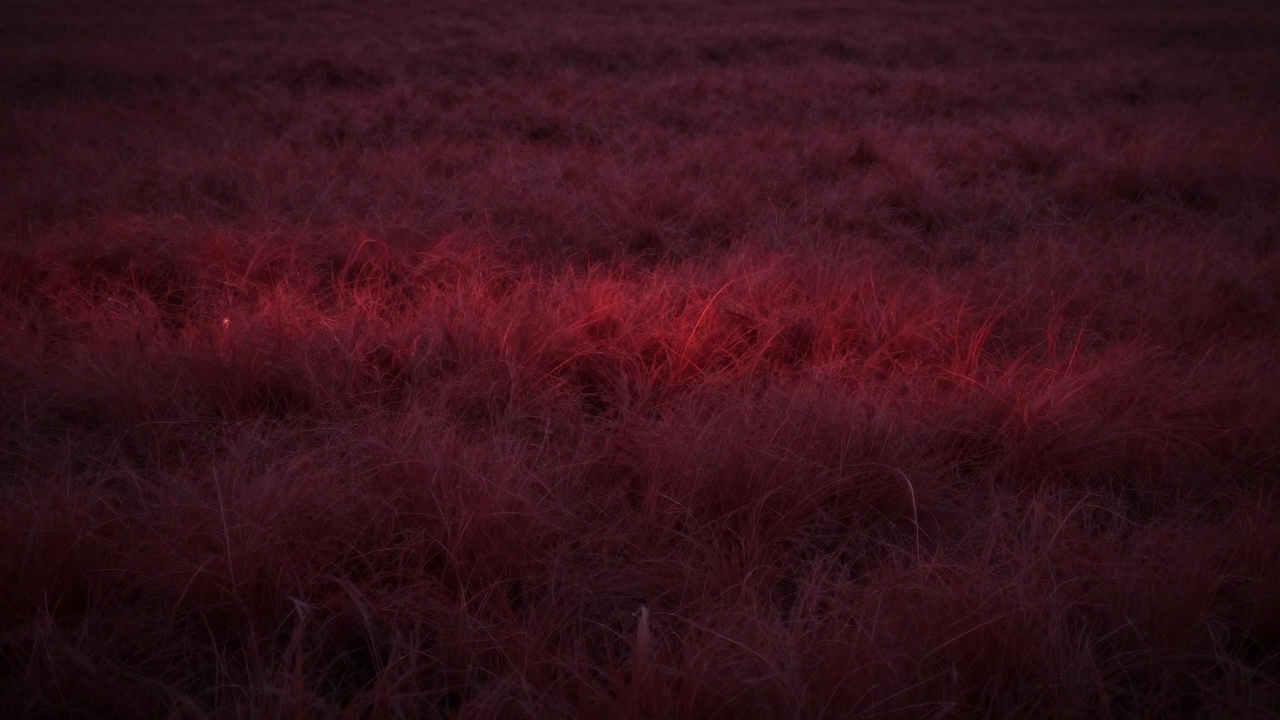
Take Mark Rothko’s large color fields. Two rectangles of deep red and maroon, stacked vertically. No trees. No faces. No story. Yet people cry in front of them. Why? Because Rothko wasn’t painting color. He was painting longing. That’s the abstract idea.
Where Did Abstract Ideas in Art Come From?
Before the 20th century, most art served a purpose: religious stories, royal portraits, historical events. Art was about representation.
That changed with industrialization, photography, and new philosophy. If a camera could capture reality perfectly, why should a painter try? Artists began asking: What can art do that a photo can’t?
The answer: express what can’t be photographed-thoughts, dreams, trauma, spiritual states. Movements like Expressionism, Cubism, and later Abstract Expressionism pushed art away from the external world and into the inner one.
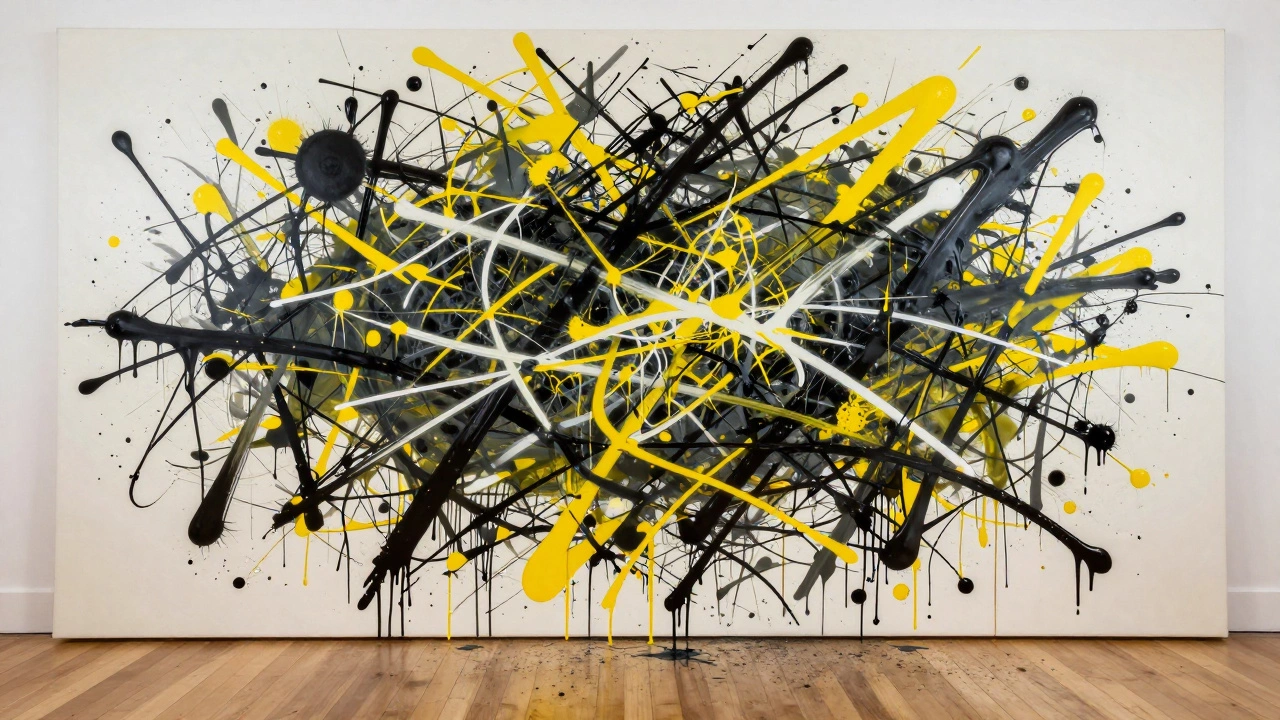
By the 1940s, artists like Jackson Pollock were dripping paint on the floor. His work wasn’t about making a picture. It was about the physical act of creation-the energy, the movement, the release. The canvas became a record of a moment, not a depiction of a thing.
Can Abstract Art Be Understood?
People often say, “My kid could paint that.” But that misses the point. Abstract art isn’t about skill alone. It’s about intention.
A child’s scribble is random. A Rothko is deliberate. Every color choice, every edge, every brushstroke was weighed. The artist spent years studying color theory, composition, and emotional resonance.
You don’t need to “get” abstract art like you get a news headline. You experience it. Like listening to jazz. You don’t need to know the chords to feel the groove.
Try this: Stand in front of an abstract piece for two minutes. Don’t try to figure out what it is. Ask yourself: What does it make me feel? Does it feel calm? Agitated? Heavy? Light? That’s the abstract idea speaking.
What Are Common Tools Artists Use to Express Abstract Ideas?
There’s no single formula, but certain techniques appear again and again:
- Color as emotion: Bright yellows for joy, deep blues for sorrow, clashing reds and greens for tension.
- Gesture and movement: Thick, fast brushstrokes (like in de Kooning’s women series) show urgency or rage.
- Texture and layering: Scraping paint, sand, or fabric into the surface adds physical depth-like memory piled on memory.
- Minimalism: Removing everything except the essential. Agnes Martin’s faint pencil lines on white canvas aren’t empty-they’re meditative.
- Chance and process: John Cage’s influence led artists to use randomness-dripping, pouring, splattering-to remove the ego from creation.
These aren’t tricks. They’re tools to bypass the logical mind and speak directly to feeling.
Why Do People Dismiss Abstract Art?
Because it doesn’t give easy answers. Modern life rewards clarity. Abstract art demands patience. It asks you to sit with uncertainty.
Some critics call it pretentious. Others say it’s a scam. But the most powerful abstract works have survived decades because they do something no photograph, no realistic painting, no digital render can do: they mirror the inner chaos of being human.
When you’re overwhelmed, confused, or grieving, abstract art doesn’t tell you what to feel. It gives space for your own emotion to rise. That’s why it still matters.
Who Are Key Artists to Study for Abstract Ideas?
If you want to understand abstract art, start here:
- Wassily Kandinsky: First to make purely non-representational paintings. Believed color and shape had spiritual power.
- Piet Mondrian: Reduced art to lines and primary colors. His grids weren’t decoration-they were his vision of universal harmony.
- Mark Rothko: Used color to create emotional space. His paintings feel like rooms you can walk into.
- Jackson Pollock: Turned painting into performance. His drip paintings are frozen moments of motion.
- Hilma af Klint: Painted abstract works before Kandinsky, inspired by spiritualism. Her work was hidden for decades.
- Agnes Martin: Quiet, repetitive lines. Her art feels like breathing.
Each of them used abstraction not to hide meaning, but to reveal something deeper than words.
Can You Create Abstract Art Without Training?
Yes. But not in the way most people think.
You don’t need to know how to draw. You don’t need expensive supplies. You need honesty. Try this: Close your eyes. Think of a memory that made you feel strong emotion-joy, anger, grief. Now open your eyes and paint or draw what that feeling looks like, not what it was about.
That’s abstract art. It’s not about technique. It’s about translation.
Many therapists use abstract art in sessions because it lets people express what they can’t say. That’s the power of the abstract idea: it gives form to the formless.
What Does Abstract Art Tell Us About Human Experience?
It reminds us that not everything meaningful can be named.
Love isn’t a word. It’s a feeling in your chest. Grief isn’t a tear. It’s the silence after someone leaves the room. Abstract art doesn’t illustrate those things-it becomes them.
When you stand in front of a Rothko, you’re not looking at paint. You’re looking at someone else’s soul trying to say something too big for language. And if you let it, it will say something back to you.
That’s why abstract art isn’t about what you see. It’s about what you feel-and what you finally allow yourself to feel.
Is abstract art just random splashes of paint?
No. While some abstract works look chaotic, they’re rarely random. Artists like Mark Rothko spent months choosing just two colors and their placement. Even Jackson Pollock’s drips followed a rhythm he developed over years. The chaos is controlled. The emotion is intentional.
Can abstract art have meaning if no one knows what it’s supposed to be?
Yes. Meaning doesn’t require a label. A piece of music doesn’t need a title to move you. Abstract art works the same way. Its meaning lives in how it makes you feel, not in what it depicts. One person might feel peace; another might feel anxiety. Both are valid responses.
Why do galleries charge so much for abstract art?
Price reflects history, rarity, and cultural impact-not technical skill. A Rothko sells for millions because it changed how we think about emotion in art. It’s not about the paint. It’s about the idea it represents and the influence it had on generations of artists.
Is abstract art still relevant today?
Absolutely. Modern digital artists, installation creators, and even AI-generated art often use abstraction to explore emotion, identity, and data overload. Abstract ideas are more relevant than ever in a world saturated with images but starving for meaning.
Do I need to know art history to appreciate abstract art?
No. You can feel a Rothko without knowing his name. But knowing the history helps you see how radical it was-how artists broke rules to give emotion a shape. It deepens the experience, but it’s not required to have one.