Oct 12, 2025
How to Make a Landscape Painting More Interesting - Proven Tips & Tricks
When you finish a drawing, painting, or print, you don’t just want to leave it lying around—you want to mounting paper it properly. This isn’t just glue and cardboard. Mounting paper is a specialized, acid-free material designed to hold your artwork flat, prevent warping, and stop damage from moisture, yellowing, or chemicals over time. Also known as acid-free mat board, a rigid, buffered paper product used to support and separate artwork in framing, it’s the unsung hero behind every professional-looking piece you see in galleries or homes.
Using regular printer paper or cardboard to mount art? That’s like putting a vintage photo in a plastic bag. Over time, acids in cheap materials eat away at the fibers, causing fading, brittleness, and stains. True mounting paper, a pH-neutral, lignin-free board engineered for archival art support is made to last decades, even centuries. It’s the same material museums use for storing drawings and prints. And it’s not just about the paper itself—archival adhesive, a reversible, non-yellowing glue specifically formulated for fine art mounting matters too. The right glue lets you remove the artwork later without damage, which is critical if you ever want to reframe or sell it.
Artists who sell prints, framers who handle originals, and even hobbyists who want their watercolors to survive the next move all need to understand this. You don’t need to spend a fortune, but you do need to know what to look for. Look for labels that say "acid-free," "lignin-free," or "archival quality." Avoid anything labeled "regular" or "standard"—those are red flags. The thickness matters too: thinner sheets work for lightweight sketches, while heavier pieces need 2mm or more for support.
Some of the posts below show how mounting ties into bigger ideas—like how to make professional art prints that last, or why framing choices affect how your work is perceived. Others dig into the materials artists actually use when preparing pieces for exhibitions. Whether you’re new to framing or you’ve been selling prints for years, this collection gives you real, no-fluff advice on what works and what doesn’t. You’ll find practical tips on choosing the right backing, avoiding common mistakes, and understanding why skipping this step can ruin years of work.
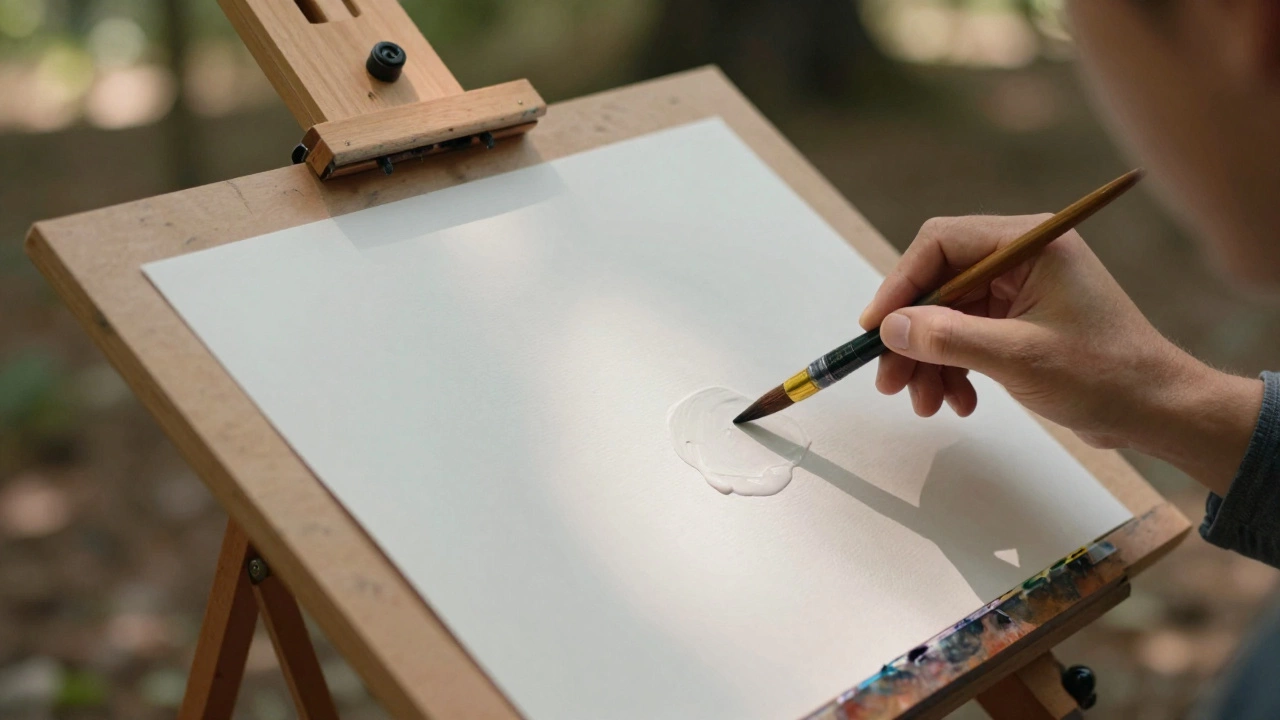
Discover better ways to keep watercolor paper flat without stretching. Watercolor blocks, mounted boards, and pre-stretched panels offer faster, cleaner results with no soaking or tape.