Mar 18, 2025
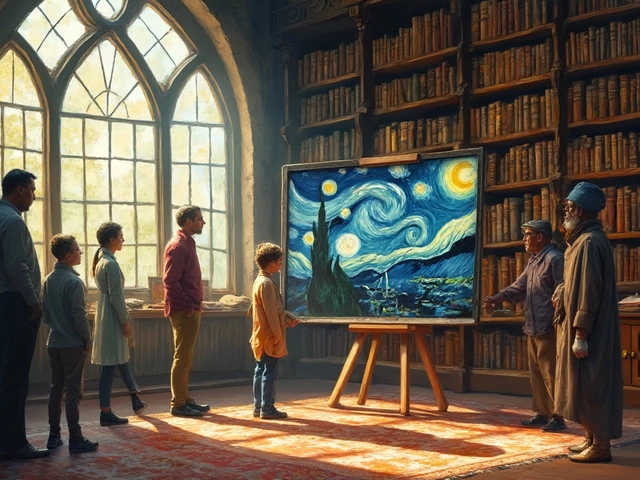
Why 'Starry Night' Isn't Under Lock and Key
When you see a painting or sculpture in a gallery, the way it’s photographed for websites, catalogs, or social media isn’t just a snapshot—it’s display photography, the intentional process of capturing and presenting visual art so it retains its emotional impact and technical detail. Also known as art photography, it’s the quiet hero behind every online exhibition, print sale, and artist portfolio. This isn’t point-and-shoot. It’s about control—lighting that doesn’t wash out a Van Gogh yellow, angles that don’t distort a sculpture’s curve, and prints that match the original’s texture and tone. If the photo lies, the viewer walks away with the wrong idea.
Good display photography doesn’t just document—it translates. It connects the artist’s intent with the viewer’s experience, whether that’s someone scrolling on their phone or standing in front of a gallery wall. That’s why it relies on exhibition photography, the specialized practice of capturing artwork in controlled environments to preserve color accuracy, depth, and spatial presence. It’s not the same as shooting a landscape or a portrait. You’re not capturing movement or emotion—you’re capturing presence. And that means knowing how light interacts with oil paint versus watercolor, how glass reflects off a framed print, and why a 12-bit TIFF matters more than a JPEG when you’re selling a limited edition.
It also means understanding the end use. Is the photo going on Instagram? Then contrast and saturation matter more than archival paper specs. Is it going into a museum catalog? Then you need color calibration, a gray card, and a tripod that doesn’t budge. Even the background matters—white isn’t always neutral. A slightly off-white can make a dark painting look muddy. A too-bright backdrop can steal focus from a delicate ink drawing. These aren’t small details. They’re the difference between a photo that feels alive and one that feels flat.
And then there’s the print. fine art printing, the process of producing high-fidelity, long-lasting reproductions using archival inks and papers designed to match the original artwork’s character isn’t just about size. It’s about material. A giclée on cotton rag feels different than a poster on glossy paper. The texture changes how your eye moves across the surface. The weight changes how it sits on a wall. And the ink? It can’t fade. Not if you want someone to still feel the same awe five years from now.
Display photography ties together everything from the brushstroke to the screen. It’s why two photos of the same painting can look completely different. One makes you want to touch it. The other makes you scroll past. The difference isn’t the artist. It’s the photographer’s choices. And in a world where most art is discovered online first, those choices matter more than ever.
Below, you’ll find real examples and practical guides—from how to photograph your own work at home, to what settings professionals use in studios, to why some prints last decades while others turn yellow in a year. No fluff. Just what works.

Learn how to properly display fine art photography with expert tips on printing, framing, lighting, and placement. Avoid common mistakes and make your photos truly stand out.