Feb 3, 2025
Best-Selling Watercolor Painting Sizes
When you work with blending oil paints, the process of smoothly transitioning between colors on canvas using brushes, palettes, or other tools. Also known as color blending, it’s what turns flat patches of paint into glowing skies, soft skin tones, or misty mountains. It’s not just about mixing colors on your palette—it’s about making them flow together on the surface while the paint is still wet.
Successful blending relies on three things: timing, tools, and technique. Oil paint stays workable for hours, sometimes days, which gives you more control than watercolor or acrylic. But if you wait too long, the edges harden and you end up with harsh lines instead of smooth gradients. That’s why most artists use a soft, round brush—like a filbert or flat synthetic—to gently feather one color into another. Some even use a dry brush to soften edges after the initial blend. Tools like palette knives can help you layer and smear paint without disturbing the brushwork underneath. And don’t forget your medium: linseed oil or odorless mineral spirits can extend drying time and make blending easier.
Blending oil paints isn’t just for realism. Even abstract artists use it to create movement and mood. Think of Van Gogh’s swirling skies or Turner’s hazy horizons—those weren’t accidents. They were built with deliberate, layered blends. You don’t need to paint like a master to get good results. Start small: blend two colors on a single apple, or try fading blue into white for a simple sky. The key is patience. Let the paint guide you. Don’t overwork it. And if it gets muddy? That’s okay. It’s part of learning.
What you’ll find below are real techniques from artists who’ve spent years figuring out how to make oil paint behave. From how to prevent colors from turning gray when mixed, to why some brushes work better than others, to the one trick that keeps your blends clean—this collection covers what actually works. No fluff. No theory without practice. Just the stuff you can use the next time you sit down to paint.
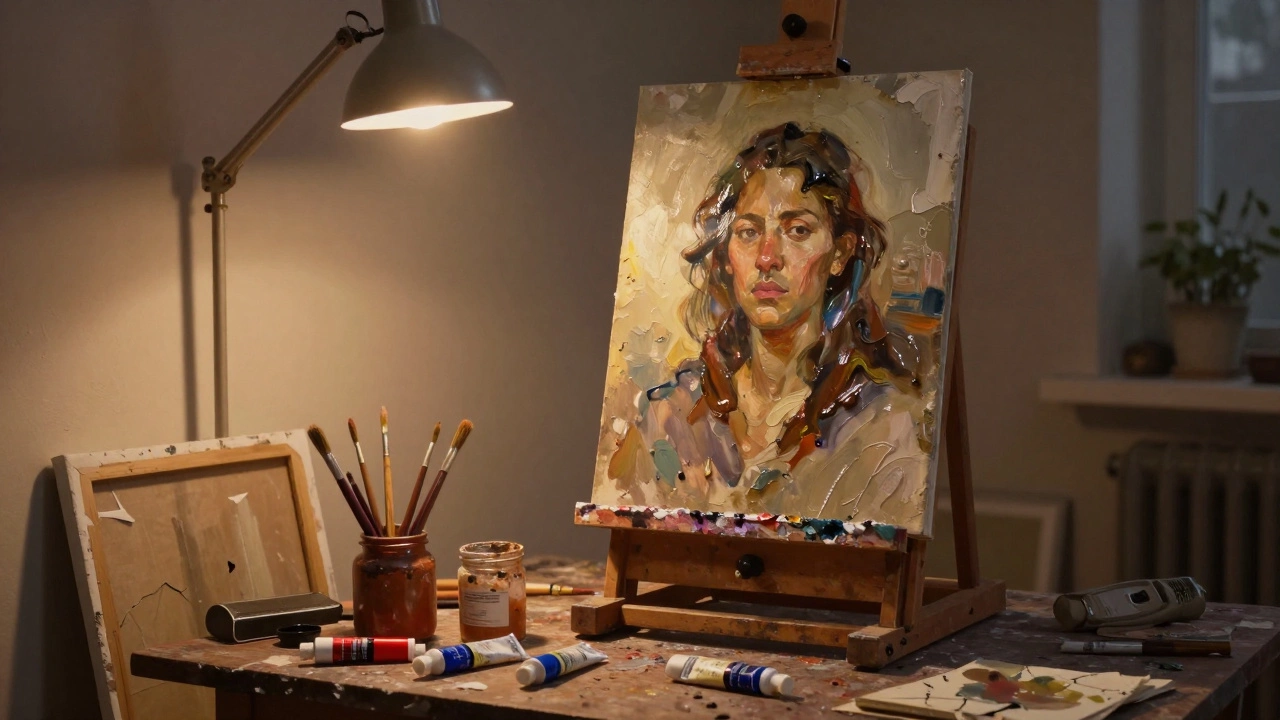
Oil painting is difficult because of its slow drying time, unforgiving blending, complex color mixing, and demanding technique. It requires patience, proper materials, and deep understanding-not just skill.