Art Pricing & Gallery Commission Calculator
Input Your Details
Pricing Breakdown
If Sold Through a Gallery
Imagine spending months perfecting a series of paintings, only to hang them in a gallery with price tags that feel like guesses. You’re not alone. Most artists struggle with the math and psychology of pricing their work, especially when the stakes are high-like during a public exhibition. Getting it wrong can mean leaving money on the table or scaring away potential buyers. But getting it right? That builds your reputation and ensures you get paid what you’re worth.
Pricing art isn’t just about covering your costs; it’s about signaling value to collectors, curators, and galleries. In this guide, we’ll break down exactly how to calculate a fair price, how to handle gallery commissions, and why consistency matters more than perfection.
The Core Formula: Cost Plus Value
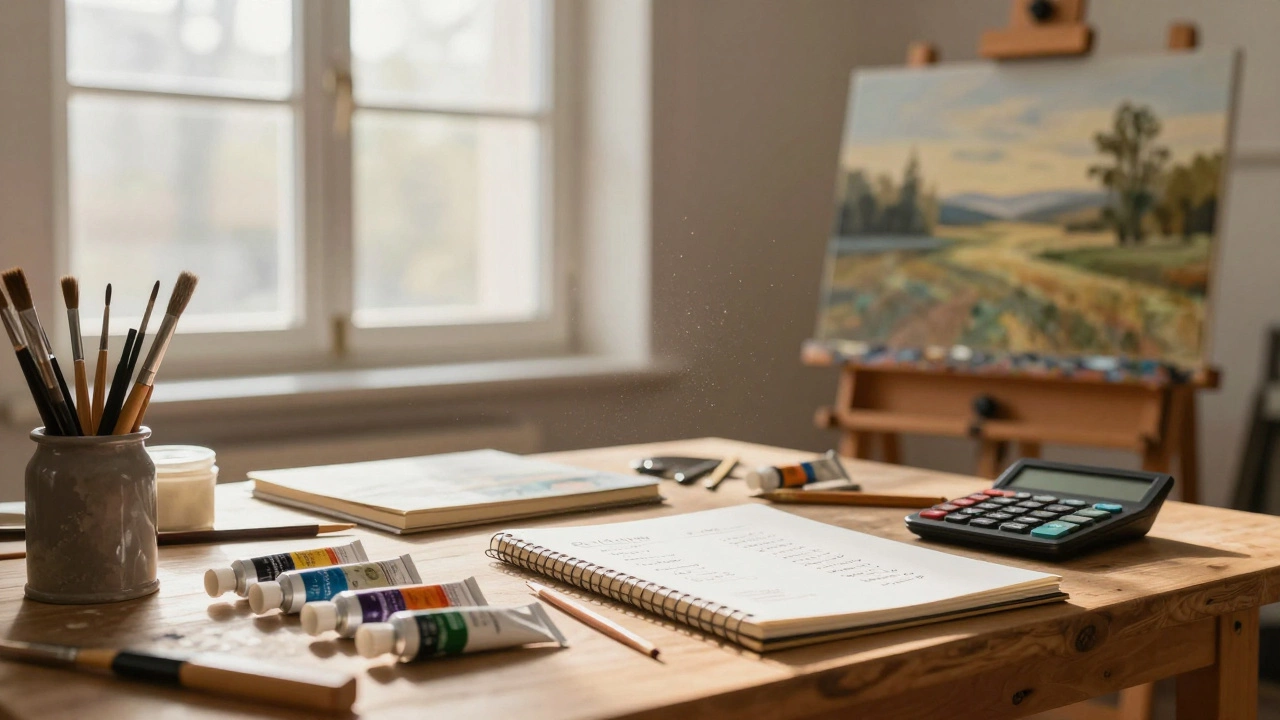
At its simplest, pricing art is a balance between objective costs and subjective value. You can’t sell below your cost, but you also can’t charge purely based on emotion. Start with the hard numbers.
Next, add your labor. This is where many artists fail. They undervalue their time. Calculate your hourly wage based on your desired annual income divided by the hours you actually work (not total hours in a year). If you want to earn $60,000 a year and work 1,500 hours creating art, your hourly rate is $40. If a piece takes 20 hours, your labor cost is $800.
Add material costs ($150) + labor ($800) = $950 base cost. Now, apply a markup. The standard industry markup for fine art is often 2x to 3x the base cost to account for overhead, marketing, and profit. So, $950 x 2 = $1,900. This is your starting retail price.
Why Consistency Beats Perfection
Once you have a base price, don’t change it wildly from one show to the next. Collectors hate unpredictability. If you sold a 24x36 inch painting for $2,000 last year, don’t suddenly ask for $5,000 for the same size without a clear reason-like a major award or increased demand.
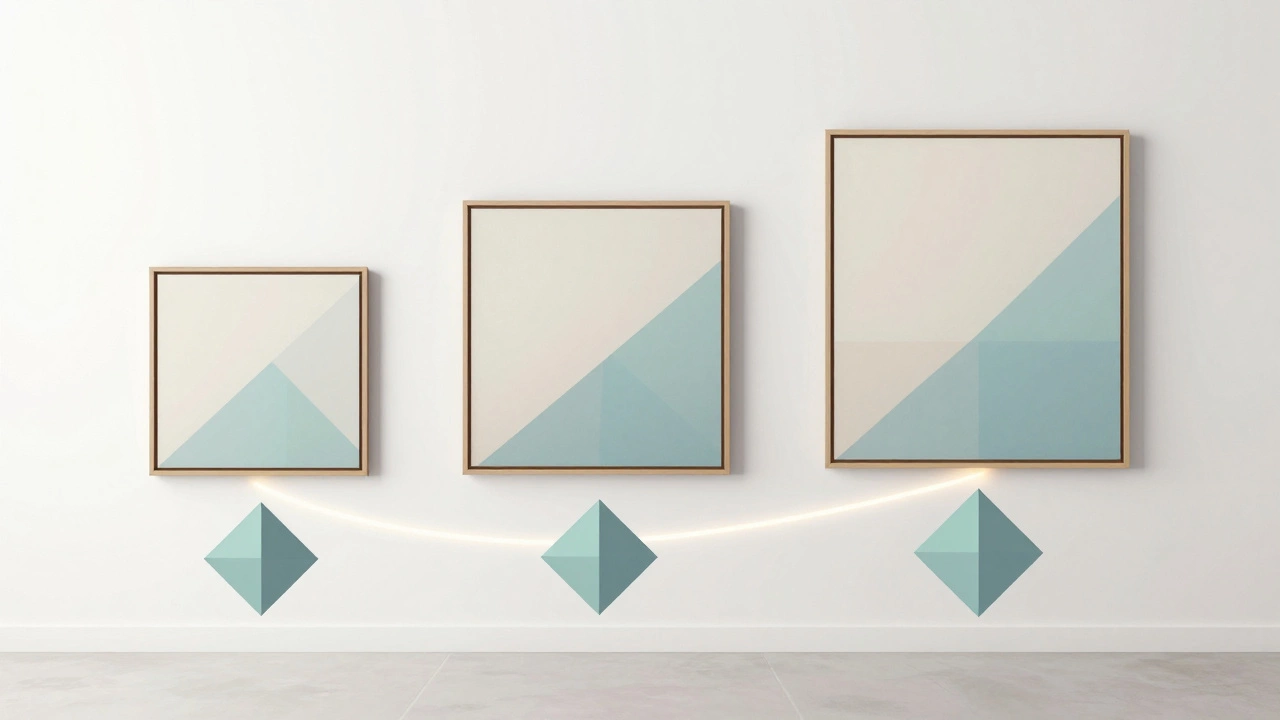
Use a linear pricing model for similar works. For example:
- 12x12 inches: $500
- 18x18 inches: $750
- 24x24 inches: $1,000
This makes it easy for buyers to understand your value proposition. It also helps you track growth over time. As your career progresses, you can increase prices incrementally-say, 10-15% per year-for new bodies of work, while keeping older pieces at their original price if they’re still unsold.
Navigating Gallery Commissions
If you’re exhibiting through a gallery, the pricing conversation changes. Galleries typically take a commission ranging from 40% to 60% of the sale price. This means if you set a price of $1,000, you might only see $400-$600 after the sale.
| Price Point | Gallery Take (50%) | Artist Net |
|---|---|---|
| $1,000 | $500 | $500 |
| $2,500 | $1,250 | $1,250 |
| $5,000 | $2,500 | $2,500 |
When working with a gallery, agree on pricing *before* the exhibition opens. Some galleries will suggest higher prices to maintain exclusivity, while others may push for lower prices to move inventory faster. Know your bottom line. If a gallery wants to discount your work by more than 10%, reconsider the partnership. Discounting devalues your brand and sets a bad precedent for future sales.
Psychological Pricing Tactics
Humans are wired to respond to certain number patterns. Ending prices in '9' or '00' can subtly influence buying behavior. For example, $995 feels significantly cheaper than $1,000, even though the difference is minimal. However, in the fine art world, round numbers often signal prestige. A price tag of $5,000 looks more intentional and valuable than $4,995.
Consider the context of the exhibition. Is it a community center show or a high-end commercial gallery? Adjust your psychological strategy accordingly. In casual settings, slightly lower, approachable prices work better. In formal galleries, higher, rounded prices reinforce perceived quality.
Handling Discounts and Negotiations
Will you offer discounts? Decide this upfront. Many artists refuse to negotiate, stating "Prices are firm." This projects confidence and protects your value. Others allow small discounts (5-10%) for multiple purchases or loyal collectors.
If you’re open to negotiation, set boundaries. Never drop below your base cost plus labor. If a buyer asks for a 20% discount, explain that your prices reflect years of training and material investment. Often, the act of explaining your value stops the negotiation dead in its tracks.
Common Mistakes to Avoid
Here are three pitfalls that ruin pricing strategies:
- Underpricing early on: Starting too low makes it hard to raise prices later. Buyers who bought your work cheaply may resent paying more for new pieces.
- Inconsistent sizing: Selling a small sketch for the same price as a large mural confuses buyers about your value metric.
- Ignoring market research: Look at what other artists with similar styles, experience levels, and venues are charging. You don’t need to match them exactly, but you should be in the same ballpark.
Research local art markets. Visit galleries, talk to collectors, and attend openings. Notice which pieces sell and at what price points. This data is gold for refining your own strategy.
Final Thoughts on Pricing Confidence
Pricing art is both science and art. The science covers costs, labor, and market rates. The art involves understanding perception, timing, and your unique voice. Trust your process. If you’ve calculated your costs fairly and valued your time respectfully, your prices are justified.
Remember, every sale is a vote of confidence in your work. Don’t apologize for your prices. Present them clearly, confidently, and consistently. Over time, this clarity will attract the right collectors and build a sustainable career.
Should I price my art higher for a prestigious exhibition?
Yes, but gradually. A prestigious venue increases your visibility and credibility, allowing you to raise prices slightly (10-15%) compared to smaller shows. However, avoid drastic jumps that alienate existing fans. Use the platform to introduce higher-tier work rather than inflating prices across the board.
How do I price digital art for an exhibition?
Digital art pricing depends on whether you’re selling prints or NFTs. For prints, use the same cost-plus-labor model, adding printing and framing costs. For NFTs, consider scarcity, edition size, and blockchain fees. Limited editions command higher prices than open editions. Always clarify what the buyer receives (e.g., high-res file, physical print, or both).
What if no one buys my art at the exhibition?
Don’t panic. Not every piece sells at every show. Use the exhibition to gather emails, network with collectors, and refine your pitch. Analyze which pieces attracted attention and adjust your marketing or pricing for future shows. Persistence is key in building a collector base.
Can I change prices after the exhibition starts?
It’s generally discouraged. Changing prices mid-exhibition appears unprofessional and can offend early buyers who paid full price. If you must adjust, do so quietly for unsold items before the next show, or offer private discounts to specific collectors without altering public signage.
How do I handle group exhibitions with varying price points?
In group shows, ensure your prices align with your peers’ experience levels. If you’re emerging, don’t price yourself above established artists unless your work is significantly larger or more complex. Communicate with other artists beforehand to avoid awkward disparities that distract viewers from the art itself.