Sculpture Classifier
Is It Sculpture?
Answer these 5 questions to determine if an artwork qualifies as sculpture. Based on the criteria from the article.
Result
Answer all questions to see classification results.
Think of a statue. Maybe it’s a bronze figure standing in a park, or a marble bust in a museum. That’s sculpture-right? But what if it’s made of wire, or ice, or old car parts? What if it doesn’t stand up at all, but hangs from the ceiling or spreads across the floor? How do we know it’s still sculpture?
It’s Not Just About Shape
Many people assume sculpture means a solid, upright figure carved or cast from stone or metal. That’s a common image, but it’s not the full story. Sculpture is defined by its three-dimensionality. Unlike a painting or photograph, which exists on a flat surface, sculpture occupies space in all directions: height, width, and depth. You can walk around it. You can touch it (if you’re allowed). You see different angles as you move. That physical presence in real space is what sets it apart.Think about a relief carving on a temple wall. It sticks out from the surface, but it’s still attached. Is that sculpture? Yes-because it has volume and projects into space. What about a stack of folded paper that looks like a human form? Still sculpture. It doesn’t need to be heavy, permanent, or realistic. It just needs to exist in three dimensions.
Materials Don’t Define It
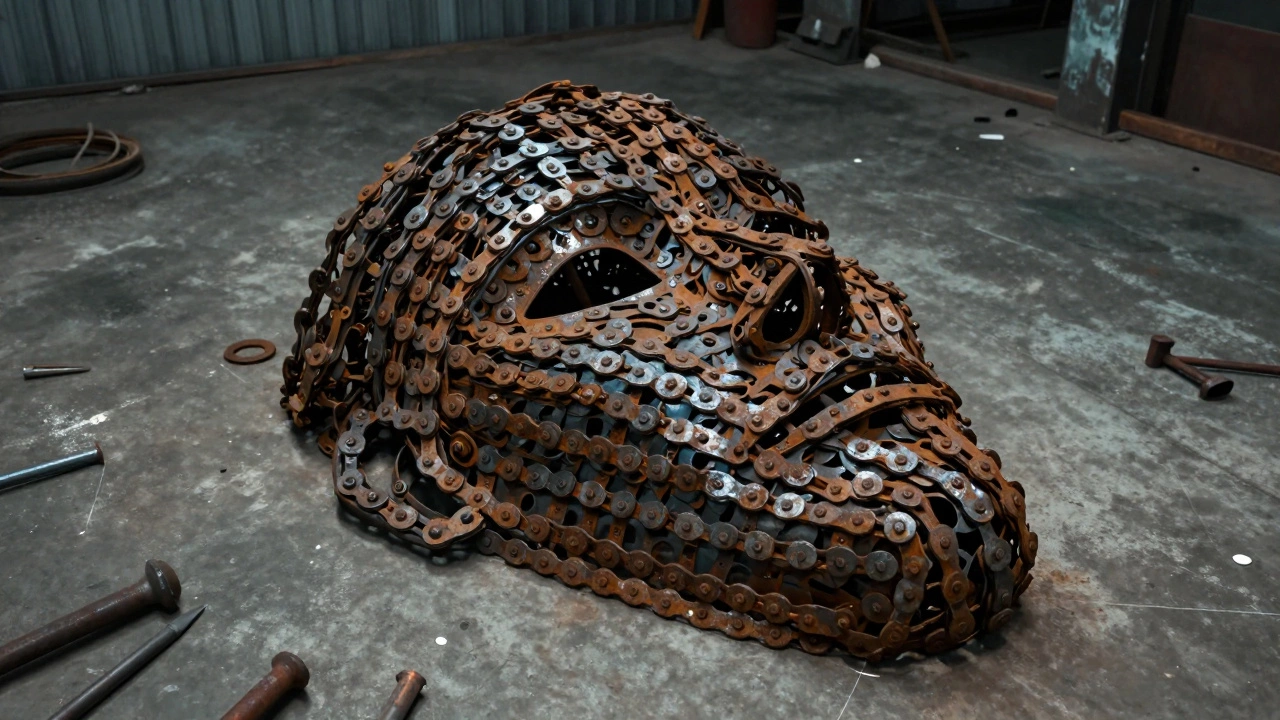
Sculpture used to be tied to traditional materials: marble, bronze, wood, clay. Those are still used, but they’re not requirements. In the 20th century, artists started using everything they could find. Louise Bourgeois made giant spiders out of steel and bronze. Claes Oldenburg turned soft pretzels and clothespins into massive, floppy monuments. Eva Hesse used latex, fiberglass, and rope to create hanging, drooping forms that felt alive.Today, you’ll see sculptures made of plastic bags, recycled electronics, sand, even light projections. A sculpture made of LED strips that changes color based on sound? Still sculpture. A pile of rusted bicycle chains arranged to look like a face? That’s sculpture too. The material doesn’t decide if it’s sculpture-the way it fills and shapes space does.
Form Over Function
A chair is three-dimensional. A teapot has volume. A building has height, width, and depth. So why aren’t they all sculptures? The key difference is intent. Sculpture is made to be seen, felt, and contemplated-not to be used. A chair’s purpose is to sit on. A teapot’s purpose is to pour tea. A sculpture’s purpose is to exist as an object of visual and emotional experience.That’s why a beautifully crafted wooden bowl might be called craft or design, but if an artist takes that same bowl, breaks it, and reassembles it with gold seams to highlight its history, now it’s sculpture. The function is gone. The meaning is what’s left.
It Doesn’t Have to Be Solid
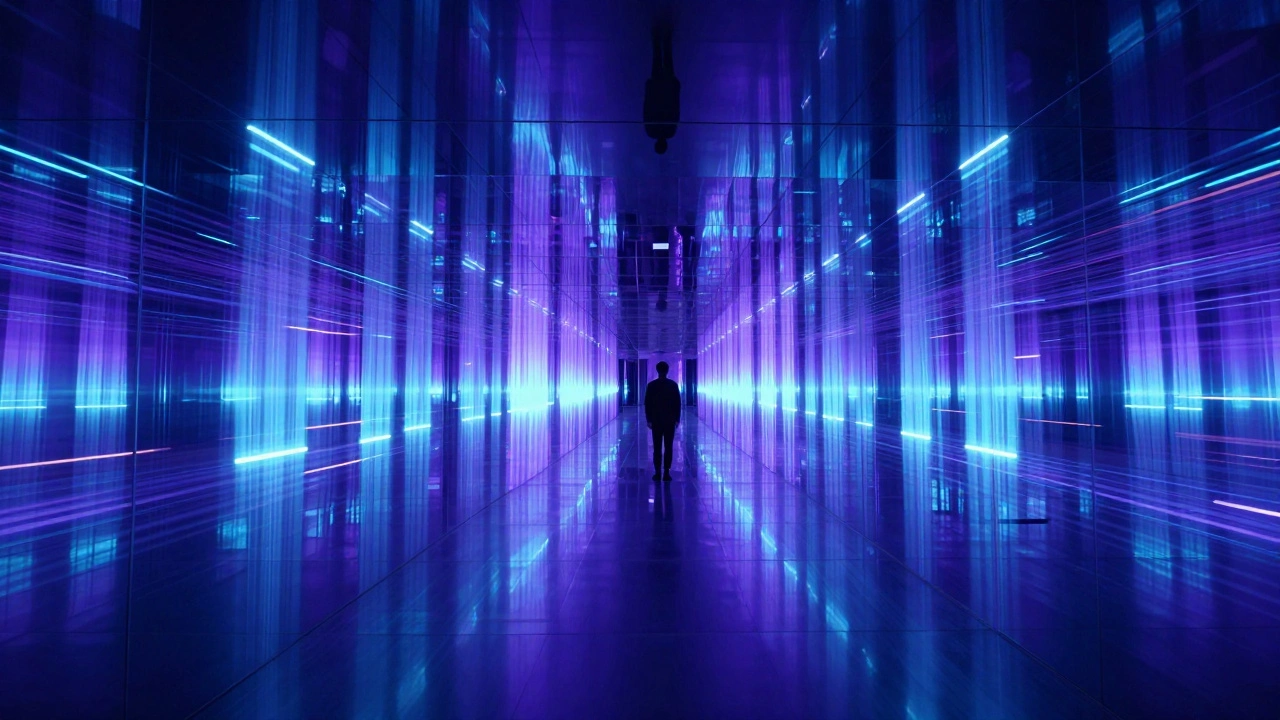
Some of the most powerful sculptures today aren’t solid objects at all. They’re environments. Think of Yayoi Kusama’s infinity rooms-mirrors, lights, and polka dots that make you feel like you’re floating in space. Or James Turrell’s light installations that make you question whether you’re seeing a wall or just color in the air.These aren’t statues. They don’t have a base. You don’t walk around them-you walk into them. But they still qualify as sculpture because they shape your experience of space. They change how you move, how you breathe, how you perceive what’s real. That’s the essence of sculpture: it transforms the space around it, and in doing so, transforms you.
Size Doesn’t Matter
Sculptures can be taller than a building or small enough to fit in your palm. The tiny bronze figures from ancient Mesopotamia, barely an inch tall, are still considered sculpture. So are the massive steel structures of Richard Serra, some weighing over 100 tons. The scale doesn’t change the classification. What matters is how the object interacts with the space around it.A small sculpture on a shelf still demands attention from multiple angles. A giant one in a plaza forces you to move around it to understand it. Both are sculptural. One doesn’t need to be monumental to be powerful.
It Can Be Temporary
Sculpture doesn’t have to last forever. Snow sculptures at winter festivals, sandcastles on the beach, ice carvings at weddings-these are all sculptures. They’re temporary, but they still occupy space, have form, and are created with artistic intent. Their impermanence doesn’t make them less valid. In fact, it adds meaning. They remind us that art doesn’t need to be preserved to be important.Even performance art that involves shaping space-like a dancer moving through a field of hanging fabric-can be considered sculptural if the environment is part of the artistic statement. The line between sculpture and other art forms blurs, but the core remains: physical form in real space.
It’s About the Viewer’s Experience
A sculpture isn’t complete until someone engages with it. A painting hangs on a wall and you look at it. A sculpture asks you to move. To circle it. To stand under it. To feel its weight, texture, or emptiness. That interaction is part of what makes it sculpture.Take a piece like Antony Gormley’s Another Place-100 iron figures spread across a beach. They’re identical, but each one looks different depending on the tide, the light, the weather. You don’t just see them-you feel their presence against the sky, the sea, the wind. That’s sculpture at work: it doesn’t just sit there. It talks to the world around it.
What It’s Not
So what doesn’t count? A flat relief that doesn’t project more than a few millimeters? Usually not-unless it’s designed to be viewed from a specific angle that makes it feel like a full 3D form. A digital image of a 3D object on a screen? That’s a rendering, not a sculpture. A VR model you can rotate? Still not sculpture-it’s a simulation of sculpture. The real thing has to exist in the physical world, not just in pixels or code.Even if you 3D-print a sculpture, it’s still sculpture because the printed object is real. But if you just view it on your tablet, you’re looking at a photo, not the artwork itself.
Modern Sculpture Breaks the Rules
The 20th century shattered old definitions. Marcel Duchamp’s readymades-like a signed urinal titled Fountain-forced people to ask: Is the artist’s choice enough to make something art? In sculpture, the answer became yes. If you take an ordinary object, remove it from its function, and place it in a new context, you’ve made sculpture.That’s why a pile of bricks arranged in a spiral, or a stack of tires painted red, can be considered sculpture. It’s not about craftsmanship. It’s about intention, context, and how the object changes the space around it.
Final Test: Ask These Questions
If you’re wondering whether something is sculpture, ask:- Does it have height, width, and depth?
- Can you walk around it or move through it?
- Is it meant to be experienced physically, not just visually?
- Does it exist in real space, not just on a screen or paper?
- Was it created with the intent to shape space as an artistic statement?
If the answer is yes to most of these, it’s sculpture-even if it looks nothing like a traditional statue.
It’s About Space, Not Substance
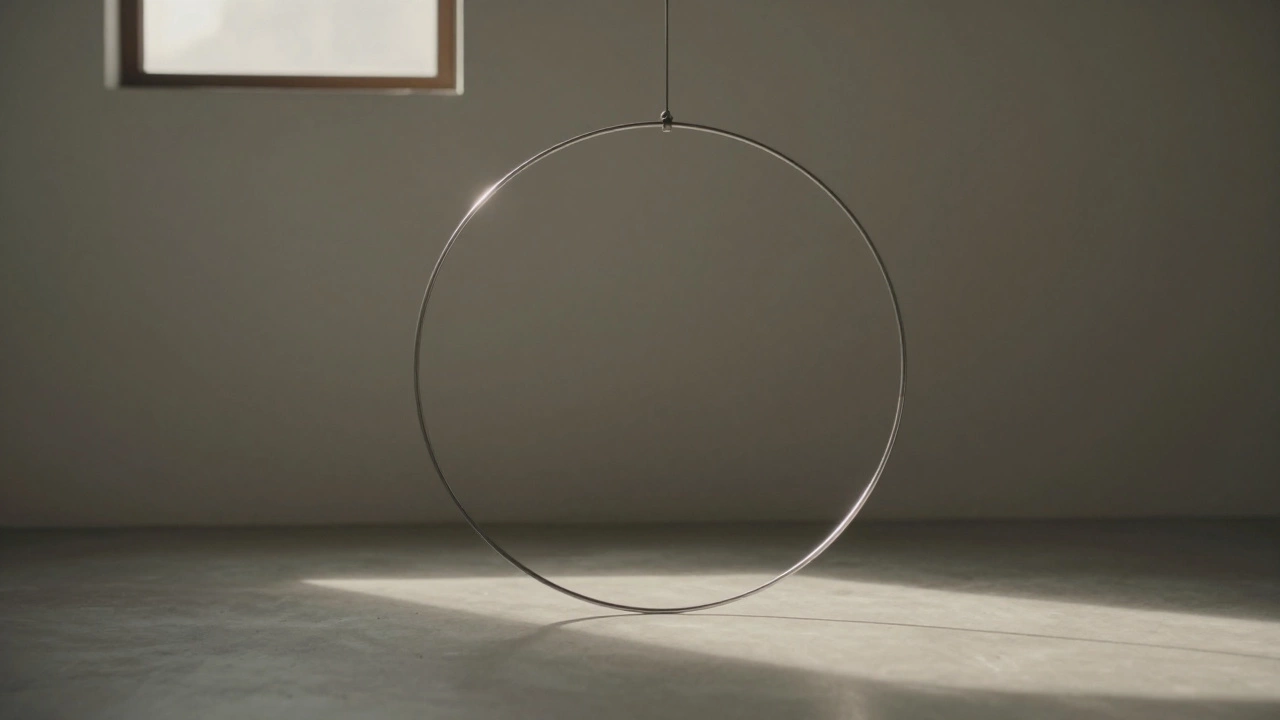
At its core, sculpture is the art of shaping space. It doesn’t need to be beautiful, realistic, or permanent. It doesn’t need to be carved or cast. It just needs to take up room in the world and make you notice it differently.That’s why a single wire bent into a circle, hanging from the ceiling, can be more sculptural than a hundred realistic busts. It doesn’t try to imitate life. It redefines space around it-and that’s the real power of sculpture.
Can a sculpture be made from anything?
Yes. Sculpture can be made from any material that can be shaped or arranged in three dimensions-metal, wood, clay, fabric, ice, plastic, found objects, or even light and sound. What matters isn’t the material, but how it occupies and transforms space.
Is a 3D-printed object considered sculpture?
Yes, if the printed object exists physically in space and was created with artistic intent. The method of creation-whether carved, molded, or printed-doesn’t change the classification. What matters is that the final piece is a tangible, three-dimensional form.
Can digital art be sculpture?
Digital art displayed on a screen is not sculpture. But if that digital design is physically realized-through 3D printing, laser cutting, or projection into real space-then it becomes sculpture. The medium must exist in the physical world.
Does sculpture have to be permanent?
No. Sculpture can be temporary. Snow, sand, ice, and even organic materials like flowers or leaves can be used to create sculptural forms. Their impermanence doesn’t diminish their status as sculpture-it often adds meaning.
Is a building a sculpture?
Generally, no. Buildings are designed for function-shelter, space, use. But if a building is designed primarily as an artistic statement, with little regard for practical use, it can be considered sculptural architecture. Think of the Guggenheim Bilbao: it’s a building, but its form is so expressive that many call it a sculpture.