Exhibition Capacity & Layout Planner
Venue Parameters
Artwork Mix
Distribute 100% across sizes below.
Recommended Count
Inventory Breakdown
- Small Works 0
- Medium Works 0
- Large Works 0
Visual Rhythm Preview
Eye level line at 57 inches implied.
Enter venue details to calculate optimal display count.
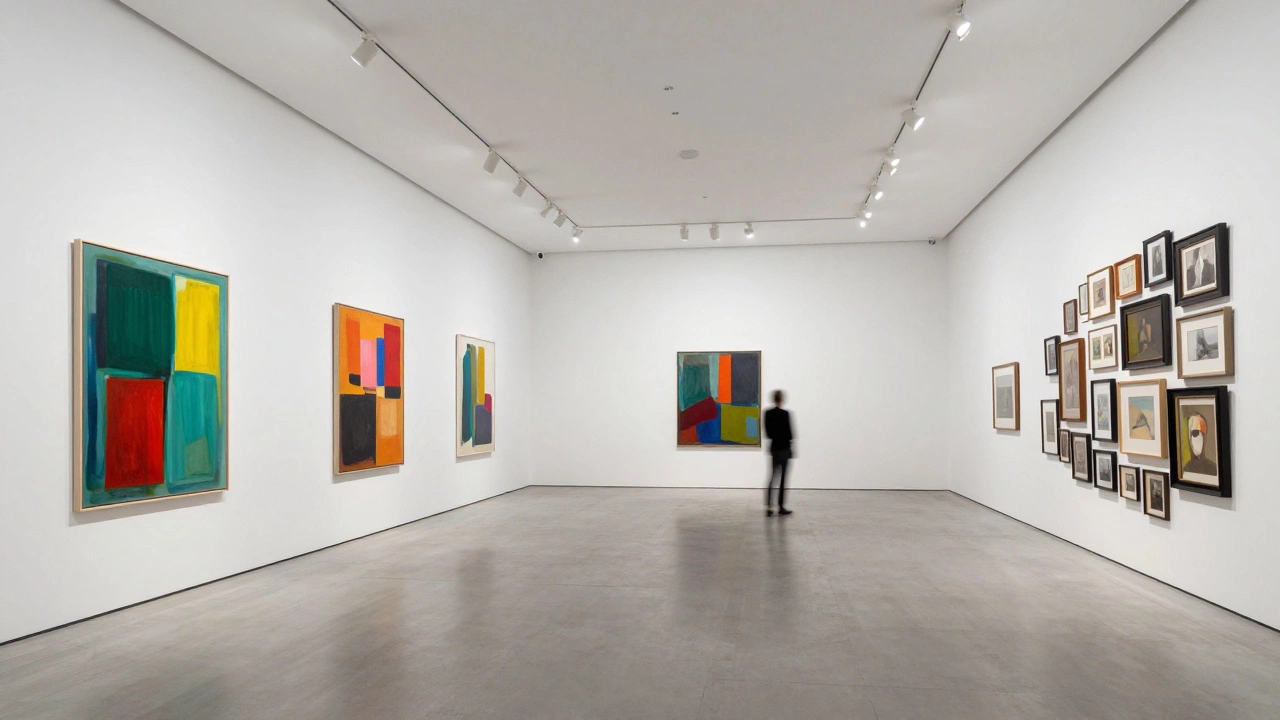
There is no magic number that guarantees a successful art show. If you walk into a major museum in New York or London, you might see fifty massive canvases dominating the walls. Walk into a trendy downtown gallery in Vancouver or Berlin, and you might find only three intimate pieces hanging in silence. Both are correct. The confusion comes from treating all exhibitions as if they follow the same rulebook. They don’t.
The real question isn't "how many" but "how much space do you have, and what story are you telling?" Packing too many works creates visual noise that exhausts viewers. Hanging too few can make the space feel empty or underwhelming, unless the individual pieces are monumental. Getting this balance right is the difference between a professional presentation and a cluttered closet sale.
Defining the Scope: Solo vs. Group Shows
The first factor that dictates your inventory count is the type of exhibition. Are you the sole artist, or are you sharing wall space with others? This distinction changes the math entirely.
Group shows operate on a different logic. Here, you are negotiating for visibility among peers. In a curated group exhibition, you might only submit one or two pieces. These shows often feature dozens of artists, so your contribution needs to stand out individually rather than build a cumulative body of work. For uncurated open calls or cooperative shows, you might bring five to ten pieces, but the density of the room will be higher because multiple voices compete for attention.
The Math of Wall Space and Sightlines
Before you decide on a number, you need to measure the physical reality of the venue. Galleries are not infinite canvases; they are architectural constraints. You must calculate your available linear wall footage and account for doors, windows, and columns that break up the flow.
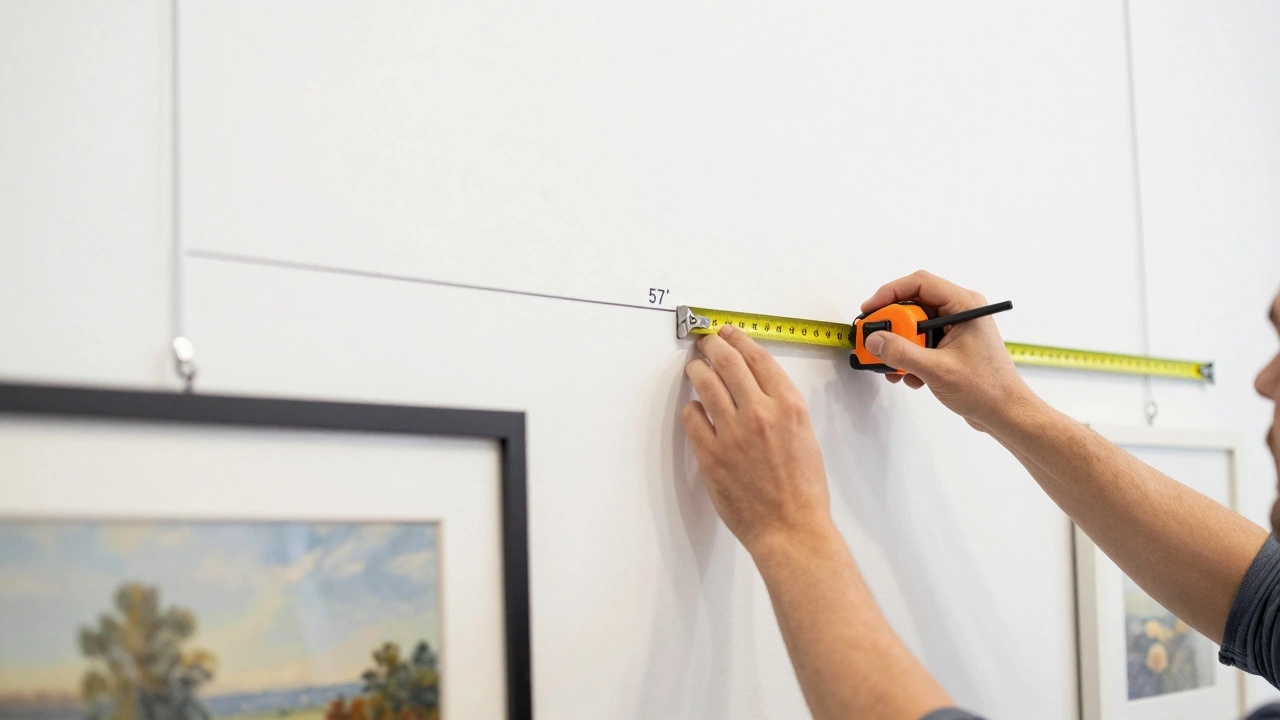
A good rule of thumb is the "eye-level zone." Most galleries hang the center of a painting at approximately 57 inches (145 cm) from the floor. This is the average eye level for a standing adult. When planning your layout, visualize horizontal lines across the walls at this height. Your paintings should align along these lines to create a rhythmic visual path for the viewer.
- Small Works (under 20x20 inches): These require less wall space but more grouping. You might cluster four small pieces together to equal the visual weight of one large canvas. Plan for about 2-3 feet of wall space per small piece if hung singly, or 6-8 feet for a tight cluster.
- Medium Works (20x20 to 36x36 inches): These are the workhorses of most exhibitions. Allow for 3-4 feet of wall space per piece, including a 2-3 inch gap between frames. This spacing prevents the "museum fatigue" where eyes struggle to separate distinct images.
- Large Works (over 36 inches): These demand isolation. A large painting acts as an anchor. It needs at least 5-6 feet of clear wall space on either side, or it should be placed on a focal wall alone. Hanging two large pieces next to each other often results in competition rather than conversation.
If you have 100 feet of usable wall space and mostly medium-sized works, you can comfortably display about 25-30 pieces. If you try to squeeze in 50, the gaps will vanish, and the viewer will feel claustrophobic. Always prioritize negative space-the empty wall area-as much as the artwork itself. Negative space gives the brain time to process and appreciate each image.
Cohesion Over Quantity: The Curatorial Mindset
Amateur exhibitors often think, "I made twenty paintings last year, so I’ll show all twenty." Professional curators think, "What is the strongest argument I can make with five paintings?" Quality always trumps quantity. An exhibition is a narrative, not a catalog.
Consider the concept of "visual rhythm." Just like music, an exhibition needs tempo changes. If every painting is the same size, color palette, and style, the viewer’s eye glazes over after the third piece. You need variation. Mix textures, scales, and tones. However, there must be a unifying thread-whether it’s a specific subject matter, a shared technique, or an emotional tone-that ties the disparate pieces together.
If you have thirty paintings but only twelve feel truly strong and connected, show the twelve. Leave the rest in the studio. Viewers remember the highlights, not the filler. A tighter selection signals confidence. It tells the audience, "These are my best ideas, presented clearly." A bloated selection signals insecurity, as if you’re hoping something sticks just by volume.
Logistics and Installation Constraints
Beyond aesthetics, practical logistics dictate your final count. Transporting, insuring, and installing artworks is labor-intensive. Each additional painting increases the risk of damage, the cost of shipping, and the time required for setup.
| Exhibition Size | Estimated Pieces | Setup Time | Risk Level | Best For |
|---|---|---|---|---|
| Intimate Show | 5-10 | 2-4 hours | Low | New artists, pop-up spaces, high-value pieces |
| Standard Solo | 15-25 | 1-2 days | Moderate | Professional galleries, mid-career artists |
| Major Survey | 30-50+ | 3-5 days | High | Museums, retrospectives, established names |
Think about the installation hardware. Do you have enough tracks, nails, or wire systems to support the weight? Heavy oil paintings on thick panels require different mounting solutions than lightweight acrylics on paper. Underestimating the physical weight of your collection can lead to structural issues or last-minute panic when you realize you don’t have the right tools.
Also consider the opening night traffic. If you expect fifty people to crowd into a small room, a dense arrangement might get bumped or touched. Spacing works further apart protects them from accidental contact during busy social events. Security and preservation are part of the curation process.
Adapting to Different Venue Types
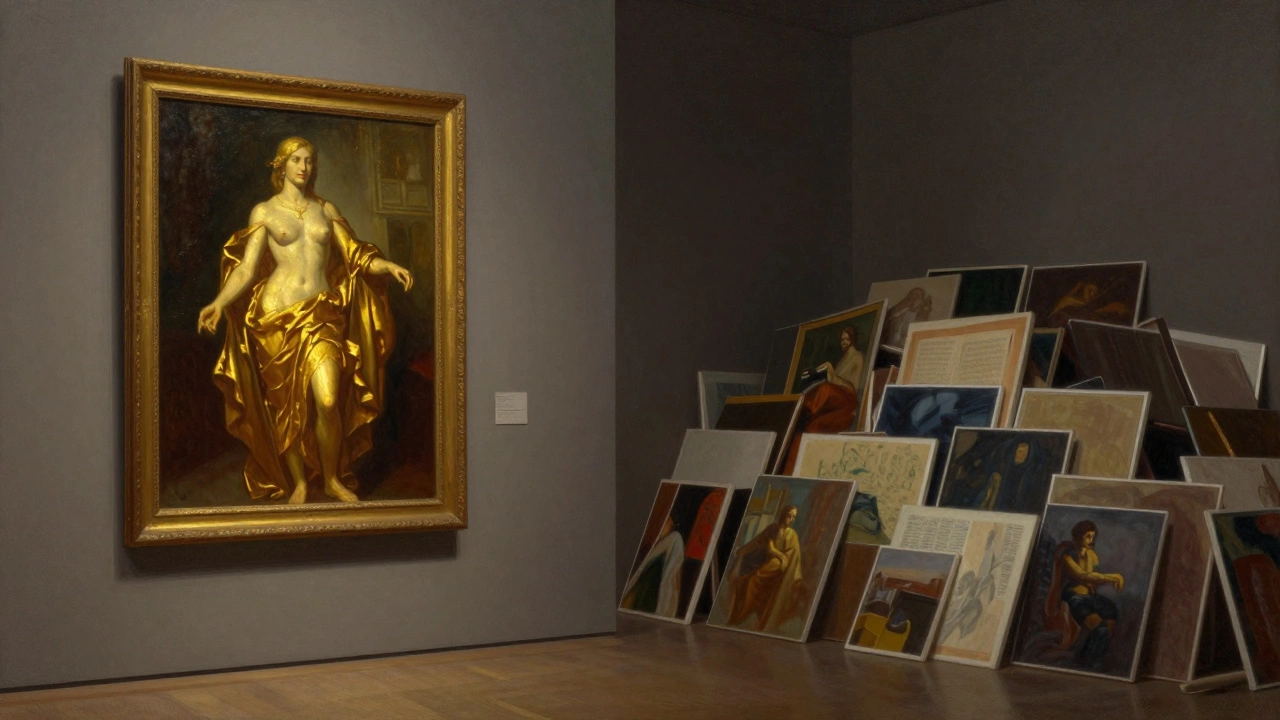
The context of the venue dramatically shifts the ideal number. A white-cube commercial gallery expects a polished, edited selection. A community center or non-traditional space might embrace a more abundant, energetic approach.
In commercial galleries, buyers are looking for investment-worthy pieces. They want clarity. Too many choices cause decision paralysis. A focused selection of 10-15 premium works often sells better than a chaotic display of 40 mediocre ones. The gallery owner wants you to look professional and manageable.
In contrast, biennales, art fairs, or public installations often thrive on abundance. Here, the goal is engagement and spectacle. You might repeat motifs or use seriality to create an immersive environment. In these cases, having 50+ identical or similar works can be a powerful artistic statement, emphasizing production and pattern over individual uniqueness.
Common Mistakes to Avoid
Many first-time exhibitors fall into predictable traps. Avoiding these pitfalls will save you from embarrassment and wasted effort.
- The "Kitchen Sink" Approach: Including everything you’ve ever made. This dilutes your brand identity. Edit ruthlessly.
- Ignoring Scale Variation: Hanging all medium-sized works in a row. This creates a monotonous visual drone. Break it up with one large anchor piece or a cluster of small studies.
- Poor Lighting Planning: Assuming gallery lights will highlight your work automatically. If you have many dark paintings, they may disappear into shadow. Test your lighting before finalizing the count.
- Neglecting the Entrance: The first thing viewers see sets the tone. Don’t put your weakest piece near the door. Place your strongest, most intriguing work within the first sightline to draw them deeper into the space.
Remember, an exhibition is a temporary architecture. You are building a room with images. The number of paintings is simply the number of bricks needed to construct that room. Build it sturdy, build it intentional, and leave enough air for people to breathe inside it.
Is it better to have fewer high-quality paintings or many varied ones?
Fewer high-quality paintings are almost always better. A tight selection of 10-15 strong works creates a memorable impression and signals professionalism. A large number of weaker pieces can overwhelm viewers and diminish the perceived value of your best work. Quality builds reputation; quantity often builds clutter.
How much space should I leave between paintings?
Aim for 2-3 inches between frames for a cohesive look. This small gap prevents the paintings from touching while keeping them visually connected. For larger works, increase the gap to 4-6 inches to allow each piece to stand alone. Never let paintings touch unless they are part of a deliberate multi-panel diptych or triptych.
Can I change the number of paintings after the exhibition starts?
It is possible but disruptive. Swapping pieces mid-exhibition requires re-hanging, which risks damaging walls and existing frames. It also confuses returning visitors who remember the original layout. Only swap pieces if there is a critical error or if the gallery specifically plans a rotating section. Ideally, finalize your selection before installation day.
What if I have more paintings than wall space?
Edit your selection. Choose the strongest pieces that fit the theme and space. Keep the extras in a portfolio or digital archive. You can mention in the press release or catalog that additional works are available upon request. Trying to cram too many pieces into limited space will ruin the viewing experience for everyone.
Does the price of the paintings affect how many I should show?
Indirectly, yes. High-priced works benefit from isolation and dramatic lighting, suggesting you should show fewer of them to maintain their prestige. Lower-priced or accessible works can be grouped more densely to encourage browsing and impulse purchases. Align your layout strategy with your sales goals.