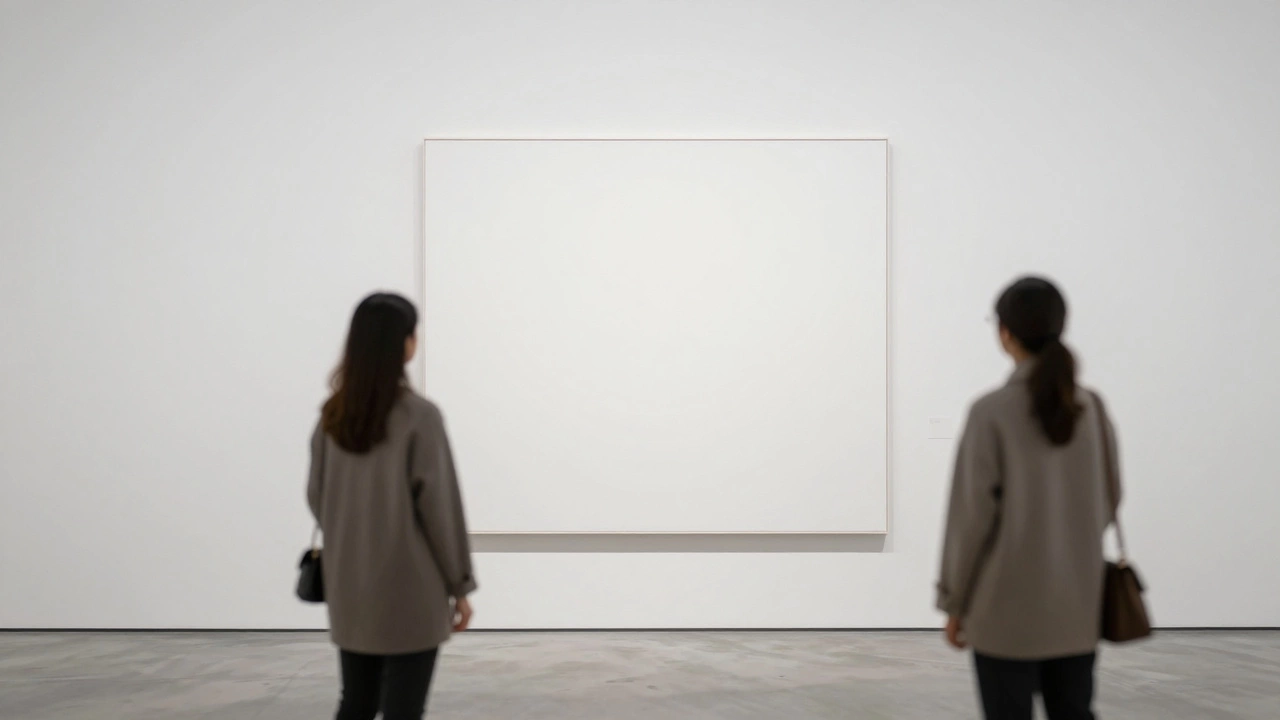
You walk into a gallery. You see a blank canvas. Or maybe a banana taped to the wall with duct tape. Your instinct screams, "I could have done that." And technically, you probably could have. But here is the uncomfortable truth: if anyone can do it, does that mean it isn't art? This question has sparked heated debates in living rooms and lecture halls for over a century. The short answer is yes, modern art is art. But the longer answer requires us to dismantle everything we think we know about skill, beauty, and value.
To understand why a pile of bricks or a single line might be considered a masterpiece, we need to stop looking at the object itself and start looking at the idea behind it. Modern art shifted the focus from craftsmanship to concept. It asks questions rather than providing answers. Let’s break down why this shift happened, how to read these works, and why your confusion is actually part of the experience.
The Shift From Retina to Mind
For centuries, art was defined by representation. If you painted an apple, it had to look like an apple. If you sculpted a horse, it had to look like a horse. The goal was technical mastery-making something beautiful that mirrored reality. Then came the camera. Suddenly, photography could capture reality faster and more accurately than any painter. Artists realized they didn’t need to compete with machines on realism anymore. They could explore what cameras couldn’t do: emotion, abstraction, and ideas.
This pivot marks the birth of Modern Art, which refers to artistic production from roughly 1860 to 1970, characterized by a rejection of traditional techniques and a focus on individual expression. Movements like Impressionism started by blurring edges to capture light. Then Cubism broke objects into geometric shapes. By the time we reached the mid-20th century, the image often disappeared entirely. The artist wasn't trying to make you see; they were trying to make you think.
Consider Piet Mondrian. His grids of black lines and primary colors aren't meant to depict a tree or a city. They are attempts to visualize pure structure and harmony. When you look at his work, you aren't appreciating a likeness; you're engaging with a theory of balance. That engagement is the art.
The Urinal That Changed Everything
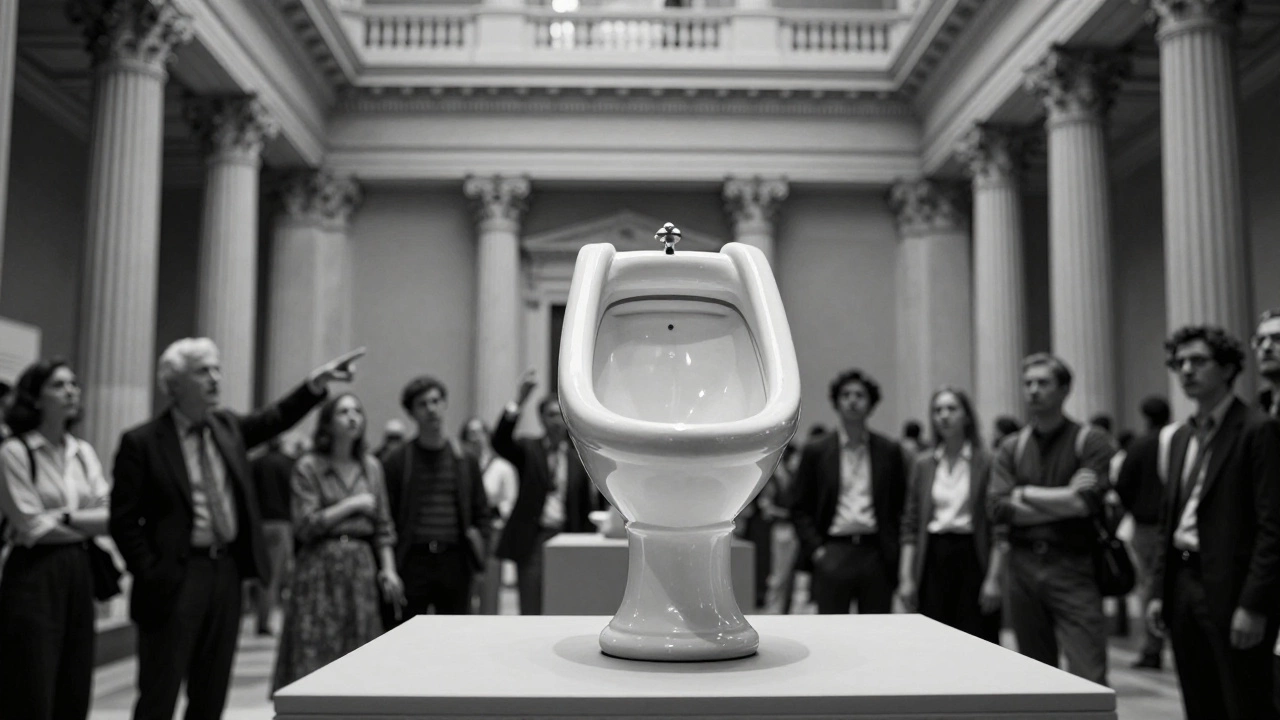
If you want to understand the core argument of modern art, you have to talk about Marcel Duchamp. In 1917, he submitted a standard porcelain urinal to an exhibition. He signed it "R.Mutt" and titled it Fountain. He didn't make the urinal. He bought it. He turned it on its side. He called it art.
Critics rejected it. Duchamp argued that the act of selection was the creative process. By choosing a mass-produced object and removing it from its functional context, he forced viewers to question what art is. This concept, known as Readymade, suggests that art exists in the mind of the beholder and the intent of the creator, not just in the physical labor of making. If Duchamp hadn't labeled it art, it would have remained a bathroom fixture. Because he did, it became a philosophical bombshell.
This doesn't mean every urinal is art. It means that context matters. The history, the statement, and the cultural conversation surrounding the object give it meaning. When you stand before Fountain today, you aren't looking at a toilet; you're looking at a challenge to authority.
Why Emotion Trumps Technique
Many people feel cheated by modern art because they equate value with difficulty. If it took ten years to learn oil painting, but only ten minutes to paint a red square, shouldn't the painting be worth more? Not necessarily. We don't pay musicians solely for how hard it is to play a note; we pay for the emotional impact of the song. Art functions similarly.
Abstract Expressionism, a movement led by artists like Jackson Pollock, focused on the physical act of painting as an emotional release. Pollock didn't drip paint to show you a landscape. He dripped it to convey chaos, energy, and freedom. The "mess" is the point. It mirrors the complexity of human consciousness, which isn't always neat or logical.
When you view these works, ask yourself: What does this make me feel? Does it provoke anger? Confusion? Calm? If it elicits a reaction, it is functioning as art. The lack of recognizable imagery forces you to project your own emotions onto the canvas, making the experience deeply personal rather than passive.
The Role of the Viewer in Creating Meaning
In traditional art, the viewer is a spectator. In modern and contemporary art, the viewer is a participant. This concept is central to Conceptual Art, where the idea is more important than the final product. The artwork is incomplete without your interpretation.
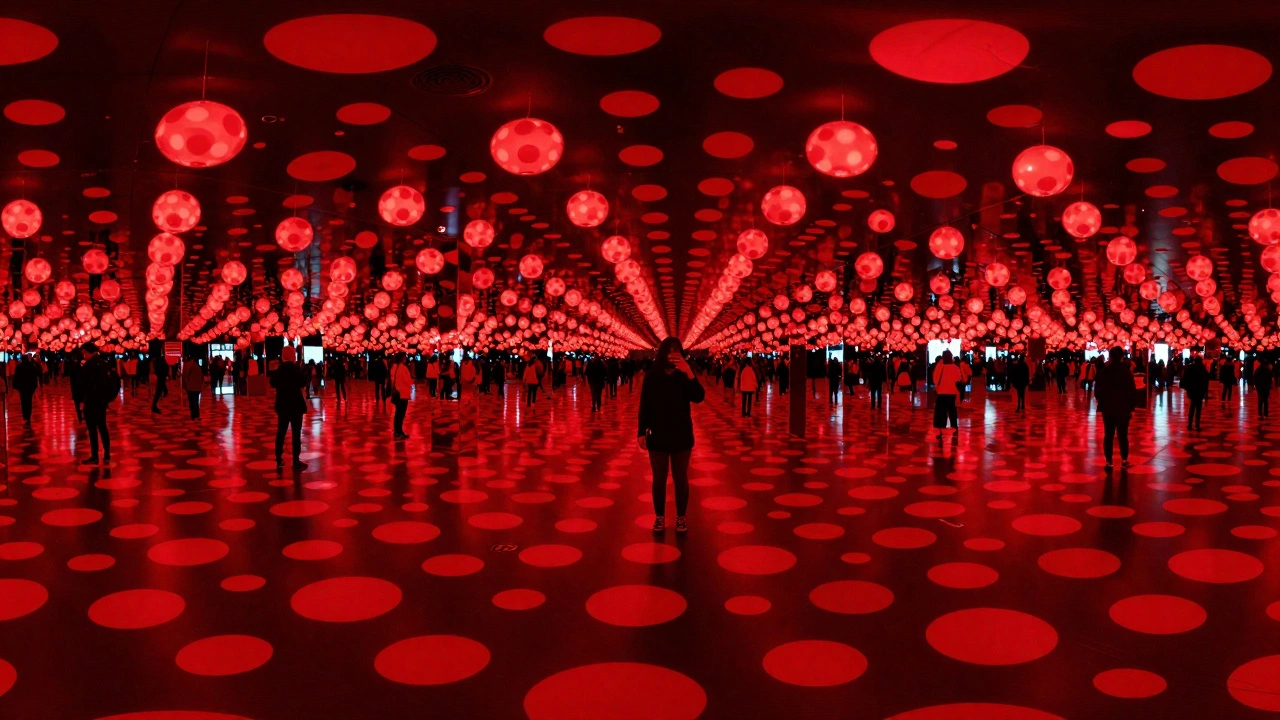
Take Yayoi Kusama's Infinity Rooms. These installations feature mirrored walls covered in polka dots or lights. There is no brushwork to admire. The "art" happens when you step inside. The infinite reflection dissolves your sense of self. You become part of the piece. Your presence completes the circuit. Without you, it's just a room with mirrors. With you, it's an exploration of infinity and ego.
This participatory nature explains why some modern art feels confusing. It’s supposed to be open-ended. There is no single correct answer. If one person sees hope in a white canvas and another sees emptiness, both interpretations are valid. The ambiguity is the feature, not the bug.
Is It All Just a Scam?
A common complaint is that modern art is a financial bubble driven by hype. High prices for simple works fuel skepticism. While the art market certainly has speculative elements, dismissing all modern art as a scam ignores the cultural impact. Art markets reflect rarity, historical significance, and institutional validation, much like sports memorabilia or vintage cars.
Moreover, the institutions that promote these works-museums, curators, critics-play a crucial role in shaping our understanding. They provide the context that transforms a random object into a meaningful statement. For example, The Tate Modern doesn't just hang paintings; it creates narratives that connect artworks to social issues, political movements, and technological changes. When you visit such spaces, you're entering a curated conversation.
However, it’s okay to dislike specific pieces. Disliking art doesn't mean it isn't art. It means it didn't resonate with you. Taste is subjective. The key is to approach it with curiosity rather than cynicism. Ask: Why did the artist choose this material? What problem are they trying to solve? What dialogue are they starting?
| Aspect | Traditional Art | Modern Art |
|---|---|---|
| Primary Goal | Representation and Beauty | Idea and Concept |
| Viewer Role | Passive Observer | Active Participant |
| Value Basis | Technical Skill | Innovation and Context |
| Example | Renaissance Portrait | Duchamp's Fountain |
How to Approach Modern Art Without Feeling Lost
You don't need an art degree to appreciate modern art. You just need to change your expectations. Here is a practical guide to navigating galleries:
- Read the Label: The placard next to the work provides essential context. Who made it? When? Why? This information unlocks the meaning.
- Ask Questions: Don't settle for "I don't get it." Ask, "What is this challenging?" or "What emotion does this evoke?"
- Embrace Confusion: If you feel confused, you're likely engaging with the work correctly. Modern art often disrupts comfort zones to provoke thought.
- Look Beyond the Object: Consider the materials, the space, and the title. Sometimes the medium is the message.
- Trust Your Reaction: If you feel nothing, move on. Art is personal. Not every piece will speak to you, and that's fine.
Remember, art is a language. Like any language, it takes time to learn the grammar. Modern art uses a different vocabulary than classical art, but it communicates just as powerfully. It talks about identity, politics, technology, and the human condition. Once you tune into that frequency, the noise becomes music.
Why is modern art so expensive?
High prices in modern art often reflect historical significance, scarcity, and institutional validation rather than material cost. Works by pivotal figures like Picasso or Warhol set benchmarks that influence the market. Additionally, the art world operates on reputation and provenance, where an artist's career trajectory and museum exhibitions drive value.
Can I create my own modern art?
Absolutely. Modern art emphasizes concept and expression over technical skill. You can use everyday objects, digital media, or abstract forms to convey ideas. The key is intentionality: why are you creating this, and what do you want the viewer to experience?
What is the difference between modern and contemporary art?
Modern art generally refers to works created between the 1860s and 1970s, focusing on breaking from tradition. Contemporary art refers to works created from the late 20th century to the present day, often addressing current global issues, technology, and identity politics.
Is there a right way to interpret modern art?
No. Modern art thrives on multiple interpretations. While artists may have specific intentions, the viewer's personal experience and context shape the meaning. Your interpretation is valid as long as it is supported by observation and reflection.
Why do museums display blank canvases?
Blank or near-blank canvases, such as those by Robert Rauschenberg or Ad Reinhardt, challenge the notion of art as decoration. They invite viewers to contemplate absence, purity, and the limits of visual perception. The emptiness becomes a space for mental projection.