Contemporary Art Style Identifier
Think you know the difference between Conceptual Art and Installation Art? Take this quick quiz to test your knowledge of contemporary art genres.
Question goes here?
Result Title
Description
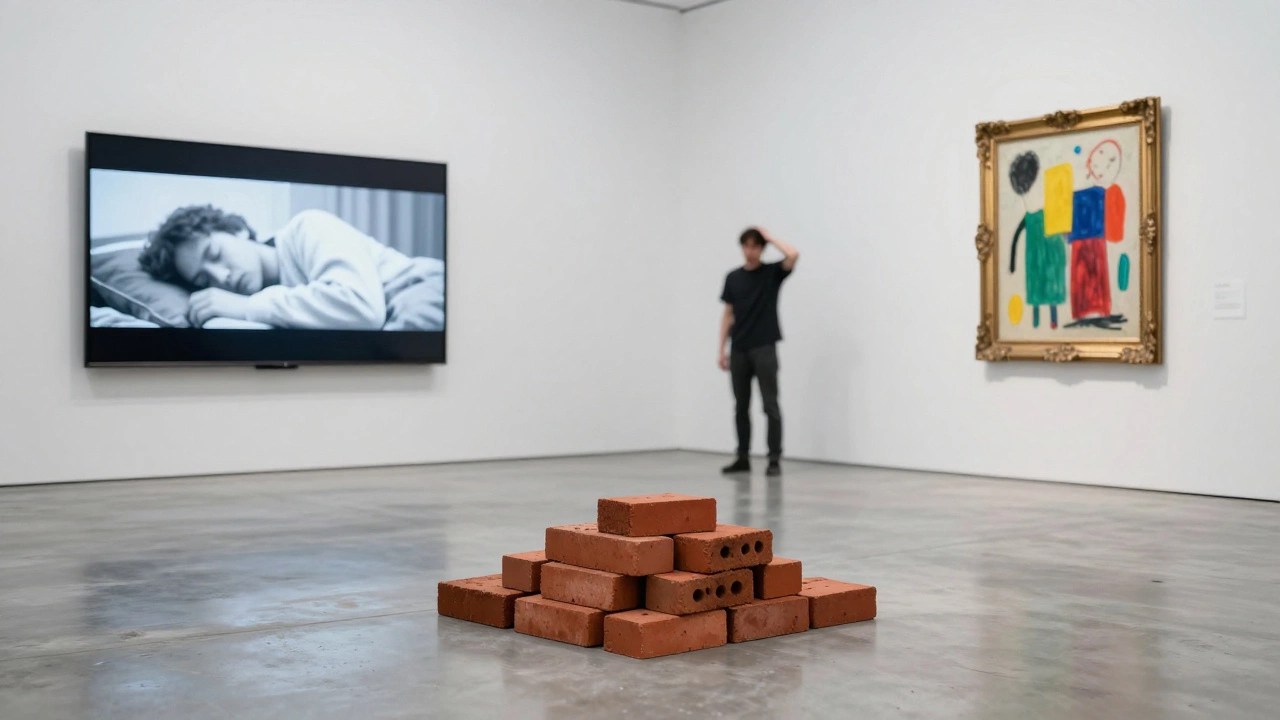
You walk into a gallery and see a pile of bricks. You look at another room and find a video loop of someone sleeping. You turn around, and there is a painting that looks like it was done by a child. Your brain screams, "Is this even art?" If you are asking what genre this falls under, you are not alone. The question "what is the genre of contemporary art?" is tricky because the answer is: there isn't just one.
Unlike classical art, which had clear rules about perspective and realism, or Modern Art, which focused on abstracting form and color, Contemporary Art (art made from the late 1960s to today) refuses to stay in a single lane. It is defined more by its attitude than by its technique. It challenges boundaries, mixes media, and often prioritizes ideas over beauty.
The Shift from Modern to Contemporary
To understand the genres of today, you have to know where they came from. Many people use "modern" and "contemporary" interchangeably, but they are distinct eras with different goals. Modern Art roughly spans from the 1860s to the 1970s. Think Picasso, Monet, or Pollock. Their goal was to break away from traditional representation. They asked, "How can we paint differently?"
Contemporary Art, however, started gaining momentum in the late 1960s and continues today. The shift happened when artists stopped caring about making things "beautiful" in the traditional sense and started caring about making statements. The question changed from "How do I paint this?" to "What does this mean?" This shift opened the door for dozens of sub-genres that coexist right now.
Major Genres and Styles in Contemporary Art
Because contemporary art is so broad, we categorize it by style or movement. Here are the most dominant genres you will encounter today.
Conceptual Art
If you have ever seen an artwork that looked like nothing special until you read the label, you were looking at Conceptual Art. In this genre, the idea behind the work is more important than the physical object. The artist might provide instructions for a performance, a text description, or a simple arrangement of everyday objects.
Marilyn Monroe’s lipstick dress or a piece of tape on the floor can be Conceptual Art if the concept drives the value. It forces the viewer to engage their brain rather than just their eyes. It asks you to question why something is considered art in the first place.
Installation Art
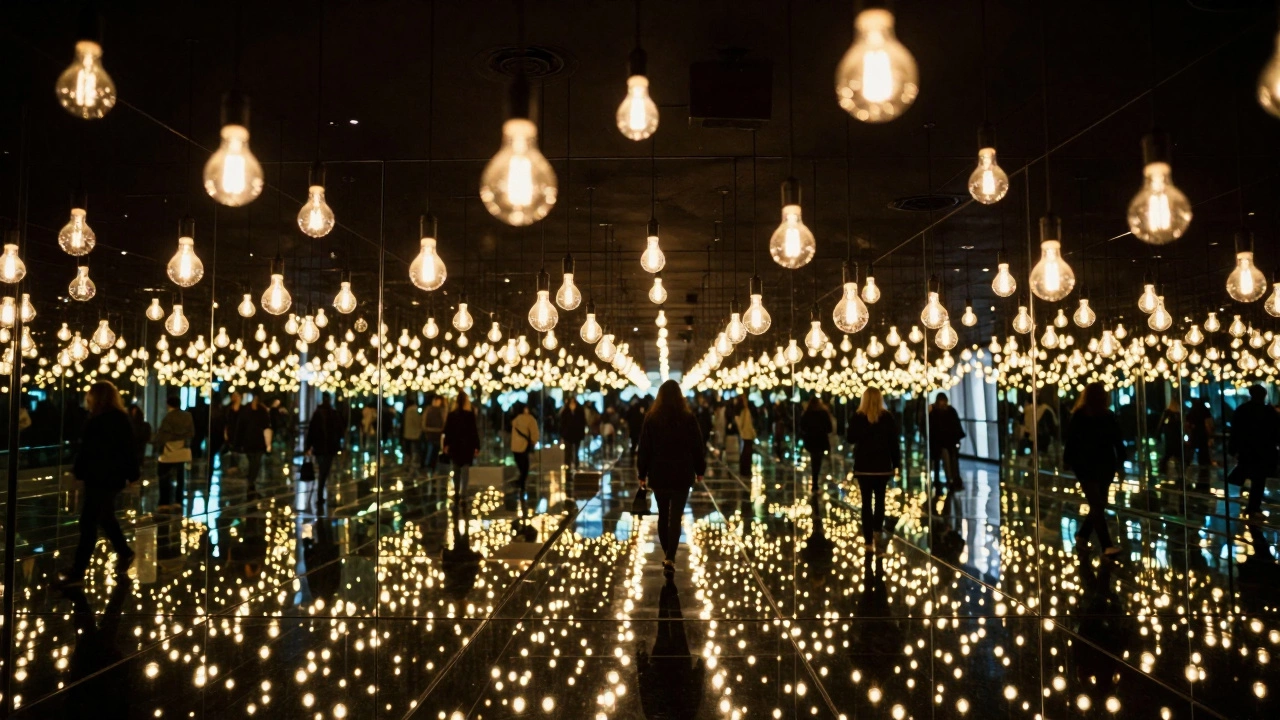
Imagine walking into a room filled with thousands of suspended light bulbs, or a space covered in mirrors that distort your reflection. That is Installation Art. Unlike a painting you hang on a wall, installation art transforms an entire space. You don't just look at it; you walk through it. It creates an immersive environment that engages all your senses-sight, sound, sometimes even smell.
This genre is huge in contemporary museums because it offers a unique experience that cannot be replicated by a photograph. Artists like Olafur Eliasson use installation art to explore themes like climate change and perception, turning the gallery into a laboratory for human experience.
Performance Art
Performance art uses the artist's body as the medium. It can be a dance, a lecture, a stunt, or a silent act of endurance. Marina Abramović is perhaps the most famous figure here, known for pushing her body to the limit to explore the relationship between performer and audience.
In the digital age, performance art has evolved. It now includes live streams, interactive social media challenges, and virtual reality experiences. The key element remains the same: the art exists only in the moment it is performed. Once it ends, only documentation remains.
Street Art and Graffiti
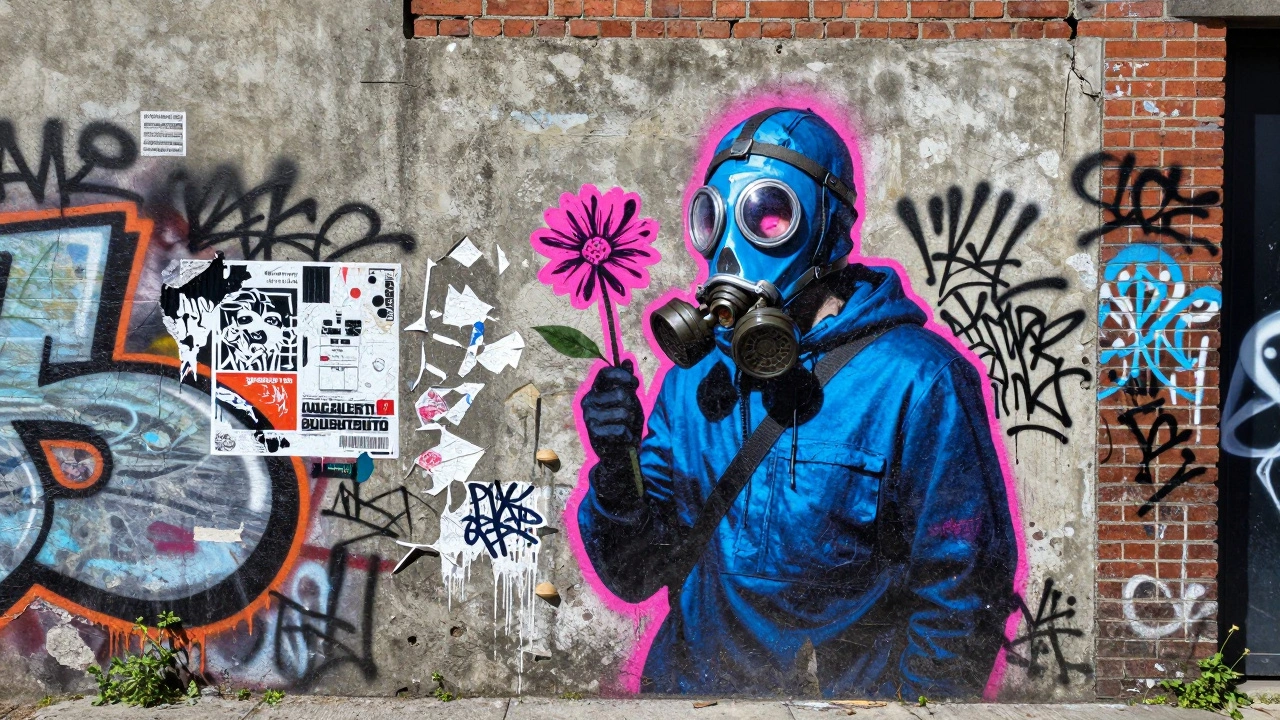
Once considered vandalism, Street Art has become a legitimate and highly valued genre of contemporary art. Artists like Banksy and Jean-Michel Basquiat (who started on the streets before moving to galleries) brought raw, political, and humorous messages directly to the public. Street art bypasses the elitism of galleries, speaking directly to people in their daily environments.
Today, cities commission murals to revitalize neighborhoods, and street artists sell pieces for millions at auction. It blurs the line between public service and private commodity, raising questions about ownership and accessibility.
Digital and New Media Art
We are living in a digital era, so it makes sense that art reflects this. Digital art encompasses everything from computer-generated imagery (CGI) and animation to AI-generated images and NFTs (Non-Fungible Tokens). Artists use software, algorithms, and code to create works that are inherently tied to technology.
Beeple’s sale of a digital collage for $69 million marked a turning point, proving that digital files could hold significant cultural and financial value. This genre is constantly evolving as new technologies emerge, making it one of the most dynamic areas in contemporary art.
| Genre | Primary Medium | Key Characteristic | Example Artist |
|---|---|---|---|
| Conceptual Art | Idea/Text/Object | Idea > Object | Marcel Duchamp |
| Installation Art | Space/Mixed Media | Immersive Environment | Olafur Eliasson |
| Performance Art | Body/Time | Ephemeral Action | Marina Abramović |
| Street Art | Paint/Stencil/Wall | Public Accessibility | Banksy |
| Digital Art | Code/Software/AI | Tech-Dependent | Beeple |
Why Are There So Many Genres?
The fragmentation of contemporary art into many genres is a direct result of globalization and technology. In the past, art was largely European-centric. Today, artists from Africa, Asia, Latin America, and the Middle East bring their own traditions, materials, and perspectives to the global stage. This diversity means there is no single "correct" way to make art.
Furthermore, the internet has democratized art creation and distribution. Anyone with a smartphone can create and share art. This has led to hybrid genres that mix photography, video, text, and sound in ways that didn't exist twenty years ago. The boundaries are porous, and artists often jump between genres within a single career.
How to Identify Contemporary Art
If you are trying to figure out if a piece is contemporary, ask yourself these three questions:
- When was it made? If it was created after 1970, it is likely contemporary.
- Does it challenge norms? Contemporary art often provokes discomfort, questions politics, or breaks traditional aesthetic rules.
- Is it mixed media? While traditional painting still exists, contemporary art frequently combines materials-video with sculpture, text with photography, etc.
Don't worry if you don't "get" it immediately. Contemporary art is often designed to be ambiguous. Part of the experience is forming your own interpretation. There is rarely a wrong answer, only missed opportunities for curiosity.
The Role of the Viewer
In Renaissance art, the viewer was a passive observer looking at a window into another world. In contemporary art, the viewer is an active participant. Your reaction, your interpretation, and even your presence completes the artwork. Without you, a performance is just a rehearsal. Without your engagement, a conceptual piece is just an object.
This shift places responsibility on the audience. It requires us to be open-minded, informed, and willing to sit with uncertainty. It invites us to discuss, debate, and connect with the artist's intent, even if we disagree with it.
Future Trends in Contemporary Art
As we move further into the 2020s, several trends are shaping the future of contemporary art. Environmental concerns are driving more artists to use sustainable materials or focus on ecological themes. Virtual Reality (VR) and Augmented Reality (AR) are creating new spaces for installation art that exist entirely online.
Artificial Intelligence is also becoming a collaborator rather than just a tool. Artists are using AI to generate images, write poetry, and compose music, raising profound questions about creativity, authorship, and the nature of human expression. These developments ensure that the "genre" of contemporary art will continue to evolve, defying easy definition.
What is the difference between modern and contemporary art?
Modern Art refers to the period roughly from the 1860s to the 1970s, characterized by a break from tradition and experimentation with form (e.g., Impressionism, Cubism). Contemporary Art refers to art made from the late 1960s to the present day. It is defined by its diversity, use of new media, and focus on concepts and ideas rather than just visual aesthetics.
Is photography considered contemporary art?
Yes, absolutely. Photography is a major genre within contemporary art. However, it is not just about taking realistic pictures. Contemporary photographers often manipulate images, combine them with other media, or use photography to explore identity, politics, and memory. Artists like Cindy Sherman and Andreas Gursky are celebrated contemporary figures.
Why is some contemporary art so expensive?
The price of contemporary art is driven by scarcity, reputation, and market demand. Established artists with a strong track record in prestigious galleries and museums command higher prices. Additionally, art is often seen as an investment asset. The role of auctions, collectors, and speculation also plays a significant part in pricing, sometimes disconnecting the cost from the material value of the work.
Can anyone be a contemporary artist?
Technically, yes. Contemporary art values individual voice and concept over technical mastery or formal training. However, gaining recognition in the art world usually involves building a portfolio, exhibiting in galleries, engaging with critics, and participating in the broader artistic community. Social media has lowered barriers to entry, allowing self-taught artists to find audiences directly.
What is the most popular genre of contemporary art?
It is difficult to name a single "most popular" genre because preferences vary widely. However, painting remains commercially dominant in auctions, while digital and installation art are increasingly popular in museums and among younger audiences. Street art has also gained massive mainstream popularity due to its visibility and cultural relevance.