Modern Art Movement Explorer
Click on a movement below to reveal its core philosophy, visual traits, and how it broke from tradition.
Core Philosophy
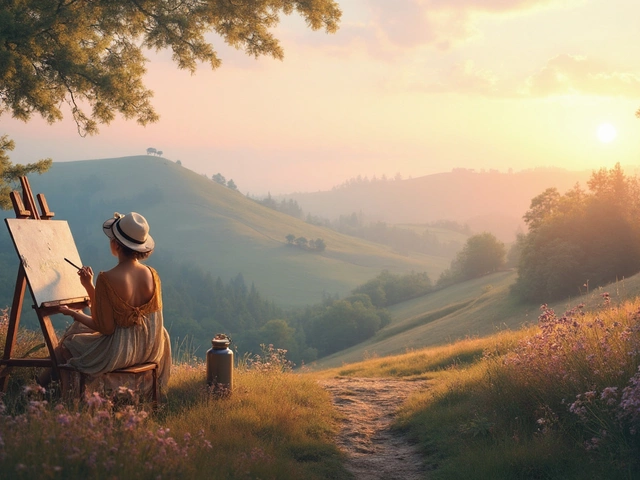
Capture light and moment. The focus shifted from objective recording to subjective experience, prioritizing how light hits an object rather than just what the object is.
Key Example
Monet's Water Lilies
Visual Trait
Visible brushstrokes, bright colors, and an emphasis on natural light.
Why It Broke Tradition
It rejected the polished, studio-based realism of the Academy. Artists painted outdoors (en plein air) to capture fleeting moments, challenging the idea that art must mimic reality perfectly.
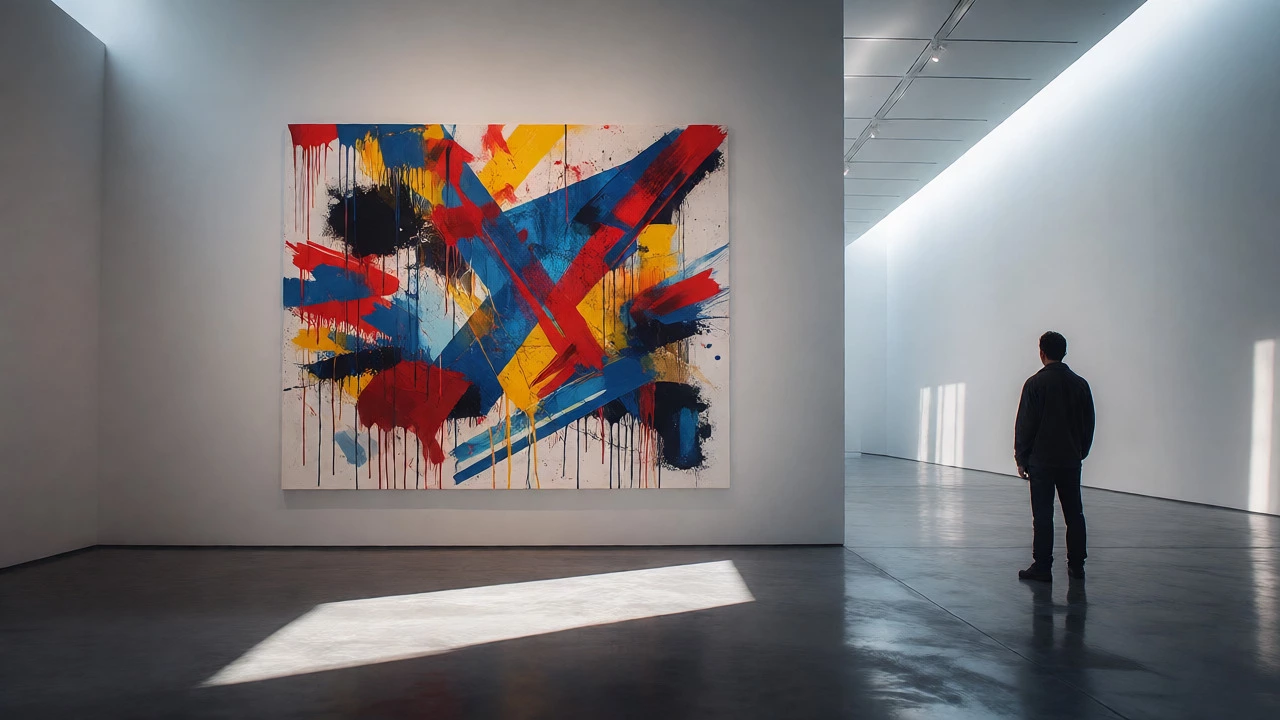
You walk into a gallery, stare at a canvas splattered with paint, and wonder: "Is this actually art?" You are not alone. This confusion is exactly what Modern Art was designed to provoke. It isn't just about pretty pictures; it's a radical shift in how humans see the world. If you want to understand what best describes modern art, you have to stop looking for realism and start looking for rebellion.
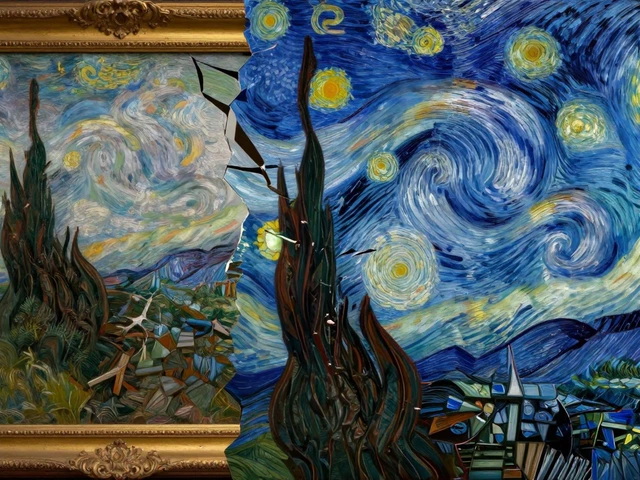
Modern art refers to the period of artistic production roughly from the 1860s to the 1970s. It marks the transition from traditional academic standards to experimental forms. The core description of modern art is its break from tradition. Artists stopped trying to copy reality perfectly. Instead, they began to interpret it, distort it, or abandon it entirely. This wasn't just an aesthetic choice; it was a philosophical one driven by industrialization, urbanization, and new technologies like photography.
The Break from Realism
Before modern art, the goal of painting was often to mimic life. If you could make a bowl of fruit look so real that a bird tried to eat it, you were a master. Then came Photography. Once cameras could capture reality instantly, painters had to ask themselves: "What is my job now?"
The answer was subjectivity. Modern artists decided their job was to show emotion, light, and perspective rather than just surface details. This led to movements like Impressionism, where the focus shifted to how light hits an object, not just what the object is. When Monet painted his water lilies, he wasn't drawing botanical diagrams. He was capturing a fleeting moment of perception. That shift-from objective recording to subjective experience-is the first major pillar defining modern art.
Experimentation with Form and Material
If realism was out, experimentation was in. Modern art is best described as a laboratory of visual ideas. Artists questioned every rule they had been taught. Why must paint be oil? Why must sculpture be stone? Why must art hang on a wall?
Cubism, pioneered by Pablo Picasso and Georges Braque, shattered the single-point perspective that had dominated Western art since the Renaissance. They showed objects from multiple angles simultaneously. This wasn't just weird geometry; it reflected a new understanding of space and time influenced by Einstein’s theories and faster travel speeds.
Similarly, Sculpture moved away from polished marble figures. Artists like Constantin Brancusi used raw materials like wood and steel, emphasizing the material itself over the representation of a human form. The texture, weight, and industrial origin of the material became part of the message. This tactile honesty is a hallmark of the modern era.
The Rise of Abstraction
Perhaps the most famous trait of modern art is abstraction. At some point, artists realized they didn't need recognizable objects to convey meaning. Color, shape, and line could speak for themselves.
Kandinsky believed colors had spiritual vibrations. Mondrian reduced the world to grids of black lines and primary colors, seeking universal harmony. Later, Abstract Expressionism emerged in New York after World War II. Artists like Jackson Pollock didn't paint *about* something; they painted the act of painting itself. Their drip paintings were records of physical movement and emotional intensity.
This move toward non-representational work forces the viewer to engage differently. You can't ask, "What is that?" You have to ask, "How does that make me feel?" This internal dialogue is central to the modern art experience.
| Movement | Core Philosophy | Visual Trait | Key Example |
|---|---|---|---|
| Impressionism | Capture light and moment | Visible brushstrokes, bright colors | Monet's Water Lilies |
| Cubism | Show multiple perspectives | Geometric fragmentation | Picasso's Les Demoiselles d'Avignon |
| Surrealism | Explore the subconscious mind | Dreamlike, illogical scenes | Dali's The Persistence of Memory |
| Pop Art | Elevate mass culture | Bold colors, commercial imagery | Warhol's Campbell's Soup Cans |
Influence of Technology and Society
You cannot describe modern art without describing the world that created it. The late 19th and early 20th centuries saw massive changes. Cities grew rapidly. Electricity changed how people lived. Freud introduced the idea of the unconscious mind. These shifts directly impacted artists.
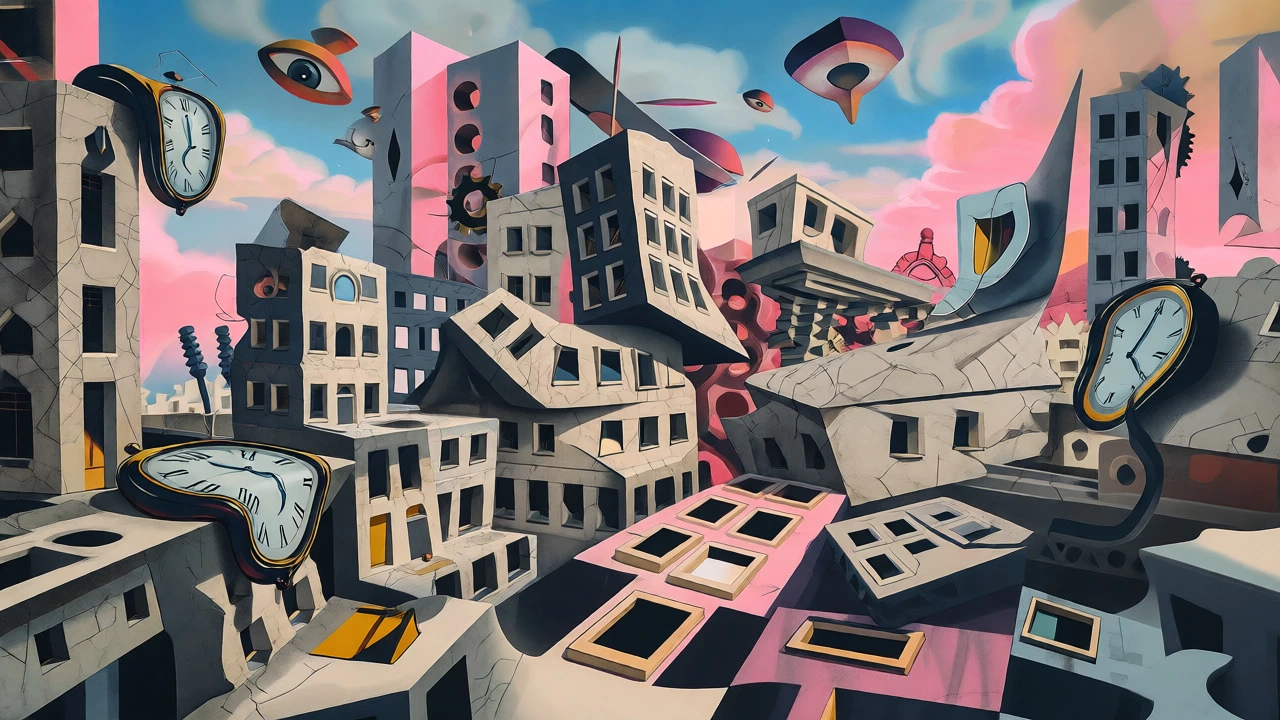
Surrealism, for instance, was heavily influenced by psychoanalysis. Salvador Dalí and René Magritte painted dreamscapes that defied logic because they wanted to visualize the irrational workings of the human psyche. The melting clocks in Dalí's work aren't just weird; they represent the fluidity of time in dreams versus rigid clock time in waking life.
Later, Pop Art responded to consumerism. Andy Warhol didn't paint heroes or gods; he painted soup cans and celebrities. By repeating images mechanically, he mirrored the assembly-line production of goods. This critique of capitalism and mass media is a defining feature of mid-20th-century modern art.
Individual Expression Over Collective Rules
Traditional art often followed guild rules or academy standards. Modern art championed the individual voice. The artist became a visionary or a provocateur, not just a craftsman. This emphasis on personal expression means there is no single "correct" style in modern art. One artist might use neon lights, another might use trash, and another might use silence.
This diversity makes modern art hard to pin down with one sentence. But if you had to choose one descriptor, it would be innovation. Every major movement within modern art sought to innovate upon what came before. Dadaists mocked the absurdity of war by creating nonsense art. Minimalists stripped art down to its bare essentials to reject emotional manipulation.
How to Identify Modern Art Today
If you are standing in front of a piece today and wondering if it fits the modern art label, check these boxes:
- Does it challenge tradition? Does it break rules of composition, color, or subject matter?
- Is it experimental? Does it use unusual materials or techniques?
- Is it subjective? Does it prioritize the artist's feeling or idea over realistic depiction?
- Does it reflect its time? Does it comment on technology, society, or psychology?
Remember, "Modern Art" is a specific historical period, not just "art made recently." Art made today is usually called Contemporary Art. While Contemporary Art grows out of Modern Art, it has different goals, often focusing more on global issues, identity politics, and digital media. However, the DNA of modern art-breaking boundaries and questioning reality-remains the foundation of all serious artistic practice today.
Frequently Asked Questions
What is the difference between Modern Art and Contemporary Art?
Modern Art generally refers to works produced from the 1860s to the 1970s. It focuses on breaking from tradition and exploring abstraction. Contemporary Art refers to art produced from the 1970s to the present. It is more diverse, often addressing global themes, identity, and using new media like video and installation.
Why is modern art considered difficult to understand?
It is difficult because it abandons the familiar language of realism. Without recognizable subjects, viewers must engage with concepts, emotions, and formal elements like color and shape. It requires active interpretation rather than passive recognition.
Did photography cause modern art?
Photography was a major catalyst. By taking over the role of documenting reality, it freed painters to explore other purposes, such as expressing emotion, exploring light, or experimenting with form, which accelerated the development of movements like Impressionism and Abstract Art.
Is all abstract art considered modern art?
Most abstract art falls under the umbrella of Modern Art, particularly from the early 20th century onward. However, contemporary artists also create abstract work. So while all classic abstract art is modern, not all abstract art made today is classified strictly as "Modern Art" in the historical sense.
Who are some key figures in modern art?
Key figures include Pablo Picasso (Cubism), Henri Matisse (Fauvism), Salvador Dalí (Surrealism), Mark Rothko (Color Field), and Andy Warhol (Pop Art). Each challenged the conventions of their time in distinct ways.